
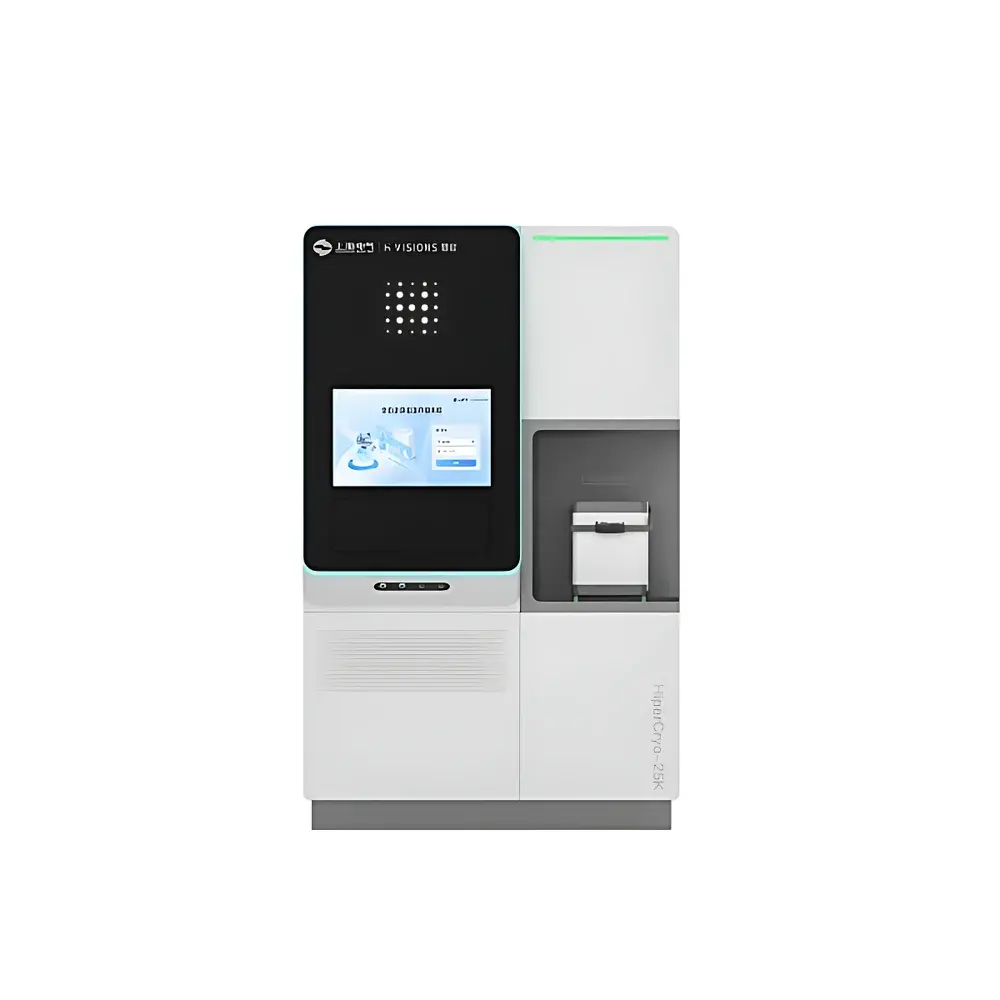
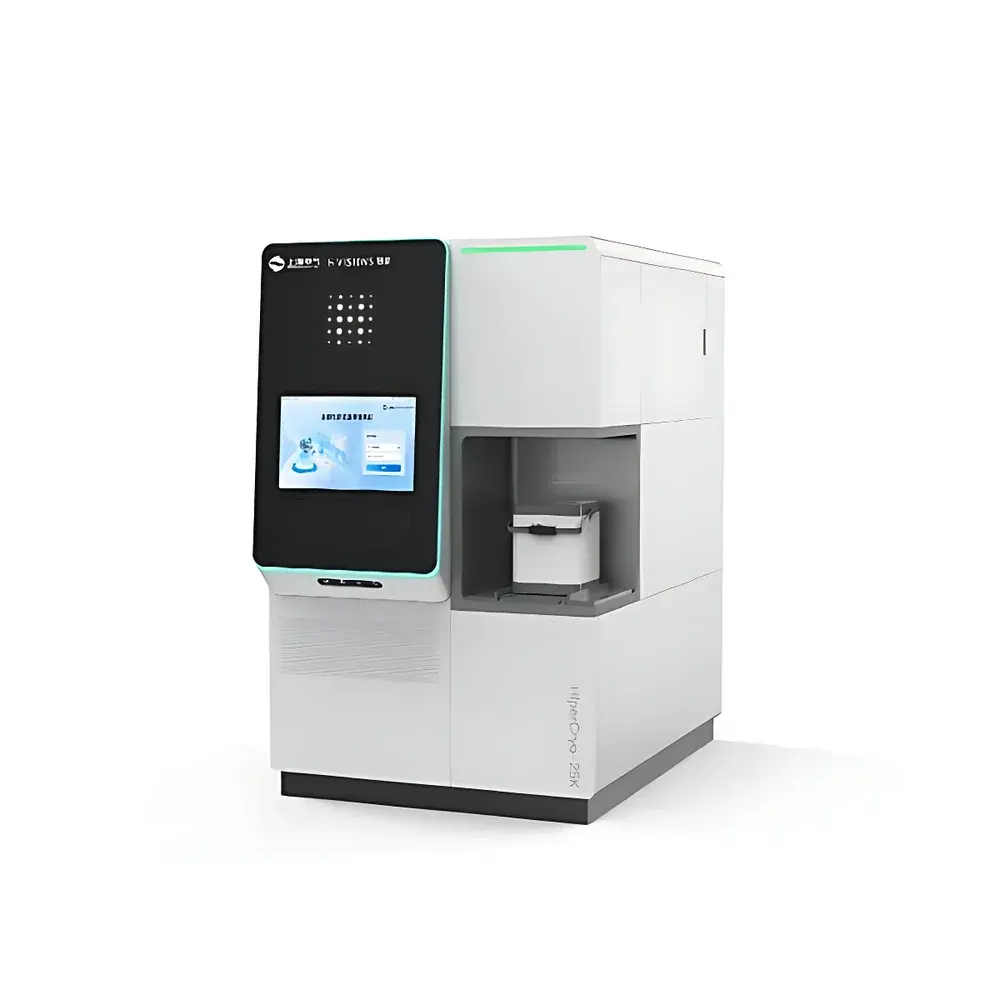
HiperCryo Automated Liquid Nitrogen Storage System by Shanghai Electric H Visions
| Brand | Shanghai Electric H Visions |
|---|---|
| Origin | Shanghai, China |
| Model | HiperCryo |
| Capacity | 1200 L |
| Construction Material | Stainless Steel |
| Weight | 1000 kg |
| Operating Temperature Range | −196 °C to −180 °C |
| Storage Configuration Options | Honeycomb Rack & Box-style Rack |
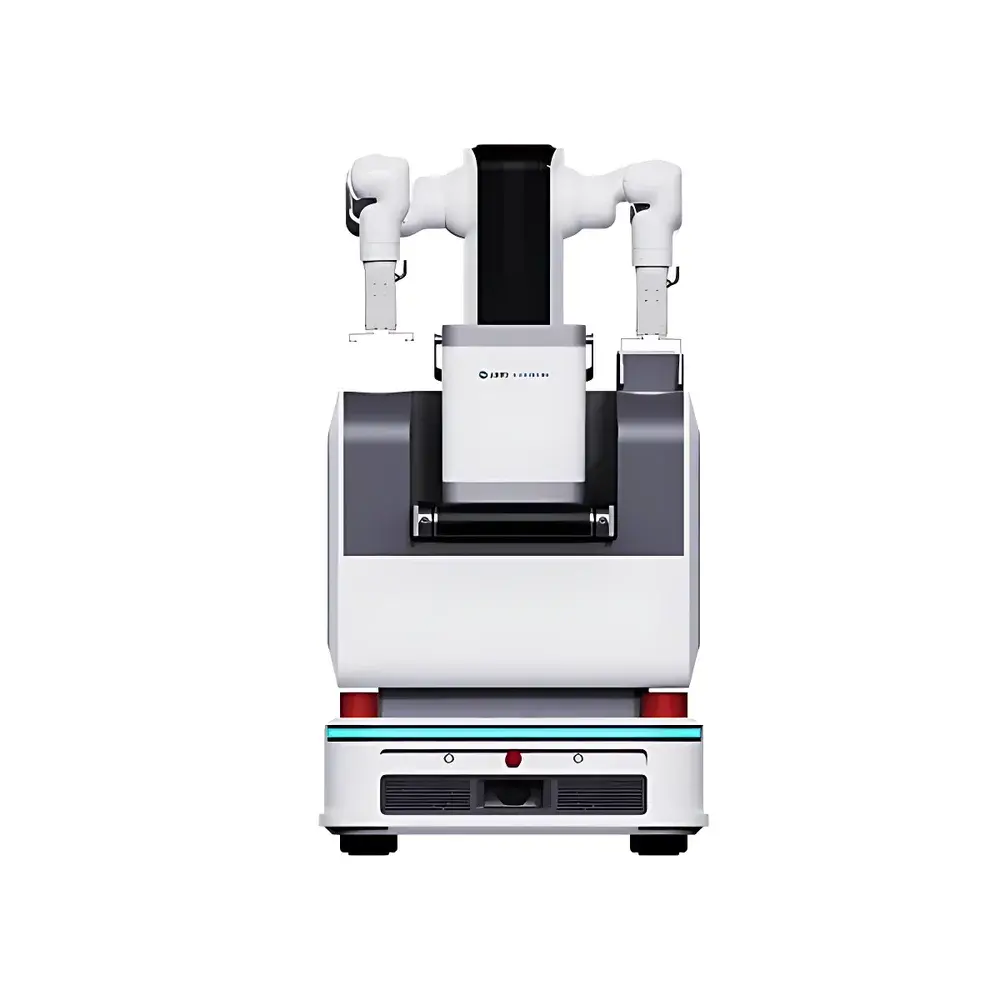
| Automation Interface | AGV-compatible, Networked Control Protocol Support |
Overview
The HiperCryo Automated Liquid Nitrogen Storage System is an engineered cryogenic biobanking platform designed for long-term, high-integrity preservation of sensitive biological specimens—including human and animal cells, primary tissues, stem cell lines, cord blood units, and genomic material—at sustained temperatures between −196 °C and −180 °C. Unlike conventional manual dewars or semi-automated storage units, the HiperCryo integrates a fully enclosed, vacuum-insulated stainless steel vessel with an in-chamber robotic handling system, enabling end-to-end sample manipulation without thermal interruption. Its operational architecture follows the principles of continuous cryogenic integrity: all critical processes—including sample loading, retrieval, tube selection, and positional reassignment—occur within the sealed liquid nitrogen environment, eliminating transient warming events that risk ice recrystallization, membrane phase transition, or nucleic acid degradation. This design aligns with best practices outlined in ISO 20387:2018 (Biobanking—General requirements for biobanking) and supports compliance with Good Laboratory Practice (GLP) and Good Manufacturing Practice (GMP) frameworks where traceability and environmental stability are auditable requirements.
Key Features
- Continuous Cryogenic Workflow: Robotic grippers and precision actuators operate entirely submerged in the liquid nitrogen vapor phase or directly within the liquid phase, ensuring zero ambient exposure during any sample-handling event.
- Dual Rack Compatibility: Supports interchangeable storage modules—honeycomb racks for high-density vial storage (e.g., 1.2–2.0 mL cryovials) and standardized box-style racks compliant with ANSI/SLAS format dimensions (e.g., 9 × 9 grid), facilitating integration with existing LIMS workflows.
- Modular Scalability: Equipped with industrial Ethernet (TCP/IP) and RS-485 interfaces, enabling centralized orchestration across multiple HiperCryo units via SCADA-level supervision software; compatible with autonomous guided vehicle (AGV) docking protocols for automated transport between storage, processing, and quality control stations.
- Thermal Efficiency Optimization: Multi-layer vacuum insulation combined with low-emissivity inner vessel coating minimizes boil-off rate; direct-in-chamber picking eliminates pre-cooling cycles required by external robotic arms, reducing average liquid nitrogen consumption by up to 35% compared to hybrid systems.
- Structural Integrity & Safety: Constructed from medical-grade 304 stainless steel with ASME BPVC Section VIII Div. 1–certified pressure containment; includes redundant level sensors, overpressure relief valves, and real-time vapor-phase oxygen monitoring to mitigate asphyxiation hazards in confined laboratory spaces.
Sample Compatibility & Compliance
The HiperCryo accommodates standard cryogenic specimen formats including externally threaded cryovials (1.2 mL, 2.0 mL), cryoboxes (10 × 10, 9 × 9), and cryostraws (0.25 mL, 0.5 mL). All internal handling components meet ISO 13485:2016 material biocompatibility criteria and are certified non-pyrogenic per USP <85>. The system’s firmware architecture supports audit trail generation in accordance with FDA 21 CFR Part 11 requirements, including user authentication, electronic signatures, and immutable timestamped logs for every physical action executed on stored samples. Environmental data—including liquid nitrogen level, chamber temperature gradients (measured at three axial points), and door cycle history—is automatically archived and exportable in CSV or XML for regulatory submission.
Software & Data Management
HiperCryo operates under the CryoLink™ Control Suite—a Windows-based application supporting both local HMI operation and remote web-accessible dashboarding via HTTPS-secured TLS 1.2 connections. The software implements hierarchical user roles (Administrator, Technician, Auditor), configurable alarm thresholds (e.g., LN2 level <15%, temperature deviation >±2 °C), and bidirectional integration with major Laboratory Information Management Systems (LIMS) through HL7 v2.x and RESTful API endpoints. Sample metadata—including donor ID, collection date, passage number, and QC status—is mapped to each physical location using a 2D barcode scanning workflow during initial inventory registration. All movement events trigger automatic updates to the relational database, preserving full chain-of-custody continuity for ISO/IEC 17025-accredited testing laboratories.
Applications
- Long-term archiving of clinical-grade cell therapies (CAR-T, MSCs) under GMP Annex 1 environmental controls
- High-throughput biorepository operations requiring >100,000 sample capacity with sub-second positional accuracy
- Integrated cryo-workflows in genomics core facilities supporting single-cell sequencing library preparation pipelines
- Regulatory-compliant storage for investigational medicinal products (IMPs) in Phase I–III clinical trials
- Academic biobanks adhering to ISBER Best Practices and NIH Genomic Data Sharing (GDS) Policy requirements
FAQ
Does the HiperCryo support integration with existing LIMS platforms?
Yes—via configurable HL7 v2.x message mapping and documented RESTful API endpoints for sample registration, location query, and status synchronization.
What safety certifications does the system hold?
The vessel complies with ASME BPVC Section VIII Div. 1; electrical components meet IEC 61000-6-2/6-4 EMC standards; oxygen deficiency monitors conform to EN 50104.
Can the system operate unattended for extended periods?
Yes—designed for 7×24 operation with predictive maintenance alerts, remote diagnostics, and automated LN2 refill coordination via optional bulk tank interface.
Is firmware validation documentation available for regulated environments?
Full IQ/OQ documentation packages—including test scripts, acceptance criteria, and raw execution records—are provided upon request for FDA/EMA submission readiness.
What is the mean time between failures (MTBF) for the robotic handling subsystem?
Based on accelerated life testing under ISO 13384-1, the gripper actuation mechanism demonstrates MTBF ≥ 25,000 cycles with ≤0.001% positional error rate at −196 °C.




