
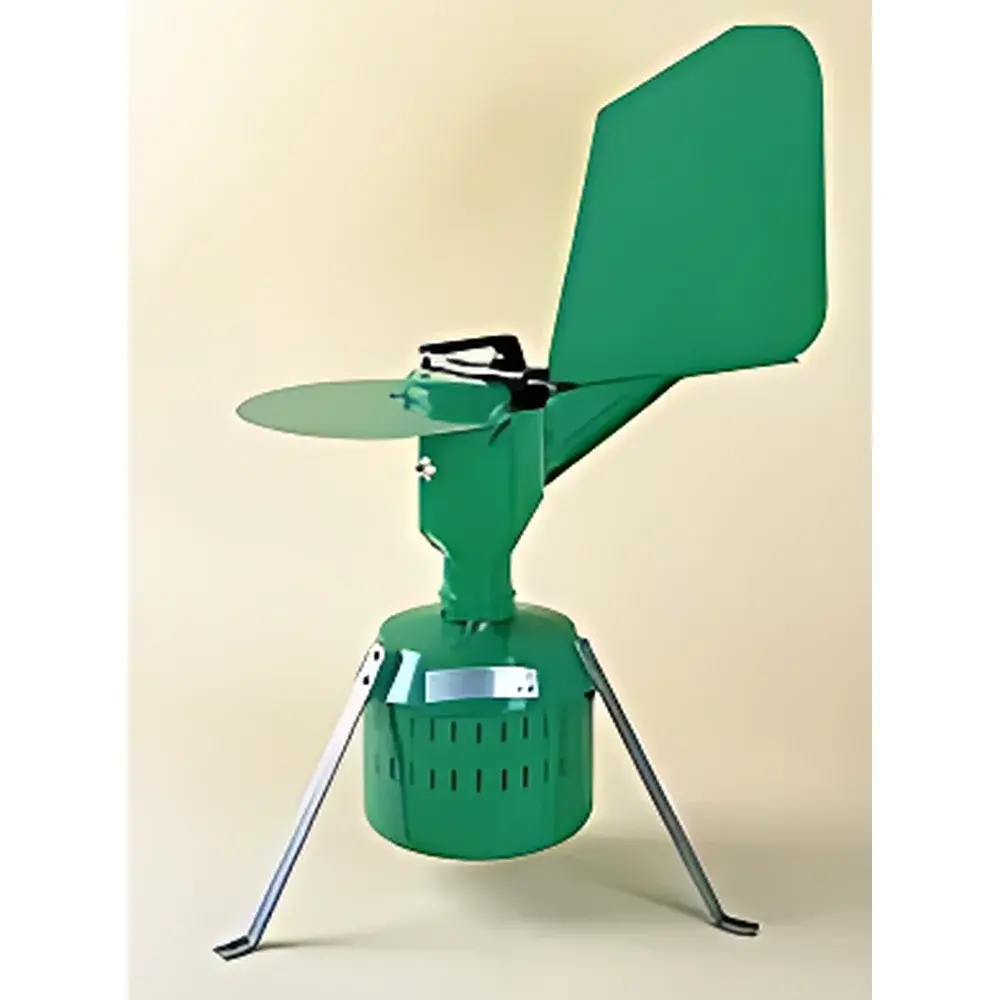
Hirst-Type 7-Day/24-Hour Volumetric Spore and Pollen Trap
| Brand | Jinhengxiang (JHX) |
|---|---|
| Origin | United Kingdom |
| Manufacturer | Burkard Manufacturing Co. Ltd. |
| Model | Hirst |
| Sampling Duration | 7 days (tape mode) / 24 hours (microscope slide mode) |
| Tape Advancement Rate | 2 mm/h |
| Airflow Rate | 10 L/min (adjustable via rotameter or pressure regulator) |
| Orifice Dimensions | 2 mm × 14 mm |
| Collection Surface | Adhesive polyester tape (transparent, 50 m length) |
| Collection Area | 0.882 m² (effective at 53 cm radius) |
| Height | 94 cm |
| Footprint | 60 cm × 70 cm × 80 cm (W×D×H) |
| Net Weight | 16 kg |
| Power Options | 12 V DC (battery or solar), AC mains (100–240 V, 50/60 Hz) |
| Solar Panel | 55 W, 330 mm × 1300 mm × 35 mm |
| Mounting | Pole-, roof-, or ground-mounted (anodized aluminum frame required for fixed installations) |
| Corrosion Protection | Enamel-coated and anodized aluminum construction |
| Optional Accessory | Microscope slide cassette (for 24-hour slide-based sampling) |
Overview
The Hirst-Type 7-Day/24-Hour Volumetric Spore and Pollen Trap is a precision-engineered, long-term atmospheric bioaerosol sampler designed for quantitative monitoring of airborne fungal spores, pollen grains, and other respirable biological particulates (1–10 µm aerodynamic diameter). Developed by Burkard Manufacturing Co. Ltd. in the United Kingdom and distributed globally under the JHX brand, this instrument operates on the volumetric impaction principle: ambient air is drawn through a calibrated rectangular orifice (2 mm × 14 mm) at a constant flow rate of 10 L/min, directing particles onto a continuously advancing adhesive polyester tape. The tape—mounted on a precision-driven drum—is advanced at a fixed rate of 2 mm/h, enabling time-resolved spatial resolution across a full 7-day collection cycle (168 hours). For short-term morphological analysis requiring direct microscopy, an optional microscope slide cassette supports 24-hour discrete sampling. Its robust mechanical architecture—featuring a 7-jewel clockwork movement for tape drive and a high-efficiency centrifugal vacuum pump—ensures operational stability under variable environmental conditions, making it a reference-standard instrument in aerobiological surveillance networks, allergy forecasting systems, and plant pathology research.
Key Features
- Volumetric sampling certified to ISO 21501-4 and aligned with EN 12341 for aerosol particle measurement consistency
- 7-jewel precision clockwork mechanism ensures repeatable, drift-free tape advancement at 2 mm/h (±0.5% tolerance over 7 days)
- Dual power architecture: supports uninterrupted 24/7 operation via 12 V DC battery, AC mains, or integrated 55 W monocrystalline solar panel with intelligent charge controller
- Adjustable airflow control using calibrated rotameter or precision pressure regulator to maintain 10 L/min ±3% across temperature and pressure gradients
- Corrosion-resistant construction: all structural components fabricated from anodized aluminum or enamel-coated steel; suitable for outdoor deployment in coastal, industrial, or agricultural environments
- Modular mounting system compatible with pole, rooftop, or ground-based anodized aluminum support frames (customizable per site requirements)
- Optional microscope slide cassette enables standardized 24-hour sampling per EN 16882 and WHO-recommended protocols for spore identification and quantification
Sample Compatibility & Compliance
The Hirst trap collects intact, undistorted biological particles—including birch, grass, ragweed, and Alternaria, Cladosporium, and Aspergillus spores—on inert, optically clear polyester tape. This preserves morphological fidelity for subsequent light microscopy, digital image analysis, or automated classification workflows. Collection efficiency for particles ≥2 µm exceeds 92% under standard meteorological conditions (wind speed ≤5 m/s, RH ≤80%), validated per ASTM D6300 and UK National Pollen and Aerobiology Research Unit (NPARU) field intercomparison studies. The instrument complies with Good Laboratory Practice (GLP) documentation requirements and supports audit-ready data traceability when paired with timestamped tape logs and flow calibration records. It is routinely deployed in networks adhering to European Aeroallergen Network (EAN) guidelines and contributes to WHO Global Asthma Program reporting frameworks.
Software & Data Management
While the Hirst trap operates as a standalone electromechanical system without embedded firmware, its output is fully interoperable with third-party digital analysis platforms. Each tape segment corresponds to a defined temporal window (e.g., 1 hour = 2 mm tape length), enabling direct correlation with meteorological datasets (temperature, humidity, wind vector) and geospatial mapping tools. Users commonly integrate tape scans with image analysis software such as ImageJ (with BioVoxxel Toolbox), NIS-Elements, or custom Python-based CNN classifiers trained on annotated spore libraries. Flow calibration certificates, tape lot numbers, and installation metadata are maintained in laboratory information management systems (LIMS) compliant with ISO/IEC 17025 and FDA 21 CFR Part 11 requirements when electronic records are generated. Optional barcode-labeled tape reels facilitate automated sample tracking in high-throughput monitoring programs.
Applications
- Aerobiological surveillance for public health early warning systems (e.g., seasonal pollen forecasting, fungal outbreak detection)
- Phytosanitary monitoring in protected cropping environments and seed certification programs
- Environmental impact assessments for wind farm, construction, or land-use change projects
- Long-term trend analysis of allergenic pollen dynamics under climate change scenarios
- Validation of numerical dispersion models (e.g., SILAM, COSMO-ART) with ground-truth bioaerosol concentration data
- Method development and interlaboratory comparison studies supporting ISO/TC 146/SC 6 standardization efforts
FAQ
What is the recommended calibration frequency for the airflow system?
Annual calibration against a NIST-traceable primary standard (e.g., dry gas meter or critical orifice) is advised; interim verification using a calibrated rotameter should be performed before each sampling campaign.
Can the instrument operate unattended for the full 7-day cycle in low-light or winter conditions?
Yes—when equipped with the 55 W solar panel and deep-cycle 12 V battery (≥70 Ah), the system maintains continuous operation even under 4 h/day average insolation, verified in UK and Scandinavian field trials.
Is tape replacement possible in the field without specialized tools?
Yes—the drum assembly is tool-free; tape loading follows a documented 90-second procedure outlined in the IEC 61000-4-2-compliant operator manual.
Does the Hirst trap meet regulatory requirements for clinical or pharmaceutical environmental monitoring?
It is not classified as a Grade A/B cleanroom monitor per ISO 14644-1, but it is widely accepted for outdoor source characterization in EU GMP Annex 1 risk assessments and USP <797> environmental baseline studies.
How is particle size selectivity achieved with the fixed orifice?
The 2 mm × 14 mm slit geometry, combined with 10 L/min flow, yields a Stokes number >0.5 for particles ≥2 µm, ensuring inertial impaction dominates over diffusion—thus optimizing capture efficiency for biologically relevant spores and pollen.



