
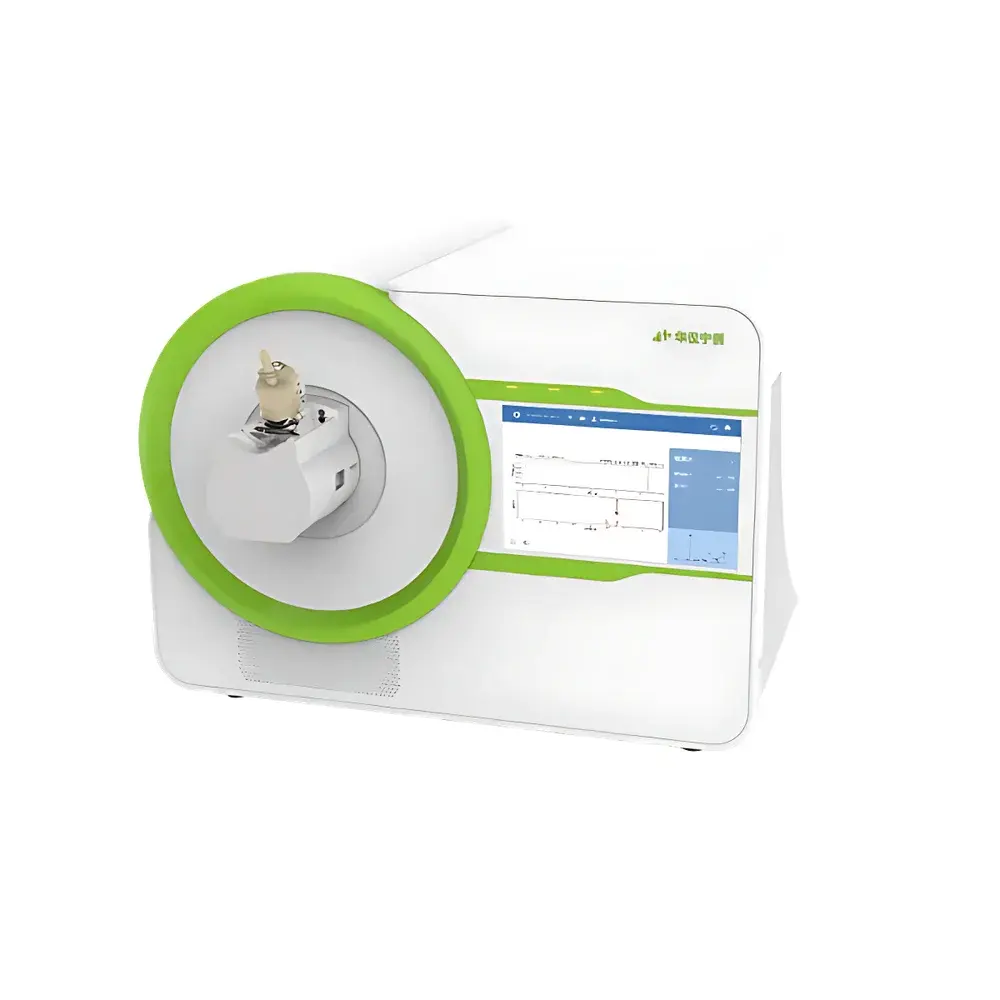
HIT-2210 Ambient Ionization Mass Spectrometer by China Innovation Instrument
| Brand | China Innovation Instrument |
|---|---|
| Origin | Zhejiang, China |
| Model | HIT-2210 |
| Ionization Mode | Dual-mode (Direct Ambient Ionization + LC-MS Coupling) |
| Detection Principle | Atmospheric Pressure Ionization Mass Spectrometry |
| Intended Use | Qualitative Identification, Semi-Quantitative & Quantitative Analysis |
| Regulatory Context | Designed for GLP-compliant laboratories and academic research environments |
Overview
The HIT-2210 Ambient Ionization Mass Spectrometer is an engineered solution for rapid molecular characterization under ambient conditions, operating on the principle of atmospheric pressure ionization coupled with high-resolution mass analysis. Unlike conventional vacuum-based electrospray or electron ionization systems, the HIT-2210 integrates a robust ambient ion source—compatible with desorption electrospray ionization (DESI), paper spray, or laser-assisted variants—that enables direct, minimal-sample-prep analysis of solids, liquids, and surfaces in open-air environments. Its dual operational architecture supports both standalone ambient mode for real-time screening and seamless hyphenation with liquid chromatography (LC-MS) for enhanced compound separation prior to mass detection. This hybrid design addresses two critical analytical needs simultaneously: high-throughput qualitative profiling and method-validated quantitative workflows. The system employs a time-of-flight (TOF) or quadrupole-TOF mass analyzer (configuration-dependent), delivering unit-mass resolution across a typical m/z range of 50–2000, suitable for small molecules, metabolites, synthetic intermediates, and pharmaceutical actives.
Key Features
- Dual-mode operation: Switch between ambient ionization (no sample derivatization or extraction required) and LC-coupled acquisition without hardware reconfiguration.
- High sensitivity detection: Sub-picomolar limits of detection (LOD) demonstrated for common pharmaceutical standards under optimized ambient conditions.
- Real-time spectral acquisition: Full-scan MS spectra acquired at ≥5 Hz, enabling dynamic monitoring of reaction progress or surface contamination mapping.
- Modular ion source platform: Interchangeable probe assemblies support DESI, nanospray, and ambient matrix-assisted laser desorption ionization (AMALDI) configurations.
- Robust vacuum architecture: Dual-stage differential pumping system maintains stable ion transmission under variable ambient humidity and temperature conditions (15–30 °C, ≤70% RH).
- Compliance-ready firmware: Audit trail logging, user access control, and electronic signature support aligned with FDA 21 CFR Part 11 requirements for regulated environments.
Sample Compatibility & Compliance
The HIT-2210 accommodates diverse sample formats including dried droplets on glass slides, plant tissue sections, tablet surfaces, food packaging residues, and LC eluent streams. No derivatization or extensive cleanup is needed for ambient-mode analysis—making it ideal for forensic trace detection, reaction mixture interrogation, and classroom demonstrations. For quantitative applications, the system supports internal standard calibration curves validated per ICH Q2(R2) guidelines. It meets essential design criteria referenced in ISO/IEC 17025:2017 for testing laboratories and supports documentation protocols required for GLP audits in preclinical drug metabolism studies. While not certified as a medical device, its performance characteristics align with ASTM E2965-22 for ambient mass spectrometry method validation.
Software & Data Management
Control and data processing are managed through the proprietary MassLab Suite v4.x software, which provides intuitive workflow templates for both novice and expert users. Key capabilities include real-time spectral visualization, peak alignment across ambient and LC-MS runs, automated library searching against NIST MS Search, and customizable report generation compliant with ISO/IEC 17025 reporting clauses. Raw data files adhere to open mzML format, ensuring interoperability with third-party tools such as Skyline, XCMS Online, and OpenMS. All instrument parameter changes, user logins, and data exports are timestamped and logged with immutable audit trails, satisfying traceability requirements under GxP frameworks.
Applications
- Pharmaceutical R&D: Rapid identification of synthetic byproducts, impurity profiling in API batches, and in situ monitoring of catalytic reactions.
- Organic synthesis: Direct analysis of TLC plates or reaction vials to confirm product formation without workup.
- Food safety: Screening for pesticide residues on fruit skins, melamine adulteration in dairy powders, and mycotoxin detection in grains.
- Academic research & teaching: Hands-on training in mass spectrometry fundamentals, ion chemistry, and data interpretation using real-world samples.
- Forensic chemistry: On-site detection of illicit drugs on currency, fingerprints, or packaging materials.
FAQ
Does the HIT-2210 require a dedicated cleanroom or special infrastructure?
No—it operates under standard laboratory ventilation and does not require external chillers, high-purity gases, or Class 1000 cleanroom conditions.
Can it be integrated with existing HPLC or UHPLC systems?
Yes—the interface uses standardized 1/16″ PEEK tubing and supports flow rates from 0.1 to 2.0 mL/min; optional post-column splitting is available for low-flow LC systems.
Is method transfer possible between ambient and LC-MS modes?
Retention time alignment is not applicable in ambient mode, but compound identification via accurate mass and fragmentation patterns remains consistent across both acquisition modes.
What regulatory documentation is provided with the system?
Each unit ships with a Factory Acceptance Test (FAT) report, IQ/OQ protocol templates, and a Declaration of Conformity referencing CE marking directives for laboratory equipment.
Is remote diagnostics supported?
Yes—optional secure remote access allows manufacturer engineers to perform firmware updates and troubleshoot instrument performance metrics with user consent and encrypted session protocols.
Related Products




