
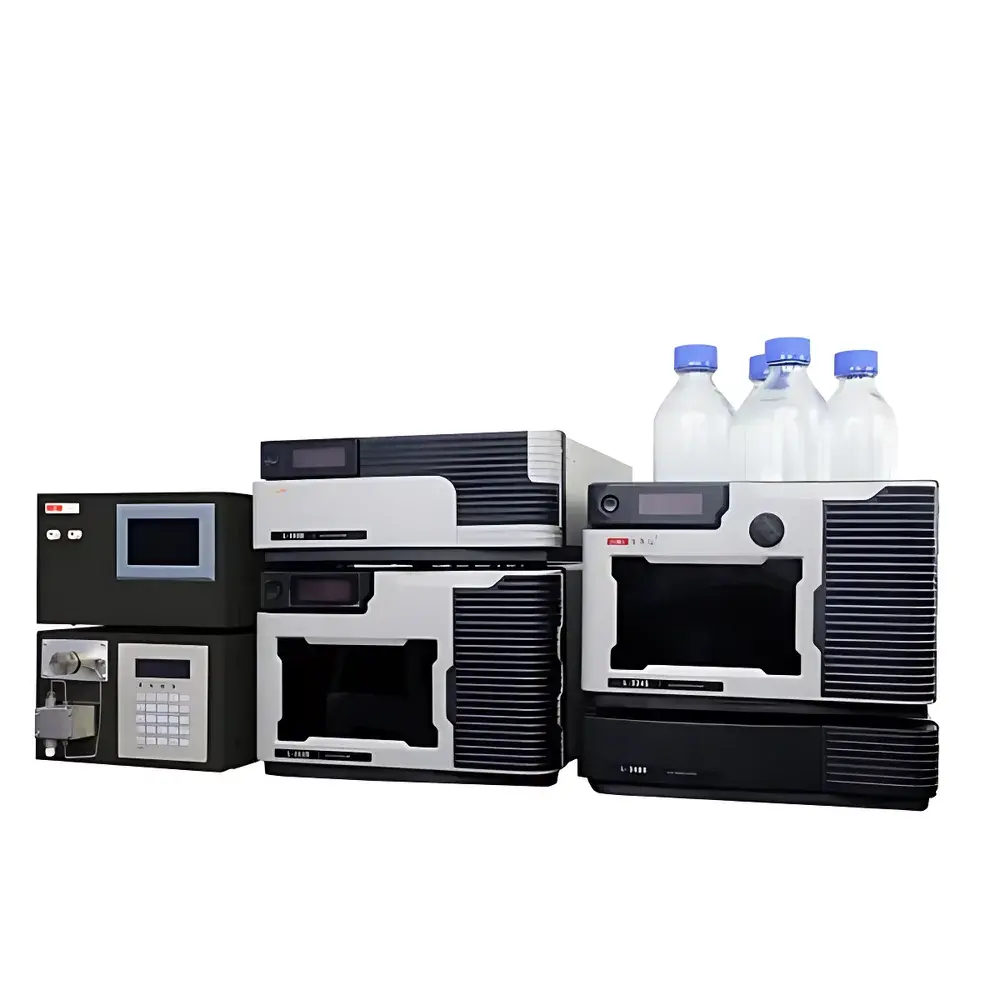
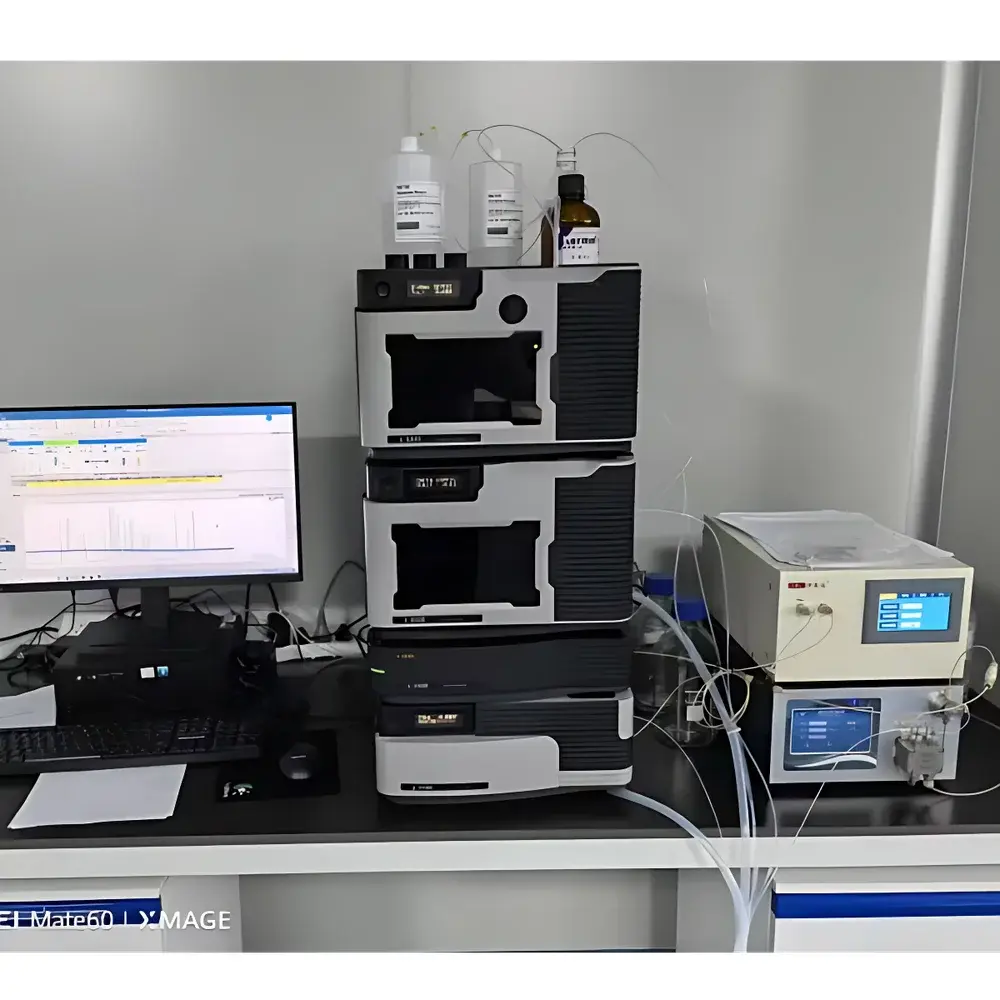
HMC L-3000 Fully Automated Amino Acid Analyzer
| Brand | HMC |
|---|---|
| Origin | Jiangsu, China |
| Manufacturer Type | Authorized Distributor |
| Country of Manufacture | China |
| Model | L-3000 |
| Instrument Type | Post-Column Derivatization System |
| Pump Flow Rate | 0.001–10.000 mL/min |
| Maximum Pump Pressure | 6000 psi |
| Autosampler Injection Volume | 1–500 µL |
| Autosampler Temperature Control | +5 °C (±1 °C) to 70 °C |
| Post-Column Reactor Temperature Range | Ambient to 150 °C |
| Detector Wavelength Range | 190–800 nm |
| Flow Cell Volume | 8 µL |
Overview
The HMC L-3000 Fully Automated Amino Acid Analyzer is a dedicated high-performance liquid chromatography (HPLC) system engineered for precise, reproducible quantification of free and hydrolyzed amino acids in complex biological, food, feed, and agricultural matrices. It operates on the well-established post-column derivatization principle using ninhydrin chemistry—where amino acids eluting from an ion-exchange column are reacted with ninhydrin reagent in a heated reactor, generating chromophores detectable at dual wavelengths (440 nm and 570 nm). This methodology conforms to internationally recognized standard methods including GB 5009.124–2016 (Food), GB/T 18246–2019 (Feed), NY/T 1975–2010 (Water-soluble fertilizers), and JJG 1064–2011 (Verification regulation for amino acid analyzers). Built upon the proven L-3000 HPLC platform—originally developed in 2008 and validated through China’s National Major Scientific Instrument Development Program and Torch Plan—the system integrates modular hardware architecture, robust fluidic control, and regulatory-compliant software to deliver trace-level sensitivity, inter-laboratory method transferability, and long-term operational stability.
Key Features
- Four-Solvent Low-Pressure Gradient Pump System: Delivers flow rates from 0.001 to 10.000 mL/min with pressure capability up to 6000 psi (41.4 MPa); features dual-piston constant-flow design with real-time pressure feedback control and innovative gradient proportioning valve (<1% RSD gradient accuracy).
- High-Precision Autosampler: Supports injection volumes from 1 µL to 500 µL with ±0.5% volumetric accuracy; accommodates 2 × 60 vial trays (expandable to 2 × 96 or 2 × 384); includes dual-wash mechanism—external needle/surface rinse and internal needle flush—to minimize carryover (<0.005%) and ensure analytical integrity across high-throughput workflows.
- Temperature-Controlled Post-Column Derivatization Reactor: Operates from ambient to 150 °C with ±0.5 °C stability; employs inert, uniformly packed silicon carbide microbeads to maximize surface area and thermal homogeneity, reducing band broadening and improving peak resolution during rapid derivatization (typical reaction time < 2 min).
- Optimized Separation Module: Utilizes imported sulfonated cation-exchange columns with sub-5 µm particle morphology; compatible with both sodium-based (hydrolyzed protein analysis) and lithium-based (physiological fluid analysis) eluent systems; supports temperature-gradient elution to reduce total run time to ≤30 minutes without sacrificing resolution.
- Dual-Wavelength UV-Vis Detector: Scanning range 190–800 nm; simultaneous dual-channel detection at 440 nm (imino acid derivatives) and 570 nm (α-amino acid derivatives); 8 µL flow cell with low-dead-volume design; sampling rate ≥20 Hz enabling reliable integration of peaks as narrow as 3–5 s (FWHM).
Sample Compatibility & Compliance
The L-3000 analyzer is validated for diverse sample types requiring rigorous amino acid profiling: hydrolyzed food proteins (e.g., soy, whey, collagen), serum/plasma/urine, plant extracts, microbial fermentation broths, and water-soluble fertilizer formulations. Its hardware and method configuration comply with ISO/IEC 17025 requirements for testing laboratories, and its operational protocols align with GLP and GMP principles. All critical parameters—including pump pressure, autosampler position, detector lamp energy, and reactor temperature—are continuously monitored and logged with timestamped audit trails. The system meets FDA 21 CFR Part 11 requirements for electronic records and signatures when deployed with Ultrachrom software in secure network environments.
Software & Data Management
Ultrachrom is a purpose-built chromatographic data system (CDS) designed exclusively for HMC L-series instruments. It provides full instrument control, method development, real-time data acquisition, peak integration (with customizable baseline algorithms), calibration curve generation (linear, quadratic, or weighted), and automated report generation in PDF or Excel formats. The software supports bilingual UI (English/Chinese), multi-user role-based access control (administrator, analyst, reviewer), electronic signature workflows, and full audit trail functionality—including user actions, parameter changes, and data modifications—with immutable storage. Raw data files (.uwd) are structured according to ASTM E1985-20 standards for chromatographic data interchange, ensuring interoperability with third-party LIMS platforms.
Applications
- Quantitative determination of all 20 proteinogenic amino acids plus taurine, hydroxyproline, and ornithine in infant formula and dietary supplements (per GB 5009.124–2016).
- Routine QC of amino acid composition in animal feedstuffs and premixes (GB/T 18246–2019).
- Stability-indicating assays for therapeutic peptides and recombinant proteins under forced degradation conditions.
- Metabolomic profiling of human plasma and CSF in clinical research settings, particularly for inborn errors of metabolism screening.
- Quality control of amino acid–based fertilizers and biostimulants (NY/T 1975–2010).
FAQ
What derivatization chemistry does the L-3000 support?
The system is optimized for ninhydrin-based post-column derivatization, with pre-configured methods for both sodium citrate (protein hydrolysate) and lithium citrate (physiological fluids) buffer systems.
Is column switching or guard column integration supported?
Yes—the L-3000 platform includes programmable six-port injection valves and optional column-switching modules for online cleanup or 2D-LC configurations.
Can the system be integrated into a laboratory information management system (LIMS)?
Ultrachrom supports ASTM E1985-compliant data export and offers ODBC/JDBC connectivity for direct LIMS integration with configurable field mapping.
What maintenance intervals are recommended for routine operation?
Pump seals: every 6 months or 2000 h; derivatization reactor frits: quarterly; detector lamp: annually or after 2000 h; autosampler needle: cleaned after each batch and inspected monthly.
Does the system meet regulatory requirements for pharmaceutical QC labs?
When operated with validated methods, calibrated hardware, and Ultrachrom in 21 CFR Part 11 mode (including audit trail, e-signature, and user access controls), it satisfies ICH Q2(R2) and USP <1058> analytical instrument qualification guidelines.




