
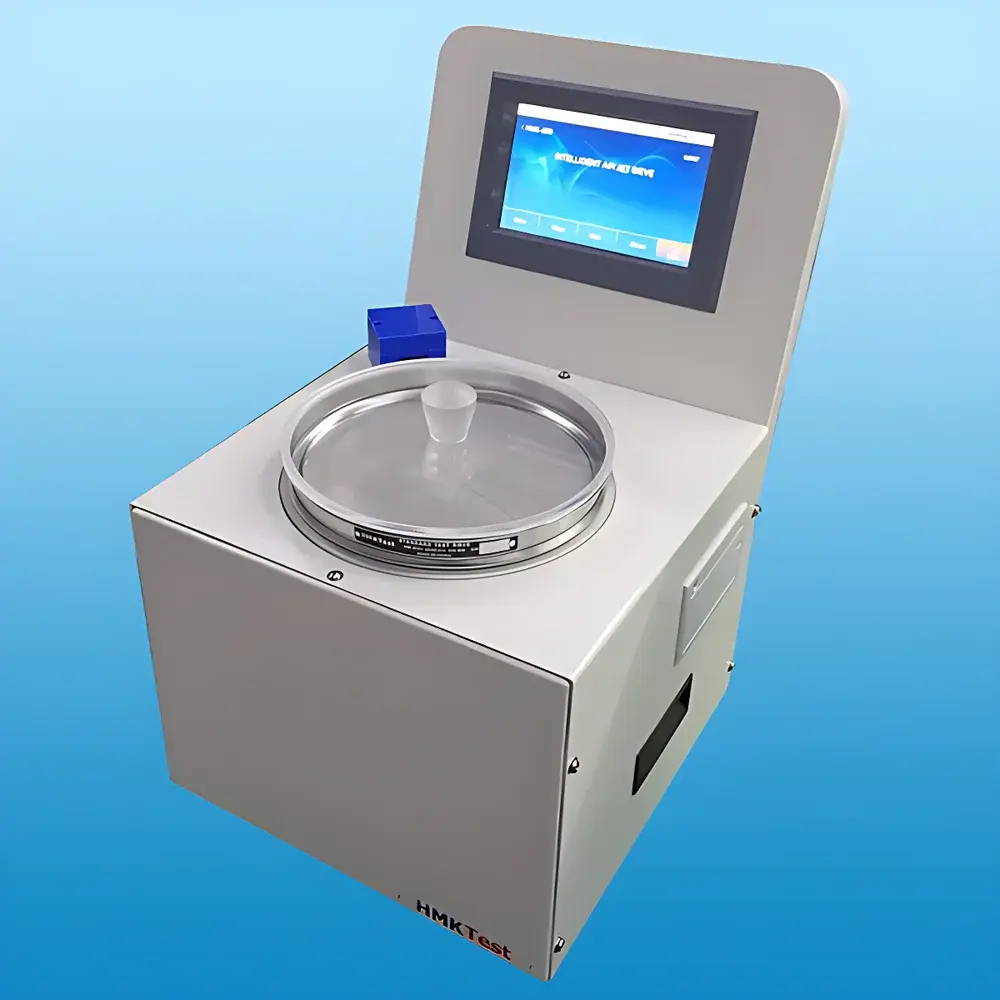
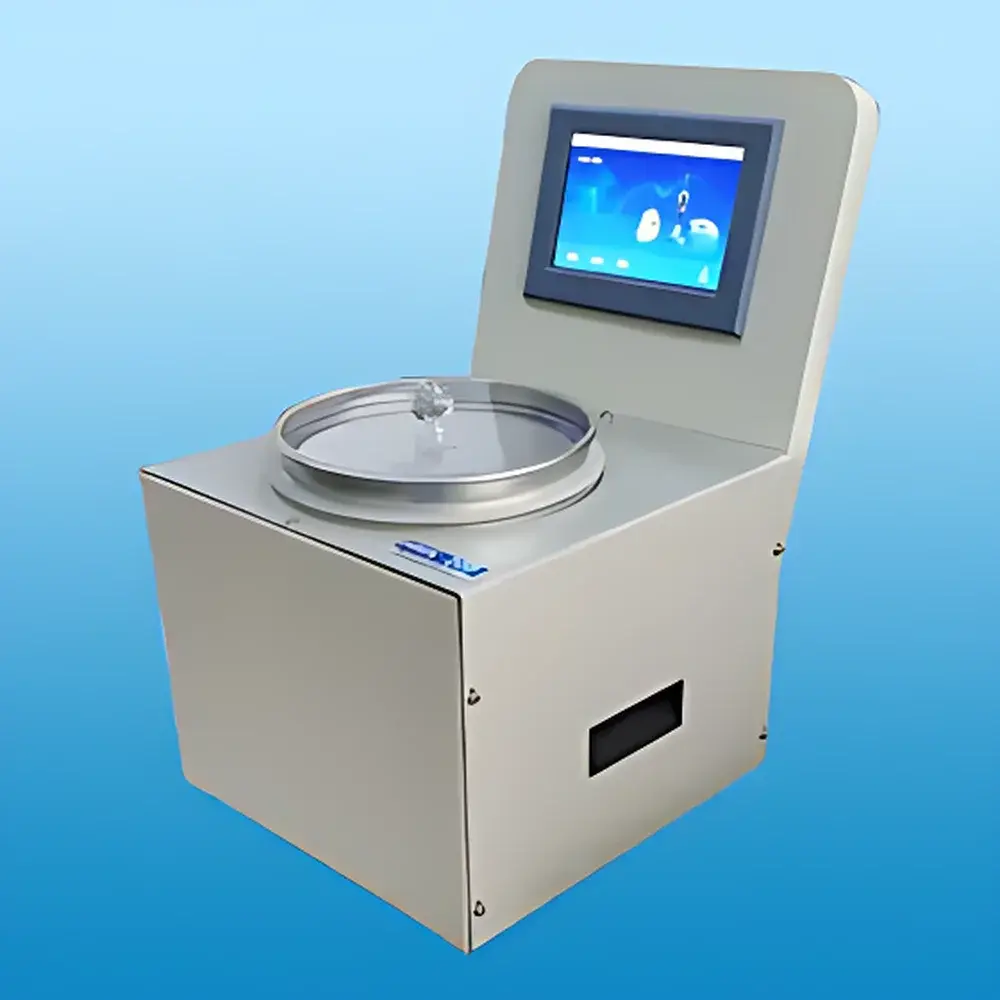
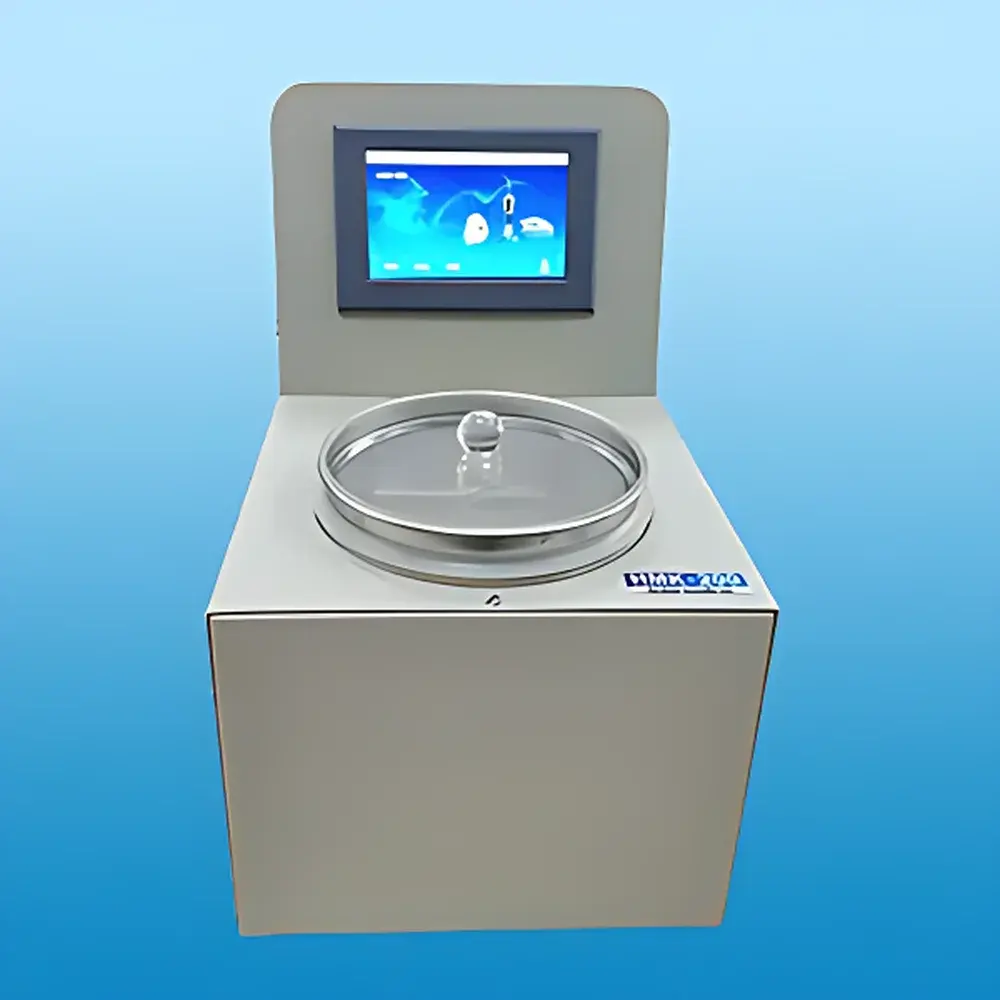
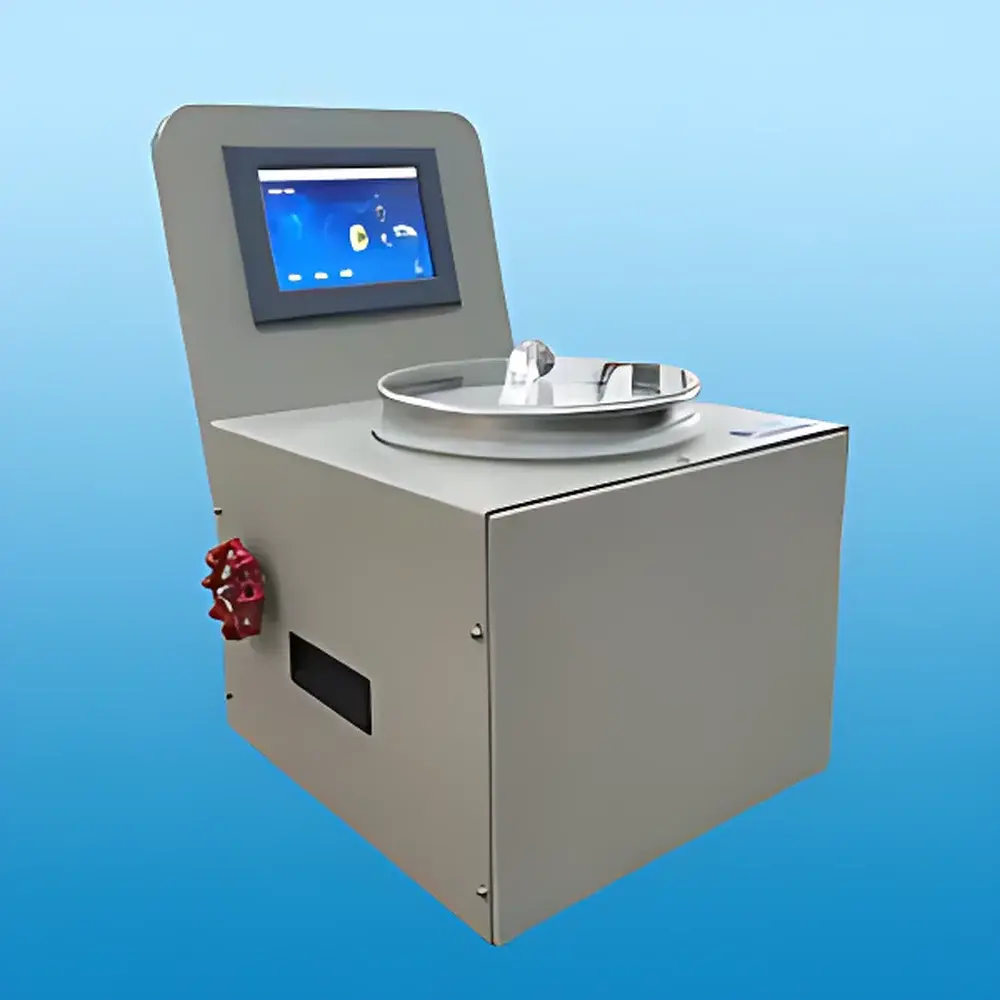
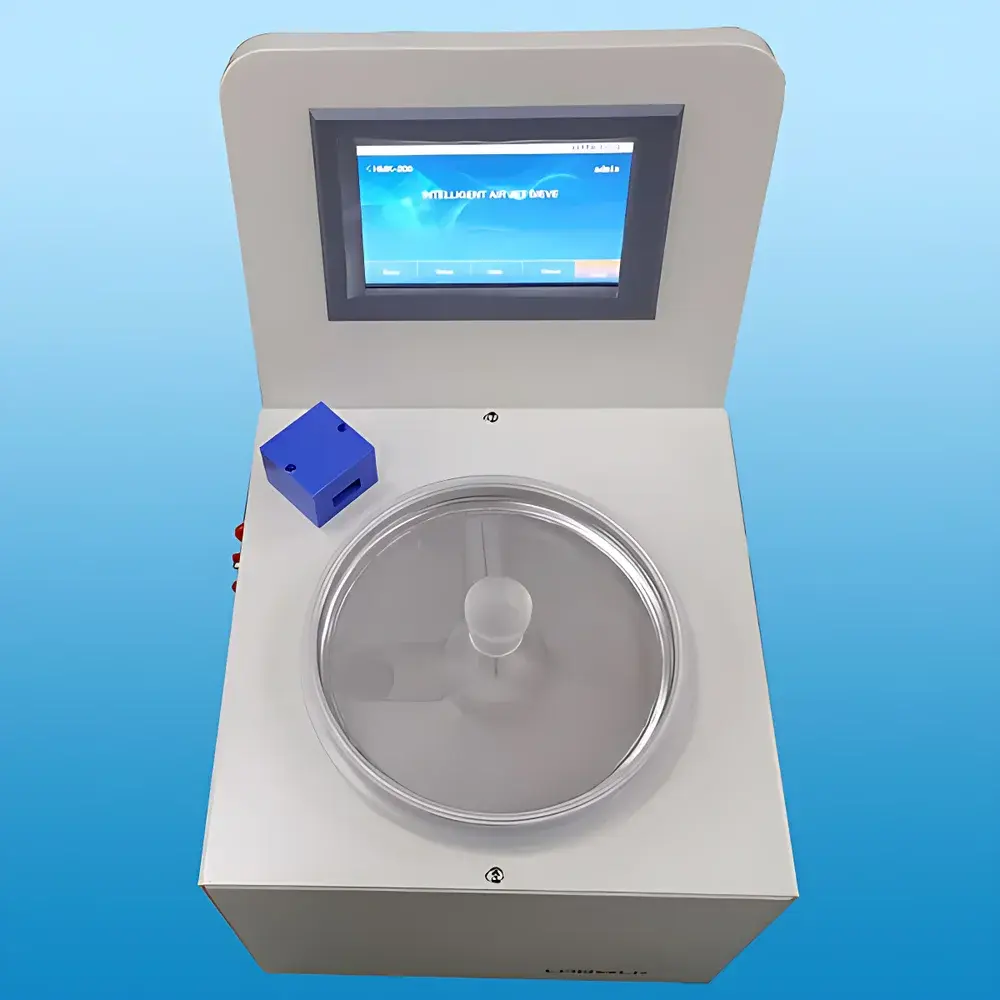
HMK-200 Air Jet Sieve Analyzer by Huameike (LABULK)
| Brand | Huameike (LABULK) |
|---|---|
| Origin | Liaoning, China |
| Manufacturer Type | Manufacturer |
| Origin Category | Domestic |
| Model | HMK-200 (01081623) |
| Principle | Air Jet Sieving |
| Measurement Range | 3–5000 µm |
| Maximum Load | 2000 g |
| Sieve Stages | Single-stage |
Overview
The HMK-200 Air Jet Sieve Analyzer is a precision laboratory instrument engineered for the reliable and reproducible determination of particle size distribution in dry, free-flowing, and cohesion-prone powders. It operates on the principle of air jet sieving — a dynamic, non-mechanical separation method that utilizes controlled negative-pressure-induced turbulent airflow to de-agglomerate and classify particles in three-dimensional motion. Unlike conventional vibratory or rotary sieves, the HMK-200 eliminates mechanical vibration, minimizing particle attrition and static interference while enabling high-fidelity classification of fine and ultrafine powders down to 3 µm. The system integrates an imported U.S.-sourced eddy current generator with a high-efficiency vacuum unit to produce a precisely regulated, rotating air vortex within the sieve chamber. This vortex lifts sample material upward, accelerates it toward the sieve lid for controlled impact-induced dispersion, and then re-directs particles toward the standard test sieve under sustained aerodynamic forces. Separation follows the “classification-first, sieving-second” paradigm — a patented operational sequence ensuring true size-based stratification prior to retention on the mesh. Designed for compliance-driven environments, the HMK-200 meets pharmacopeial and international standards including USP <786>, EP 2.9.33, ISO 2591-1, ASTM E11, and Chinese Pharmacopoeia 2025 Edition Method for Air Jet Sieving.
Key Features
- 7-inch full-color LCD touchscreen interface with intuitive navigation and real-time status monitoring
- Adjustable nozzle rotation speed (0–18 rpm), programmable across low/medium/high modes with on-the-fly pause/resume functionality
- Integrated vacuum pressure sensor (range: −10 to 0 kPa) enabling real-time negative pressure calibration before and during sieving
- Automated calculation of cumulative undersize percentage, mass balance verification, and statistical reporting per run
- Patented “Open-Sieve” function to prevent near-size particle blinding and ensure consistent mesh accessibility
- Built-in microprocessor with embedded SOP library (200 preloaded protocols) supporting method-driven operation and user-defined parameter templates
- Auditable data handling: full audit trail (login credentials, timestamped actions, parameter changes, result generation), administrator-level access control, and GLP/GMP-aligned workflow integrity
- High-efficiency particle recovery system achieving ≥99.99% collection efficiency for fines via optional cyclonic collector or direct vacuum capture
Sample Compatibility & Compliance
The HMK-200 is validated for use with a broad spectrum of challenging dry powders exhibiting low bulk density, electrostatic charge, or strong interparticle cohesion — including pharmaceutical actives and excipients, food-grade flours and seasonings, cementitious materials, carbon black, graphite, coal fly ash, ceramic precursors, polymer resins, rubber compounds, and pigment dispersions. Its performance is traceable to internationally recognized reference standards and routinely verified against certified particle size standards (e.g., NIST SRM 1980). Instrument qualification supports IQ/OQ/PQ protocols compliant with FDA 21 CFR Part 11, EU Annex 11, and ISO/IEC 17025 requirements. All measurement outputs include metadata tags for regulatory submission readiness.
Software & Data Management
The analyzer’s embedded firmware enables local storage of up to 8,000 complete test records, each containing raw pressure/time curves, sieve-specific parameters, operator ID, timestamp, and final distribution tables. Data export is supported via RS-232 serial interface (compatible with analytical balances and LIMS systems) and USB flash drive — formats include CSV, PDF, and XML. Optional PC-based software provides advanced visualization tools: overlay comparison of multiple distributions, d10/d50/d90 trend analysis, batch deviation reporting, and automated report generation with digital signature capability. Audit trail logs are immutable and exportable for internal review or regulatory inspection.
Applications
- Pharmaceutical quality control: assay uniformity testing, granulation endpoint determination, inhaler formulation characterization
- Food & beverage R&D: flour fineness grading, spice particle homogeneity assessment, functional ingredient dispersion validation
- Construction materials: cement fineness (Blaine equivalent correlation), slag powder classification, lightweight aggregate sizing
- Advanced materials: battery cathode/anode powder screening, graphene oxide dispersion quality, catalyst support particle distribution
- Coatings & pigments: titanium dioxide agglomerate breakdown verification, rheology-modifier particle integrity checks
FAQ
What standards does the HMK-200 comply with?
The instrument conforms to USP <786>, EP 2.9.33, ISO 2591-1, ASTM E11, and Chinese Pharmacopoeia 2025 Edition air jet sieving methodology.
Can the HMK-200 be integrated into a LIMS environment?
Yes — via RS-232 serial output or USB export, with structured data formats compatible with major LIMS platforms.
Is calibration traceable to national standards?
Yes — pressure sensors are factory-calibrated against NIST-traceable references; optional annual recalibration service includes certificate of conformity.
Does the system support multi-sieve sequential analysis?
While the HMK-200 is configured for single-stage sieving per run, users can manually replace the test sieve and execute consecutive runs under identical SOP conditions to build multi-cut distributions.
What maintenance is required for long-term accuracy?
Routine cleaning of the nozzle, sieve holder, and vacuum path is recommended after every 10–15 runs; annual verification of vacuum pump performance and sensor drift is advised.



