
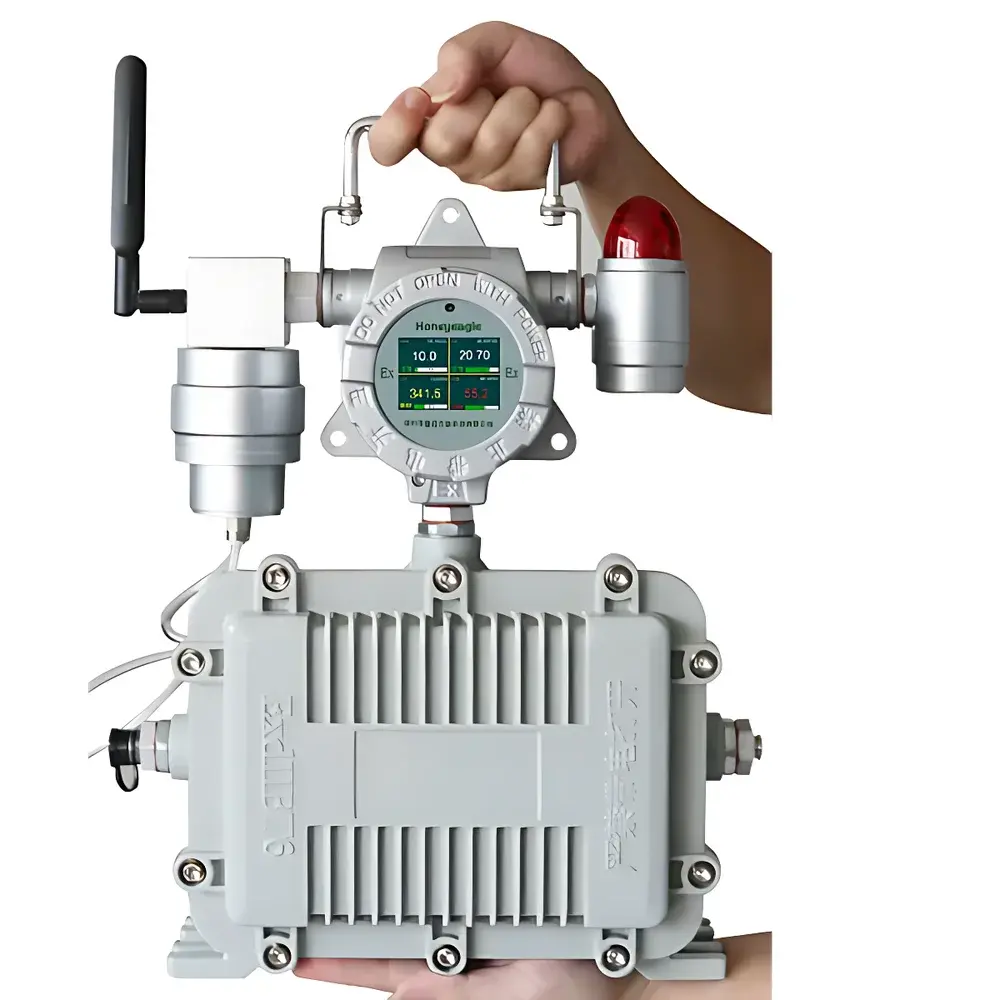
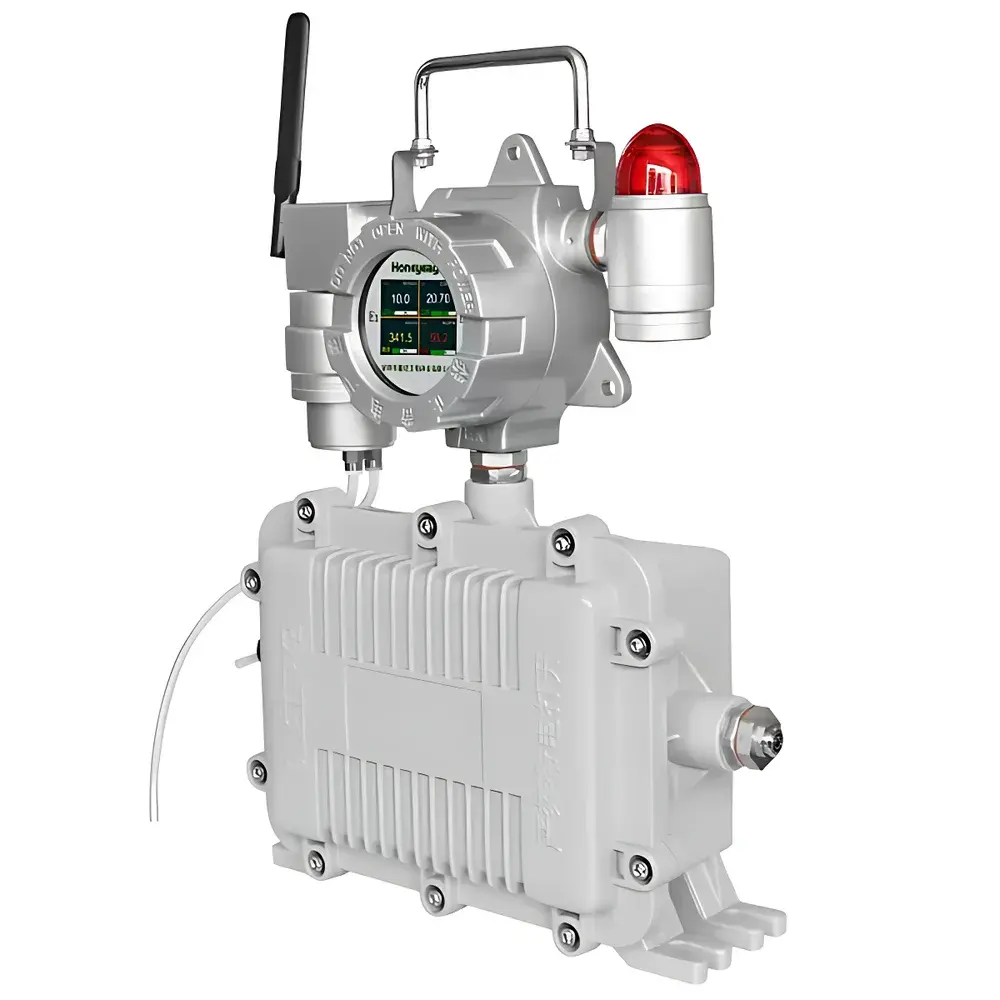
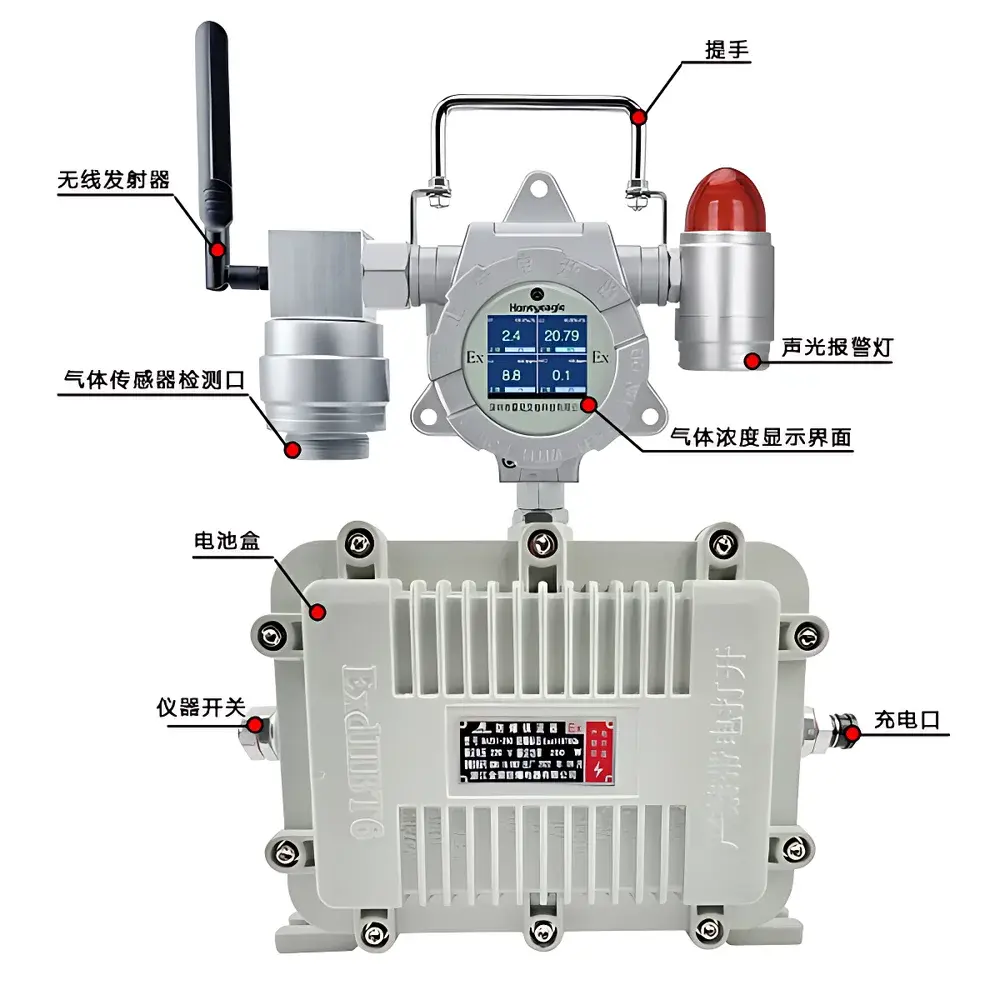
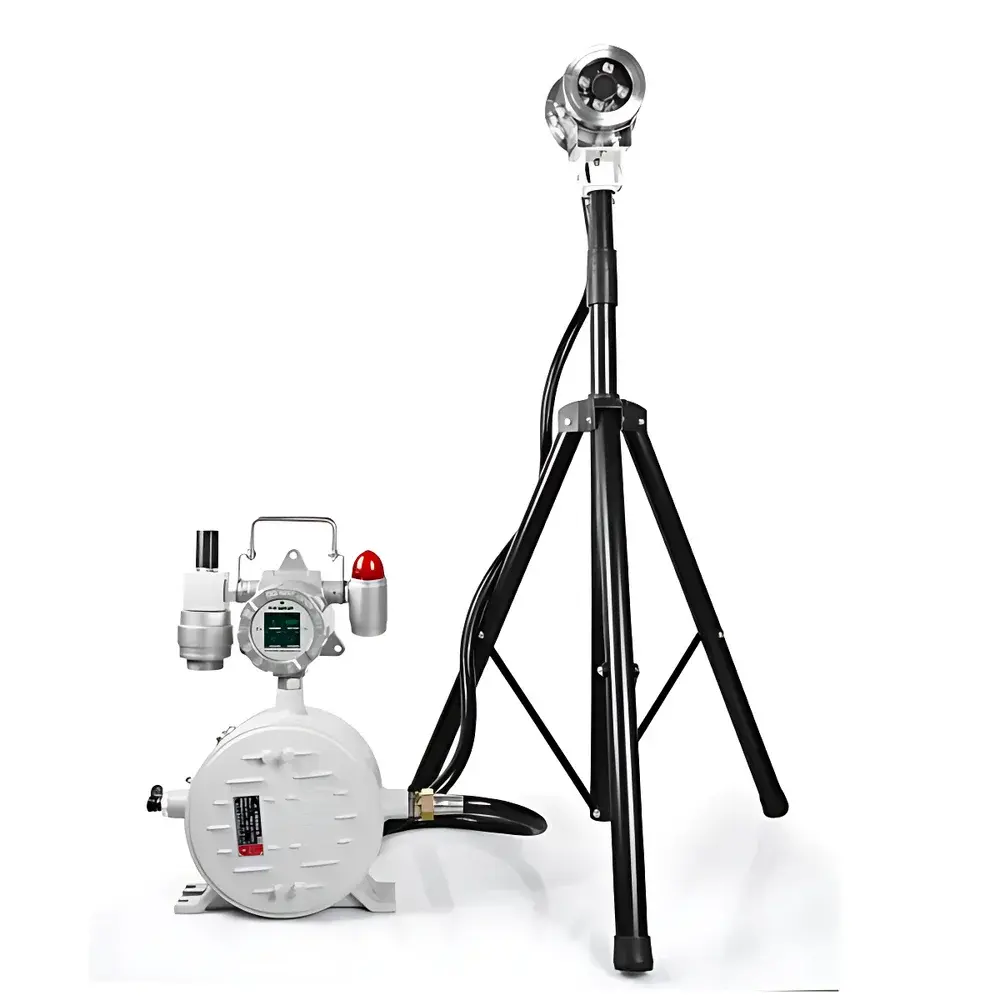
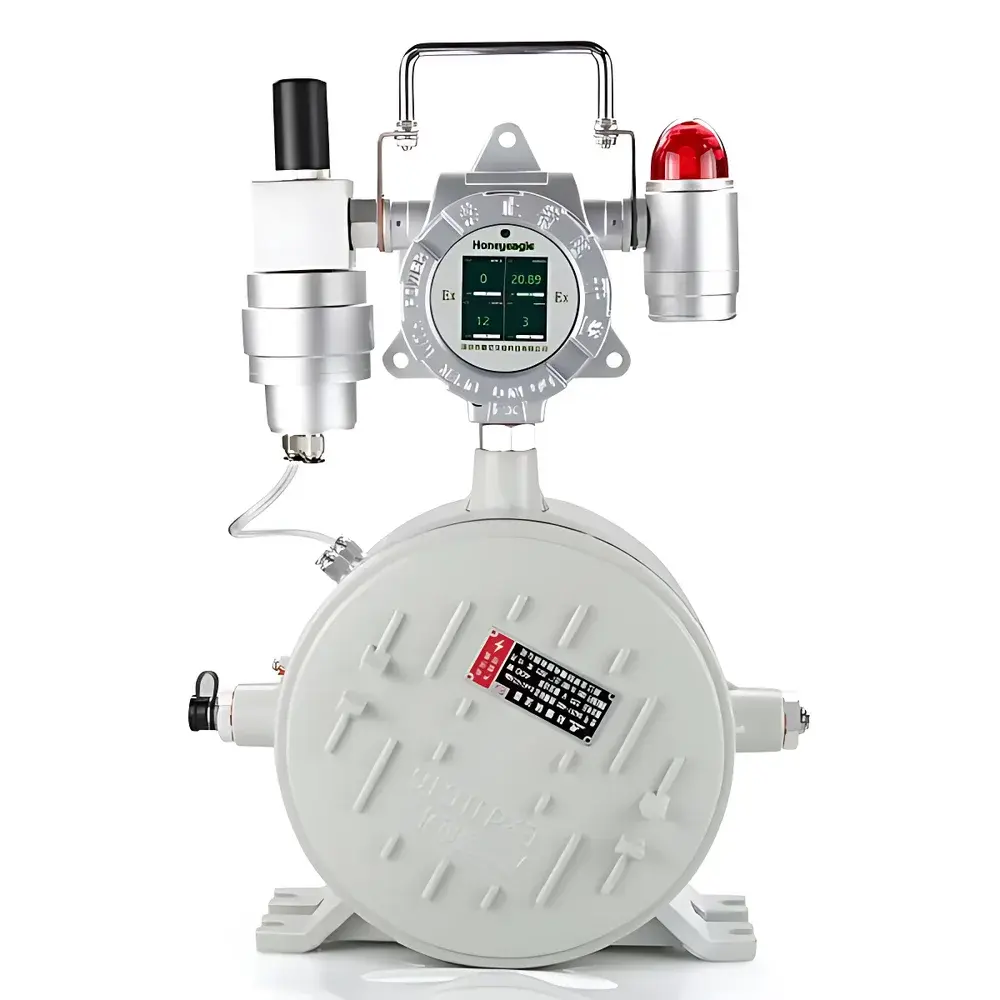
Honegeagle HNAG1000-4ST Portable Multicomponent Gas Analyzer
| Brand | Honegeagle |
|---|---|
| Origin | Guangdong, China |
| Manufacturer Type | Manufacturer |
| Product Category | Domestic |
| Model | HNAG1000-4STS-T |
| Detection Principle | Electrochemical Sensing |
| Instrument Type | Fixed/Portable Hybrid (Wireless IoT-Enabled) |
| Response Time | T90 ≤ 10 s (gas-dependent, per selection table) |
| Gas Configuration | 1–6 interchangeable electrochemical sensors for combustible and toxic gases |
| Certifications | CNAS, CPA, SIL-2 compliant |
| Enclosure Rating | IP66 |
| Explosion Protection | Ex d IIB T6 / Ex d IICT6 |
| Compliance | GB 3836.1–2010, GB 3836.2–2010, GB 3836.15–2000, GB/T 50493–2019, GB 12358–2006, GBZ/T 223–2009, GBZ 2.1–2007, GB 4208–2008 |
Overview
The Honegeagle HNAG1000-4ST Portable Multicomponent Gas Analyzer is an intrinsically safe, wireless-enabled hybrid gas detection platform engineered for continuous real-time monitoring in confined spaces and hazardous industrial environments. Unlike conventional fixed-point or handheld-only instruments, the HNAG1000-4ST integrates electrochemical sensor technology with robust explosion-proof mechanical architecture (Ex d IIB T6 / Ex d IICT6) and secure low-power wireless telemetry—enabling deployment as both a portable survey instrument and a node within a scalable, cloud-connected gas safety network. Its core measurement principle relies on selective electrochemical transduction: each sensor generates a current proportional to the target gas concentration (e.g., CO, H2S, O2, SO2, NO2, Cl2, NH3) under diffusion-controlled conditions, with cross-sensitivity minimized via proprietary catalytic filter layers and temperature-compensated signal processing. Designed for compliance with international functional safety frameworks—including SIL-2 certification per IEC 61508—the device supports mission-critical applications where personnel exposure limits (per GBZ 2.1–2007 and ACGIH TLVs), flammability thresholds (%LEL), and regulatory alarm response times (T90 ≤ 10 s per GB 12358–2006) are non-negotiable.
Key Features
- Modular electrochemical sensor architecture supporting 1–6 simultaneously active gas channels; sensors are hot-swappable without tools and support offline calibration and zero self-adjustment.
- Multi-unit display output: configurable readings in ppm, %LEL, %VOL, and mg/m³—automatically scaled per gas-specific calibration factors and molecular weight.
- Remote configuration via IR remote control: zero adjustment, span calibration, and alarm threshold setting performed without opening the enclosure—reducing maintenance downtime and eliminating exposure during servicing.
- Embedded intelligent compensation algorithms: dynamic temperature and humidity correction, zero-drift suppression, and interference rejection optimized for complex gas matrices (e.g., hydrocarbon-rich refinery atmospheres).
- Dual-stage protection circuitry: reverse polarity safeguard, over-range clamping, and transient voltage suppression (TVS) to ensure operational integrity under electrical fault conditions.
- Long-duration power management: 80-hour continuous operation on standard Li-ion battery pack; optional external DC input (12–24 VDC) for extended fixed-site deployment.
- Integrated audible (≥85 dB @ 30 cm) and visual (dual-color LED status ring + flashing strobe) local alarm indicators; optional external horn/strobe interface for zone-level alerting.
Sample Compatibility & Compliance
The HNAG1000-4ST is validated for use with a defined set of electrochemically detectable gases—including but not limited to carbon monoxide (CO), hydrogen sulfide (H2S), oxygen (O2), sulfur dioxide (SO2), nitrogen dioxide (NO2), chlorine (Cl2), ammonia (NH3), phosphine (PH3), and hydrogen cyanide (HCN). Sensor selection must align with application-specific gas hazards and permissible exposure limits (PELs) defined in GBZ 2.1–2007 and OSHA Z-tables. The instrument meets mandatory requirements for hazardous location installation per GB 3836 series standards (including flameproof enclosure design, thermal class T6, and group IIB/IIC classification), and conforms to GB/T 50493–2019 for detector spacing, coverage radius, and alarm logic in petrochemical facilities. It also satisfies environmental ingress protection IP66 per GB 4208–2008, ensuring resistance to high-pressure water jets and dust ingress during outdoor or washdown operations.
Software & Data Management
Data acquisition and system integration are supported through Honegeagle’s proprietary HN-Link™ wireless protocol (2.4 GHz ISM band, AES-128 encrypted), enabling secure transmission of time-stamped concentration values, alarm events, sensor health diagnostics, and battery status to central gateways or edge controllers. The device supports Modbus RTU over RS-485 for legacy DCS/SCADA integration and includes built-in event logging (≥10,000 records) with timestamp, gas ID, concentration, and alarm severity level. Audit trails comply with GLP-aligned data integrity principles: all configuration changes, calibrations, and alarm acknowledgments are immutably logged with user ID (if authenticated) and system timestamp. While not FDA 21 CFR Part 11-certified out-of-the-box, the firmware architecture allows traceable electronic signatures and role-based access control when deployed within validated enterprise platforms meeting GMP/GLP documentation requirements.
Applications
The HNAG1000-4ST is deployed across industries requiring simultaneous multi-gas verification in dynamic or intermittently accessible zones. Typical use cases include pre-entry atmospheric testing in confined spaces (tanks, silos, sewers, tunnels); continuous perimeter monitoring around flare stacks, vapor recovery units, and LNG transfer points; mobile leak surveys in pipeline right-of-ways and underground utility vaults; real-time air quality assessment in pharmaceutical cleanrooms and bioreactor suites; and emergency response triage during chemical spills or fire incidents. Its dual-mode capability—functioning as both a personal wearable and a semi-permanent area monitor—makes it especially suited for rotating shift environments such as offshore platforms, municipal wastewater treatment plants, and batch-process chemical manufacturing lines where hazard profiles change hourly.
FAQ
What gas combinations can be configured on a single HNAG1000-4ST unit?
Up to six electrochemical sensors may be installed concurrently, selected from Honegeagle’s certified library of 12+ calibrated gas modules. Common configurations include CO/H2S/O2/LEL (catalytic bead), or NH3/Cl2/SO2/NO2. Custom sensor sets require factory validation and updated firmware mapping.
Is the device suitable for Class I, Division 1 hazardous locations?
Yes—its Ex d IIB T6 / Ex d IICT6 flameproof enclosure and internal energy-limiting circuitry meet the requirements for Zone 1 and Zone 2 classified areas per GB 3836.1–2010 and GB 3836.2–2010, including Group B (ethylene) and Group C (hydrogen/acetylene) gas groups.
How is calibration traceability maintained?
Each sensor module ships with NIST-traceable calibration certificates issued by CNAS-accredited laboratories. Field calibration uses certified gas standards traceable to national metrology institutes; calibration logs include gas lot number, expiration date, flow rate, and ambient conditions.
Can the HNAG1000-4ST operate without wireless connectivity?
Yes—local detection, alarming, and data logging remain fully functional in standalone mode. Wireless transmission is an optional enhancement for centralized visibility, not a dependency for core safety functions.
Related Products







