

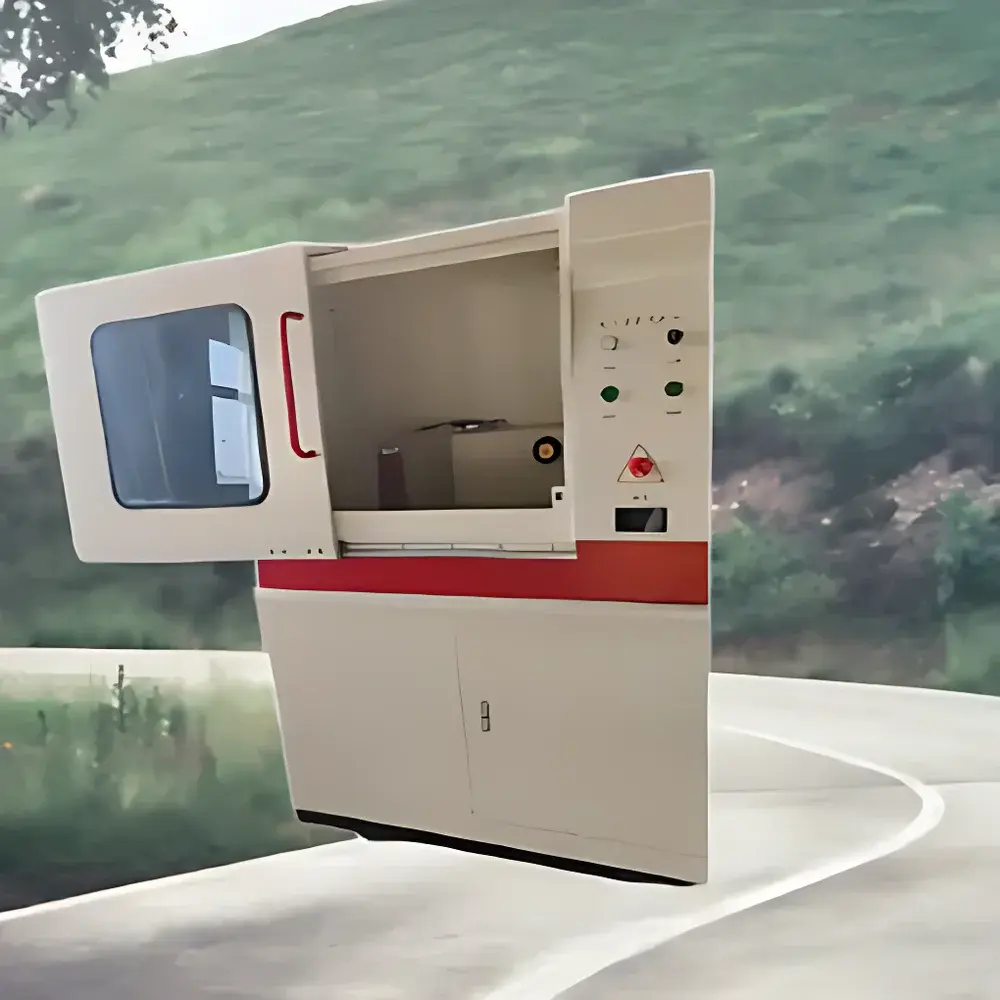
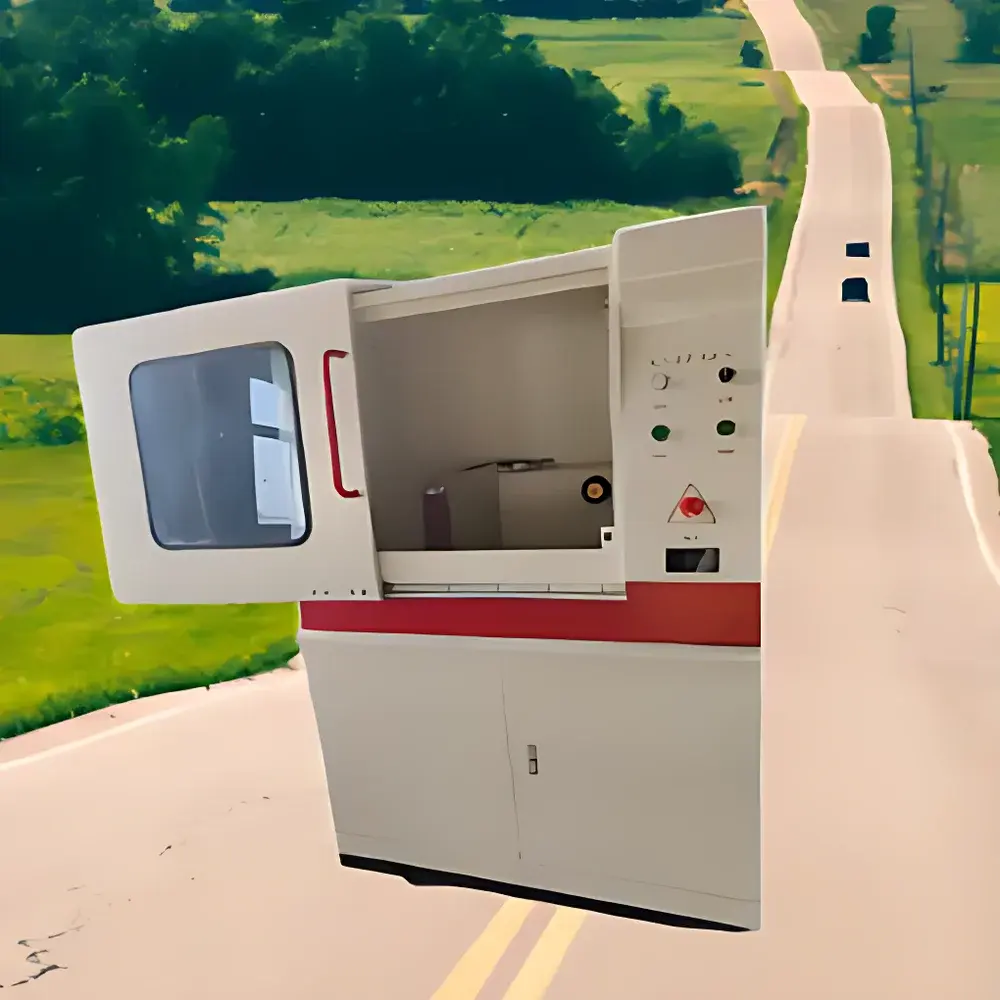
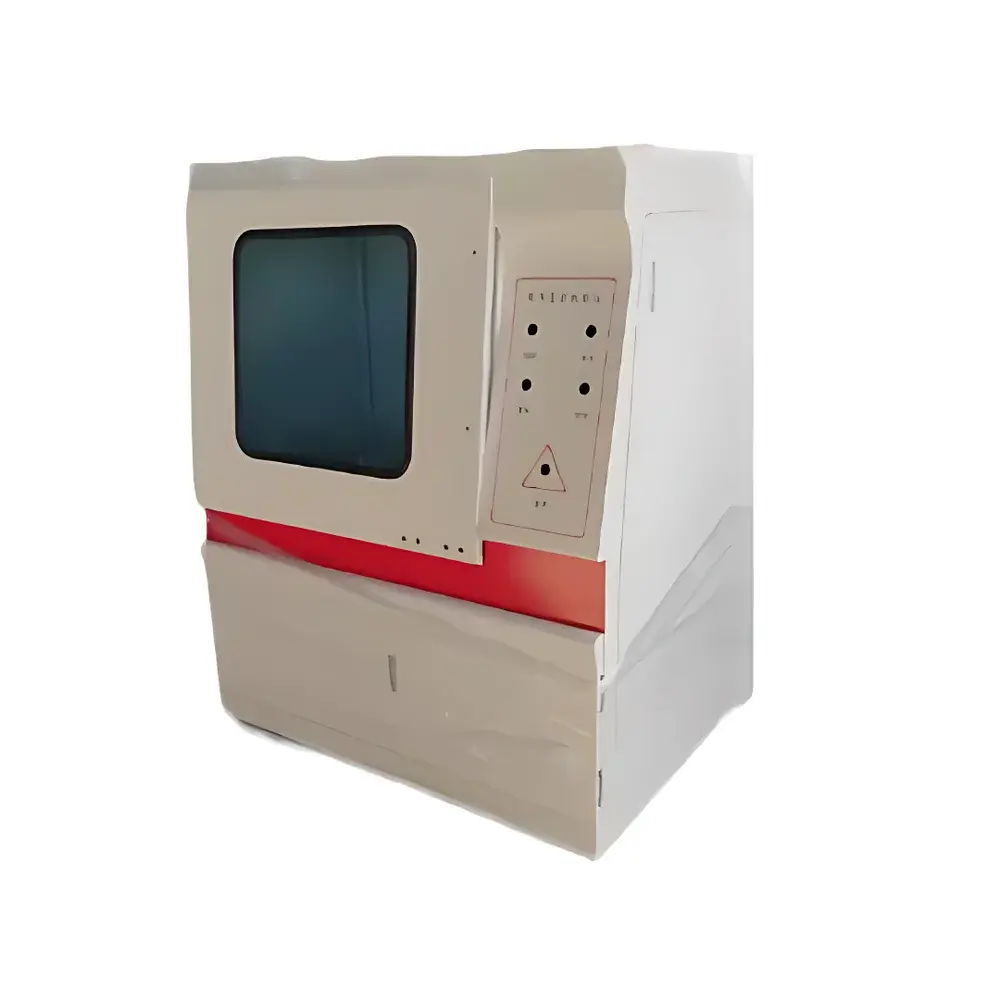
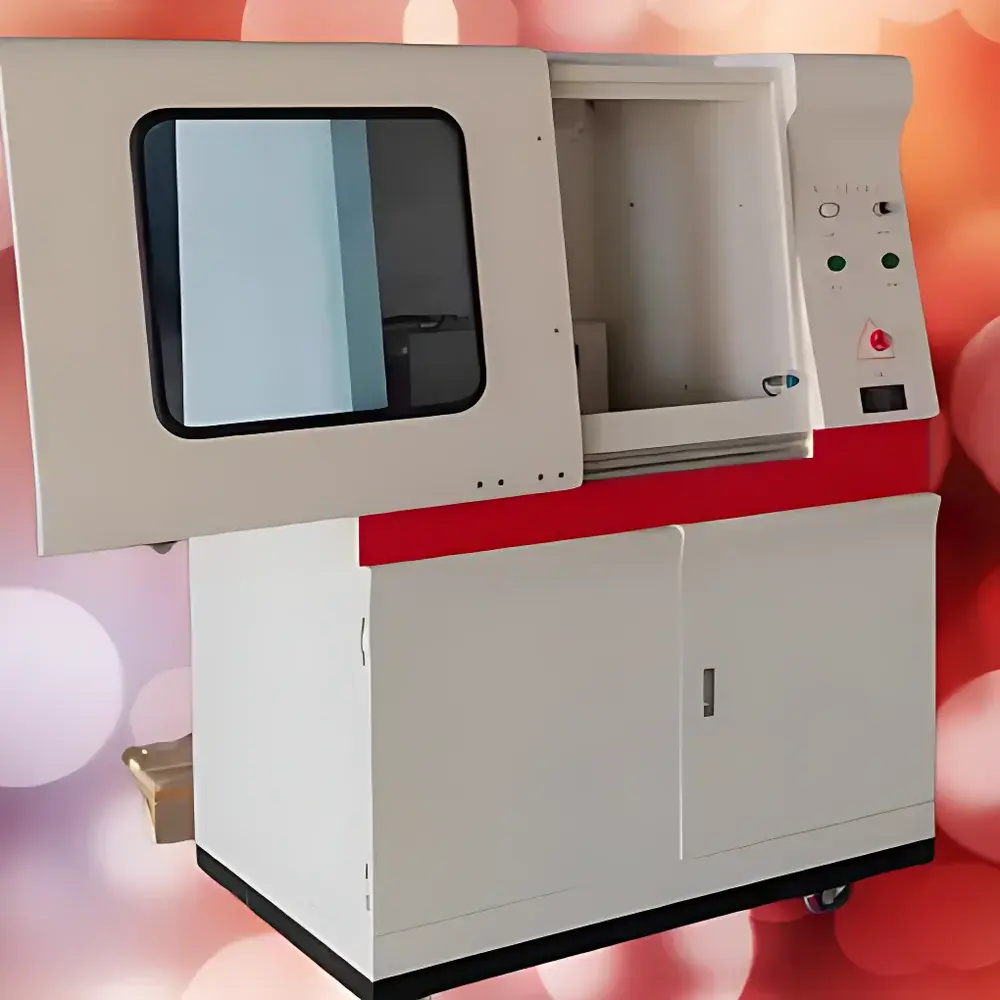
Hongri HRJ-C Electrical Conduit Dielectric Breakdown Tester
| Brand | Hongri Instrument |
|---|---|
| Origin | Hebei, China |
| Manufacturer Type | Authorized Distributor |
| Country of Origin | China |
| Model | HRJ-C |
| Price | USD 8,200 (FOB) |
| Maximum Output Voltage | 20 kV AC/DC |
| Compliance | GB/T 1408.1–2016, GB/T 13542.1–2009, GB/T 1695–2005, GB/T 3333–1999 |
Overview
The Hongri HRJ-C Electrical Conduit Dielectric Breakdown Tester is a precision high-voltage testing system engineered for determining the dielectric strength and electrical breakdown voltage of insulating materials—including PVC and HDPE electrical conduits, rubber, plastics, polymer films, ceramics, glass, varnish coatings, resins, cables, and insulating oils. It operates on the principle of controlled voltage ramping under standardized electric field conditions, applying either AC or DC voltage across a defined electrode gap until catastrophic insulation failure (i.e., dielectric breakdown) occurs. The instrument conforms to internationally recognized test methodologies specified in GB/T 1408.1–2016 (“Electrical Strength of Insulating Materials — Part 1: Tests at Power Frequencies”) and supplementary standards including GB/T 13542.1–2009 (electrical insulating films), GB/T 1695–2005 (vulcanized rubber), and GB/T 3333–1999 (cable paper). Designed for laboratory-based quality control, R&D validation, and incoming material inspection, the HRJ-C delivers repeatable, traceable, and standards-compliant results essential for compliance with industrial safety and product certification requirements.
Key Features
- Fixed maximum output voltage of 20 kV AC/DC, selectable via front-panel toggle switch with clear visual indication
- Integrated interlocked test chamber: power to the high-voltage transformer is automatically disabled when the door is opened, eliminating risk of accidental exposure
- Enhanced spatial safety design: minimum clearance between high-voltage electrode and chamber wall exceeds 250 mm (per GB/T 1408.1–2016 requirement for ≤50 kV systems)
- Nine-tier layered safety architecture, including overcurrent, overvoltage, ground-fault, short-circuit, and electromagnetic discharge protection
- Dedicated DC post-test discharge alarm: audible and visual alert activates upon door opening after DC testing; alarm resets only after manual activation of the electromagnet-controlled discharge rod
- PLC-based voltage ramp control with adjustable rate from 10 V/s to 5 kV/s, supporting stepwise, continuous, or gradient protocols
- Standard electrode configurations (25 mm, 75 mm, and 6 mm diameter) compatible with ASTM D149 and IEC 60243 test geometries
- Test medium flexibility: supports both air-gap and oil-immersed (e.g., 25# transformer oil) configurations per GB/T 1408.1–2016 Annex A
Sample Compatibility & Compliance
The HRJ-C is validated for use with solid and liquid dielectrics commonly employed in low- and medium-voltage electrical infrastructure. Applicable sample types include rigid and flexible electrical conduits (PVC, PE, metal-clad), elastomeric gaskets, laminated insulators, cast resin components, and transformer-grade insulating oils. All test procedures align with national standard requirements for grounding resistance (<4 Ω), operator training, minimum safe working distance (≥1.2 m), and mandatory pre-test verification of earth continuity, cabling integrity, and electrode alignment. The system satisfies structural and procedural prerequisites for GLP-compliant laboratories and supports audit-ready documentation when paired with optional data logging modules. Compliance documentation includes full traceability to GB/T 1408.1–2016 Clause 6 (test setup), Clause 7 (procedure), and Clause 8 (reporting), as well as cross-referenced alignment with ISO/IEC 17025:2017 clause 7.2.2 (method validation).
Software & Data Management
While the base HRJ-C model operates via embedded PLC interface with analog metering and manual data recording, optional PC integration enables automated test sequencing, real-time voltage/current waveform capture, and CSV-exportable datasets. The software platform supports configurable pass/fail thresholds, automatic calculation of dielectric strength (kV/mm), and generation of test reports compliant with internal QA templates. Audit trail functionality—when deployed with time-stamped user login and parameter lockout—meets foundational expectations for FDA 21 CFR Part 11–aligned environments where electronic records require attribution and immutability. All firmware updates are delivered via secure USB interface; no cloud connectivity or remote access capabilities are implemented, preserving network isolation in regulated facilities.
Applications
This tester serves critical functions across multiple domains: verification of conduit wall integrity prior to cable pulling; qualification of new extrusion batches against UL 651 and GB/T 5836.1 specifications; comparative aging studies of polymer degradation under thermal/electrical stress; validation of conformal coating performance on PCB enclosures; and routine maintenance screening of insulating oil in distribution transformers. It is routinely deployed by third-party certification labs (e.g., CNAS-accredited facilities), wire-and-cable manufacturers, building material suppliers, and municipal utility engineering departments responsible for underground infrastructure safety assurance.
FAQ
Is the HRJ-C suitable for testing flexible non-metallic conduit (FNMC)?
Yes—provided specimens are conditioned per GB/T 2951.12–2008 and mounted using flat-surface electrodes to ensure uniform field distribution across curved walls.
Does the system support variable-frequency AC testing?
No—the HRJ-C provides fixed 50 Hz AC output only, consistent with GB/T 1408.1–2016 power-frequency test requirements.
What grounding configuration is required for valid test execution?
A dedicated protective earth connection with measured resistance <4 Ω must be established prior to operation; shared facility grounds are insufficient for electromagnetic noise suppression.
Can test data be exported for LIMS integration?
Yes—optional RS-232 or USB-to-serial interface enables direct transfer of timestamped breakdown voltage values, ramp rate, and test duration to external databases.
Is calibration certification included with shipment?
A factory-issued calibration report traceable to CNAS-accredited primary standards is provided; annual recalibration is recommended per GB/T 19022–2003 guidelines.



