
Hongweiliangzi HW-06S Intelligent Insoluble Particle Analyzer
| Brand | Hongweiliangzi |
|---|---|
| Origin | Shandong, China |
| Model | HW-06S |
| Measurement Range | 1–500 µm |
| Channel Options | ≥5, ≥8, ≥10, ≥12, ≥25, ≥100 µm (customizable) |
| Pharmacopoeia-Compliant Channels | ≥10 µm, ≥25 µm |
| Sample Volume Range | 0.1–1000 mL |
| Minimum Sample Volume | ≥0.1 mL |
| Volume Accuracy | < ±0.5% |
| Counting Range | 0–9,999,999 particles |
| Particle Concentration Range | 0–10,000 particles/mL |
| RSD | ≤2% (for standard particles ≥1000 particles/mL) |
| Sampling Time | <8 s for 5 mL |
| Time Accuracy | ±5% of set value |
| Channel Resolution | ≥95% (≥10 µm channel) |
| Stirring Speed | 0–2000 rpm, continuously adjustable |
| Operating Temperature | 0–40 °C |
| Power Supply | AC 220 V ±10%, 50 Hz, ≤90 W |
| Dimensions | 360 × 330 × 415 mm |
Overview
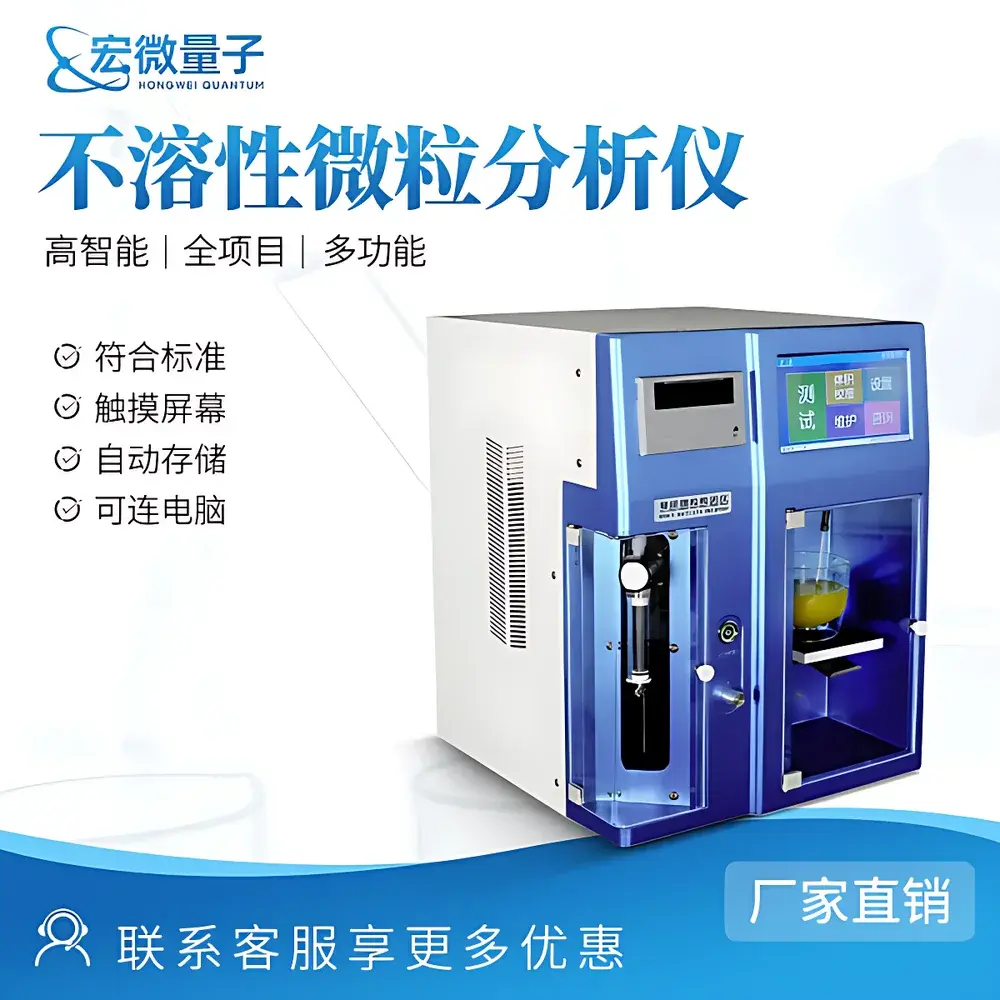
The Hongweiliangzi HW-06S Intelligent Insoluble Particle Analyzer is a laser light obscuration-based instrument engineered for quantitative detection and size-classified enumeration of insoluble particulate matter in parenteral pharmaceuticals and packaging materials. It operates on the principle of single-particle optical sensing (SPOS), where particles suspended in liquid media pass through a focused laser beam, generating transient light extinction signals proportional to their equivalent spherical diameter. The system complies with the core measurement methodology stipulated in the Chinese Pharmacopoeia (ChP) 2020 Edition, General Chapter 0903 — “Determination of Particulate Matter in Injectable Preparations”, and aligns with key international pharmacopoeial requirements including USP <788>, EP 2.9.19, and JP 6.07. Designed specifically for quality control laboratories in pharmaceutical manufacturing, contract testing organizations (CTDOs), and regulatory-compliant R&D facilities, the HW-06S delivers traceable, reproducible particle counts across a broad dynamic range (1–500 µm), supporting both routine batch release and investigative analysis.
Key Features
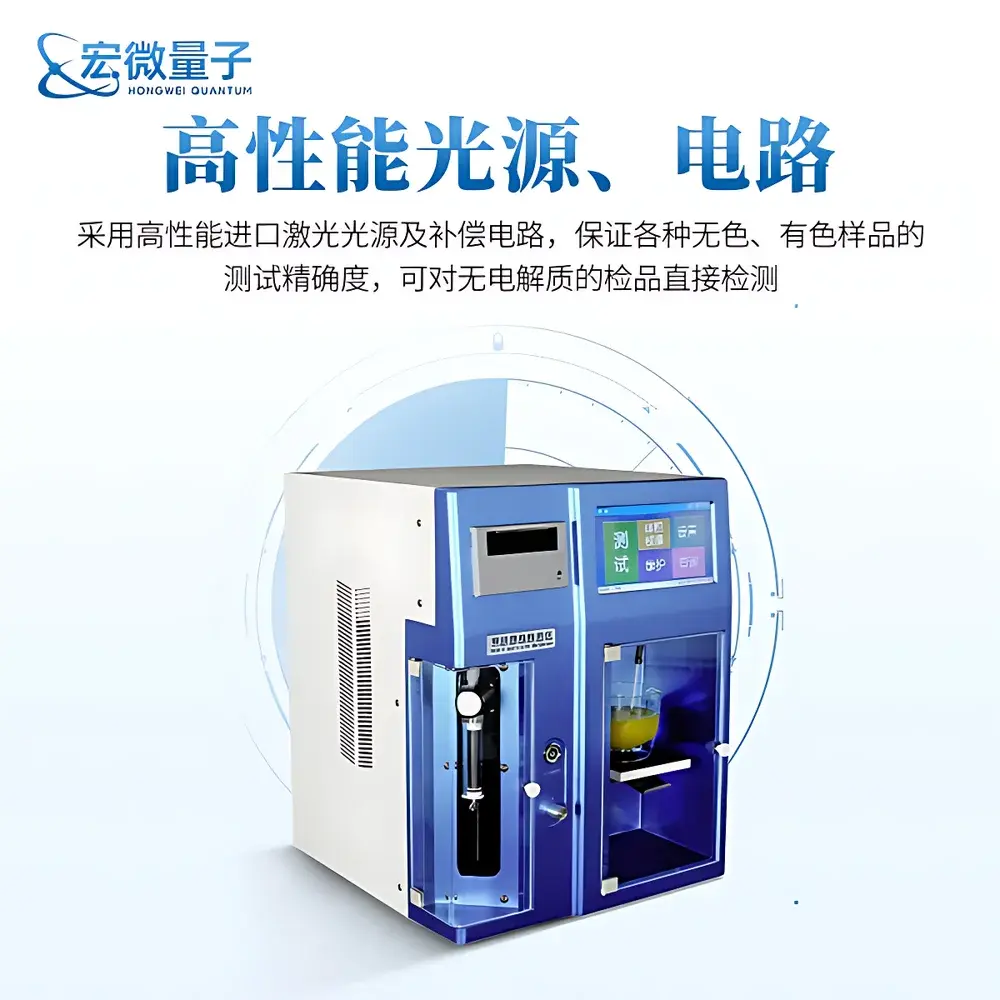
- Laser light obscuration detection using high-stability imported laser diode and compensated analog signal circuitry — ensures consistent sensitivity for colorless, colored, and low-conductivity samples without electrolyte addition.
- High-pressure syringe pump sampling system with programmable volume control (0.1–1000 mL), enabling precise volumetric delivery independent of ambient pressure or altitude — validated for operation at elevations up to 3000 m above sea level.
- Chemically inert fluid path constructed from ASTM-certified 316L stainless steel and PTFE — compatible with organic solvents (e.g., ethanol, isopropanol), oil-based formulations, and aggressive excipients.
- Dual-mode pharmacopoeial testing protocols: dedicated large-volume infusion mode (e.g., 100–250 mL bags) and small-volume injection mode (e.g., 1–20 mL ampoules/vials), with automatic unit conversion to particles per container per ChP/USP reporting conventions.
- Adjustable glass propeller stirrer (0–2000 rpm, stepless control) maintains homogeneous particle suspension during sampling — critical for minimizing sedimentation bias in viscous or density-mismatched preparations.
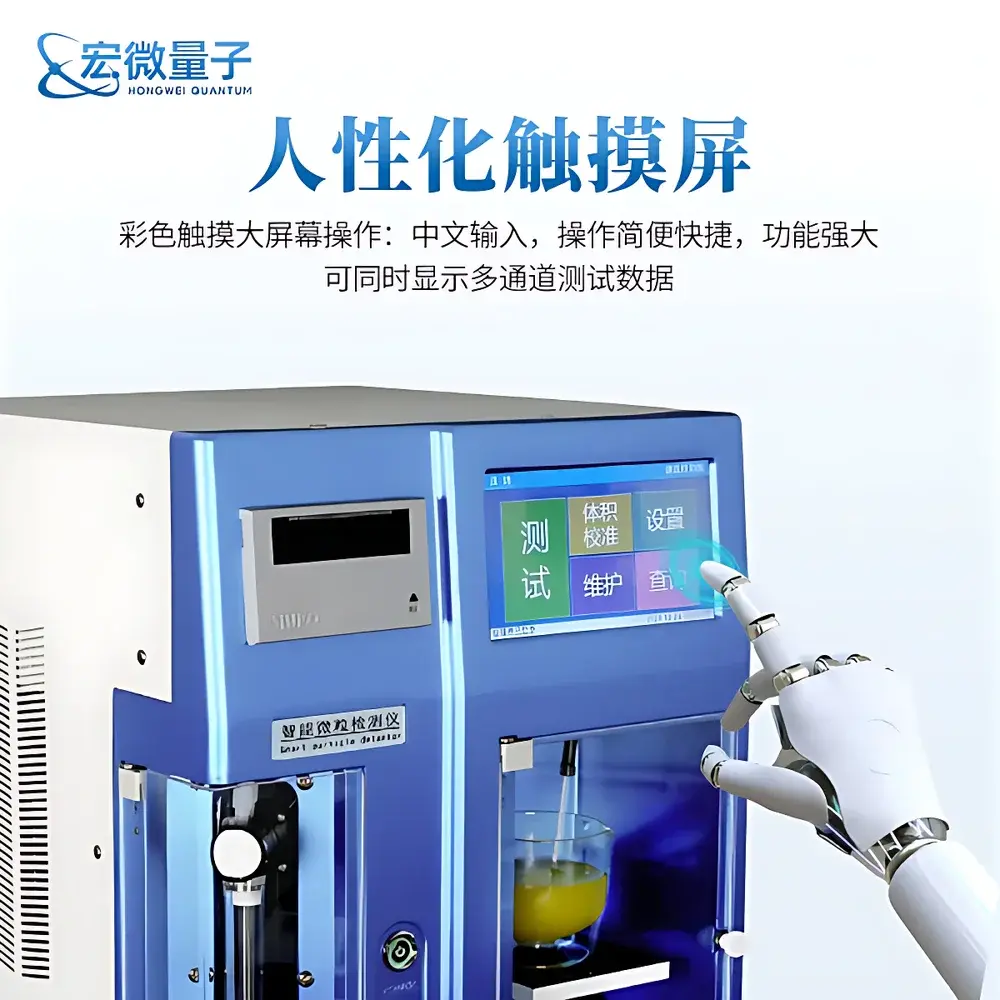
- 10.1-inch capacitive touchscreen interface with full Chinese character input support, multi-channel real-time display, and embedded audit trail functionality compliant with ALCOA+ data integrity principles.
Sample Compatibility & Compliance
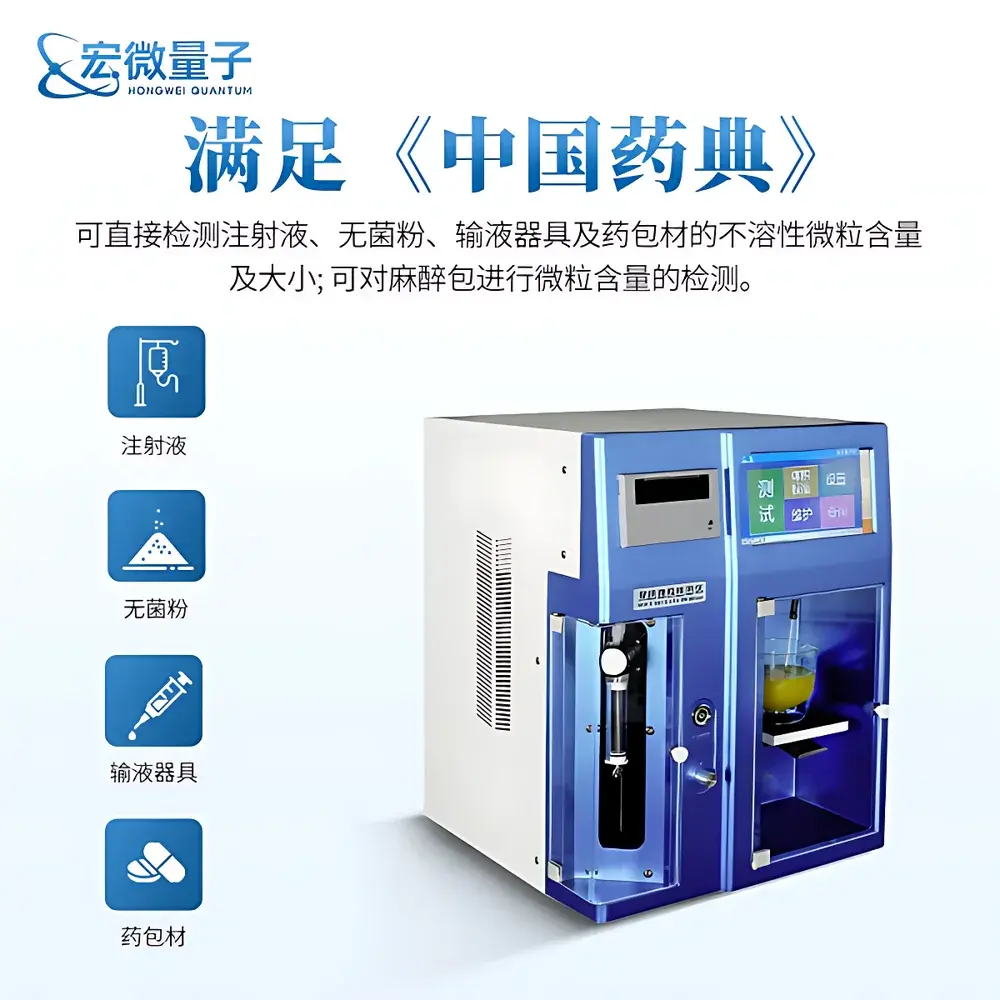
The HW-06S supports direct analysis of sterile powders (after reconstitution), ready-to-use injectables (including biologics, liposomal suspensions, and radiopharmaceuticals), elastomeric closures, glass vials, and IV bag components. Its design accommodates non-aqueous systems such as lipid emulsions and solvent-based anesthetics (e.g., propofol formulations). Regulatory alignment includes full traceability to ChP 0903, USP <788>, and ISO 21501-4 for light extinction particle characterization. Optional IQ/OQ/PQ documentation packages are available to support GMP-compliant installation and operational qualification under Annex 11 and FDA 21 CFR Part 11 requirements.
Software & Data Management
Embedded firmware provides automated data acquisition, statistical summarization (mean, SD, RSD, histogram distribution), and configurable report generation (PDF, CSV, XML). Data export via USB or Ethernet enables integration with LIMS and ELN platforms. The optional desktop software includes advanced analytics: trend charting across batches, outlier identification using Grubbs’ test, and comparative analysis against historical baselines. All electronic records retain full audit trail metadata — including user ID, timestamp, parameter changes, and result modifications — satisfying GLP/GMP data governance mandates.
Applications
- Batch release testing of small-volume parenterals (SVPs) and large-volume parenterals (LVPs) per ChP/USP specifications.
- Extractable and leachable studies for primary packaging components (rubber stoppers, plastic tubing, IV sets).
- Stability-indicating assessment of particle formation during accelerated and long-term storage conditions.
- Process validation support for filtration steps, filling line qualification, and cleanroom environmental monitoring correlation.
- Investigational analysis of visible and subvisible particles in biosimilars, mRNA-LNPs, and cell/gene therapy products.
FAQ
Does the HW-06S meet FDA 21 CFR Part 11 requirements for electronic records?
Yes — the system includes role-based three-tier password protection, immutable audit trails, and electronic signature capability (via optional software module), fulfilling core Part 11 criteria for closed systems.
Can it analyze samples containing ethanol or castor oil?
Yes — the 316L/PTFE wetted path resists corrosion and swelling, enabling validated use with organic solvents and lipid vehicles.
Is calibration verification supported with NIST-traceable standards?
Yes — the instrument accepts certified polystyrene latex (PSL) reference particles (e.g., 10 µm, 25 µm) for daily performance checks and annual recalibration.
What is the minimum detectable particle concentration?
The system achieves reliable counting down to 10 particles/mL at ≥10 µm with RSD ≤2%, verified per ISO 21501-4 repeatability protocols.
Can test methods be locked to prevent unauthorized modification?
Yes — method templates can be digitally signed and write-protected within the user privilege hierarchy, ensuring method consistency across shifts and operators.




