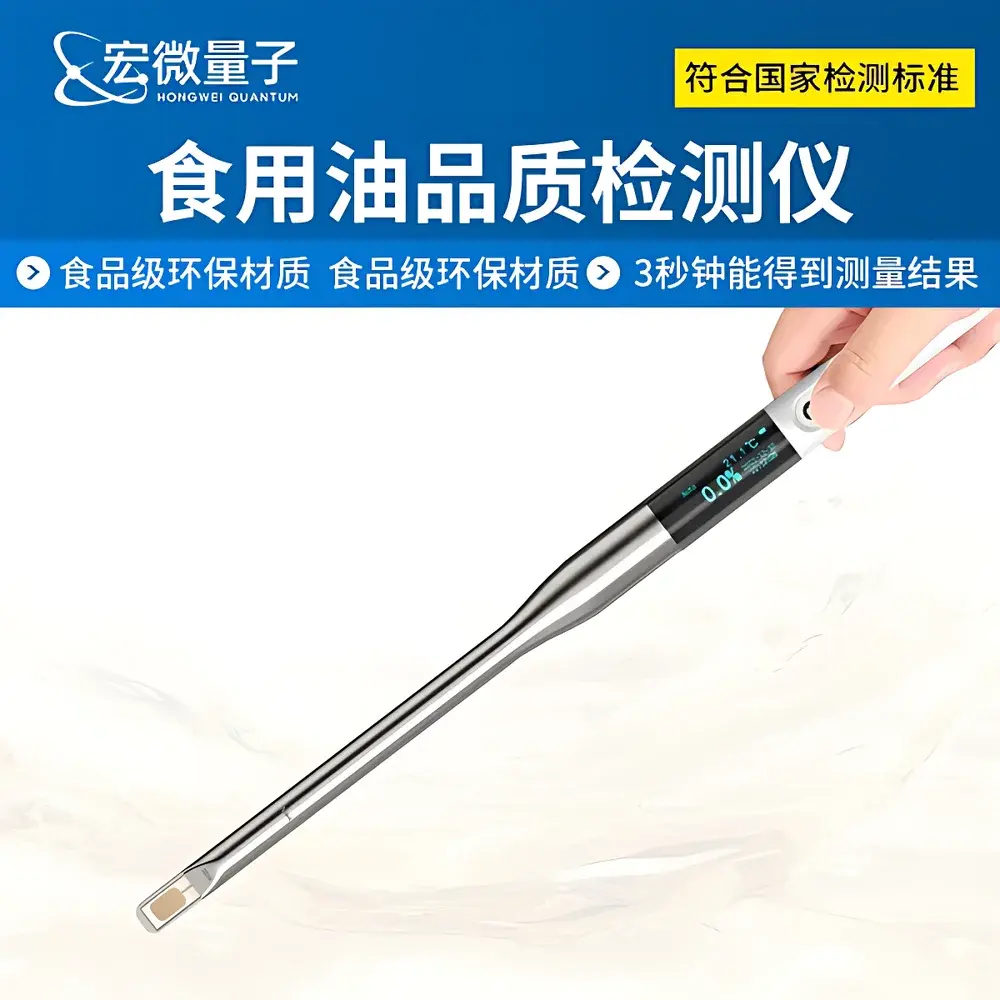
Hongweiliangzi HW-SYP Edible Oil Polar Compounds (TPM) Analyzer
| Brand | Hongweiliangzi |
|---|---|
| Origin | Shandong, China |
| Manufacturer Type | Authorized Distributor |
| Region of Manufacture | Domestic (PRC) |
| Model | HW-SYP |
| Price | USD 520 (FOB) |
| Measurement Principle | Capacitive Sensing of Total Polar Materials (TPM) |
| Temperature Range | 0–200 °C |
| TPM Range | 0–50% |
| TPM Accuracy | ±1.5% |
| TPM Resolution | 0.1% |
| Temp. Accuracy | ±1.5 °C |
| Temp. Resolution | ±0.1 °C |
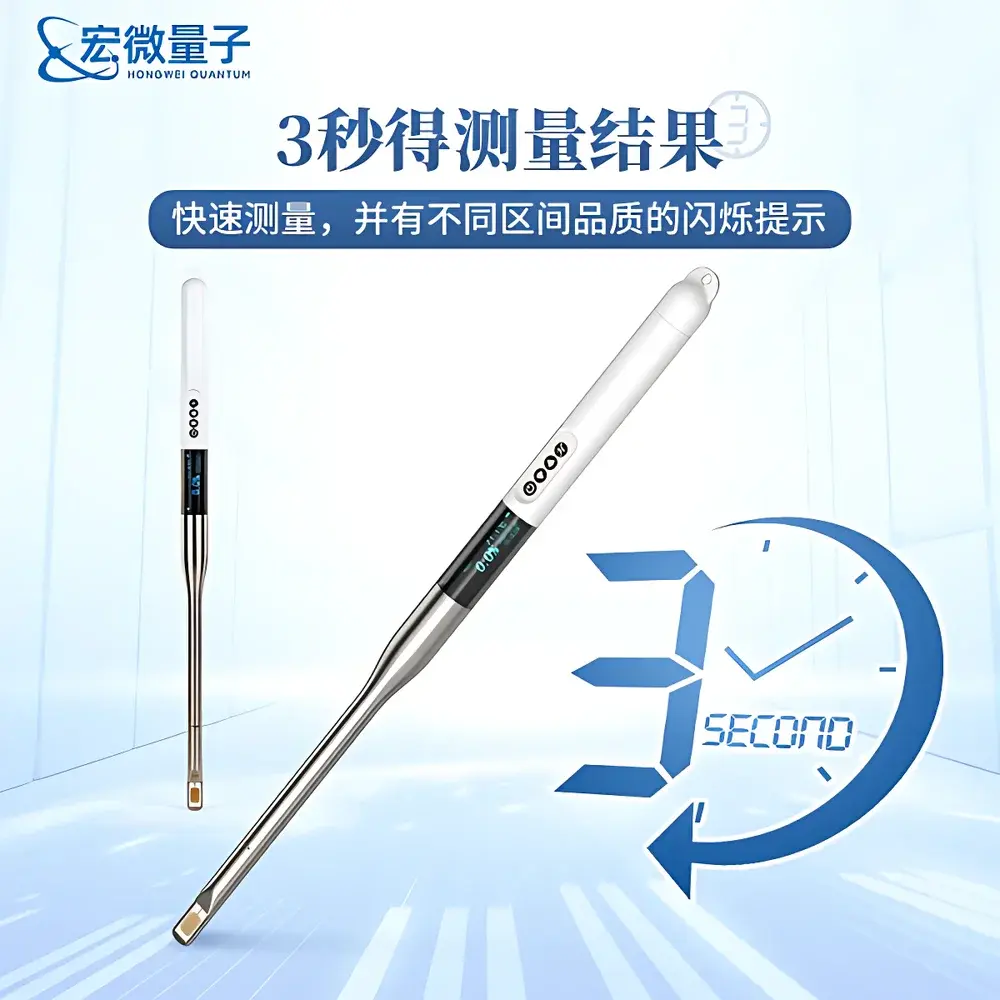
| Response Time | <3 s |
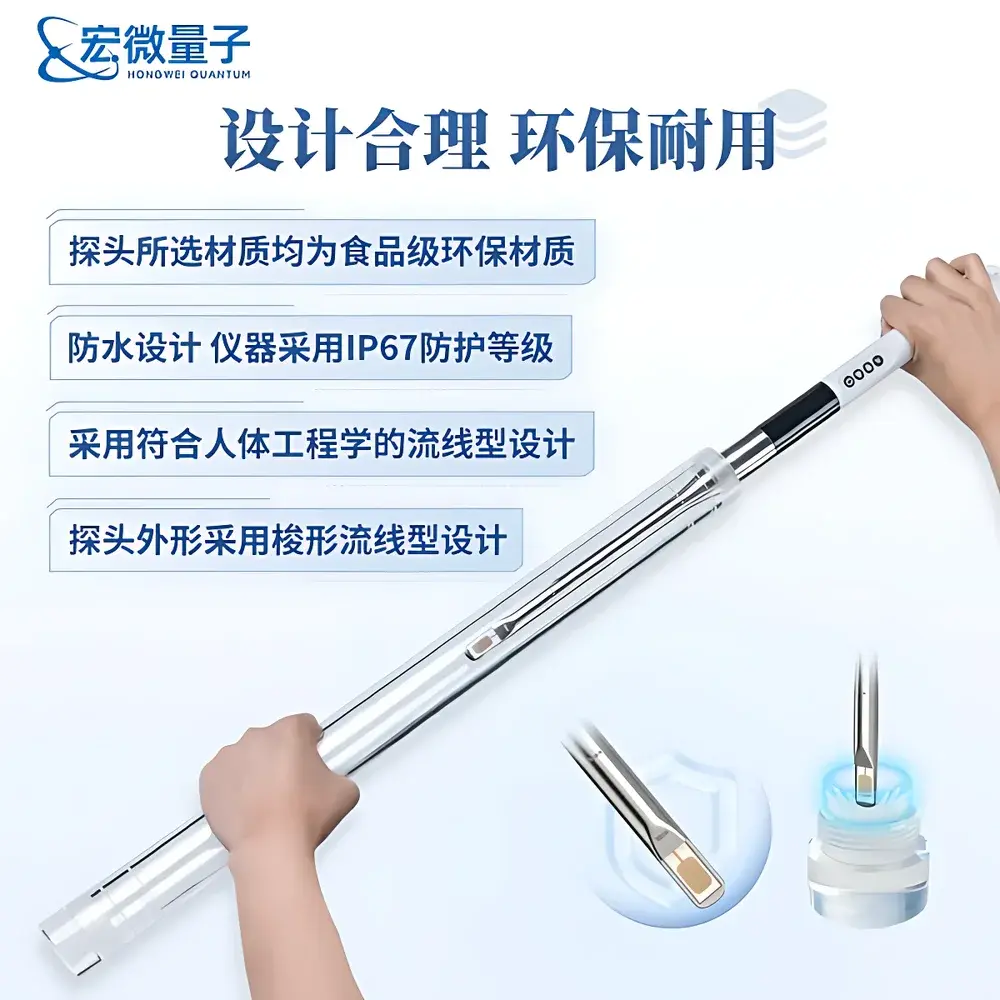
| Probe Material | Food-Grade 316 Stainless Steel |
| Housing Material | High-Impact PC Engineering Plastic |
| IP Rating | IP67 |
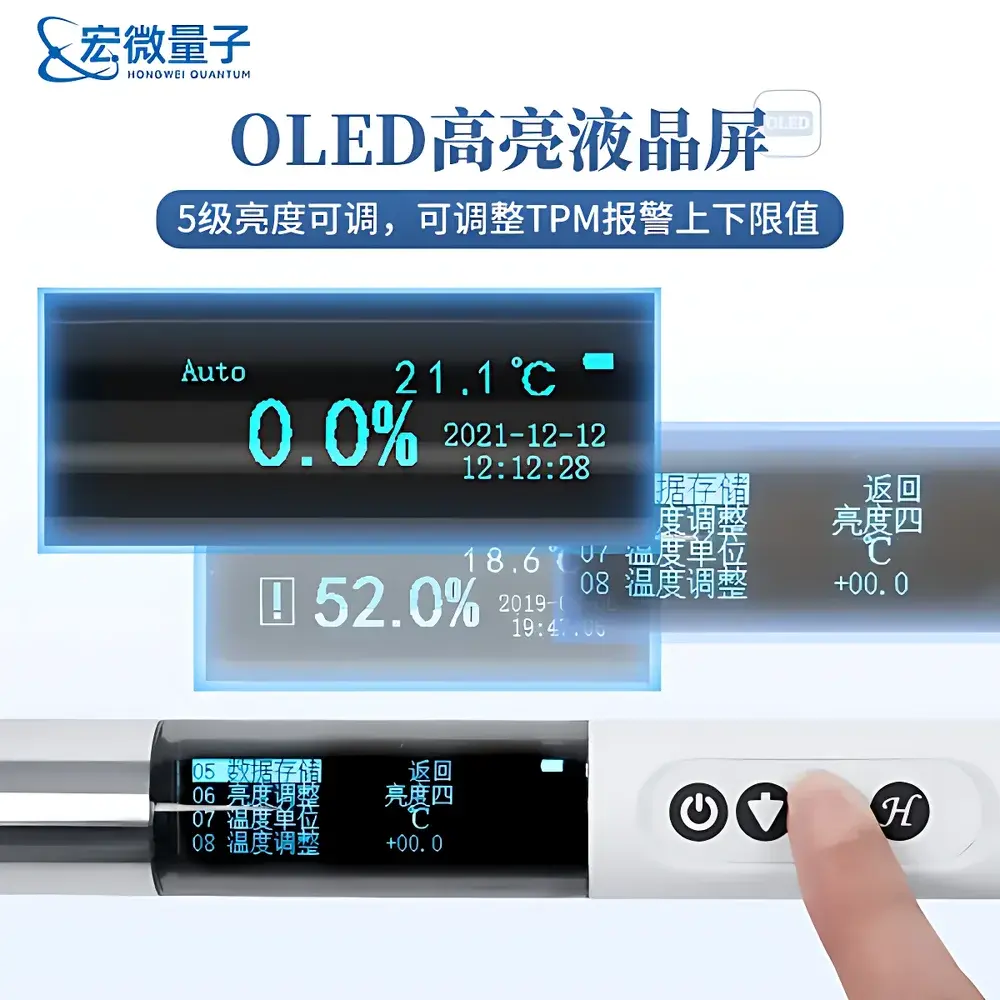
| Display | OLED, 5-Level Brightness Adjustment |
| Battery | 900 mAh Li-ion, USB-C Charging |
| Continuous Operation | ≥30 h |
| Data Storage | 10,000 Records |
| Dimensions (Probe) | Ø24.5 × 480 mm |
| Weight | 275 g |
| Packaging Dimensions | 53 × 600 mm |
| Package Weight | 1.2 kg |
| Connectivity | Wi-Fi & PC USB Interface |
| Cloud Platform | Integrated SaaS Dashboard with Audit-Ready Export |
| Calibration | User-Adjustable TPM Offset & Full Reset Capability |
| Alarm Thresholds | Configurable Upper/Lower TPM Limits |
Overview
The Hongweiliangzi HW-SYP Edible Oil Polar Compounds (TPM) Analyzer is an in-field, non-destructive instrument engineered for real-time quantification of total polar materials (TPM) in frying oils—critical indicators of thermal degradation and oxidative breakdown. Unlike classical wet-chemistry methods (e.g., solvent extraction followed by gravimetric or chromatographic analysis), the HW-SYP employs a calibrated capacitive sensing principle that correlates dielectric permittivity shifts in heated oil to its polar compound concentration. This physics-based approach eliminates reliance on hazardous solvents, trained laboratory personnel, or centralized infrastructure—enabling immediate, on-site assessment at point-of-use: fryers, production lines, canteens, inspection checkpoints, or mobile food safety units. Designed in strict alignment with the regulatory threshold defined in GB 7102.1–2003 Hygienic Standard for Edible Vegetable Oils During Frying (max. 27% TPM), the HW-SYP delivers objective, repeatable pass/fail decisions under operational conditions up to 200 °C.
Key Features
- Field-Deployable Precision: Operates continuously at ambient temperatures from 0 °C to +50 °C and directly immerses into hot oil up to 200 °C without thermal drift compensation delay.
- Sub-3-Second TPM Quantification: Capacitive sensor architecture achieves stable readings within <3 seconds; results displayed as numeric %TPM with intuitive high/low-frequency LED alerts corresponding to predefined quality bands (e.g., “Fresh”, “Caution”, “Discard”).
- FDA-Compliant Probe Construction: Immersion probe fabricated from electropolished 316 stainless steel meeting ISO 8536-4 and EC No. 1935/2004 requirements for food contact surfaces; zero leaching or residue retention due to optimized hydrodynamic (spindle-shaped) geometry.
- IP67-Rated Ruggedness: Fully sealed housing resists dust ingress and withstands immersion in water up to 1 meter for 30 minutes—validated per IEC 60529—ensuring reliability in humid kitchens, outdoor markets, or transport environments.
- Regulatory-Ready Data Integrity: Local storage of 10,000 timestamped records with operator ID tagging; Wi-Fi and USB-C interfaces support encrypted export to LIMS or cloud platforms compliant with FDA 21 CFR Part 11 audit trail requirements.
- User-Controlled Metrology: Field-accessible TPM calibration offset adjustment and full factory reset capability ensure long-term traceability; configurable alarm thresholds allow alignment with internal SOPs or jurisdiction-specific limits (e.g., EU’s 24–27% TPM guidance).
Sample Compatibility & Compliance
The HW-SYP is validated for use across common frying media including soybean, palm, sunflower, canola, peanut, and blended vegetable oils. It maintains measurement stability in presence of food particulates, minor water content (<0.5%), and typical frying by-products (e.g., polymerized triglycerides, free fatty acids, aldehydes). While not intended for unrefined crude oils or highly viscous biodiesel blends, its performance has been verified against reference ASTM D7467 and AOCS Cd 19d-99 protocols using NIST-traceable TPM standards. Device firmware and cloud platform architecture conform to GLP-aligned data governance principles—including immutable record timestamps, user authentication logs, and version-controlled calibration history—supporting inspection readiness for CNCA, SAMR, or third-party GMP audits.
Software & Data Management
Bundled SaaS cloud dashboard provides role-based access control, geotagged measurement mapping, trend analytics (e.g., TPM accumulation rate vs. fryer usage hours), and automated PDF report generation. Raw data exports are available in CSV and XML formats compatible with enterprise QMS systems (e.g., MasterControl, TrackWise). Local PC software supports batch synchronization, spectral baseline review, and firmware updates via signed binaries. All wireless transmissions employ TLS 1.2+ encryption; no data is processed or stored on-device beyond local flash memory—fully satisfying GDPR and PIPL data residency requirements.
Applications
- Routine monitoring of deep-fry oil turnover in commercial kitchens, school cafeterias, and fast-food chains.
- On-site verification during food safety inspections by municipal health authorities or provincial market supervision bureaus.
- Pre-screening of bulk oil deliveries at edible oil refineries and ingredient suppliers.
- Forensic identification of adulterated or repeatedly abused cooking oils in food fraud investigations.
- Process validation and HACCP critical control point (CCP) documentation in ISO 22000-certified facilities.
- Educational use in food science laboratories for teaching lipid oxidation kinetics and regulatory compliance frameworks.
FAQ
Does the HW-SYP require daily recalibration?
No—factory calibration remains stable for ≥6 months under normal use. A quick verification check using the included reference oil standard is recommended before each shift.
Can it measure TPM in olive oil or butter-based frying media?
Not recommended: high monounsaturated fat content and low smoke points cause rapid sensor fouling and non-linear dielectric response outside validated matrix ranges.
Is the cloud platform accessible outside mainland China?
Yes—the SaaS instance is hosted on AWS Singapore with global HTTPS access; regional data routing complies with local sovereignty laws.
What happens if the probe is immersed below 50 °C?
Readings remain technically valid but lack clinical relevance; GB 7102.1–2003 mandates measurement at operational frying temperature (typically ≥160 °C) to reflect actual degradation state.
How is measurement uncertainty propagated across the full 0–50% TPM range?
Stated ±1.5% accuracy applies uniformly per ISO/IEC 17025:2017 Annex A.3; expanded uncertainty (k=2) is documented in the Certificate of Conformance shipped with each unit.