
Hongweiliangzi HW-YHS Dual-Parameter Soil & Water Oxidation-Reduction Potential (ORP) and pH Meter
| Brand | Hongweiliangzi |
|---|---|
| Model | HW-YHS |
| ORP Range | −2000 to +2000 mV, Resolution: 0.1 mV, Accuracy: ±10 mV |
| pH Range | 0–14, Resolution: 0.1, Accuracy: ±0.05 |
| Temperature Range | 5–60 °C, Resolution: 0.1 °C, Accuracy: ±1 °C |
| Power Supply | DC 5 V / 2 A |
| Battery Capacity | 6000 mAh |
| Data Storage | 5 million records |
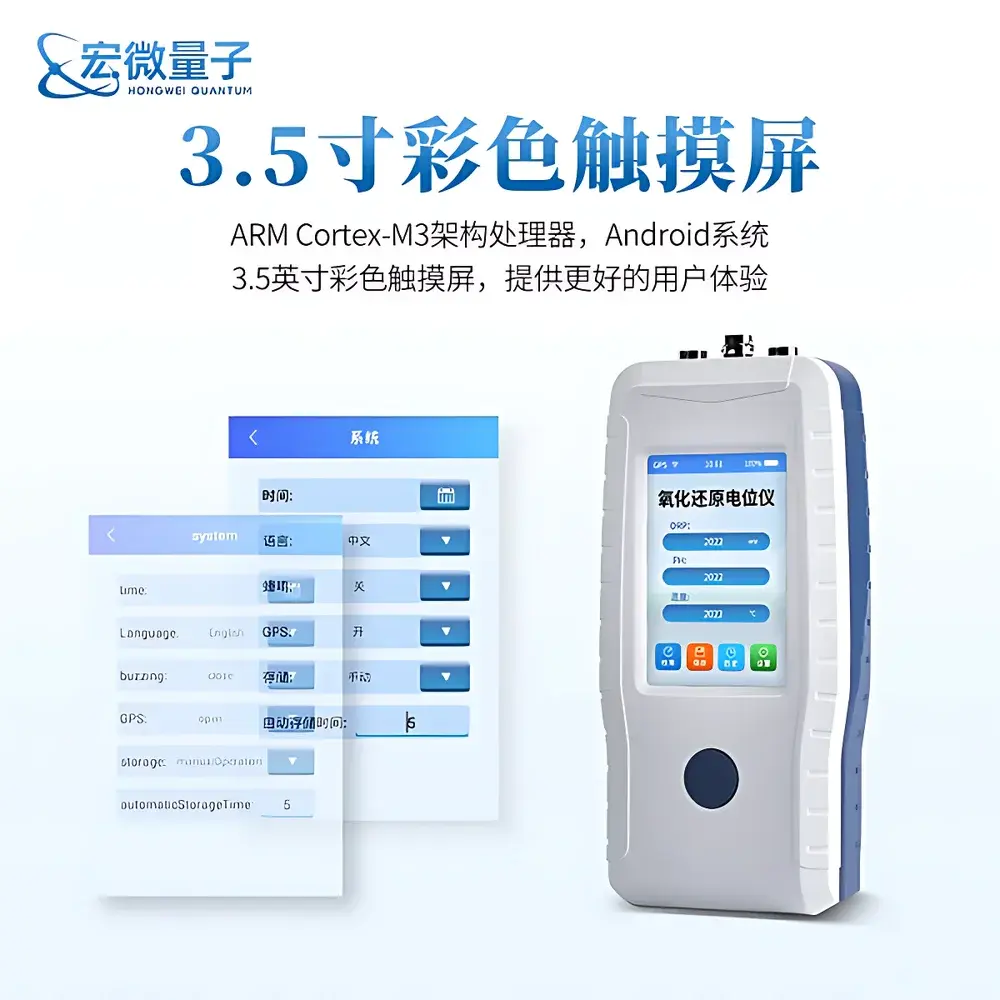
| Display | 3.5-inch color touchscreen |
| IP Rating | IP65 |
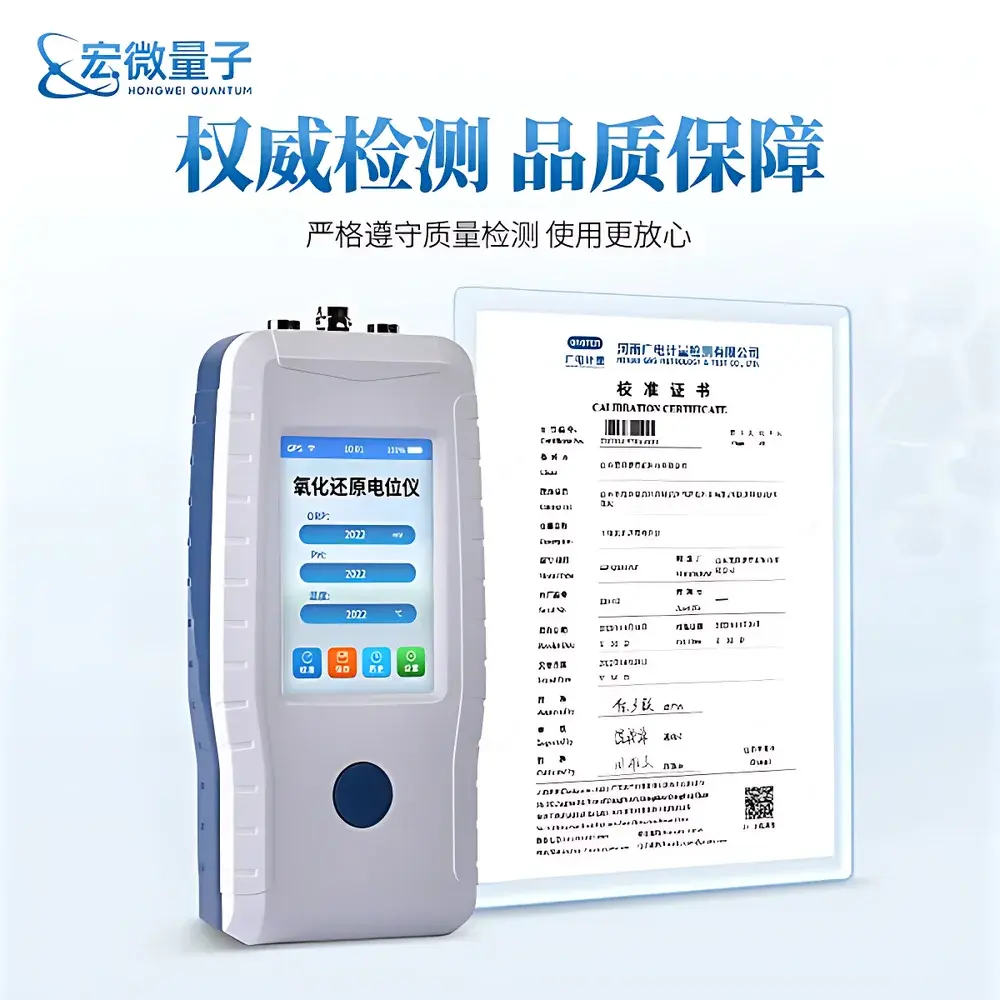
| Compliance | HJ 746–2015, SL 94–1994 |
Overview
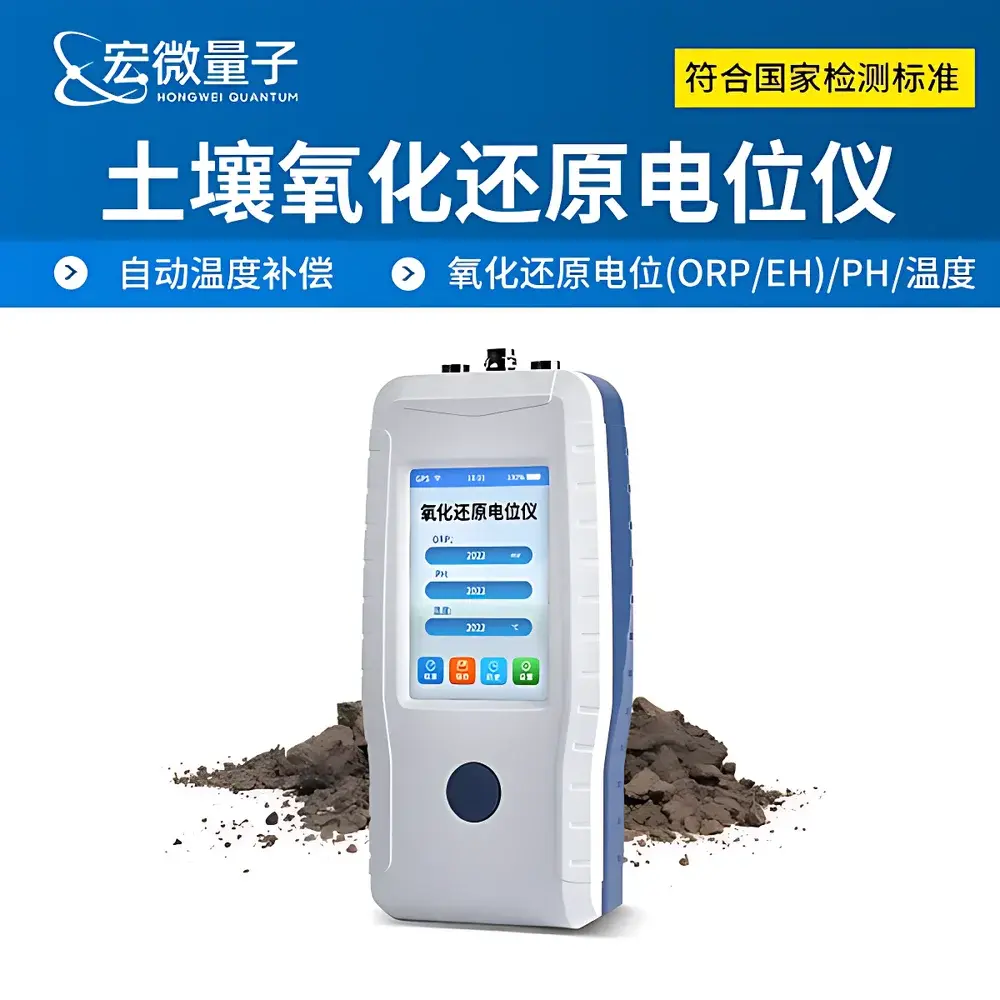
The Hongweiliangzi HW-YHS Dual-Parameter Soil & Water Oxidation-Reduction Potential (ORP) and pH Meter is an integrated field-deployable electrochemical instrument engineered for simultaneous in situ measurement of oxidation-reduction potential (Eh/ORP), pH, and temperature in both saturated soils and aqueous media. It operates on the fundamental principle of potentiometric measurement—comparing the potential difference between a noble-metal working electrode (typically platinum or gold) and a stable reference electrode (Ag/AgCl or calomel) under zero-current conditions. This voltage differential, expressed in millivolts (mV), reflects the thermodynamic tendency of a system to gain or lose electrons, serving as a critical integrative indicator of redox status in environmental matrices. Unlike isolated chemical assays, ORP provides real-time insight into dynamic biogeochemical processes—including microbial respiration pathways, iron/manganese cycling, organic matter decomposition, and contaminant transformation kinetics—making it indispensable for soil health assessment, wetland characterization, wastewater treatment monitoring, aquaculture management, and regulatory compliance with Chinese environmental standards.
Key Features
- ARM Cortex-M3 microcontroller architecture with embedded Android-based firmware for deterministic real-time data acquisition and responsive UI interaction
- 3.5-inch high-contrast color capacitive touchscreen with auto-adjusting backlight and configurable sleep timer for extended field usability
- Integrated IP65-rated enclosure ensuring dust-tight operation and resistance to low-pressure water jets—suitable for outdoor deployment in humid, muddy, or rain-exposed environments
- Dual-mode electrode interface supporting interchangeable ORP electrodes, refillable Ag/AgCl reference electrodes, and stainless-steel hollow probe rods optimized for direct soil insertion without pre-extraction
- Automatic temperature compensation (ATC) across 5–60 °C range, with optional manual override for controlled calibration protocols
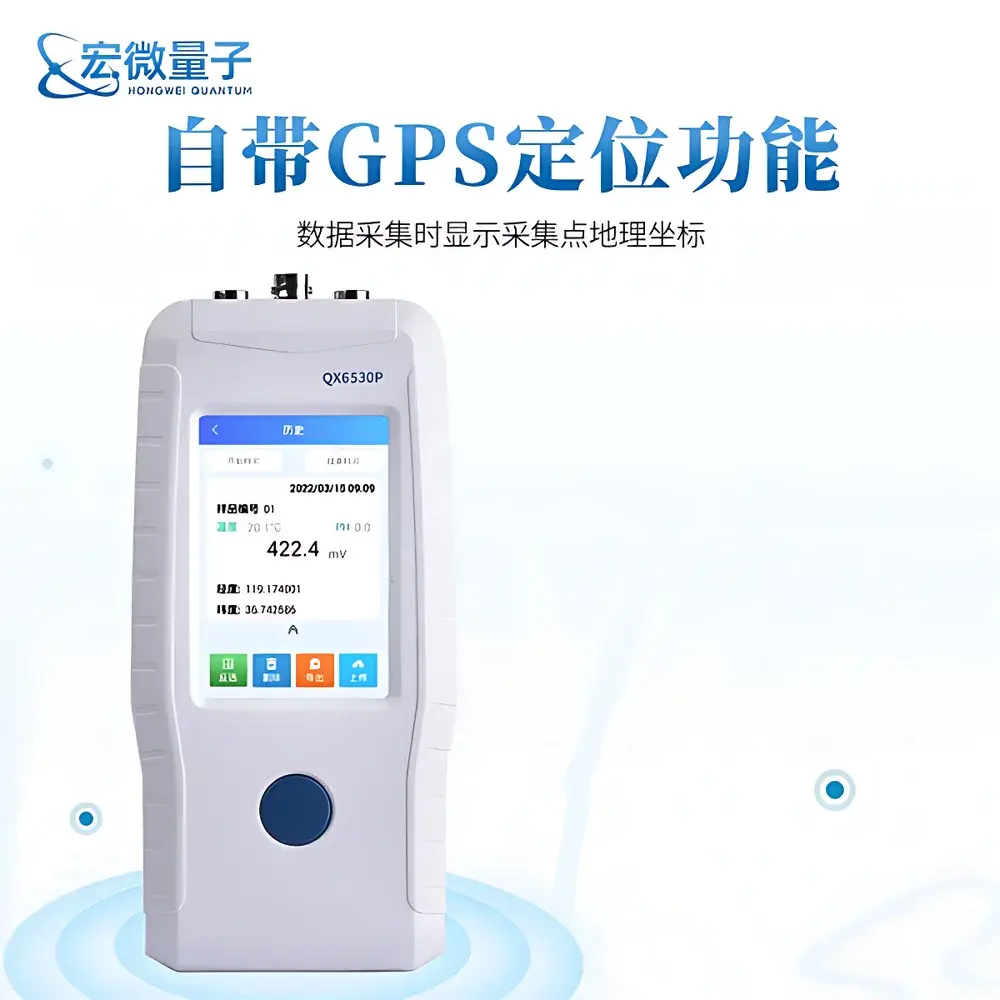
- On-device data logging capacity of up to 5 million timestamped records, including ORP (mV), pH, temperature (°C), and measurement metadata
- USB Type-C charging port compatible with standard 5 V/2 A mobile power adapters; internal 6000 mAh Li-ion battery enabling >12 hours of continuous operation at 1-minute sampling intervals
- Wi-Fi 802.11 b/g/n connectivity for secure TLS-encrypted upload of measurement datasets to cloud-based environmental monitoring platforms or local LIMS infrastructure
- One-touch “Auto-Read” function that locks stable readings after convergence detection—eliminating subjective endpoint judgment and post-processing conversion
Sample Compatibility & Compliance
The HW-YHS is validated for direct contact measurements in heterogeneous, high-ionic-strength, and particulate-laden media—including anaerobic paddy soils, river sediments, activated sludge, aquaculture ponds, and municipal effluents. Its electrode design minimizes junction clogging and polarization drift during prolonged immersion or repeated soil penetration. The instrument conforms to the methodological requirements of HJ 746–2015 “Determination of Oxidation-Reduction Potential in Soils — Potentiometric Method”, which specifies electrode conditioning, stabilization time, soil moisture thresholds (>30% w/w), and reporting conventions for field Eh values. It also aligns with SL 94–1994 “Determination of Oxidation-Reduction Potential — Potentiometric Method” for aquatic applications. While not certified to ISO/IEC 17025, its traceable calibration procedure supports GLP-aligned documentation when used with NIST-traceable ORP buffer standards (e.g., +225 mV Zobell’s solution, +470 mV ceric sulfate).
Software & Data Management
Data export is supported via USB mass storage mode: measurement logs are saved in UTF-8 encoded CSV format with headers (Timestamp, ORP_mV, pH, Temp_C, Electrode_Status, Battery_%), fully compatible with Excel, Python pandas, R, and laboratory informatics systems. Wi-Fi transmission employs HTTPS POST requests to RESTful endpoints, supporting OAuth2 authentication and payload encryption. The onboard firmware maintains a full audit trail—including calibration events, firmware updates, battery discharge cycles, and sensor fault codes—with timestamps logged to internal flash memory. No proprietary software is required for basic operation; however, optional desktop utilities (Windows/macOS/Linux) provide graphical trend analysis, geotagging overlays, and batch validation against user-defined alert thresholds (e.g., ORP < −150 mV indicating anaerobic stress in rice paddies).
Applications
- Soil Biogeochemistry: Mapping redox gradients across hydromorphic landscapes, evaluating denitrification potential, assessing remediation progress in contaminated sites (e.g., Cr(VI) reduction, TCE dechlorination)
- Wastewater Process Control: Monitoring ORP setpoints in biological nutrient removal (BNR) systems, optimizing chlorine dosing in disinfection contact tanks, detecting sulfide breakthrough in anaerobic digesters
- Aquaculture & Hydroponics: Tracking oxidative stress indicators in recirculating aquaculture systems (RAS), correlating ORP with dissolved oxygen stability and ammonia toxicity thresholds
- Regulatory Field Screening: Supporting Tier 1 site assessments per China’s “Technical Guidelines for Soil Environmental Monitoring” (HJ 166–2019), generating defensible data for reporting under GB 15618–2018 soil quality limits
- Educational & Research Use: Teaching core concepts of electrochemical equilibrium, electron transfer stoichiometry, and Nernst equation applications in environmental science curricula
FAQ
Does the HW-YHS require electrode refilling or maintenance during routine field use?
Yes—the included Ag/AgCl reference electrode contains a KCl electrolyte gel that must be replenished every 3–6 months depending on ambient temperature and usage frequency. Platinum ORP electrodes should be cleaned weekly with dilute HNO3 and rinsed thoroughly with deionized water.
Can the device perform simultaneous ORP and pH measurements in the same soil sample?
Yes—its dual-channel analog front-end acquires both signals concurrently without cross-talk; however, sequential insertion of separate ORP and pH electrodes is recommended to avoid mechanical interference and ensure representative microsite sampling.
Is the data export format compliant with FDA 21 CFR Part 11 requirements?
No—the current firmware does not implement electronic signatures, audit trail immutability, or role-based access control required for Part 11 compliance; it is intended for non-GxP environmental screening rather than pharmaceutical or clinical applications.
What is the recommended calibration frequency for field deployments lasting >72 hours?
Calibration is advised before each deployment and after every 8–12 hours of continuous operation, using two-point ORP buffers (e.g., +225 mV and +470 mV) and standard pH 4.01/7.00 buffers at ambient temperature.
How does the automatic temperature compensation algorithm handle thermal lag in dense soil matrices?
The ATC algorithm applies the Nernst-derived temperature coefficient (−0.198 mV/°C per pH unit) only after the thermistor achieves thermal equilibrium—detected by <0.02 °C/min drift over 30 seconds—ensuring compensation validity even during slow soil heat transfer.







