
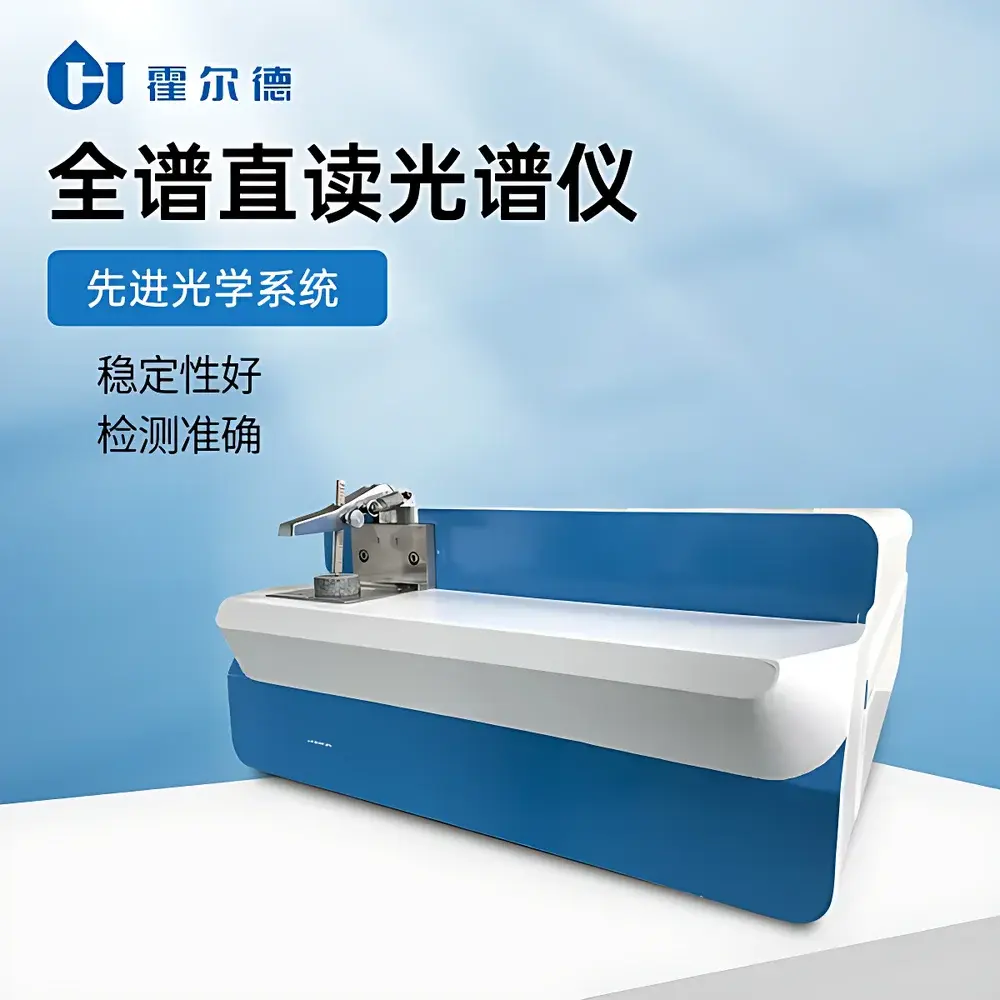
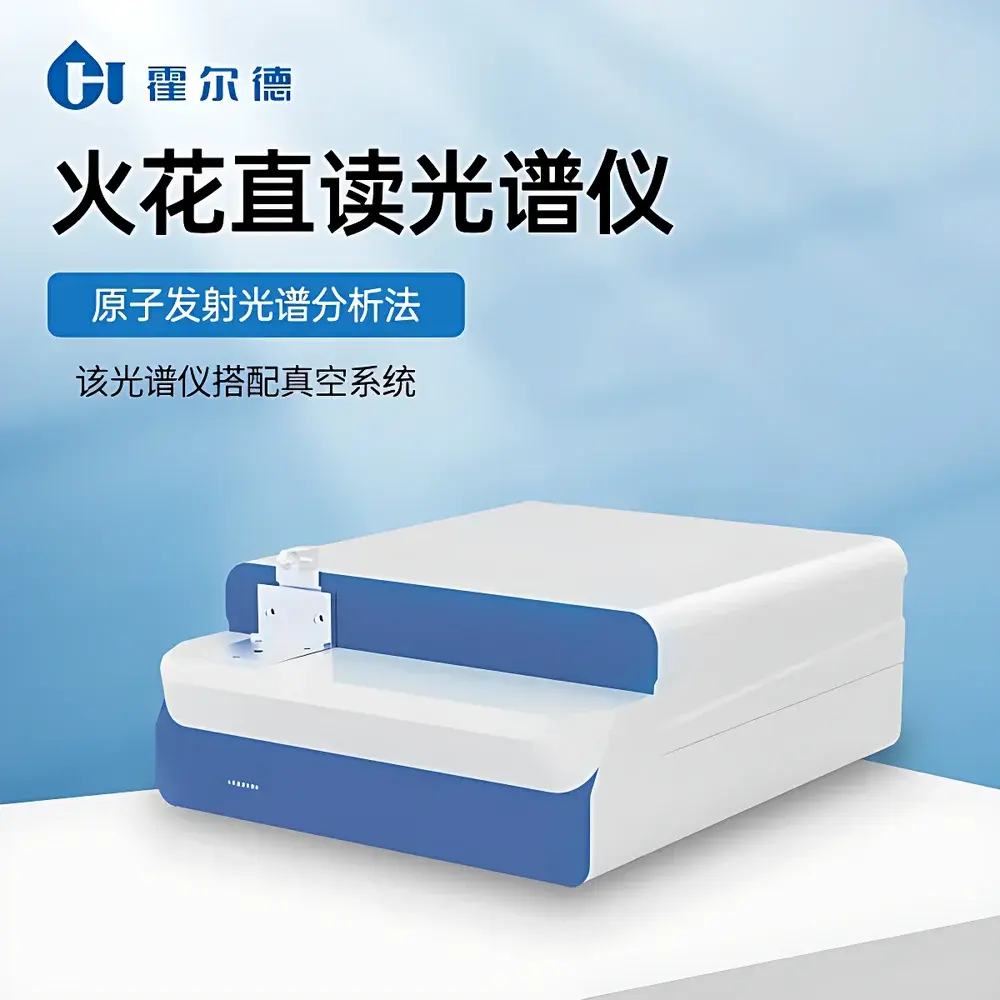
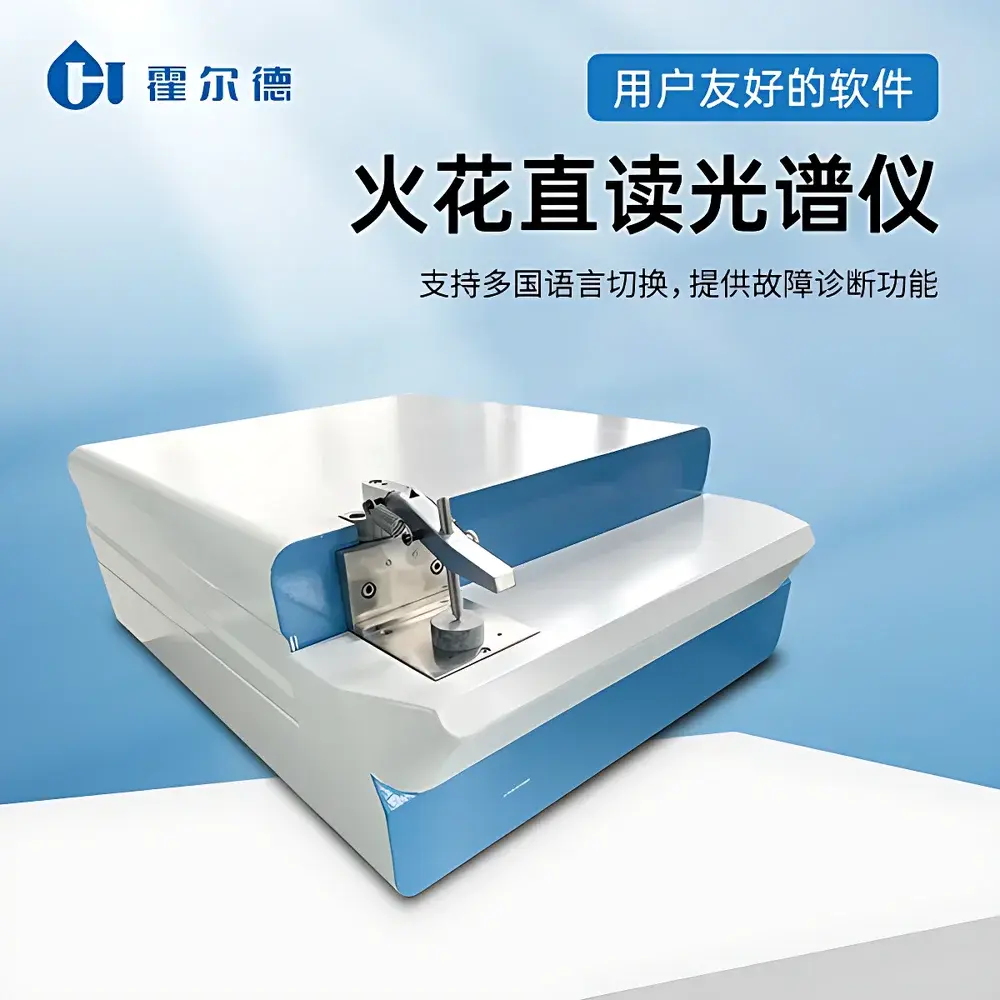
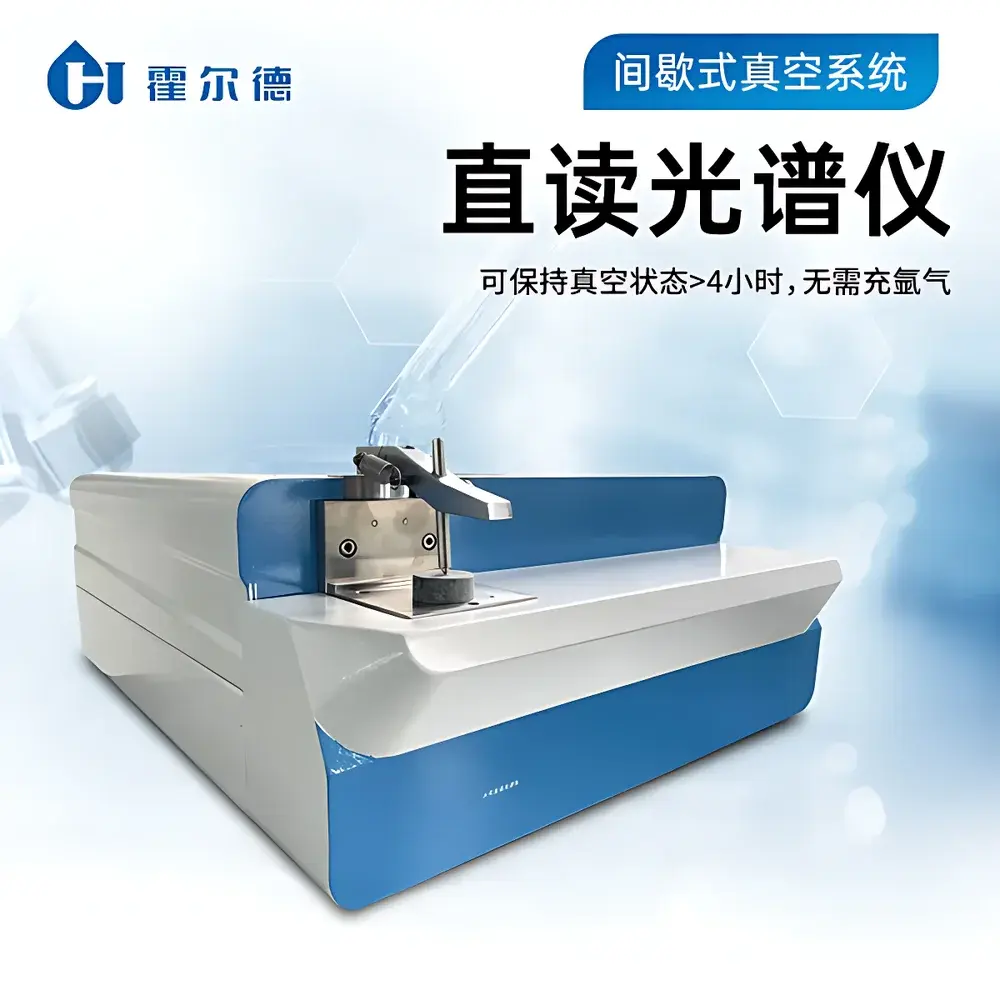
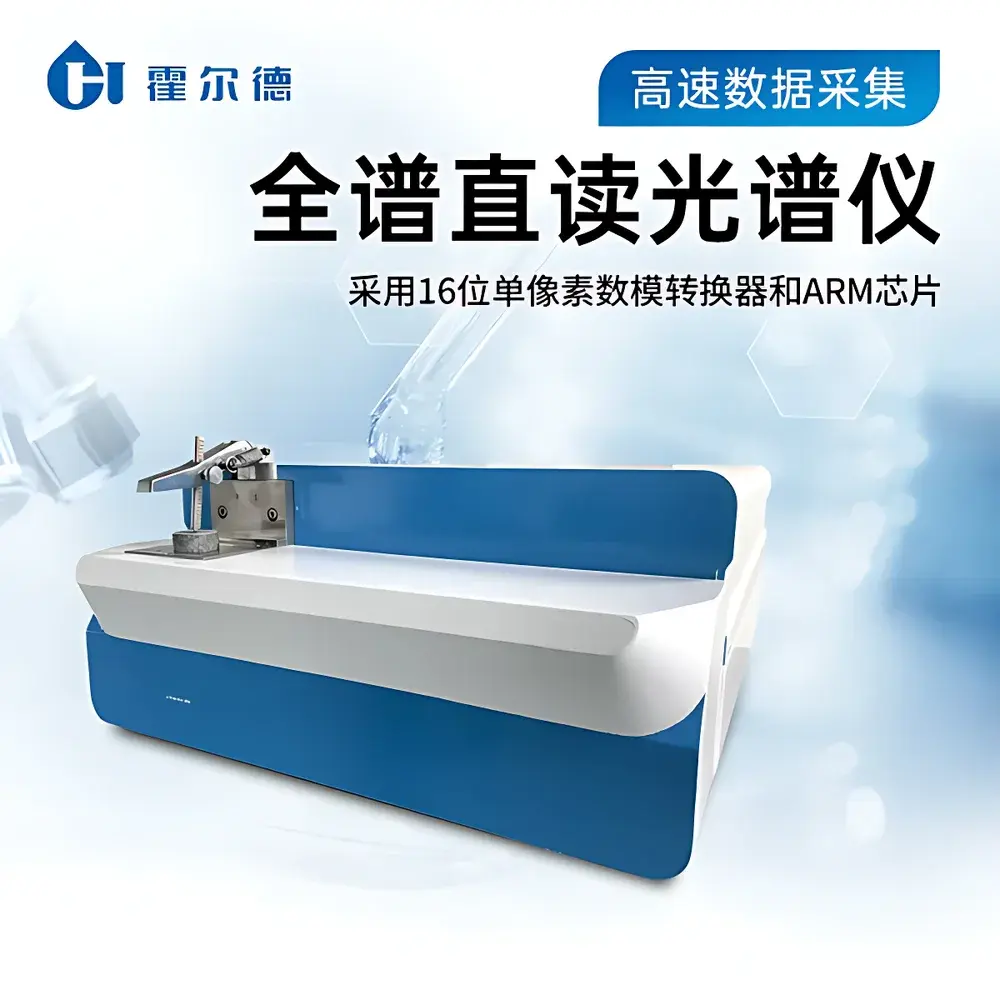
Horde Electric HD-Spark1 Desktop Direct-Reading Spark Emission Spectrometer
| Brand | Horde Electric |
|---|---|
| Origin | Shandong, China |
| Manufacturer Type | OEM Manufacturer |
| Instrument Type | Benchtop |
| Excitation Method | Spark Discharge |
| Detector Type | CCD-based Multi-Channel Array |
| Focal Length | 400 mm |
| Grating Groove Density | 2700 lines/mm |
| Wavelength Range | 120–800 nm |
| Analog-to-Digital Resolution | 16-bit per pixel |
| Optical Architecture | Paschen-Runge Mount with Rowland Circle Design |
| Vacuum System | Intermittent Vacuum Maintenance |
| Compliance | ASTM E415, ISO 11573, GB/T 4336 (Chinese National Standard for Spark OES) |
Overview
The Horde Electric HD-Spark1 is a benchtop direct-reading spark optical emission spectrometer (OES) engineered for quantitative elemental analysis of metallic alloys in industrial quality control and metallurgical R&D environments. It operates on the fundamental principle of spark-induced atomic emission: a high-energy electrical discharge vaporizes and excites surface atoms of a solid metal sample; the resulting element-specific spectral lines—emitted as photons across the vacuum ultraviolet to near-infrared range—are dispersed by a fixed-grating monochromator and resolved spatially on a high-stability CCD detector array. The Paschen-Runge optical layout with a 400 mm Rowland circle ensures consistent focal geometry, minimizing aberrations and enabling simultaneous multi-element detection without mechanical scanning. Integrated intermittent vacuum control maintains optical path integrity below 10 Pa in the spectrometer chamber, eliminating air absorption—particularly critical for accurate measurement of low-wavelength emissions (e.g., C 193.0 nm, P 178.2 nm, S 180.7 nm), which are essential for steel grade certification.
Key Features
- Robust spark source with real-time energy regulation: Digital pulse-width modulation enables precise control of discharge current, frequency, and integration time—critical for reproducible ablation across diverse matrix types (e.g., ferritic vs. austenitic steels, Al-Si vs. Cu-Zn alloys).
- Dedicated excitation chamber with electrode protection system: Prevents arcing-induced pitting and extends tungsten-carbide counter-electrode service life beyond 10,000 sparks under routine operation.
- High-fidelity optical train: 2700 grooves/mm holographic grating delivers resolving power (λ/Δλ) > 25,000 at 200 nm, supporting baseline separation of adjacent iron-group lines (e.g., Cr I 283.56 nm / Fe I 283.59 nm).
- ARM-based embedded acquisition unit: Processes raw CCD frames at ≥120 Hz frame rate; 16-bit ADC resolution ensures linear dynamic range exceeding 65,000:1 for intensity quantification—essential for trace element detection (e.g., B, Sn, As) alongside major constituents (Fe, Mn, Si).
- Thermal stabilization architecture: Dual-zone temperature control (±0.1 °C) of grating and detector mounts mitigates thermal drift during extended calibration sequences or multi-shift production runs.
Sample Compatibility & Compliance
The HD-Spark1 accepts flat, polished metallic samples with diameters from 10 mm to 40 mm and thickness ≥4 mm—compatible with standard ASTM E415 sampling fixtures. It supports analysis of ferrous matrices (carbon steels, low-alloy steels, stainless steels, cast irons) and non-ferrous systems (Al, Cu, Mg, Zn, Ni, Ti, and their alloys). Calibration libraries include pre-validated type standards per ISO 11573 Annex A and GB/T 4336 certified reference materials. Full audit trail functionality—including user login timestamps, method versioning, and raw spectrum archiving—meets GLP and GMP documentation requirements. Optional 21 CFR Part 11-compliant software module provides electronic signatures, role-based access control, and immutable data logging for regulated manufacturing environments.
Software & Data Management
The proprietary Horizon OES Suite features intuitive workflow-driven interface with multilingual support (English, German, Spanish, Chinese). It implements advanced background correction algorithms (iterative polynomial fitting + peak deconvolution) and inter-element interference correction matrices derived from NIST SRM 1250 series validation studies. All calibrations are stored as portable XML files with full metadata (date, operator, instrument ID, lamp age). Raw spectra (16-bit FITS format) and processed results (CSV/Excel) export directly to LIMS via secure FTP or OPC UA protocols. Built-in diagnostic dashboard monitors vacuum pressure stability, spark energy variance, and detector dark-current drift—triggering automated recalibration alerts when statistical process control (SPC) limits are exceeded.
Applications
- Metallurgical incoming inspection: Rapid verification of alloy grade compliance (e.g., AISI 304 vs. 316 stainless; ASTM A105 carbon steel) against purchase specifications.
- Foundry melt shop control: Real-time monitoring of residual elements (Cu, Sn, Pb) and tramp elements (As, Sb) that affect hot-shortness in castings.
- Scrap sorting and recycling: Discrimination of high-value alloy streams (e.g., Inconel 718 vs. Monel 400) based on Ni-Cr-Mo-Co fingerprinting.
- R&D alloy development: Quantitative mapping of microsegregation in weld zones or heat-affected zones using sequential spark mapping mode.
- Failure analysis laboratories: Detection of embrittling impurities (e.g., H, O, N) via indirect indicators (Ti/N ratio, Al/O correlation) where direct measurement is not feasible.
FAQ
What vacuum level does the HD-Spark1 maintain during analysis?
The intermittent vacuum system sustains chamber pressure ≤8 Pa during measurement cycles, automatically reactivating between samples to preserve optical throughput and detector quantum efficiency.
Is argon purge required for operation?
Yes—a continuous 99.996% pure argon flow (≥3 L/min) is mandatory to displace atmospheric nitrogen and oxygen, ensuring stable plasma formation and minimizing CN band interference in the 190–220 nm region.
Can the instrument be integrated into an automated production line?
It supports hardware-level I/O triggers (TTL/RS-232) and Ethernet-based remote command execution (SCPI protocol), enabling synchronization with robotic sample handlers and MES scheduling systems.
How often must the optical grating be cleaned or realigned?
The sealed Paschen-Runge mount eliminates routine optical alignment; grating contamination is prevented by the vacuum barrier—no maintenance is scheduled within the first 5 years under normal operating conditions.
Does the software support custom method creation for proprietary alloys?
Yes—users may define new calibration curves using certified reference materials, assign custom grade classification rules, and embed pass/fail logic with configurable tolerance bands per element.






