
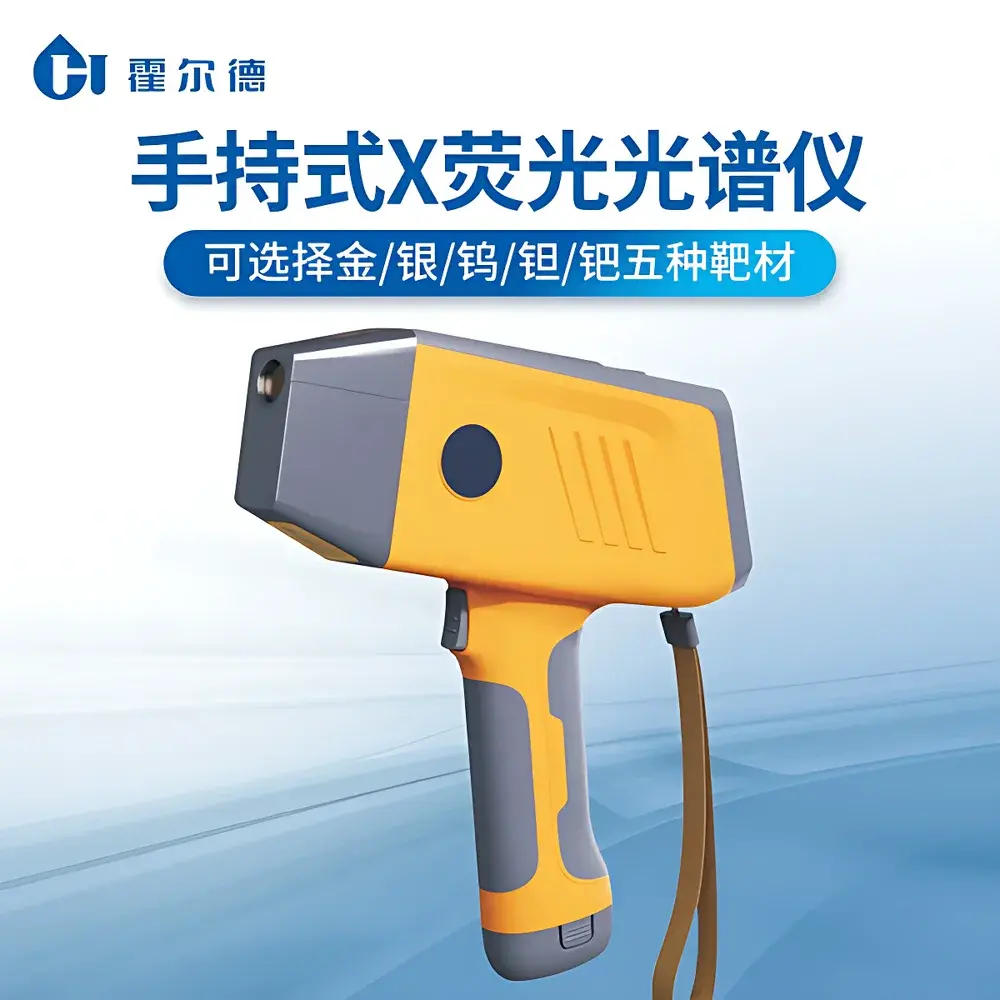
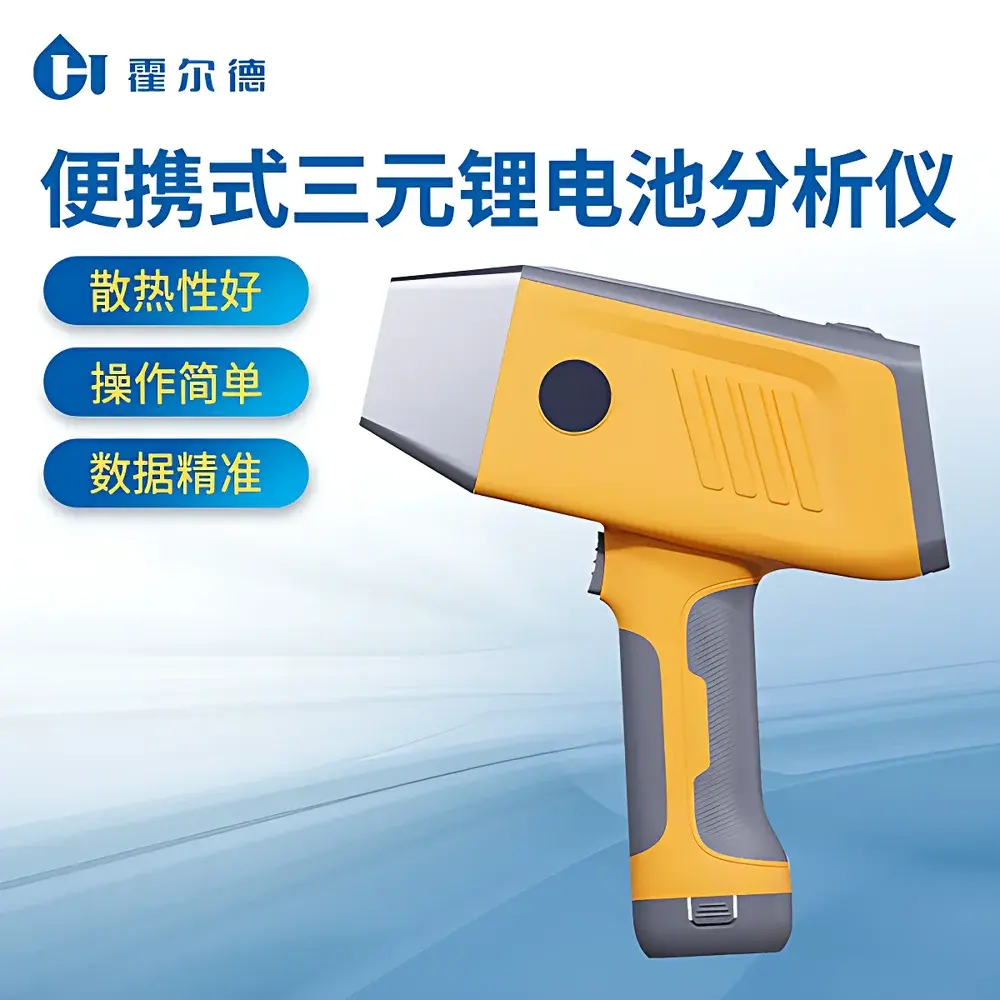
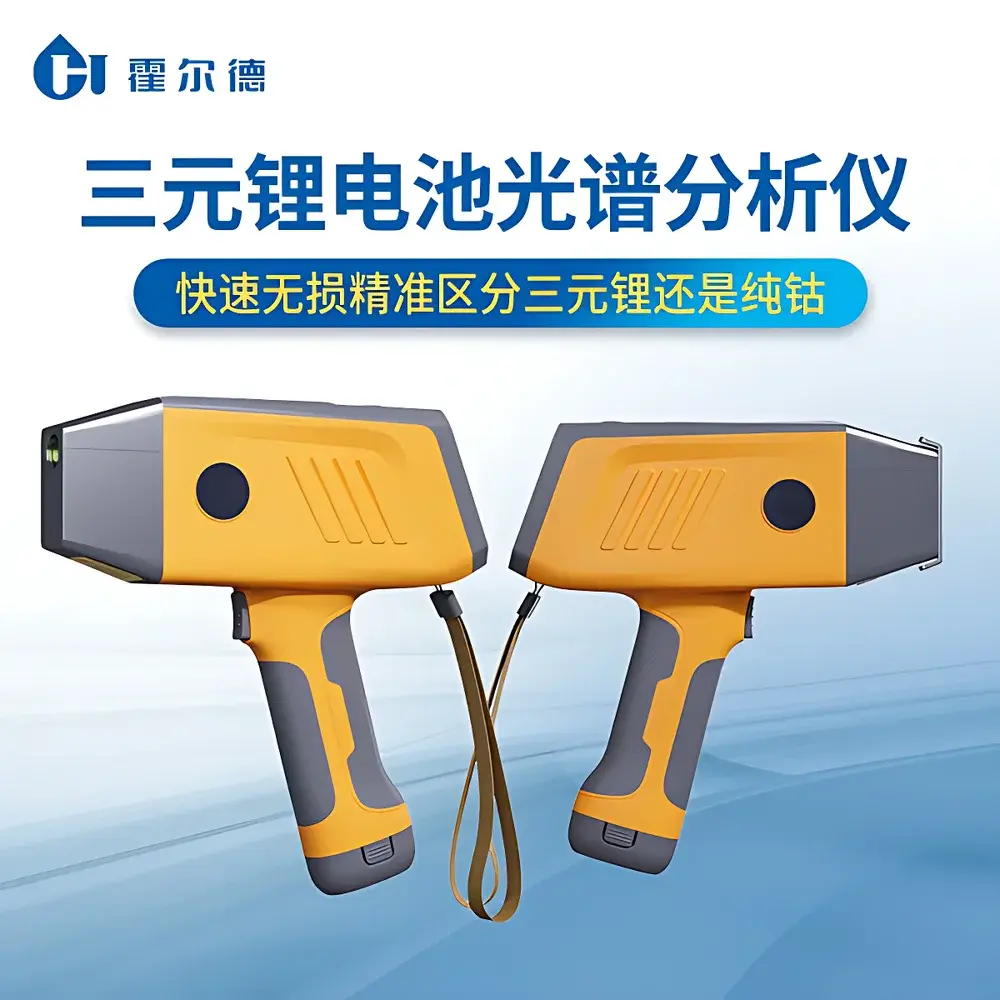
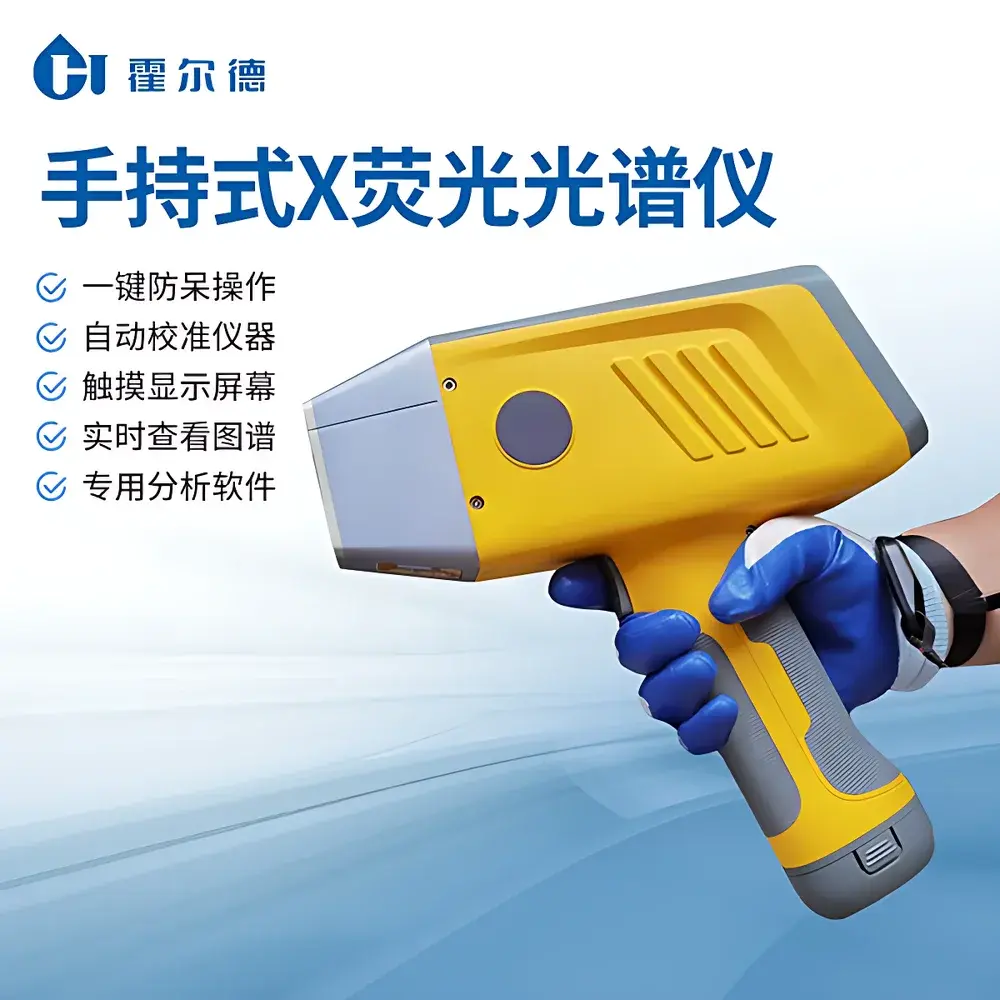
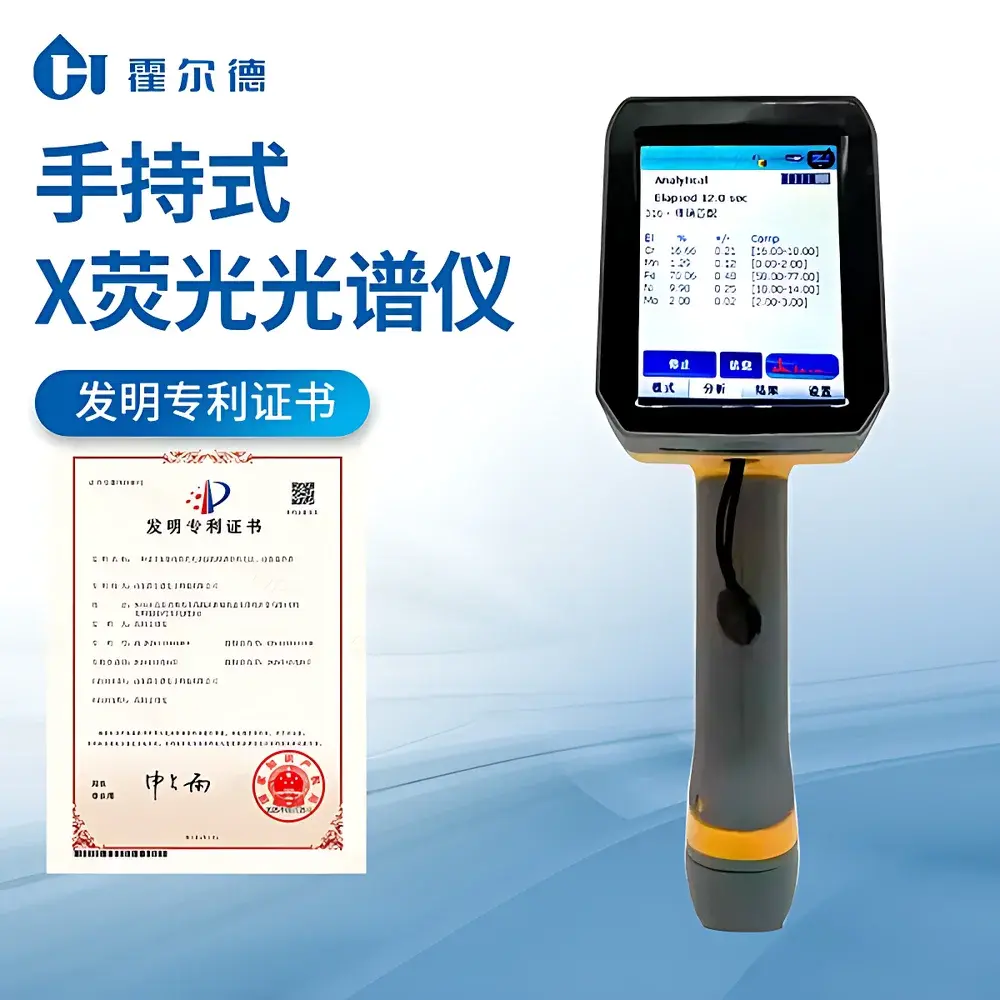
Horde Electric XRF-SL1 Portable XRF Analyzer for Ternary Lithium Battery & Soil Heavy Metal Analysis
| Brand | Horde Electric |
|---|---|
| Origin | Shandong, China |
| Manufacturer Type | Direct Manufacturer |
| Country of Origin | China |
| Model | XRF-SL1 |
| Price | ¥118,000 |
| Instrument Type | Handheld |
| Detection Principle | X-Ray Fluorescence Spectrometry (XRF) |
| Operating Temperature | −20 °C to 50 °C |
Overview
The Horde Electric XRF-SL1 is a field-deployable handheld X-ray fluorescence (XRF) spectrometer engineered for rapid, non-destructive elemental analysis in two critical domains: lithium-ion battery materials and environmental soil matrices. Leveraging energy-dispersive XRF (ED-XRF) technology, the instrument excites atomic electrons via primary X-ray irradiation and quantifies characteristic secondary X-ray emissions to determine elemental composition. Its optimized detector geometry, low-noise silicon drift detector (SDD), and high-stability miniature X-ray tube enable reliable detection of elements from titanium (Ti, Z=22) to bismuth (Bi, Z=83) — including Ni, Co, Mn, Fe, Cu, Zn, Pb, and As — with detection limits in the low parts-per-million (ppm) range for homogeneous solid samples under standard measurement conditions. Designed for operational continuity in variable outdoor environments, the XRF-SL1 maintains spectral stability across its full −20 °C to +50 °C operating envelope, making it suitable for mine-site surveys, battery recycling yards, agricultural soil screening, and industrial QC checkpoints.
Key Features
- Robust thermal management architecture: Over 50% of the housing is precision-machined 6061-T6 aluminum; integrated slot-style top-mounted heat sink ensures sustained tube output stability during extended field sessions.
- Optimized human-machine interface: Industrial-grade 3.5-inch TFT color touchscreen (240 × 320 pixels, LED backlight), fully sealed against dust and moisture (IP54-rated enclosure); integrated wrist strap and ergonomic diamond-textured rubber grip reduce operator fatigue during multi-hour use.
- Streamlined analytical workflow: Fixed high-voltage generator eliminates motorized filter wheels or collimator adjustments; factory-calibrated 316 stainless steel reference plate enables on-site verification without lab intervention; boot-to-test time <45 seconds; elemental ID and quantitative result displayed within 0.8 seconds post-trigger.
- High-fidelity quantitative engine: Fundamental Parameters (FP) algorithm with embedded matrix correction; pre-loaded library of >500 certified alloy standards; user-definable custom calibrations for up to 300 material groups; micro-sample compensation mode supports analysis of wires as thin as 0.04 mm diameter or irregular fragments.
- Comprehensive elemental coverage: Quantitative analysis of Ti, V, Cr, Mn, Fe, Co, Ni, Cu, Zn, Hf, Ta, W, Re, Pb, Bi, Zr, Nb, Mo, Pd, Ag, Cd, Sn, and Sb — sufficient for ternary cathode stoichiometry verification (e.g., NMC 111/532/622/811), heavy metal screening per EPA Method 6200, and alloy verification per ASTM E1999.
Sample Compatibility & Compliance
The XRF-SL1 accommodates heterogeneous, non-planar, and low-mass samples typical in battery and environmental workflows: intact pouch cells, crushed cathode scrap, uncrushed anode foils, powdered ore concentrates, and air-dried soil cores. Sample preparation is minimal — surface cleaning and flat placement suffice for reproducible results. The analyzer complies with IEC 61000-6-3 (EMC emission standards) and meets radiation safety requirements per IEC 62495 (handheld XRF devices). While not intended for regulatory reporting without laboratory validation, its data supports Tier 1 screening aligned with ISO 18587:2016 (soil contamination assessment) and USP <232>/<233> elemental impurity guidance for battery-grade raw materials. For GMP-relevant applications, audit trail logging and user-access controls are configurable via optional firmware modules compliant with FDA 21 CFR Part 11 Annex 11 principles.
Software & Data Management
The embedded Android-based OS runs proprietary Horde Analyze™ v3.2 software, supporting real-time spectrum visualization, batch export (CSV, PDF, XML), GPS-tagged location stamping, and cloud synchronization via encrypted HTTPS to private enterprise servers. All measurement metadata — including tube parameters, live count rates, dead time, and calibration timestamps — are retained in immutable binary logs. Exported reports include uncertainty estimates derived from counting statistics and matrix effects modeling. Optional PC-based Horizon Suite enables advanced multivariate regression, method transfer between instruments, and integration with LIMS platforms via ASTM E1703-compliant data exchange protocols.
Applications
- Battery Materials Manufacturing: In-line verification of Ni:Co:Mn ratios in NMC precursors and sintered cathodes; detection of Fe/Cr/Ni/Cu/Zn contaminants in electrode slurries and tooling surfaces to prevent cell-level short-circuit risks.
- Recycling & Resource Recovery: On-site classification of spent Li-ion batteries by chemistry type (NMC vs. LFP vs. LCO); quantification of Co and Ni content in black mass prior to hydrometallurgical processing; rapid assay of Cu foil purity in recovered anodes.
- Environmental Field Screening: Rapid semi-quantitative mapping of As, Pb, Cd, Cr, and Hg in agricultural topsoil; identification of anthropogenic hotspots near e-waste dismantling zones or former industrial sites.
- Mining & Exploration: Real-time grade control during trenching and drill-core logging; discrimination between sulfide-rich vs. oxide-hosted Ni-Co-Mn mineralization; support for selective sampling strategies that reduce lab submission volume by >40%.
FAQ
Does the XRF-SL1 require annual recalibration?
No — the instrument uses a fixed high-voltage source and factory-traceable 316 SS reference standard. Daily verification using the built-in check source is recommended; full recalibration is only required after physical impact or exposure beyond specified environmental limits.
Can it analyze wet or organic-rich soil samples?
Direct analysis of moist or high-OM soils is discouraged due to matrix absorption effects. Air-drying and light homogenization improve precision; for regulatory compliance, lab-based digestion (e.g., EPA 3050B) remains mandatory.
Is spectral data export compatible with third-party chemometric software?
Yes — raw spectra (counts vs. keV) and processed quantitation tables are exportable in ASCII format, enabling import into Unscrambler®, MATLAB®, or R-based PLS regression pipelines.
What safety certifications does the device hold?
It carries CE marking for EMC and RoHS compliance; radiation output is certified below 1 µSv/h at 5 cm distance per IEC 62495, and includes dual visual (top/bottom flashing LEDs) and haptic alerts during beam activation.
Related Products







