
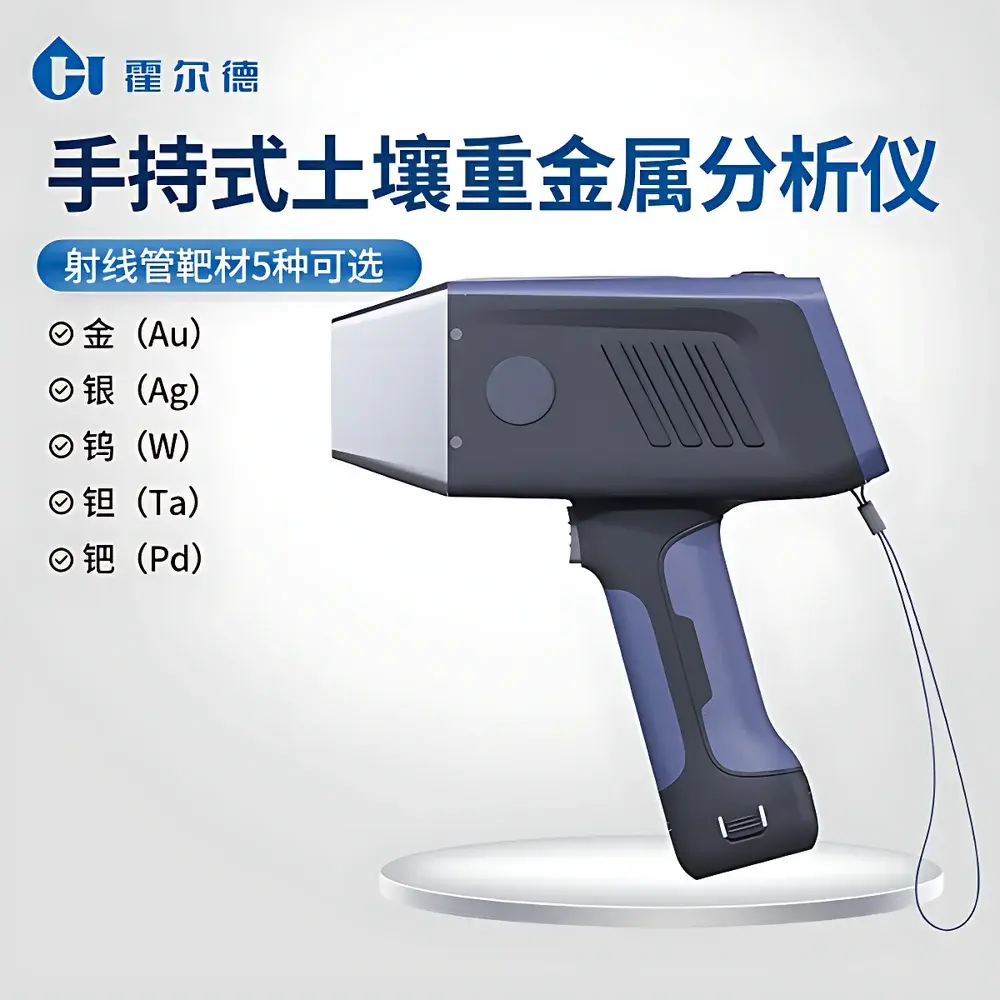
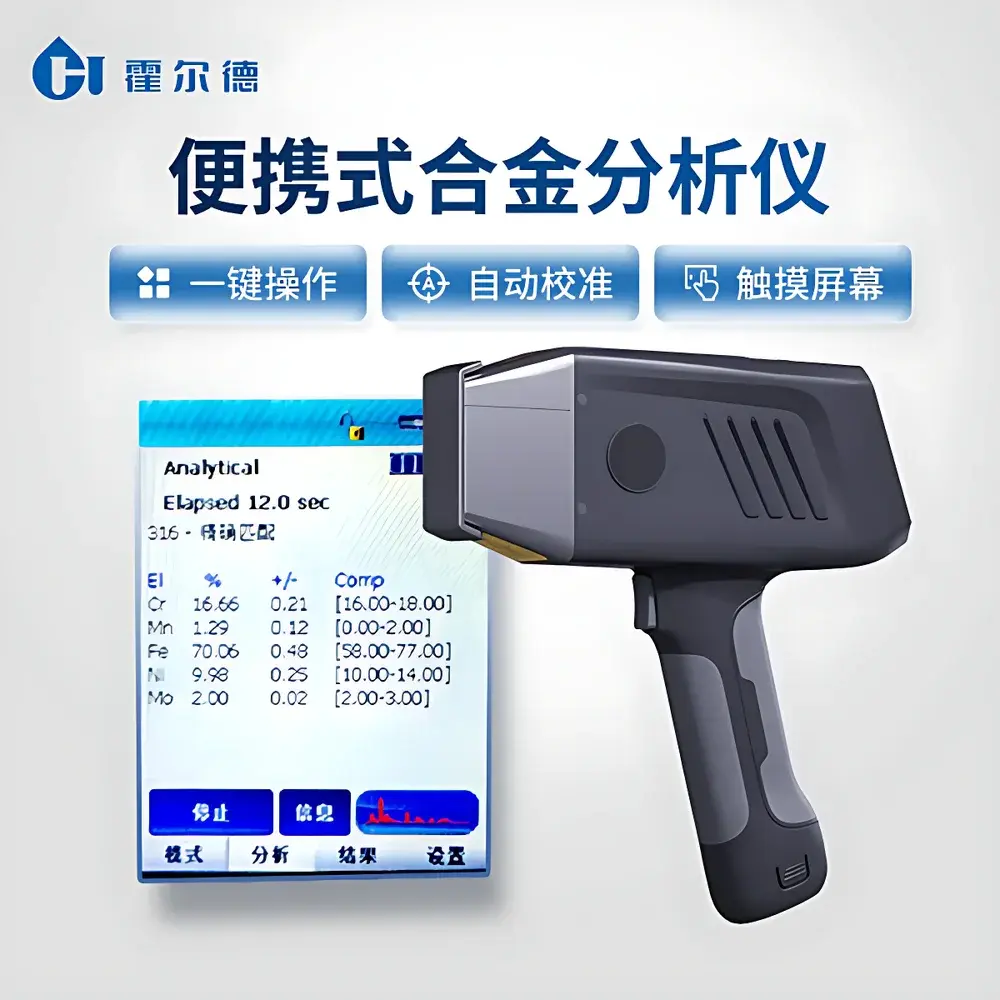
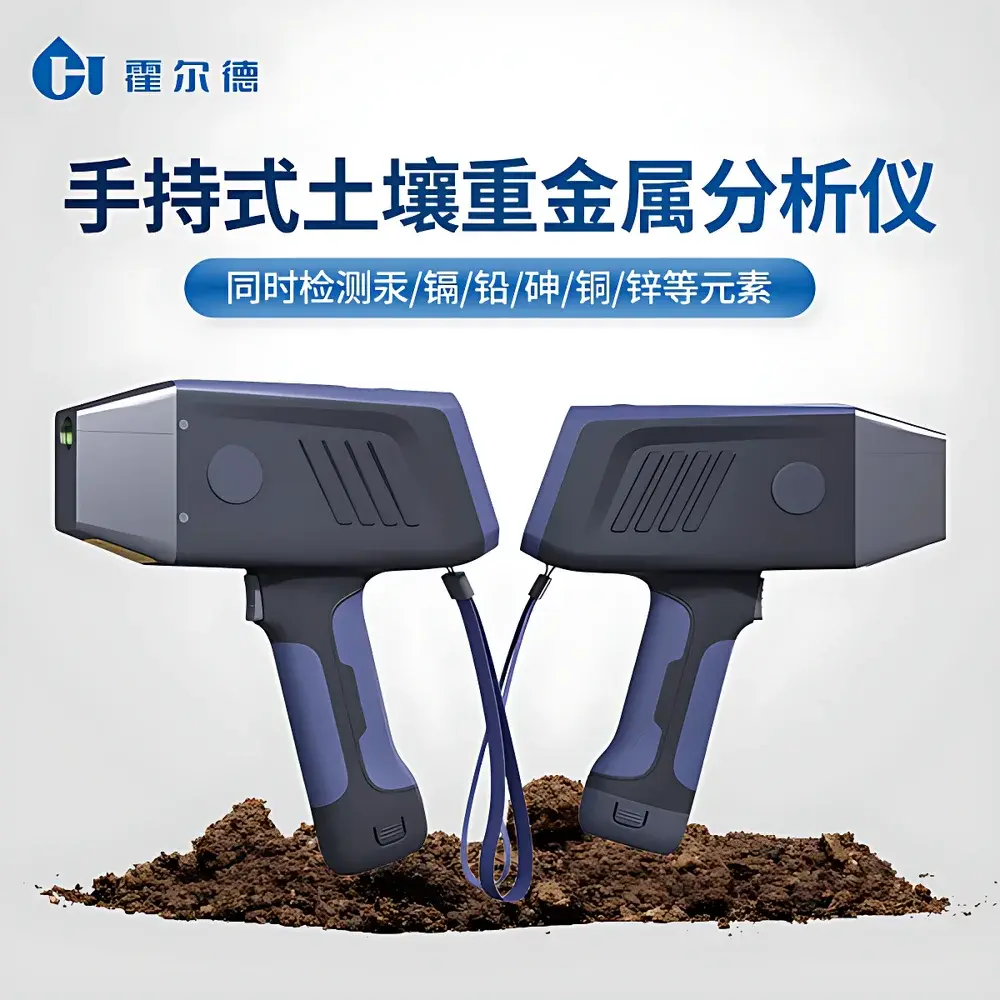
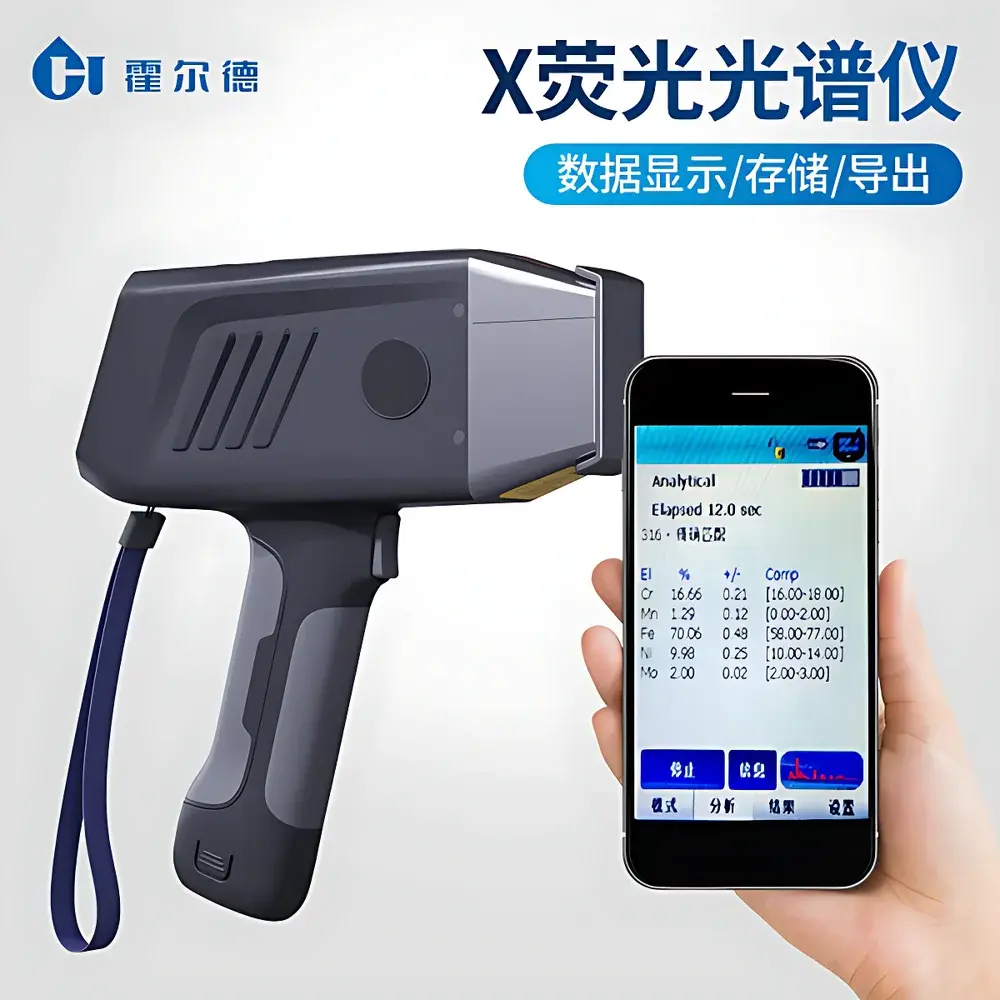
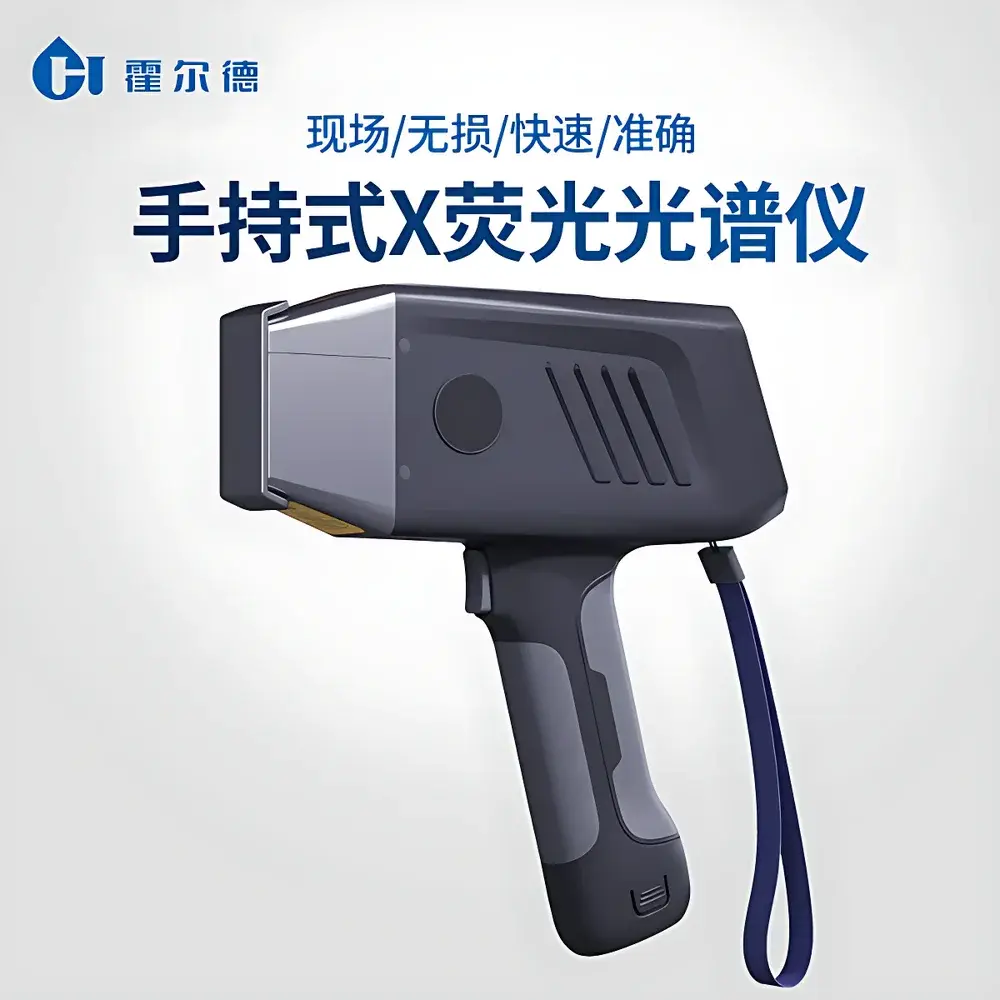
HORDE XRF-ST1 Handheld Soil Heavy Metal Analyzer
| Brand | HORDE Electric |
|---|---|
| Origin | Shandong, China |
| Manufacturer Type | Direct Manufacturer |
| Country of Origin | China |
| Model | XRF-ST1 |
| Product Type | Handheld |
| Detection Principle | Energy-Dispersive X-Ray Fluorescence (EDXRF) |
Overview
The HORDE XRF-ST1 Handheld Soil Heavy Metal Analyzer is an industrial-grade, field-deployable elemental analyzer engineered for rapid, non-destructive quantification of heavy metals in soil matrices using energy-dispersive X-ray fluorescence (EDXRF) spectroscopy. Unlike laboratory-bound ICP-MS or AAS systems, the XRF-ST1 enables real-time, in-situ analysis without sample digestion or chemical reagents—making it ideal for environmental site assessments, regulatory compliance screening, and remediation monitoring. Its compact ergonomic design (weight < 1.5 kg), integrated rechargeable battery (≥8 hrs operational life), and rugged IP54-rated housing ensure reliable performance across diverse field conditions—from agricultural fields and brownfield sites to landfill perimeters and mining-affected zones. The instrument operates on a dual-target excitation source optimized for low-Z to mid-Z elements (Mg–U), delivering detection limits in the range of 1–10 mg/kg for key toxic metals under standardized soil matrix conditions (e.g., SRM 2710a, NIST).
Key Features
- Simultaneous multi-element detection: Hg, Cd, Pb, As, Cu, Zn, Ni, Co, V, Cr, Mn, and up to 25 additional elements (customizable via firmware update and calibration library expansion)
- Integrated high-sensitivity Si-PIN detector with Peltier cooling, achieving energy resolution ≤165 eV at Mn Kα (5.9 keV)
- Onboard GPS module (GPS/GLONASS dual-system support) with sub-3-meter positional accuracy; geotagged spectra stored with timestamp, altitude, and coordinate metadata
- Intelligent EDXRF software with automated spectral deconvolution, matrix correction (based on fundamental parameters method), and empirical calibration models for common soil types (clay, loam, sand, organic-rich)
- Ruggedized aluminum-magnesium alloy chassis with shock-absorbing rubber overmold; compliant with MIL-STD-810G for drop resistance (1.2 m onto concrete)
- Real-time data visualization: element concentration maps, contour overlays, and trend heatmaps generated directly on-device or via cloud-synced dashboard
Sample Compatibility & Compliance
The XRF-ST1 is validated for direct analysis of air-dried, homogenized soil samples with particle size ≤2 mm—requiring no pelletization or binder addition. It complies with ASTM D6729-22 (Standard Test Method for Determination of Metals in Soils by Portable X-Ray Fluorescence Spectrometry) and supports method validation per EPA Method 6200. Instrument operation adheres to ISO 18589-4:2019 (Radiological protection — Measurement of radioactivity in the environment — Soil — Part 4: Measurement of radionuclides using gamma spectrometry) for background interference assessment. All measurement protocols are fully traceable to NIST-traceable soil reference materials (e.g., SRM 2709a, 2710a, 2711a). Data integrity meets GLP/GMP documentation requirements, including electronic signatures, audit trails, and user-access controls aligned with FDA 21 CFR Part 11 principles.
Software & Data Management
The proprietary HORDE GeoScan Suite provides end-to-end workflow management—from acquisition to reporting. Field operators use the touchscreen interface for one-click measurement, auto-peak identification, and immediate pass/fail flagging against customizable regulatory thresholds (e.g., China GB 15618-2018, US EPA Regional Screening Levels, EU CLP thresholds). All spectra and metadata are encrypted and stored locally (32 GB internal memory) with optional automatic upload to secure AWS-hosted platforms. Export formats include CSV, PDF analytical reports (with embedded GPS coordinates and spectral plots), and GIS-ready SHP/KML files. Software updates, calibration libraries, and method templates are delivered via OTA (over-the-air) with version-controlled release notes and change logs.
Applications
- Regulatory soil screening: Pre-construction site characterization, RCRA facility inspections, and post-remediation verification per ASTM D7212
- Agricultural land assessment: Mapping bioavailable Cd and Pb hotspots in rice paddies or orchard soils; supporting risk-based land-use classification
- Industrial legacy site triage: Rapid delineation of Cr(VI)-contaminated plumes at electroplating facilities or As-affected zones near former pesticide manufacturing plants
- Emergency response: First-responder deployment during spill incidents (e.g., battery recycling facility breaches) to establish exposure boundaries within minutes
- Long-term remediation monitoring: Time-series tracking of Zn and Cu attenuation in phytoremediation trials or immobilization efficacy of phosphate amendments
- Academic research: In-field validation of portable XRF against lab-based techniques; correlation studies between total metal content and sequential extraction fractions
FAQ
Does the XRF-ST1 require sample preparation before analysis?
No—air-dried, sieved (<2 mm) soil can be analyzed directly. For optimal precision, surface leveling and removal of visible debris (stones, roots) are recommended.
How does the instrument handle soil moisture variability?
The built-in moisture compensation algorithm uses Compton scatter intensity normalization and applies matrix-specific corrections derived from >500 validated soil moisture–density profiles.
Can the XRF-ST1 quantify speciation (e.g., Cr(III) vs. Cr(VI))?
No—EDXRF measures total elemental concentration only. Speciation requires complementary techniques such as HPLC-ICP-MS or XANES.
Is calibration transfer possible between instruments?
Yes—HORDE’s cross-unit calibration protocol uses shared reference standards and spectral alignment algorithms, enabling consistent results across fleets of XRF-ST1 units.
What regulatory reporting formats does the software support?
Pre-configured templates for China’s “Soil Pollution Risk Control Standard” (GB 15618-2018), US EPA Region 9 TPH/Heavy Metals Reporting, and EU REACH Annex XVII compliance documentation.







