
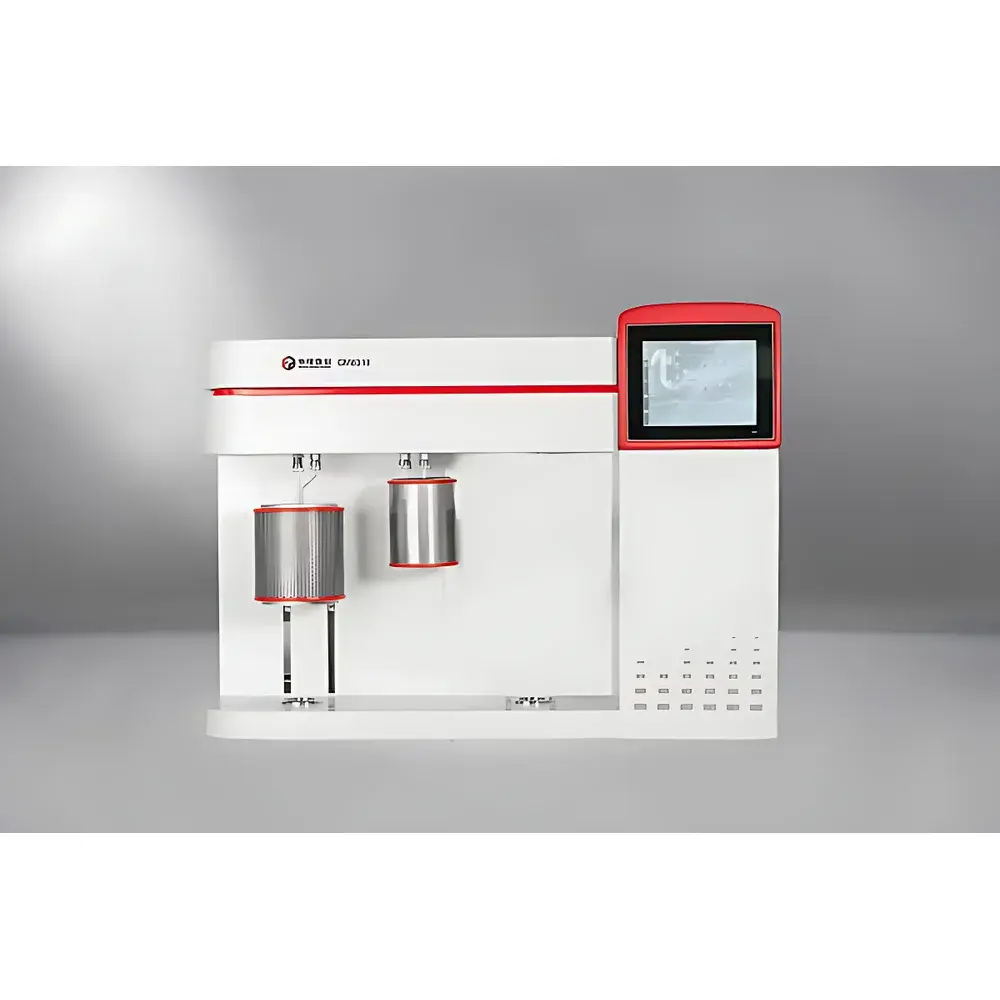
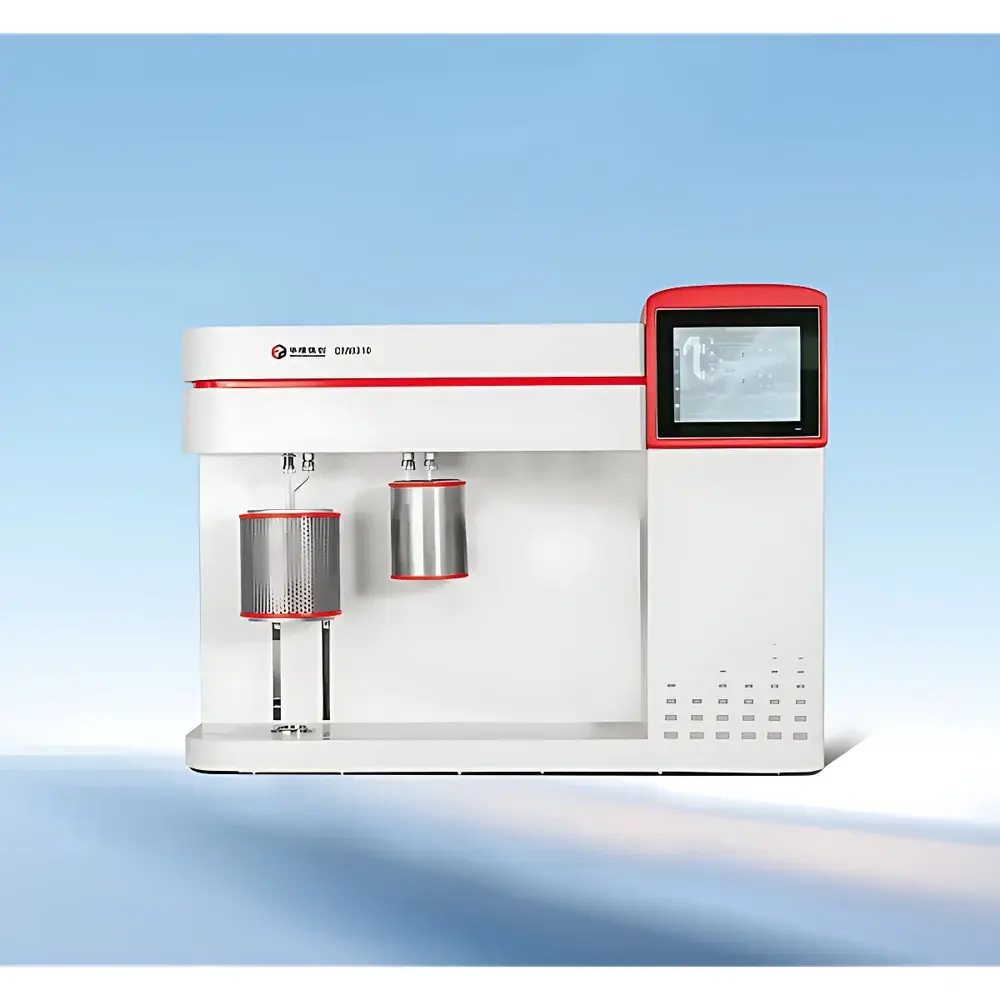
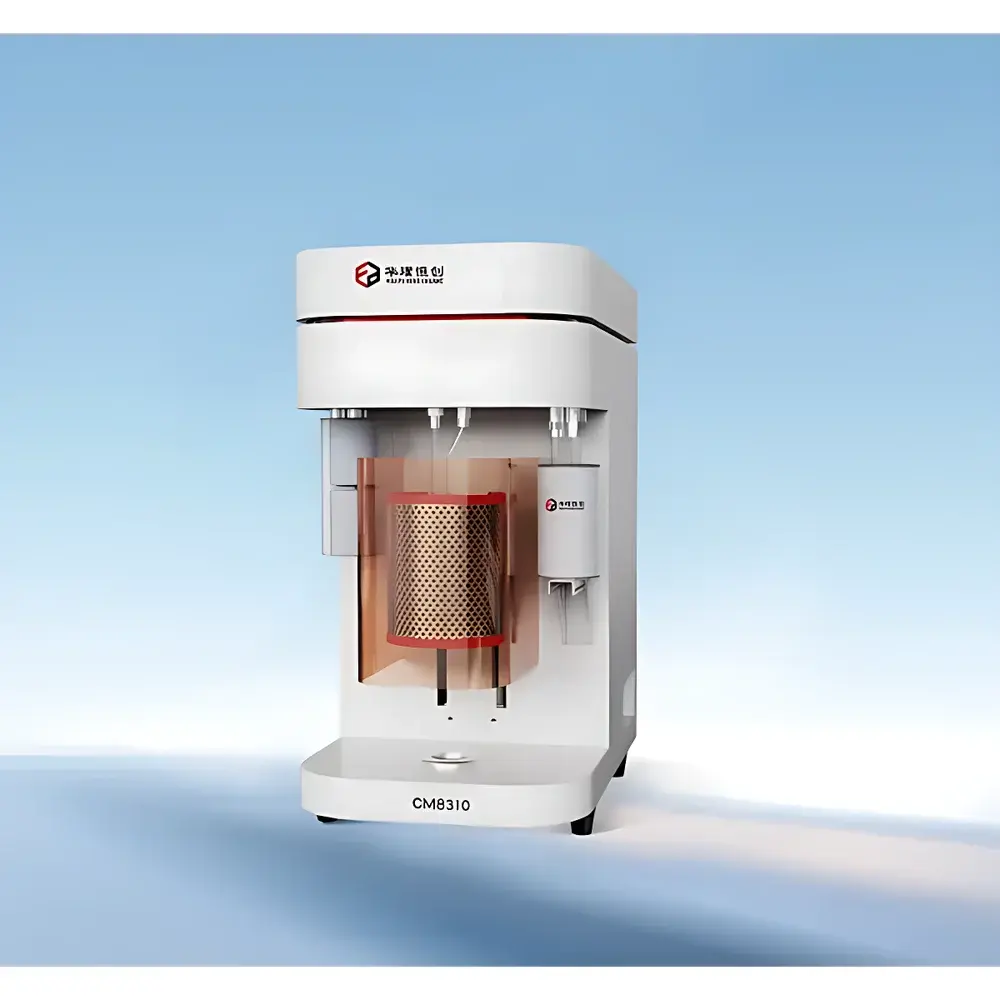
HPHC ChemiMaster 8310 Series Automated Single-Station Chemisorption Analyzer
| Brand | HPHC |
|---|---|
| Origin | Beijing, China |
| Model | CM8310 Series |
| Instrument Type | Chemisorption Analyzer |
| Measurement Principle | Dynamic Flow Method |
| Gas Inlet Ports | 8 |
| Heating Temperature Range | Ambient to 1200 °C |
| Isothermal Stability | ±0.001 °C |
| Heating Rate | 1 °C/min |
| Pressure Range | Atmospheric |
| Test Capabilities | TPD, TPR, TPO, Pulse Chemisorption (Metal Dispersion), Vapor Adsorption, BET Single-Point Surface Area, Multi-Component Competitive Adsorption |
| Detector | Tungsten-Rhenium Alloy Thermal Conductivity Detector (TCD) |
| TCD Count | 1 |
| Mass Flow Controllers | 2 |
| Exhaust Flow Meter | 1 |
| Electric 6-Port Valve | 1 |
| Electric 4-Port Valves | 2 |
| Furnace Control | Dual-point (“Bed Temp” & “Furnace Temp”) |
| Sample Temperature Sensing | Independent RTD or Thermocouple |
| Internal Line Insulation | Up to 300 °C |
| Gas Flow Range | 5–100 SCCM |
| Tubing Material | 1/8″ SS316 |
| Optional Accessories | Integrated Vapor Generator (Continuous & Pulsed Modes), Customizable LOOP Volumes (≥3 Options), Cold Trap (1), Forced-Air Cooling System (1) |
Overview
The HPHC ChemiMaster 8310 Series is an automated single-station chemisorption analyzer engineered for high-precision dynamic gas–solid interaction characterization under controlled thermal and compositional conditions. Built upon the flow method principle, it enables quantitative analysis of surface active sites—including acid/base centers, redox-active metal species, and dispersion states—through temperature-programmed techniques (TPD, TPR, TPO), pulse chemisorption, vapor-phase adsorption, and single-point BET surface area determination. The system operates at atmospheric pressure with full thermal management: a dual-sensor furnace (simultaneous bed- and furnace-temperature monitoring), ±0.001 °C isothermal stability, and programmable heating rates up to 1 °C/min across a 0–1200 °C range. Its architecture integrates eight independently regulated gas inlets, corrosion-resistant SS316 tubing throughout, and uniform line insulation up to 300 °C—ensuring reproducible gas delivery, minimal condensation, and long-term integrity during aggressive reactive gas exposures (e.g., H₂, O₂, NH₃, CO, H₂O vapor).
Key Features
- Single-station configuration optimized for method development, catalyst screening, and GLP-compliant routine testing
- Dual-point temperature control with independent bed-temperature sensing—critical for accurate kinetic interpretation in TPD/TPR
- Eight configurable gas inlets supporting complex gas switching sequences; expandable via auxiliary manifolds
- Integrated vapor generator (optional) enabling precise, temperature-stabilized delivery of organic or inorganic vapors (e.g., H₂O, alcohols, amines) in continuous or pulsed mode
- Thermal conductivity detector (TCD) based on tungsten–rhenium alloy filament—offering high sensitivity, low drift, and compatibility with inert and reactive carrier gases
- Full-system insulation (up to 300 °C) and forced-air cooling to maintain thermal gradients and prevent downstream condensation
- Automated valve sequencing with real-time status feedback in software; includes one electric 6-port and two 4-port valves for flexible gas routing
- Cold trap (standard) and optional LOOP volumes (≥3 configurations) for enhanced quantification accuracy in pulse titration
Sample Compatibility & Compliance
The ChemiMaster 8310 accommodates powdered, pelletized, or monolithic catalysts (typically 0.05–0.5 g) in standard quartz U-tube reactors. Its design supports ASTM D7215 (TPD of acidic sites), ISO 18314-1 (catalyst redox behavior), and USP <1251> (surface area by gas adsorption) methodologies. All gas-handling components meet ASTM A269 SS316 specifications; internal surfaces are passivated to minimize catalytic memory effects. The system’s hardware architecture and software audit trail capability align with FDA 21 CFR Part 11 requirements when deployed with electronic signature and user-access controls enabled. It is routinely validated per ICH Q5D (characterization of biocatalysts) and ISO/IEC 17025 calibration protocols for thermal and flow parameters.
Software & Data Management
The proprietary ChemiControl™ software provides synchronized control of temperature ramps, valve actuation, gas flows, and data acquisition at 10 Hz resolution. Real-time visualization includes TCD signal overlays, valve state diagrams, and furnace thermocouple traces. All raw data (time–signal, temperature–signal, flow–signal) are stored in HDF5 format with embedded metadata (user ID, method name, calibration timestamps, instrument serial). Export options include CSV, ASCII, and ASTM E131-compliant spectral files. The software supports method templates for TPD, TPR, TPO, pulse titration, and competitive adsorption experiments—with built-in peak integration (Gaussian/Lorentzian deconvolution), baseline correction, and stoichiometric conversion (e.g., H₂ consumption → metal dispersion %). Audit trails record all parameter changes, run initiations, and data exports—fully traceable for GMP/GLP audits.
Applications
- Quantification of Brønsted/Lewis acid site density and strength distribution via NH₃ or pyridine TPD
- Assessment of noble metal (Pt, Pd, Rh) dispersion and average crystallite size using CO or H₂ pulse chemisorption
- Redox profiling of transition metal oxides (e.g., Co₃O₄, CeO₂) via H₂-TPR and O₂-TPO
- Vapor-phase adsorption kinetics of H₂O, SO₂, or NOₓ on desulfurization or DeNOₓ catalysts
- Multi-component competitive adsorption studies—e.g., co-adsorption of CO and H₂ on Fischer–Tropsch catalysts, or NH₃ and H₂O on SCR formulations—to model realistic flue gas or reformate environments
- BET single-point surface area estimation for rapid catalyst lot qualification per ISO 9277
FAQ
What sample forms are compatible with the CM8310?
Powdered catalysts, pressed pellets (≤4 mm diameter), and small monolith segments (cut to fit 6 mm OD quartz reactor) are supported. Sample mass should be 0.05–0.5 g to ensure representative surface coverage and avoid thermal lag.
Can the system perform simultaneous multi-gas pulses?
No—it executes sequential pulses via programmable valve timing. However, pre-mixed gases (e.g., 5% H₂/Ar) can be delivered through dedicated inlets, and competitive adsorption is achieved by introducing multiple analytes in defined temporal sequences.
Is low-temperature operation (<0 °C) supported?
The base system operates from ambient to 1200 °C. A cryogenic cooling option (−40 °C to 1200 °C) is available as a factory-installed upgrade, enabling CO₂ or N₂ adsorption at sub-ambient temperatures.
How is metal dispersion calculated from pulse chemisorption data?
Using stoichiometric assumptions (e.g., 1:1 CO:Pt, 1:1 H₂:Pt after correction for H/Pt = 1), peak integration yields total adsorbed moles; dispersion (%) = (surface metal atoms / total metal atoms) × 100, derived from sample composition and loading.
Does the software support automated method validation reports?
Yes—ChemiControl™ generates IQ/OQ summary reports including temperature uniformity maps, flow linearity verification, TCD noise/resolution tests, and repeatability statistics (n ≥ 3) per ASTM E2656, exportable as PDF with digital signatures.



