
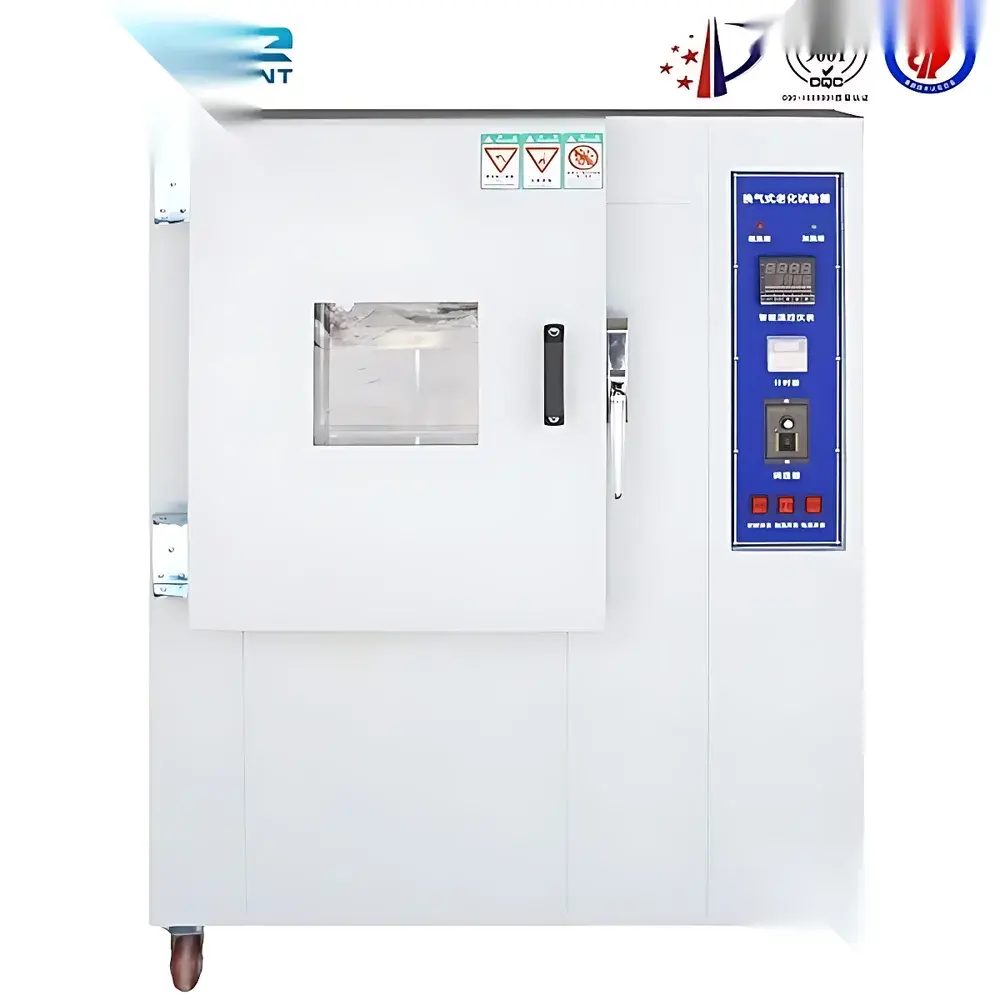
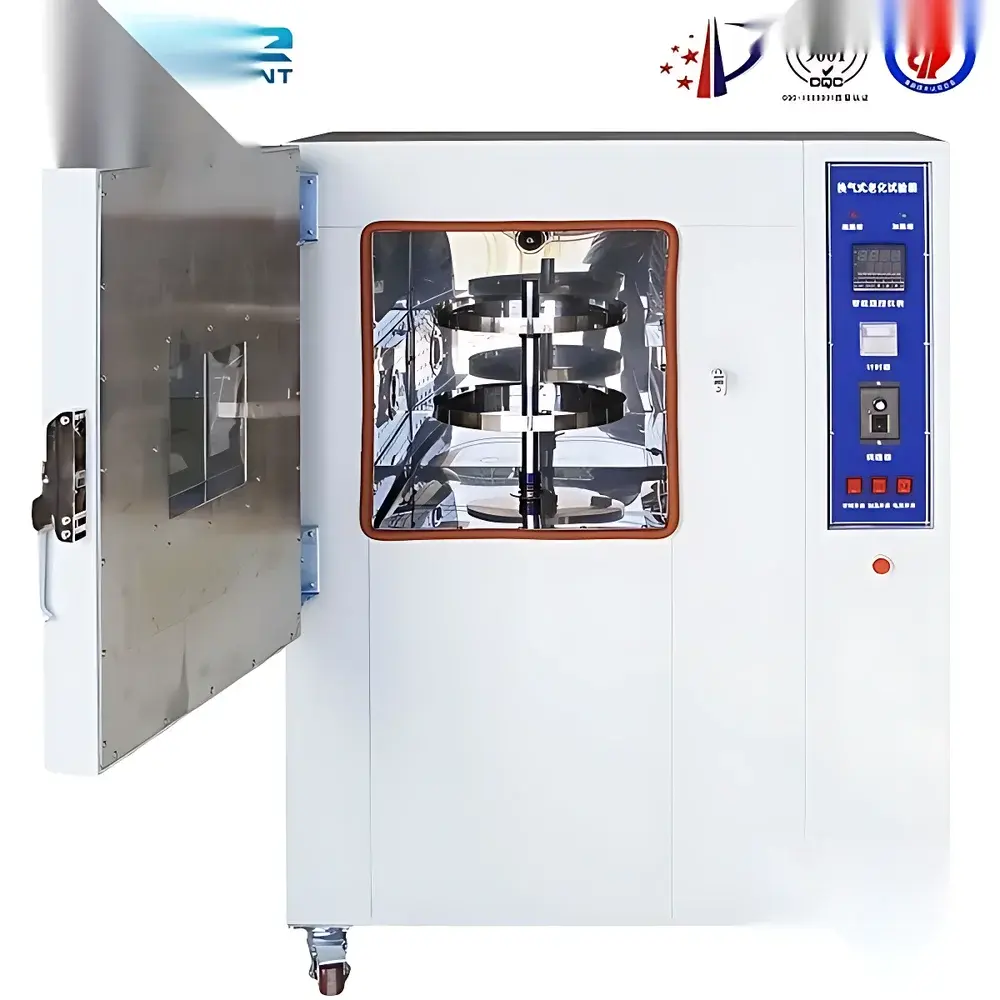
OK-HQ Series Natural Convection High-Temperature Aging Test Chamber
| Brand | Other Brands |
|---|---|
| Origin | Imported |
| Manufacturer Type | Authorized Distributor |
| Price | USD 2,600 (Reference Only) |
| Temperature Range | RT+10°C to 200°C / 300°C |
| Temperature Uniformity | ±2°C |
| Temperature Stability | ±0.5°C |
| Air Exchange Rate | 2–100 cycles/hour |
| Adjustable Air Exchange Interval | 1 min – 99 h |
| Internal Chamber Dimensions (L×W×H, mm) | 450×450×500 to 800×1000×1000 |
| Power Consumption | 4.0–9.0 kW |
| Controller | LED Digital PID Microprocessor with Timer (1–9999 min) |
| Turntable Diameter | Φ250–Φ700 mm |
| Compliance | ASTM D5423-09 (Type II), ASTM D5374-93(2005), UL 1581, GB/T 2423.2, IEC 60068-2-2, JIS C 0040, VDE 0470 |
Overview
The OK-HQ Series Natural Convection High-Temperature Aging Test Chamber is an engineered environmental test system designed for accelerated thermal aging evaluation of polymeric and elastomeric materials under controlled, ventilated high-temperature conditions. Unlike forced-convection ovens, this chamber relies on natural convection combined with precisely regulated air exchange to simulate long-term thermal degradation mechanisms—particularly relevant for electrical insulation, wire & cable sheathing, automotive seals, textile coatings, and rubber compounds. Its core operational principle centers on maintaining a defined air exchange rate (2–100 cycles/hour) within a thermally stable workspace, enabling reproducible oxidation kinetics studies per standardized aging protocols. The chamber’s structural design prioritizes thermal homogeneity, mechanical durability, and traceable process control—critical for laboratories conducting qualification testing in compliance with international material standards.
Key Features
- Stainless steel (SUS304) interior chamber with argon-arc welded seams and mirror-finish surface for corrosion resistance and ease of cleaning.
- Exterior cabinet constructed from A3 cold-rolled steel with electrostatic powder coating for enhanced mechanical integrity and aesthetic consistency.
- Intelligent microprocessor-based PID temperature controller with LED digital display, offering 0.1°C resolution for both setpoint and real-time monitoring.
- Programmable air exchange timing: adjustable interval from 1 minute to 99 hours, supporting precise replication of standard aging cycles (e.g., ASTM D5423 Type II).
- Horizontal natural convection airflow architecture supplemented by internal baffle plates to minimize thermal stratification; uniformity maintained at ±2°C across the working volume.
- Integrated low-speed rotating turntable (Φ250–Φ700 mm, model-dependent) for uniform exposure of cylindrical or asymmetrical specimens during extended aging.
- Energy-efficient insulation using ultra-fine glass fiber cotton (≥100 mm thickness), reducing standby heat loss and improving thermal response stability.
- Front-mounted observation window with tempered glass and built-in LED lighting for continuous visual inspection without thermal disturbance.
- Standard 50 mm diameter test port on left side wall, sealed with silicone gasket, facilitating external power/signal feedthrough for in-situ sensor integration or load monitoring.
Sample Compatibility & Compliance
The OK-HQ chamber accommodates a broad range of non-volatile, thermally stable samples—including insulated wires, rubber hoses, synthetic leather, woven fabrics, plastic films, and molded elastomer parts—up to maximum dimensions of 800 × 1000 × 1000 mm. Its air exchange mechanism ensures continuous replenishment of ambient oxygen, critical for simulating oxidative aging pathways. The system meets essential requirements of multiple international standards: ASTM D5423-09 (Type II laboratory oven for electrical insulating materials), ASTM D5374-93(2005) (standard test methods for thermal aging of electrical insulation), UL 1581 (Reference Standard for Electrical Wires and Cables), IEC 60068-2-2 (Environmental testing – Part 2-2: Tests – Test B: Dry heat), GB/T 2423.2 (Chinese national standard for high-temperature testing), JIS C 0040 (Japanese Industrial Standard for environmental testing), and VDE 0470 (German safety standard for insulating materials). All configurations support GLP-aligned documentation when paired with external data loggers.
Software & Data Management
While the base controller operates via standalone LED interface with embedded timer and PID logic, the chamber is compatible with third-party PC-based data acquisition systems via RS-485 or analog output (0–10 V / 4–20 mA). Optional USB or Ethernet modules enable real-time temperature logging, alarm event timestamping, and CSV export for audit trails. For regulated environments (e.g., ISO/IEC 17025-accredited labs), the system supports integration with validated software platforms compliant with FDA 21 CFR Part 11 requirements—including electronic signatures, audit trail generation, and user-access level controls—when deployed with appropriate validation documentation.
Applications
- Evaluation of thermal endurance life of PVC, PE, XLPE, and TPE insulation materials per IEC 60216.
- Aging performance assessment of automotive rubber components (hoses, gaskets, bushings) under simulated under-hood conditions.
- Pre-qualification testing of textile coatings and laminates for aerospace or industrial protective gear.
- Comparative oxidation resistance screening of novel polymer formulations during R&D.
- Compliance verification for wire and cable manufacturers seeking UL, CSA, or VDE certification.
- Stability testing of adhesives, sealants, and encapsulants used in electronics packaging.
FAQ
What is the difference between natural convection and forced convection aging chambers?
Natural convection aging chambers rely on buoyancy-driven airflow without mechanical fans, minimizing turbulence and shear stress on delicate specimens—ideal for evaluating bulk oxidative degradation. Forced convection systems use blowers to accelerate heat transfer but may introduce non-uniform aging effects due to localized airflow patterns.
Can this chamber be used for humidity-controlled aging tests?
No—the OK-HQ series is strictly a dry-heat, ventilated aging system. It does not incorporate humidification or dehumidification subsystems. For combined temperature/humidity aging, refer to dedicated climate test chambers compliant with IEC 60068-2-30.
Is calibration certificate included with shipment?
A factory calibration report (traceable to NIST or equivalent national metrology institute) is provided upon request. On-site IQ/OQ/PQ validation support and accredited calibration services are available as optional add-ons.
How is air exchange rate verified and validated?
Air exchange rate is calculated based on chamber volume and measured volumetric flow rate using calibrated anemometry at the exhaust port. The system includes provisions for installing flow meters and integrating with external gas analyzers for O₂ concentration tracking during extended tests.
Does the chamber meet CE marking requirements for EU deployment?
Yes—mechanical and electrical design complies with EN 61000-6-2 (EMC immunity) and EN 61000-6-4 (EMC emissions), and thermal safety conforms to EN 60519-1. CE Declaration of Conformity is supplied with each unit.



