
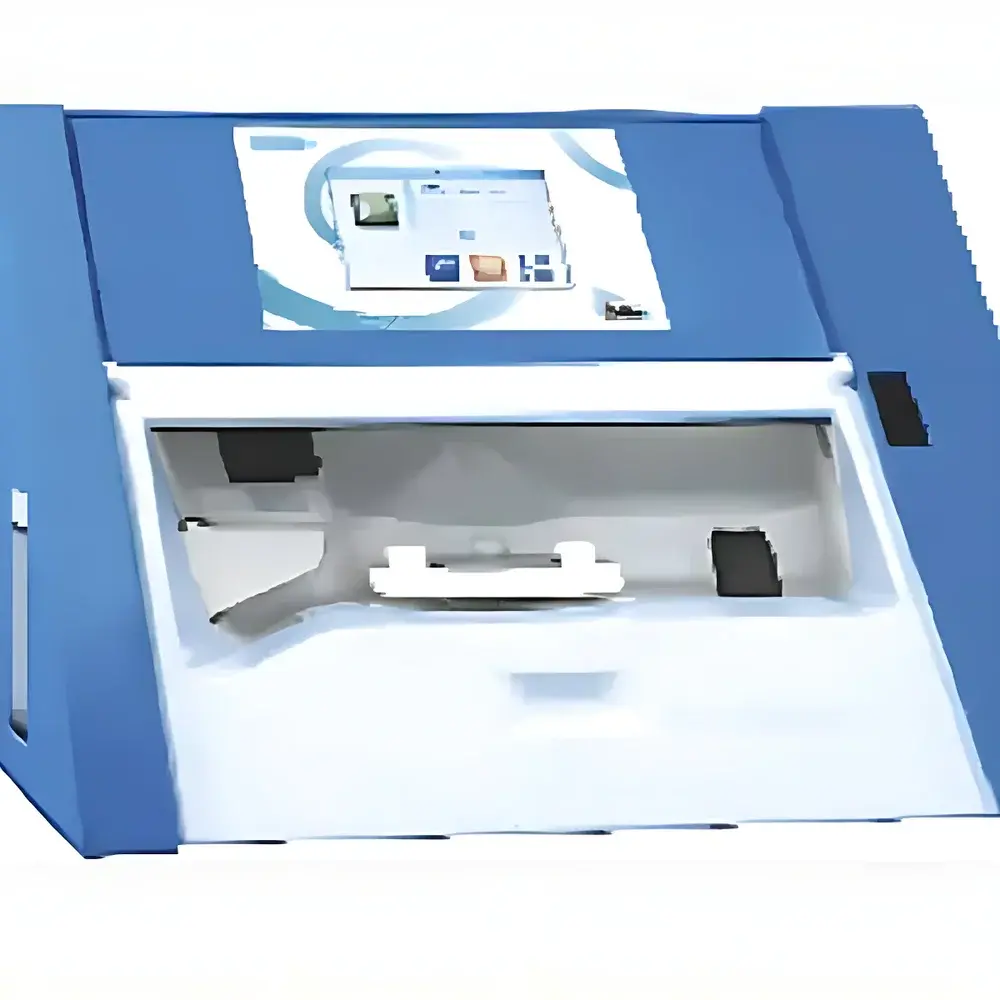
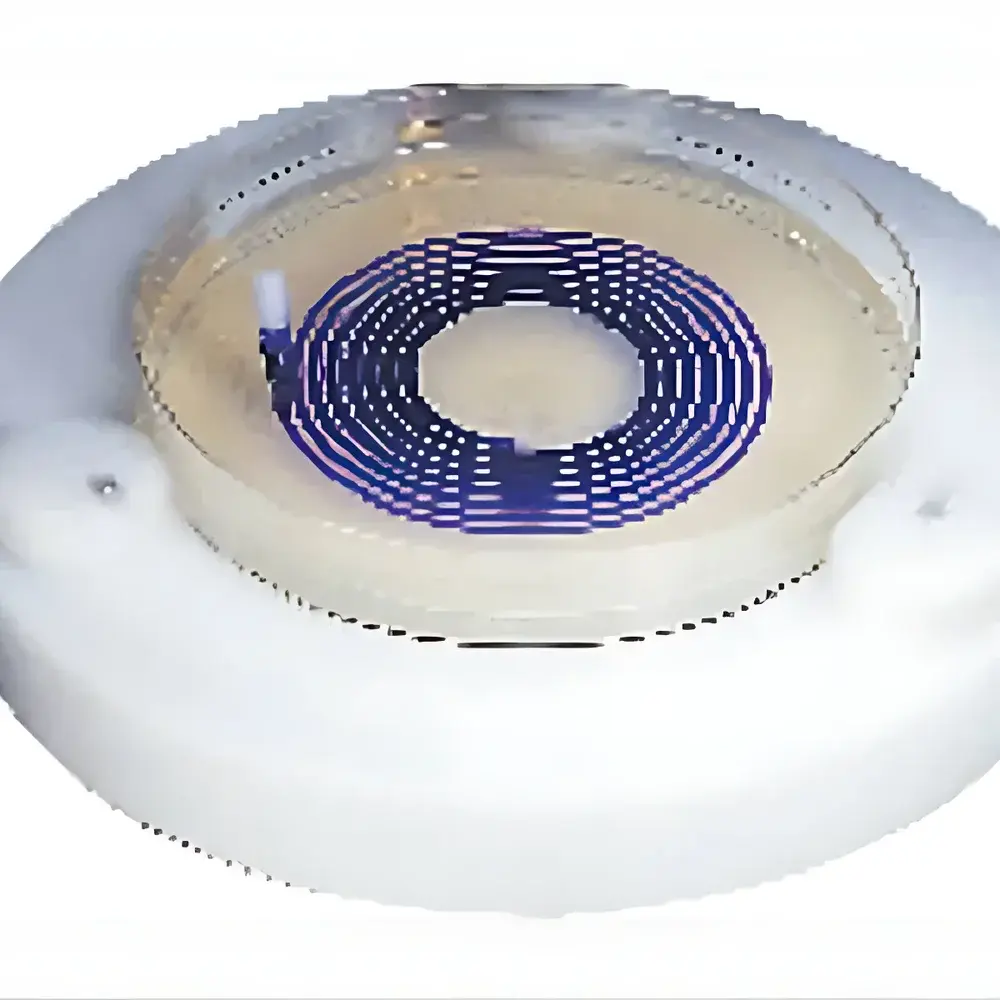
HuaDuanBio HD-L100 Automated Spiral Plater
| Brand | HuaDuanBio |
|---|---|
| Origin | Zhejiang, China |
| Manufacturer Type | Direct Manufacturer |
| Model | HD-L100 |
| Price | Upon Request |
| Principle | Archimedean Spiral Dispensing |
| Plate Compatibility | 90–150 mm Petri Dishes |
| Dispensing Time | ≤30 s per plate |
| Tip Handling | Fully Automated Disposable Tip Exchange |
| Dispensing Speed | Up to 50 µL/s |
| Minimum Dispensed Volume | <10 nL per step |
| Dispensing Repeatability | ≥99% |
| Compliance | ISO 7218, SN/T 2098–2008, FDA-BAM Chapter 3 |
| Operating Environment | 5–40 °C, RH <80%, AC 100–240 V, 50/60 Hz, <40 W |
Overview
The HuaDuanBio HD-L100 Automated Spiral Plater is an ISO-compliant, benchtop microbiological plating system engineered for precision, reproducibility, and walk-away operation in regulated laboratory environments. It implements the Archimedean spiral dispensing principle—where a continuous, logarithmically decreasing volume of microbial suspension is deposited along a planar spiral trajectory across the agar surface of standard Petri dishes (90–150 mm). This geometrically controlled deposition enables quantitative colony-forming unit (CFU) enumeration without serial dilution, while simultaneously supporting discrete colony isolation for subculturing or identification. The instrument operates on a closed-loop microstepping motor architecture with four independently controlled stepper motors, ensuring positional accuracy within ±0.1 mm and volumetric consistency across repeated runs. Designed for integration into food safety, pharmaceutical QC, cosmetic microbiology, and clinical reference labs, the HD-L100 meets core requirements for GLP-aligned workflows and regulatory submissions under ISO 7218 and FDA-BAM Chapter 3.
Key Features
- Fully automated spiral plating with no manual pipetting, dilution, or tip handling—reducing operator variability and contamination risk.
- 34 pre-programmed dispensing protocols, including dedicated modes for CFU enumeration (ISO 7218), single-colony isolation (undiluted 10⁶ CFU/mL inoculum), and Kirby-Bauer antimicrobial susceptibility testing (AST).
- High-resolution fluidic control: minimum dispense step <10 nL; maximum speed 50 µL/s; repeatability ≥99% (CV <1%) verified per ISO 8655-6.
- Integrated disposable tip auto-ejection and loading mechanism—eliminates carryover between samples and supports unattended batch processing.
- Intuitive 7-inch capacitive touchscreen interface with password-protected user roles, audit trail logging, and protocol versioning.
- Low-power design (<40 W), compact footprint (320 × 380 × 310 mm), and ambient operating range (5–40 °C, RH <80%) enable deployment in shared lab spaces and cleanroom-adjacent zones.
Sample Compatibility & Compliance
The HD-L100 accommodates standard non-vented and vented Petri dishes (90 mm, 100 mm, 150 mm) made from polystyrene or polypropylene. It accepts viscous suspensions up to 10 cP (e.g., yeast cultures, viscous food homogenates) and aqueous bacterial suspensions (e.g., Escherichia coli, Staphylococcus aureus, Pseudomonas aeruginosa) without clogging. All dispensing parameters—including spiral pitch, rotation rate, and volume decay exponent—are adjustable via firmware to accommodate matrix-specific rheological behavior. The system complies with ISO 7218:2018 (microbiology of food and animal feeding stuffs), SN/T 2098–2008 (Chinese national standard for spiral plating), and FDA Bacteriological Analytical Manual (BAM) Chapter 3 (Aerobic Plate Count). It supports 21 CFR Part 11–ready data export when paired with optional LIMS integration modules.
Software & Data Management
The embedded control software (v3.2+) provides real-time monitoring of motor status, tip presence, plate alignment, and dispensing progress. Each run generates a timestamped metadata file (.csv) containing protocol ID, plate dimensions, start/end coordinates, total dispensed volume, and motor step logs. Audit trails record user login/logout events, parameter modifications, and calibration actions—with immutable timestamps and operator IDs. Export formats include CSV, PDF run reports, and XML-compatible structured logs. Optional USB-to-Ethernet bridge enables secure network-based remote diagnostics and centralized fleet management across multi-site laboratories.
Applications
- Quantitative aerobic plate counts (APC) in food, beverage, and environmental water testing per ISO 4833-1 and AOAC 977.27.
- Routine AST using Kirby-Bauer disk diffusion—precise, reproducible antibiotic-impregnated zone seeding prior to disk placement.
- Isolation of clonal colonies from mixed cultures for MALDI-TOF MS identification or whole-genome sequencing library prep.
- Validation of disinfectant efficacy (EN 13697, ASTM E2149) requiring statistically robust colony distribution.
- QC release testing of sterile pharmaceutical products (USP <61>, Ph. Eur. 2.6.12) where low-bioburden enumeration demands high sensitivity and low CV.
FAQ
Does the HD-L100 require calibration before each use?
No—factory-calibrated motor encoders and gravimetrically validated dispensing profiles eliminate daily calibration. Annual verification against NIST-traceable standards is recommended.
Can the system be integrated with laboratory information management systems (LIMS)?
Yes—via configurable ASCII over TCP/IP or RS-232 output; supports HL7 v2.5.1 message mapping for seamless result ingestion.
What maintenance is required for long-term reliability?
Monthly cleaning of the tip ejection path and optical plate-centering sensors; biannual inspection of stepper motor belts and Z-axis lead screw lubrication.
Is the instrument suitable for BSL-2 applications?
Yes—when used inside certified biosafety cabinets; its sealed dispensing head and disposable tip architecture minimize aerosol generation and cross-contamination risk.
How is data integrity ensured during power interruption?
Non-volatile flash memory retains active protocol state and partial run logs; upon restart, the system resumes from last confirmed dispensing coordinate with automatic volume compensation.
Related Products



