
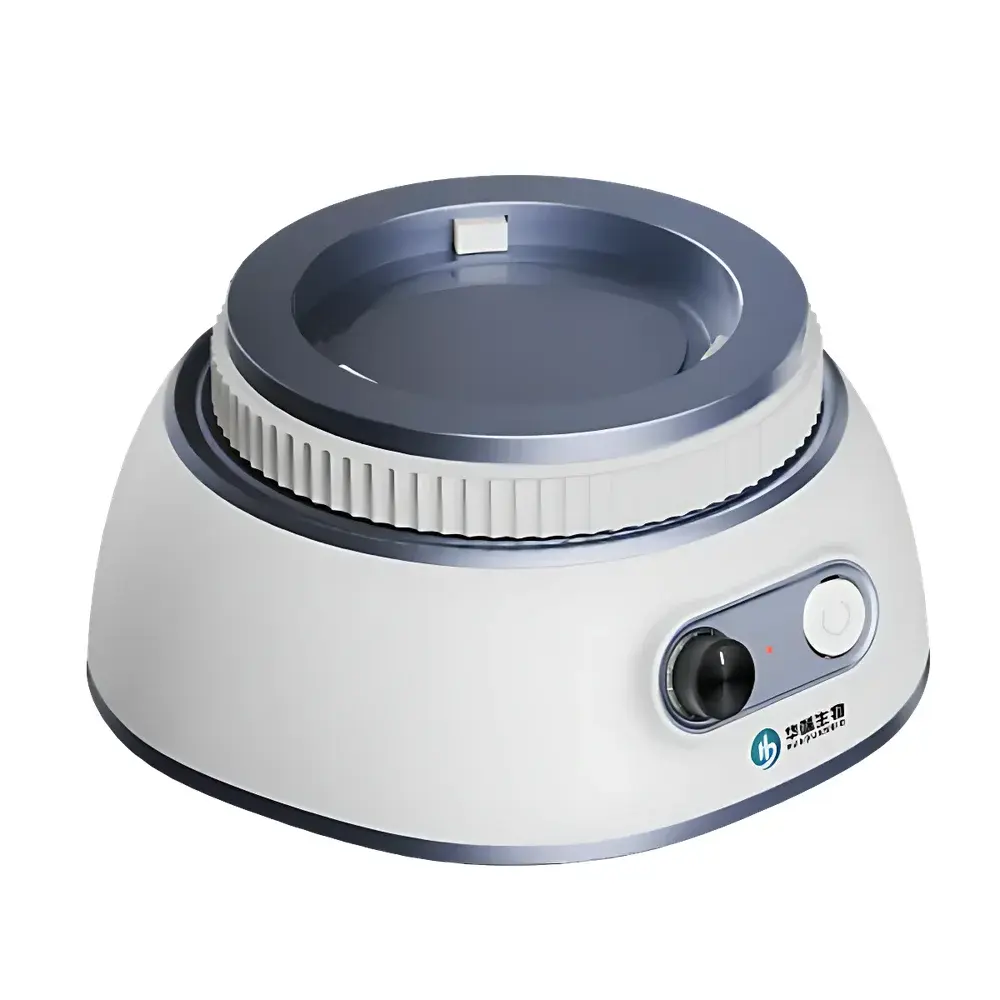
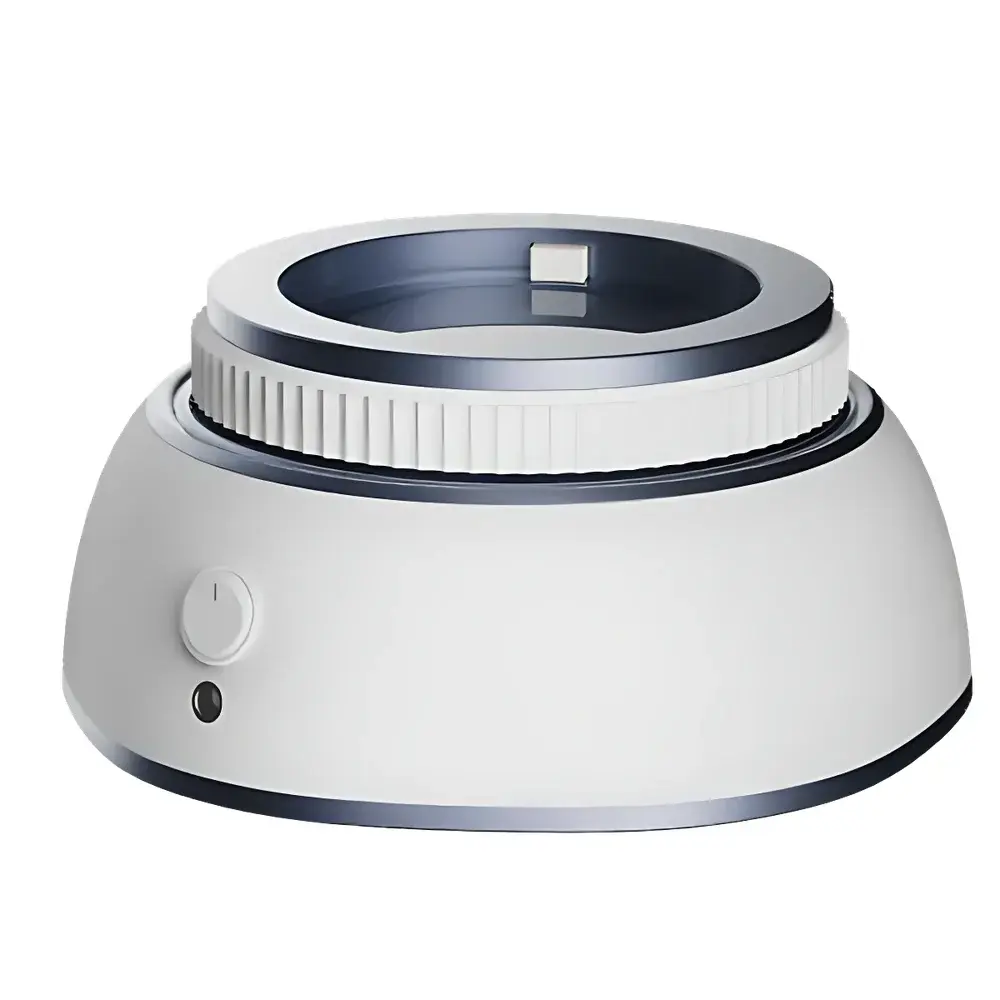
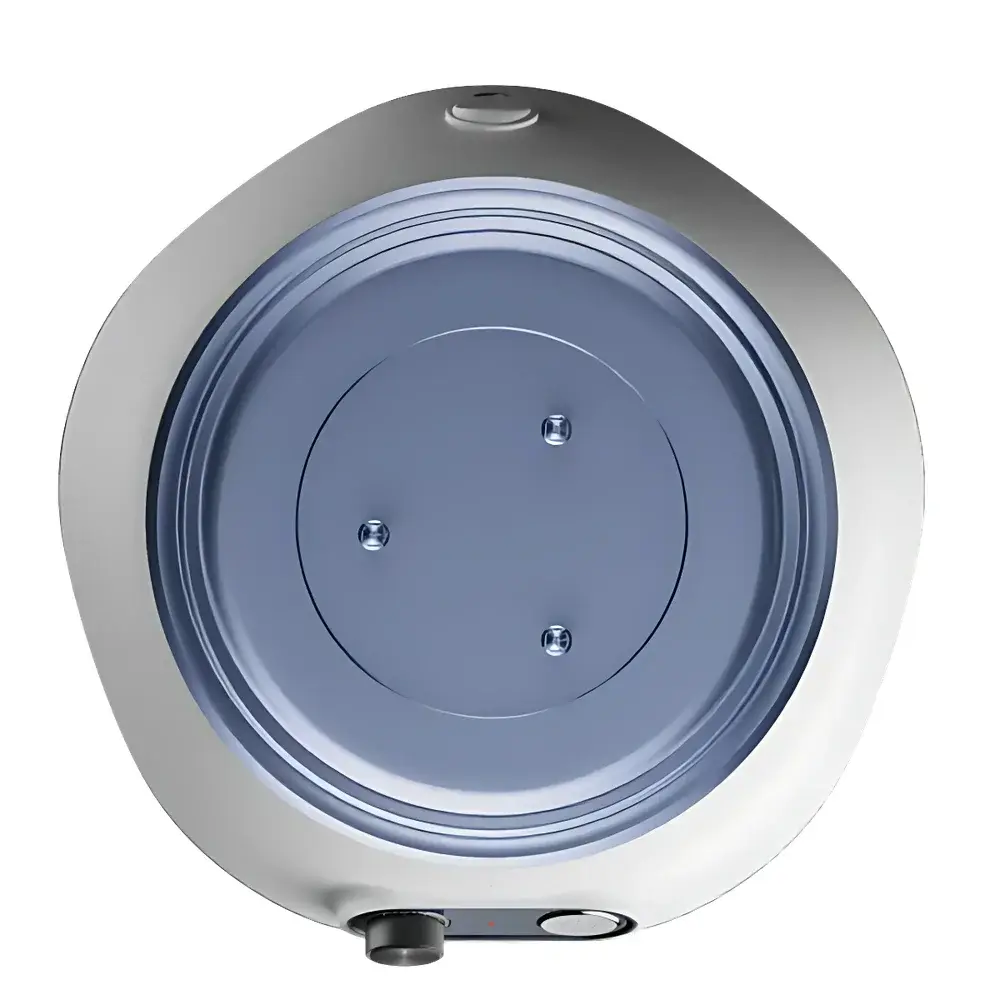
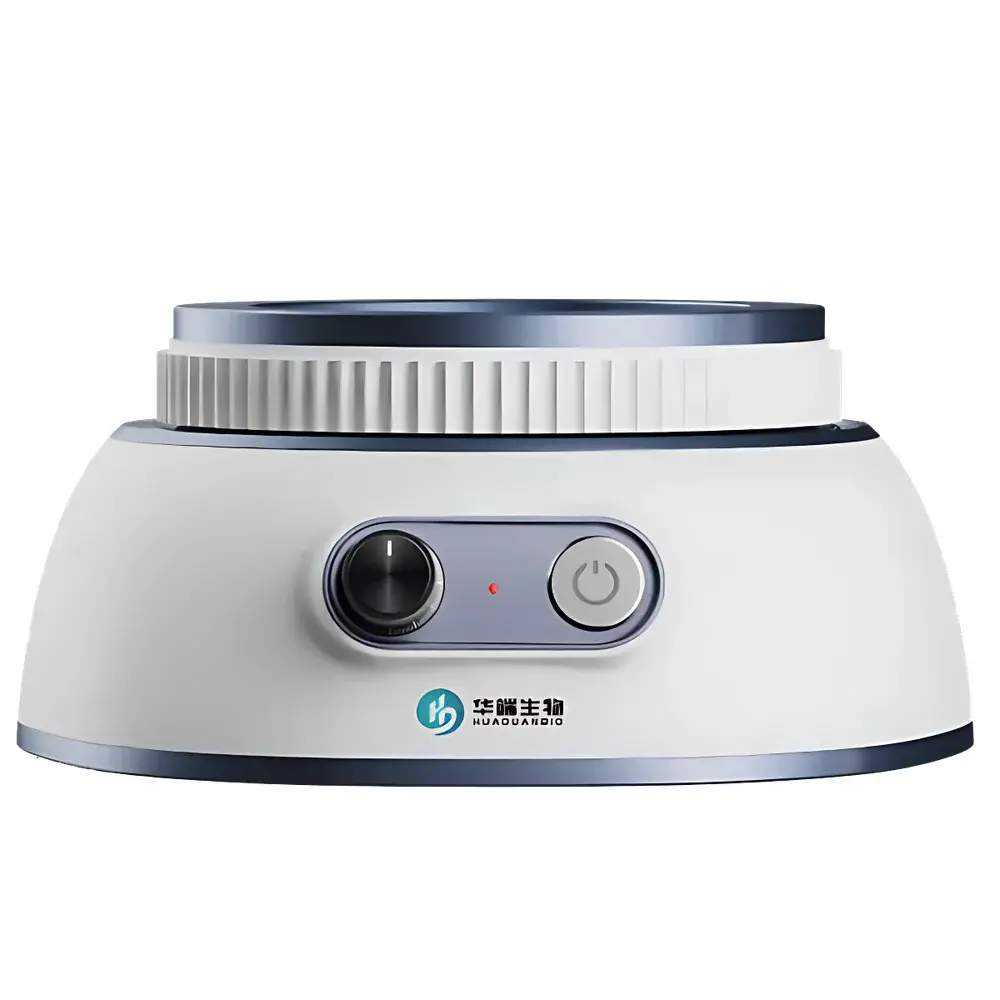
HuaDuanBio HD-L2 Automated Microbial Plating System
| Brand | HuaDuanBio |
|---|---|
| Origin | Zhejiang, China |
| Manufacturer Type | Direct Manufacturer |
| Product Category | Domestic (China-made) |
| Model | HD-L2 |
| Price | USD 1,240 (approx. based on ¥8,800 at 1 USD ≈ ¥7.1) |
| Compatible Petri Dish Diameter | 85–90 mm |
| Activation Modes | Manual Button + Infrared Sensor |
| Rotational Speed Range | 100–400 rpm (infinitely variable) |
| Eccentricity | < 0.1% |
| Construction Material | Anodized Aluminum Alloy Housing with Stainless Steel Components |
| Liquid Containment | Sealed Rotary Stage with Integrated Drip-Edge and Drain-Channel Design |
| Included Accessories | 1 × Stainless Steel L-Spreader, 1 × Power Cord |
Overview
The HuaDuanBio HD-L2 Automated Microbial Plating System is an entry-level benchtop instrument engineered for reproducible, operator-independent bacterial lawn preparation on standard Petri dishes. It operates on a controlled rotational spreading principle—leveraging centrifugal force and precise mechanical guidance to distribute liquid microbial suspensions uniformly across agar surfaces. Unlike manual streaking or glass-bead-based plating methods, the HD-L2 eliminates inter-operator variability in colony density and spatial distribution, thereby improving colony isolation efficiency, CFU quantification accuracy, and assay repeatability in microbiological quality control, antibiotic susceptibility testing (AST), and environmental monitoring workflows. Its design conforms to fundamental requirements of GLP-compliant laboratories where documentation of plating consistency—and minimization of human handling—is essential for audit readiness.
Key Features
- Infinitely adjustable rotational speed (100–400 rpm) enables optimization for diverse suspension viscosities—from low-concentration broth cultures to viscous glycerol stocks—without compromising film uniformity.
- Dual activation interface: tactile push-button for deliberate initiation and non-contact infrared sensor for hands-free operation under sterile hood conditions, reducing contamination risk and glove wear.
- Sub-0.1% eccentricity rotary stage, achieved via precision-machined bearing mounts and calibrated disk-centering fixtures, ensures consistent radial acceleration and eliminates wobble-induced uneven spreading.
- Hermetically sealed motor housing and integrated drip-edge geometry prevent agar medium or sample carryover from infiltrating internal drive mechanisms—extending service life and simplifying decontamination between runs.
- Modular spreader compatibility: accepts both autoclavable stainless steel L-spreader rods and disposable polypropylene spreaders, supporting both cost-sensitive high-throughput labs and ISO 13485-certified diagnostic facilities requiring traceable single-use components.
- Anodized aluminum alloy chassis provides structural rigidity, chemical resistance to common disinfectants (e.g., 70% ethanol, 0.5% sodium hypochlorite), and thermal stability during extended operation.
Sample Compatibility & Compliance
The HD-L2 accommodates all standard 85–90 mm Petri dishes—regardless of material (polystyrene, polypropylene, or borosilicate glass)—and supports agar concentrations ranging from 1.2% to 2.0% w/v without slippage or edge pooling. It has been validated for use with Gram-positive (e.g., Staphylococcus aureus ATCC 25923), Gram-negative (e.g., Escherichia coli ATCC 25922), and yeast (e.g., Candida albicans ATCC 90028) suspensions prepared per CLSI M07-A10 guidelines. While not certified to IEC 61000-6-2/6-3 or UL 61010-1 out-of-the-box, its electrical architecture complies with basic safety provisions for Class I laboratory equipment. Users deploying the HD-L2 in regulated environments (e.g., pharmaceutical QC labs) are advised to perform in-house installation qualification (IQ) and operational qualification (OQ) protocols aligned with ISO/IEC 17025 and USP <61>/<62> plating validation requirements.
Software & Data Management
The HD-L2 operates as a standalone electromechanical system with no embedded firmware, cloud connectivity, or digital log generation. All operational parameters—including speed setting, activation timestamp (via external lab notebook or LIMS entry), and spreader type—are manually recorded. This architecture intentionally avoids software validation overhead, making it suitable for settings where ALCOA+ data integrity principles are maintained via procedural controls rather than electronic audit trails. For labs requiring electronic records, integration with third-party LIMS platforms can be achieved via external footswitch-triggered timers or programmable logic controllers (PLCs) interfaced through dry-contact I/O ports (available upon request as optional hardware add-on).
Applications
- Standardized CFU enumeration in water, food, and pharmaceutical product testing per ISO 4833-1, FDA BAM Chapter 3, and EP 2.6.12.
- Preparation of uniform lawns for Kirby-Bauer disk diffusion assays and gradient strip MIC determinations.
- High-fidelity replica plating in strain preservation and mutant screening workflows.
- Supporting EUCAST and CLSI breakpoint interpretation by minimizing edge-effect colonies and ensuring ≥90% surface coverage within ±5% CV across replicate plates.
- Training platform for undergraduate microbiology labs emphasizing Good Microbiological Practice (GMP) fundamentals and aseptic technique reinforcement.
FAQ
Does the HD-L2 support 100 mm or 150 mm Petri dishes?
No—the mechanical stage and spreader arm geometry are optimized exclusively for 85–90 mm diameter dishes. Larger formats require custom tooling not provided with the base configuration.
Can the stainless steel spreader be autoclaved repeatedly without degradation?
Yes—grade 304 stainless steel construction withstands ≥50 cycles of standard 121°C, 15 psi, 20-minute autoclaving without warping or surface pitting.
Is speed calibration traceable to NIST standards?
The HD-L2 does not include factory-calibrated tachometric verification; users should validate rotational speed using an external handheld optical tachometer prior to critical assays.
What maintenance is required beyond routine cleaning?
Annual inspection of rotary bearing preload and IR sensor alignment is recommended; no lubrication or firmware updates are necessary due to brushless DC motor and solid-state sensing design.
Can the unit be operated inside a biosafety cabinet?
Yes—its compact footprint (220 × 180 × 160 mm), low electromagnetic emissions, and absence of exhaust or heat-generating components permit safe use within Class II A2 cabinets.





