
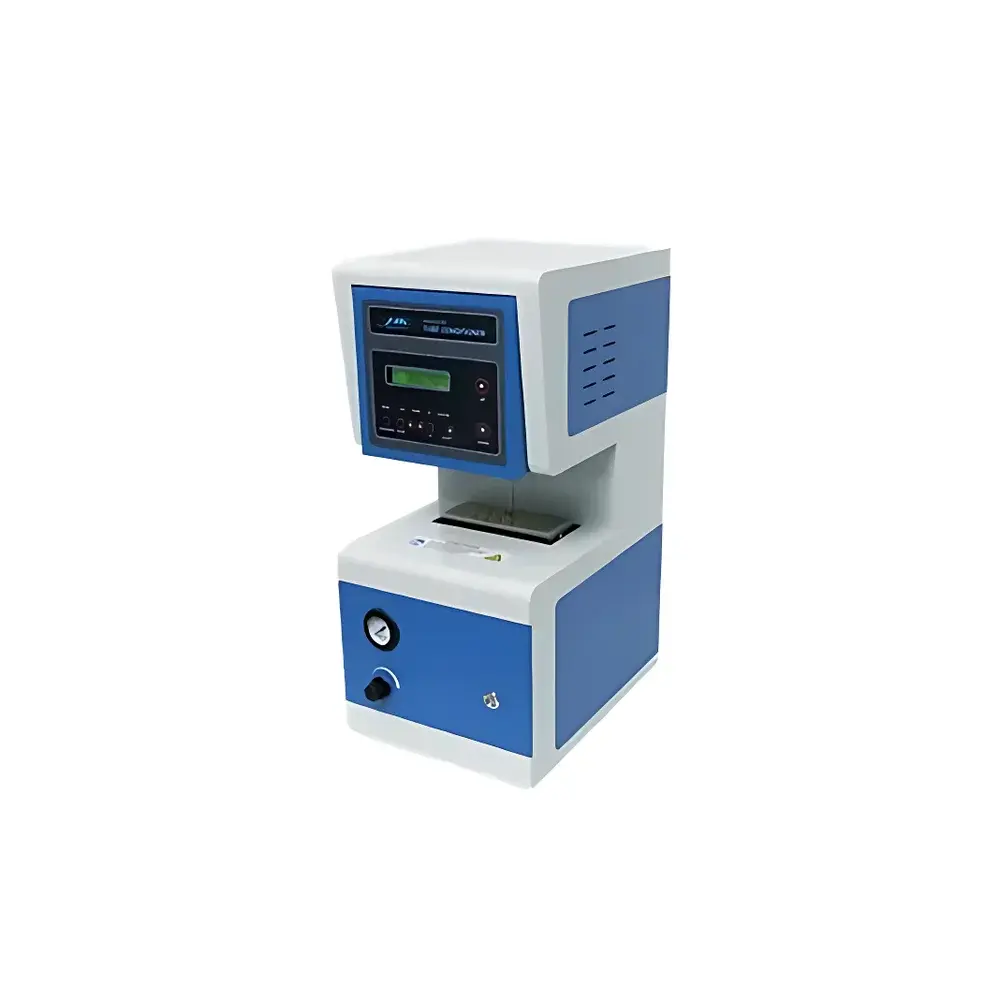
HUANKONG APK1200 Adsorption Tube Aging and Activation Instrument
| Brand | HUANKONG |
|---|---|
| Origin | Shandong, China |
| Manufacturer Type | Direct Manufacturer |
| Model | APK1200 |
| Temperature Range | Ambient to 400 °C |
| Gas Flow Rate | 200 mL/min |
| Tube Capacity | 20 tubes |
| Compliance | HJ 644–2013, HJ 734–2014, HJ 583–2010 |
Overview
The HUANKONG APK1200 Adsorption Tube Aging and Activation Instrument is a precision-engineered thermal conditioning system designed for the rigorous preparation of sorbent-packed sampling tubes used in thermal desorption–gas chromatography (TD–GC) and TD–GC–MS workflows. It operates on the principle of controlled high-temperature purging: adsorption tubes are heated under a continuous, regulated flow of ultra-high-purity inert gas (e.g., nitrogen or helium), enabling quantitative removal of residual organic compounds, moisture, and background contaminants accumulated during field sampling or prior laboratory use. This process—commonly referred to as “tube aging” or “tube activation”—is not merely a maintenance step but a critical pre-analytical requirement to ensure baseline integrity, method reproducibility, and regulatory data validity. The APK1200 meets the mandatory tube conditioning specifications outlined in Chinese environmental monitoring standards HJ 644–2013, HJ 734–2014, and HJ 583–2010, which govern VOC analysis in ambient air and stationary source emissions.
Key Features
- 20-position automated tube carousel with independent dual-tube gas channels—each gas line serves two tubes, enabling efficient parallel processing without cross-contamination.
- Programmable 10-segment temperature ramping profile, supporting complex aging protocols including hold steps, ramp rates, and cooling phases—all configurable via intuitive front-panel interface.
- Precise temperature control from ambient to 400 °C (±1 °C accuracy), with PID-regulated heating zones and real-time sensor feedback ensuring thermal uniformity across all tube positions.
- Stainless-steel heating chamber with optimized airflow dynamics and integrated thermal shielding to minimize wall condensation and maximize desorption efficiency.
- Automated tube insertion/retraction mechanism: tube carriers enter the heated zone only during active aging; after completion, the system initiates forced-air cooling and returns carriers to standby position—eliminating manual handling and reducing operator exposure to high temperatures.
- Gas flow regulation at 200 mL/min per channel (adjustable ±5% via calibrated mass flow controller), compatible with standard 1/8″ Swagelok fittings and certified high-purity gas supply lines.
Sample Compatibility & Compliance
The APK1200 accommodates standard 6 mm OD × 90 mm L stainless-steel or glass sorbent tubes (e.g., Tenax TA, Carbopack B/C, Carboxen 1000, or multi-bed configurations), with optional adapters for alternative diameters. All internal wetted surfaces are electropolished stainless steel or passivated to prevent catalytic decomposition or adsorption artifacts. The instrument complies with the procedural requirements for tube preconditioning specified in HJ 644–2013 (ambient air VOCs), HJ 734–2014 (stack emissions), and HJ 583–2010 (benzene homologues). While not certified to ISO/IEC 17025 or GLP as a standalone device, its operational parameters align with Good Laboratory Practice principles for trace-level environmental analysis. Routine verification—using certified reference standards such as NIST-traceable benzene-doped tubes—is recommended to validate cleaning efficacy before analytical runs.
Software & Data Management
The APK1200 operates via embedded firmware with non-volatile memory storing up to 50 user-defined methods. Each method includes temperature setpoints, ramp rates, dwell times, gas flow activation logic, and cooldown profiles. System logs record timestamped start/stop events, peak temperature achieved, actual flow rate, and fault codes (e.g., overtemperature, flow deviation >±10%). Data export is supported via USB flash drive in CSV format, enabling integration into LIMS environments. Though the unit lacks Ethernet or remote API connectivity, its audit trail structure satisfies minimum documentation expectations under CNAS-CL01:2018 and supports FDA 21 CFR Part 11 compliance when paired with validated electronic lab notebook (ELN) systems for method archiving and operator sign-off.
Applications
- Pre-use activation of new sorbent tubes to eliminate manufacturing residuals and stabilize baseline response.
- Post-sampling regeneration of used tubes prior to re-deployment in multi-day monitoring campaigns.
- Failure investigation support—identifying carryover or ghost peaks by correlating tube cleaning history with chromatographic anomalies.
- Method development studies evaluating sorbent longevity, breakthrough capacity, and optimal aging conditions for novel VOC mixtures.
- Quality assurance in accredited environmental testing laboratories performing EPA TO-17–aligned analyses under Chinese regulatory frameworks.
FAQ
What is the maximum operating temperature, and how is thermal stability maintained?
The APK1200 achieves stable operation up to 400 °C, with thermal uniformity ≤±2 °C across all 20 tube positions, verified by NIST-traceable thermocouple mapping.
Can the instrument be used with helium as the purge gas?
Yes—helium, nitrogen, and argon are all supported; flow calibration is performed per gas type to account for viscosity differences.
Is there built-in validation for cleaning efficacy?
No direct on-board analytics, but the system supports routine verification using spiked recovery tests (e.g., 100 ng benzene per tube) followed by blank analysis per HJ 644–2013 Annex C.
How does the 10-stage programming enhance method flexibility?
Multi-step ramps allow staged desorption—e.g., low-T moisture removal (100 °C), mid-T volatile purge (250 °C), and high-T residue bake-out (380 °C)—minimizing sorbent degradation while maximizing contaminant removal.
Does the system meet international standards such as ISO 16000 or ASTM D6196?
While designed to fulfill HJ-series requirements, its technical specifications (temperature range, flow control, and programmability) are consistent with the operational scope of ISO 16000-6 and ASTM D6196–22 for indoor air sorbent tube conditioning.
Related Products




