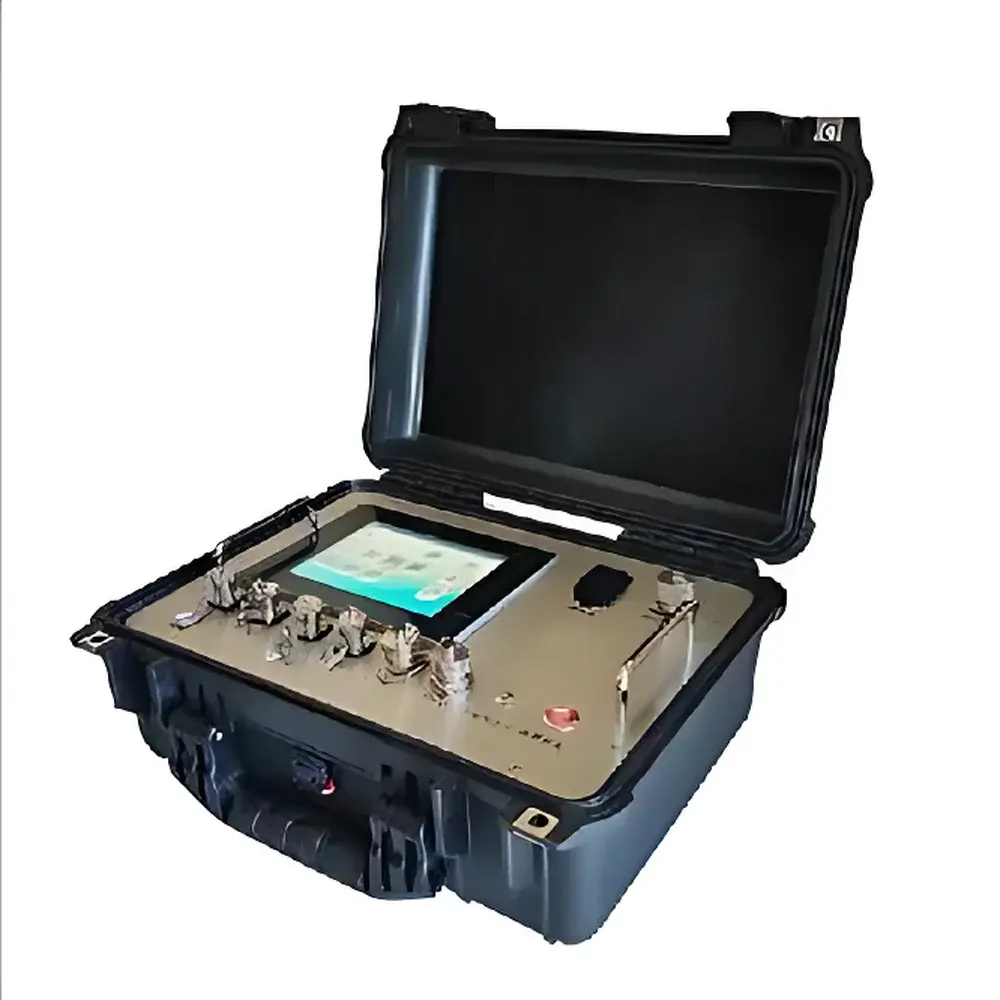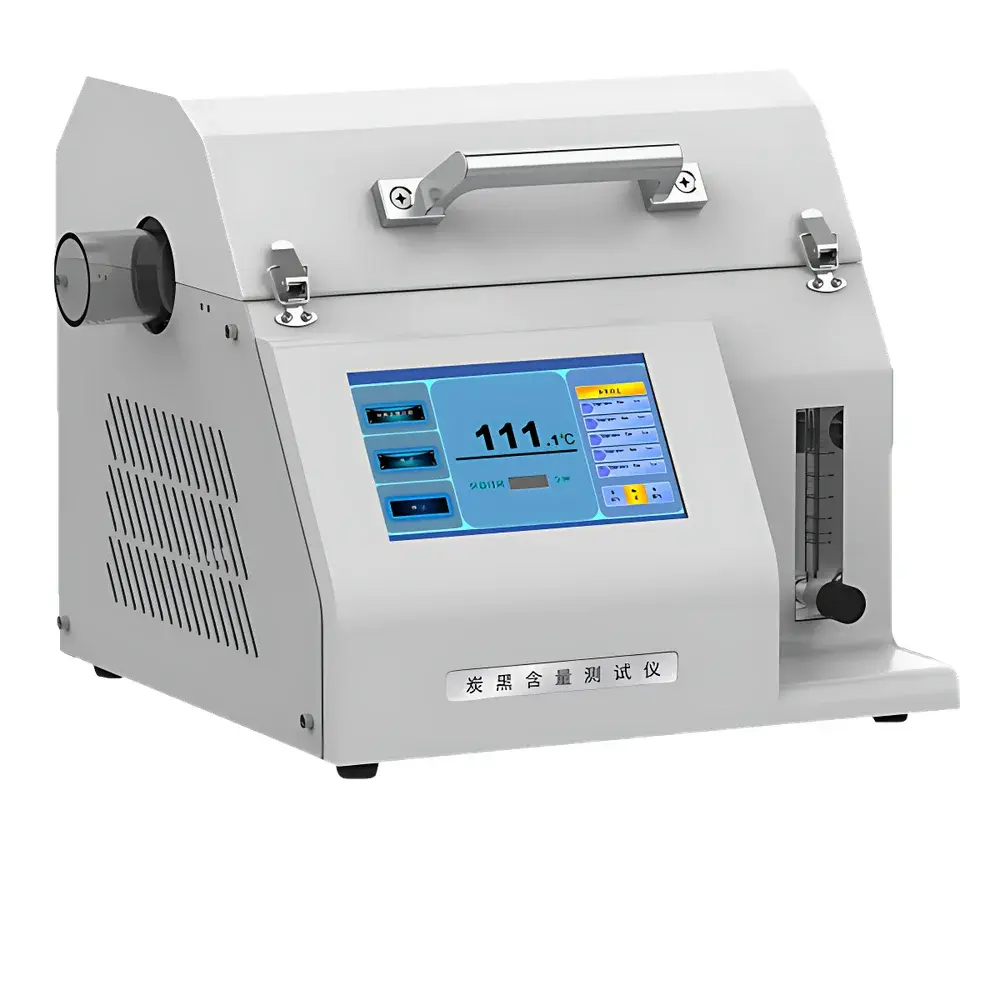
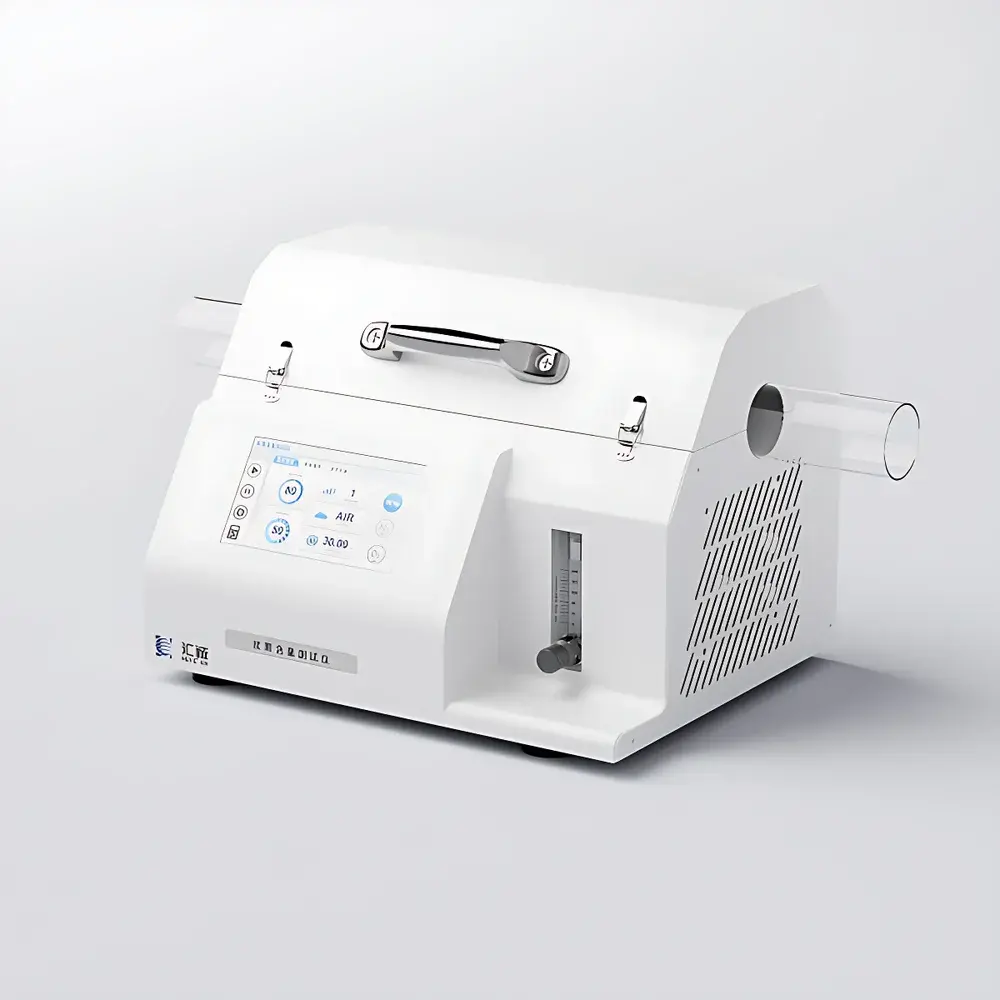
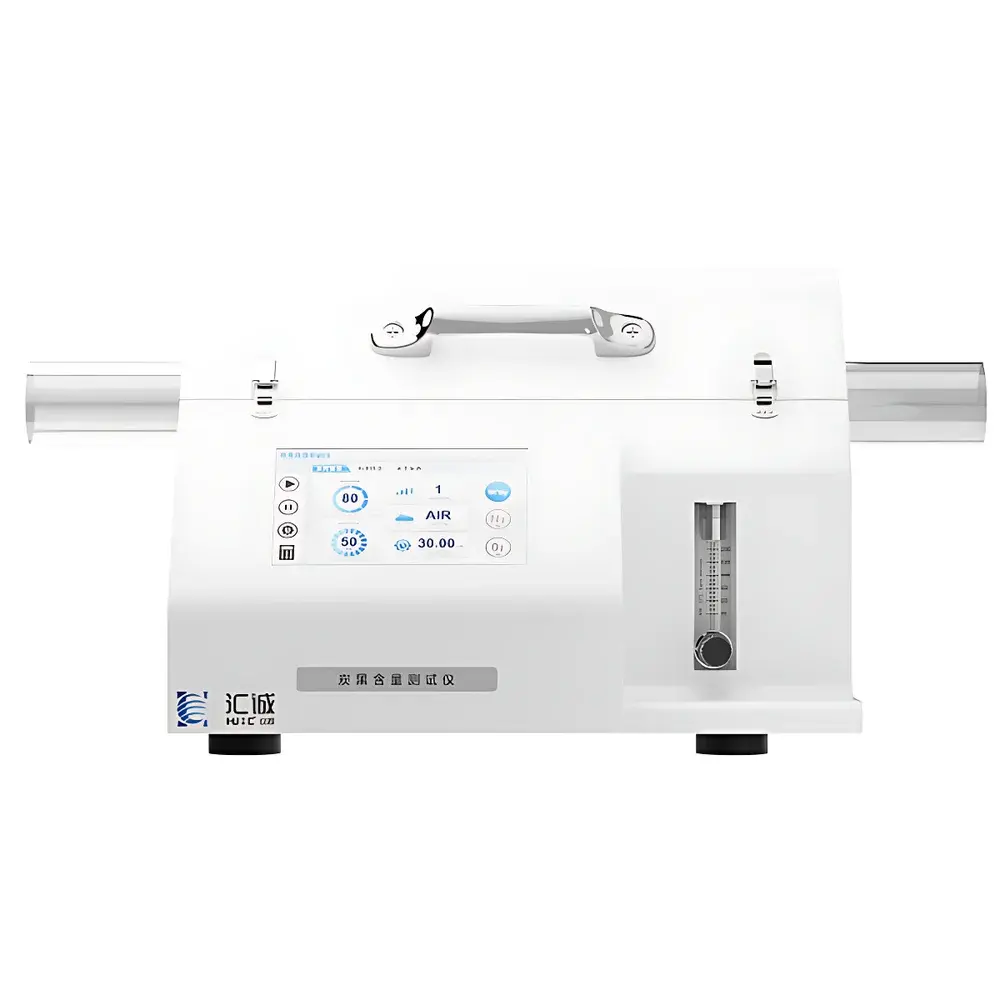
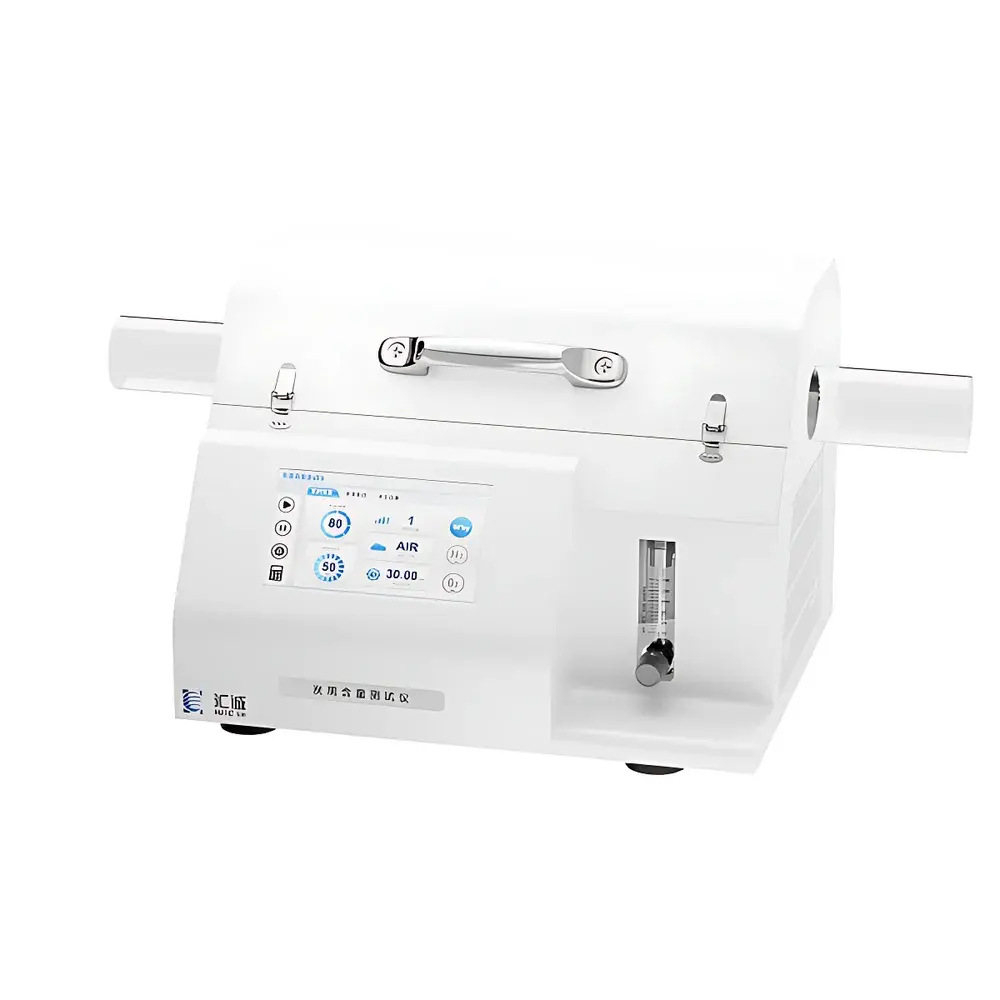
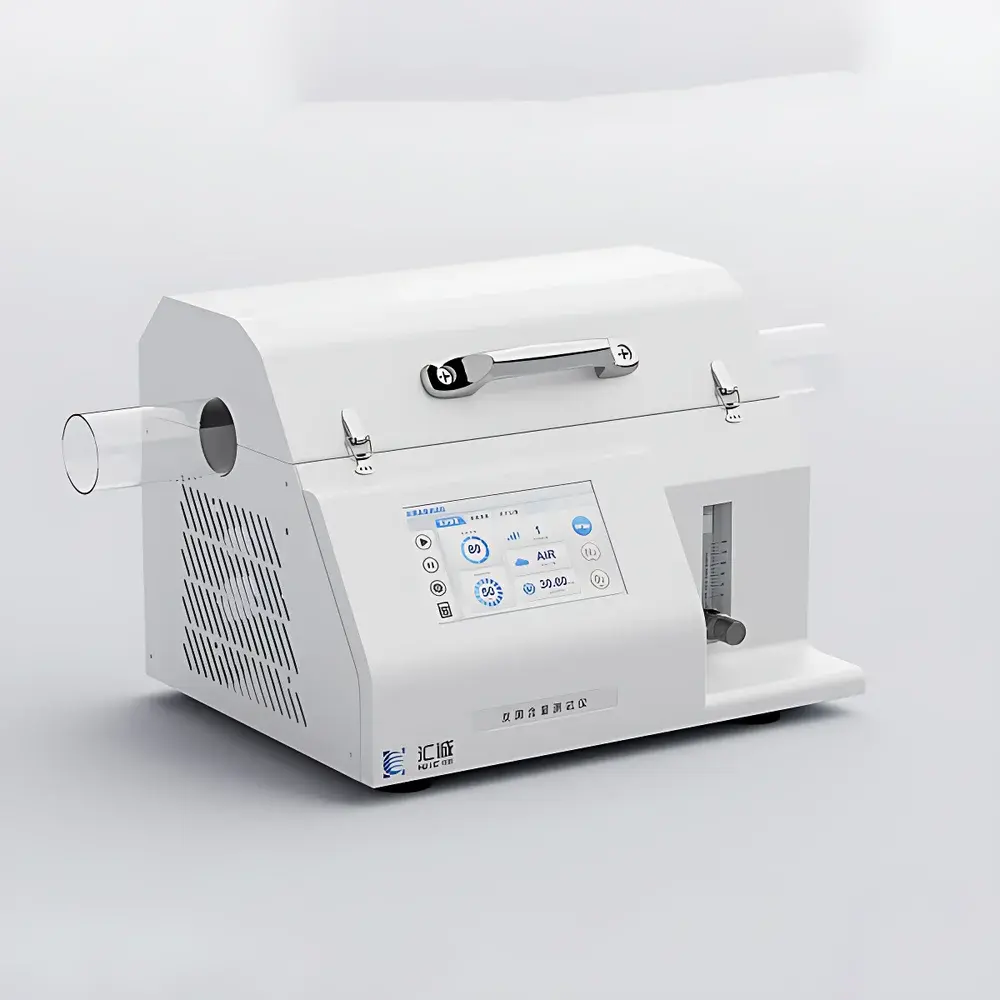
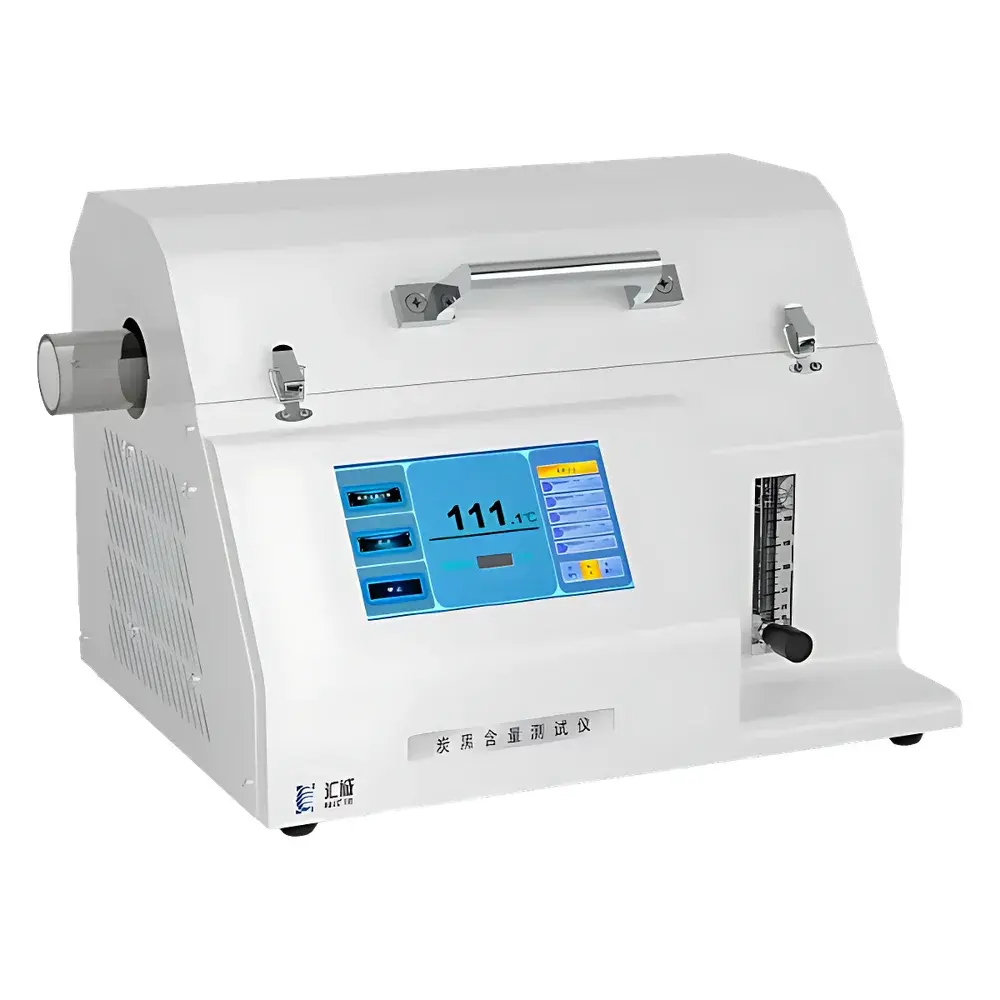
Huicheng Instrument HC3500 Carbon Black Dispersion & Content Analyzer
| Brand | Huicheng Instrument |
|---|---|
| Origin | Jiangsu, China |
| Manufacturer Type | Direct Manufacturer |
| Country of Origin | China |
| Model | HC3500 |
| Price | USD 3,650 (FOB Jiangsu) |
| Temperature Range | Ambient to 1000 °C |
| Display | 7-inch TFT LCD Touchscreen |
| Sample Capacity | 4 parallel positions |
| Heating Zone Length | 260 mm |
| Furnace Tube Dimensions | Ø45 mm × 600 mm |
| Chamber Dimensions | Ø45 mm × 350 mm |
| Heating Element | High-Temperature Alloy Resistance Wire |
| Temperature Control | PID with Multi-Stage Programmable Ramp/Soak Profiles |
| Temperature Uniformity | ±5 °C across working zone |
| Sensor Resolution | 0.1 °C |
| Gas Control | Dual Mass Flow-Controlled Inlets (N₂ only), Auto-Switching per Program Step |
| Cooling Method | Lid-Open Forced-Air Rapid Cool-down |
| Power Supply | AC 220 V / 50 Hz, 600 W |
| Overall Dimensions | 416 × 325 × 289 mm |
| Compliance | GB/T 3515–2005, GB/T 13021–1991, GB/T 2951.41–2008, ISO 6964:2015, IEC 60811-4-1:2012, ASTM D1606 (referenced), JTG E50 T1165–2006 |
Overview
The Huicheng Instrument HC3500 Carbon Black Dispersion & Content Analyzer is a dedicated thermal gravimetric system engineered for precise quantification of carbon black content in thermoplastic polymers—including polyethylene (PE), polypropylene (PP), and polybutylene (PB)—using the standardized pyrolytic loss-on-ignition method under inert atmosphere. Operating on the principle of controlled thermal decomposition in high-purity nitrogen, the HC3500 measures mass loss between initial sample weight and residual ash after complete organic matrix volatilization at elevated temperatures (up to 1000 °C). Unlike optical dispersion analyzers, this instrument delivers absolute gravimetric results traceable to SI mass units—making it suitable for QC laboratories requiring compliance with regulatory test methods such as GB/T 3515, ISO 6964, and IEC 60811-4-1. Its design emphasizes reproducibility, operator safety, and method fidelity over subjective image-based assessment.
Key Features
- Four-position parallel furnace chamber enables simultaneous analysis of up to four samples, reducing throughput time without compromising inter-sample temperature uniformity.
- Optimized open-lid furnace architecture facilitates rapid sample loading/unloading and accelerates post-run cooling—cutting average cycle time by ≥40% compared to sealed-tube systems.
- Multi-stage programmable temperature controller supports up to 10 ramp/soak segments per method, allowing full customization for complex polymer matrices requiring staged decomposition profiles.
- Integrated PID temperature regulation maintains ±1 °C setpoint stability within the active heating zone (260 mm length), with real-time monitoring via high-resolution 0.1 °C thermocouple feedback.
- 7-inch capacitive touchscreen interface provides intuitive navigation, password-protected method storage, and one-touch launch of preloaded ASTM/GB-compliant protocols.
- Dual independent gas inlets support automatic N₂ flow switching between purge, pyrolysis, and ash-stabilization phases—ensuring consistent oxygen exclusion throughout thermal treatment.
Sample Compatibility & Compliance
The HC3500 is validated for use with granular, pelletized, or milled specimens of PE, PP, PB, and ethylene-propylene copolymers. It accommodates standard crucible formats (ceramic or platinum) with maximum sample mass of 1.0 g per position. All operational parameters align with mandatory requirements of GB/T 13021–1991 (for PE pipe materials), GB/T 2951.41–2008 (cable insulation testing), and ISO 6964:2015 (rubber carbon black content determination). The system meets GLP documentation prerequisites through timestamped audit trails, user-access logs, and electronic signature-ready report generation—fully compatible with FDA 21 CFR Part 11–aligned data management workflows when paired with optional LIMS integration.
Software & Data Management
Embedded firmware includes built-in calculation algorithms compliant with ISO 6964 Annex B:炭黑 content (%) = [(m₁ − m₂) / m₁] × 100, where m₁ = initial mass and m₂ = residue mass after pyrolysis. Results are automatically tabulated alongside ash content (%), mass loss curves, and thermal event timestamps. Export options include CSV, PDF, and XML formats—with metadata fields for analyst ID, instrument serial number, calibration date, and environmental conditions. Raw thermogravimetric data streams are logged at 1 Hz resolution and retained for ≥12 months on internal flash memory. Optional PC software enables remote monitoring, method library synchronization, and statistical process control (SPC) charting per ISO 22514-2.
Applications
- Quality assurance of black-pigmented PE pressure pipes per GB/T 13663.2–2018 and ASTM D3350.
- Verification of carbon black loading consistency in automotive EPDM compounds prior to vulcanization.
- Batch release testing of telecom cable jacketing materials per YD/T 837.3–1996 mechanical-physical test suite.
- R&D screening of novel conductive polymer blends where carbon black dispersion affects percolation threshold.
- Third-party certification labs performing accredited testing to CNAS-CL01 (ISO/IEC 17025) requirements.
FAQ
What standards does the HC3500 directly support?
It is configured to execute test sequences defined in GB/T 3515–2005, GB/T 13021–1991, ISO 6964:2015, IEC 60811-4-1:2012, and JTG E50 T1165–2006.
Can the instrument operate under argon instead of nitrogen?
Yes—the dual-gas manifold supports any inert carrier gas; argon compatibility requires optional MFC recalibration and gas certification documentation.
Is calibration traceable to national metrology institutes?
Factory calibration uses NIST-traceable reference weights and PtRh/Pt thermocouples; on-site verification kits (including certified reference materials) are available upon request.
Does the system meet cybersecurity requirements for networked lab environments?
Firmware v2.3+ includes TLS 1.2 encryption for remote data transfer and configurable firewall rules for Ethernet-connected deployments.
What maintenance intervals are recommended?
Quartz tube inspection every 200 cycles; thermocouple verification quarterly; gas line filter replacement every 6 months under continuous operation.