
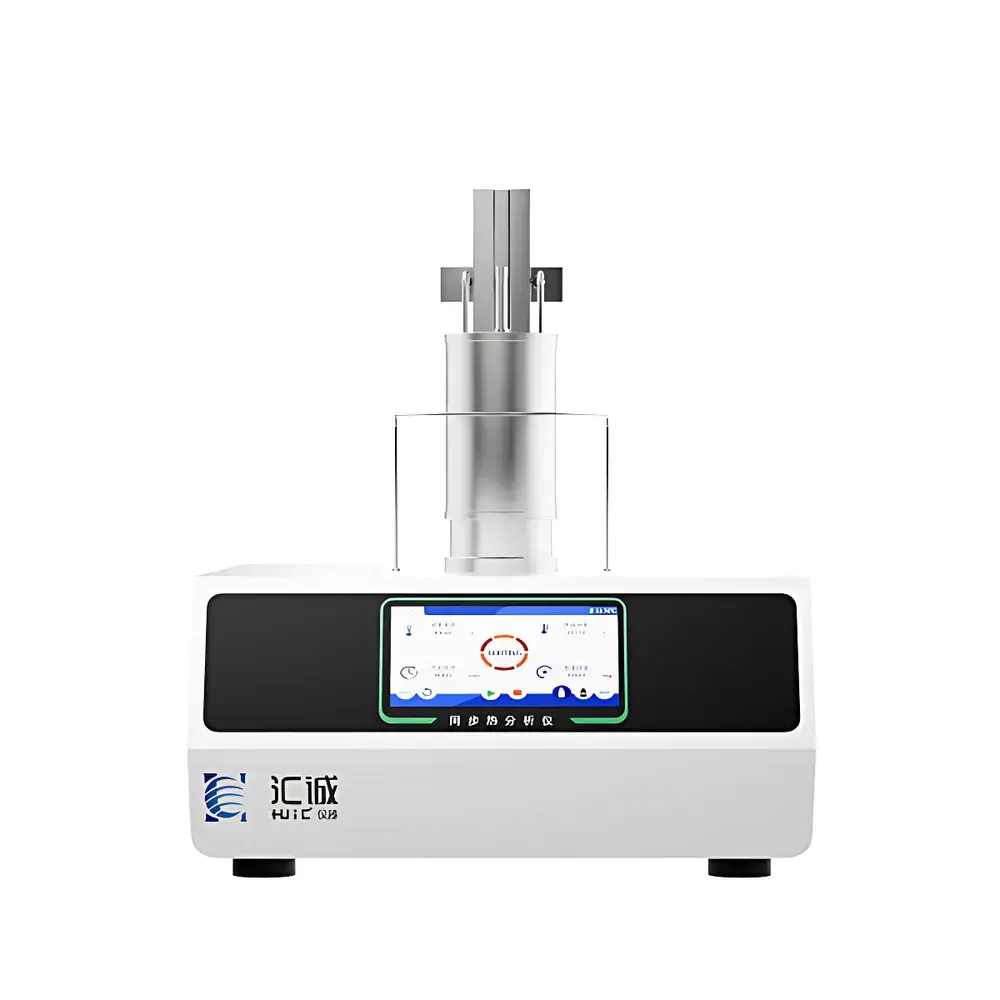
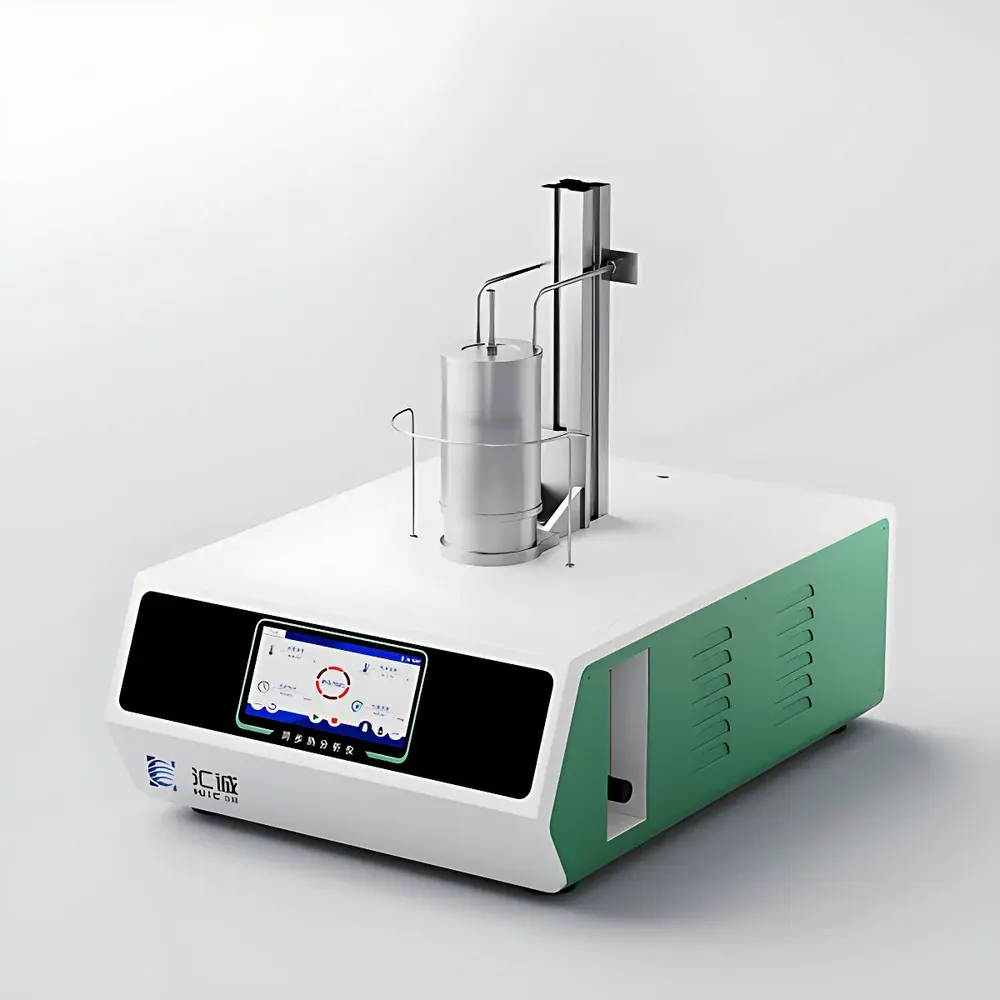
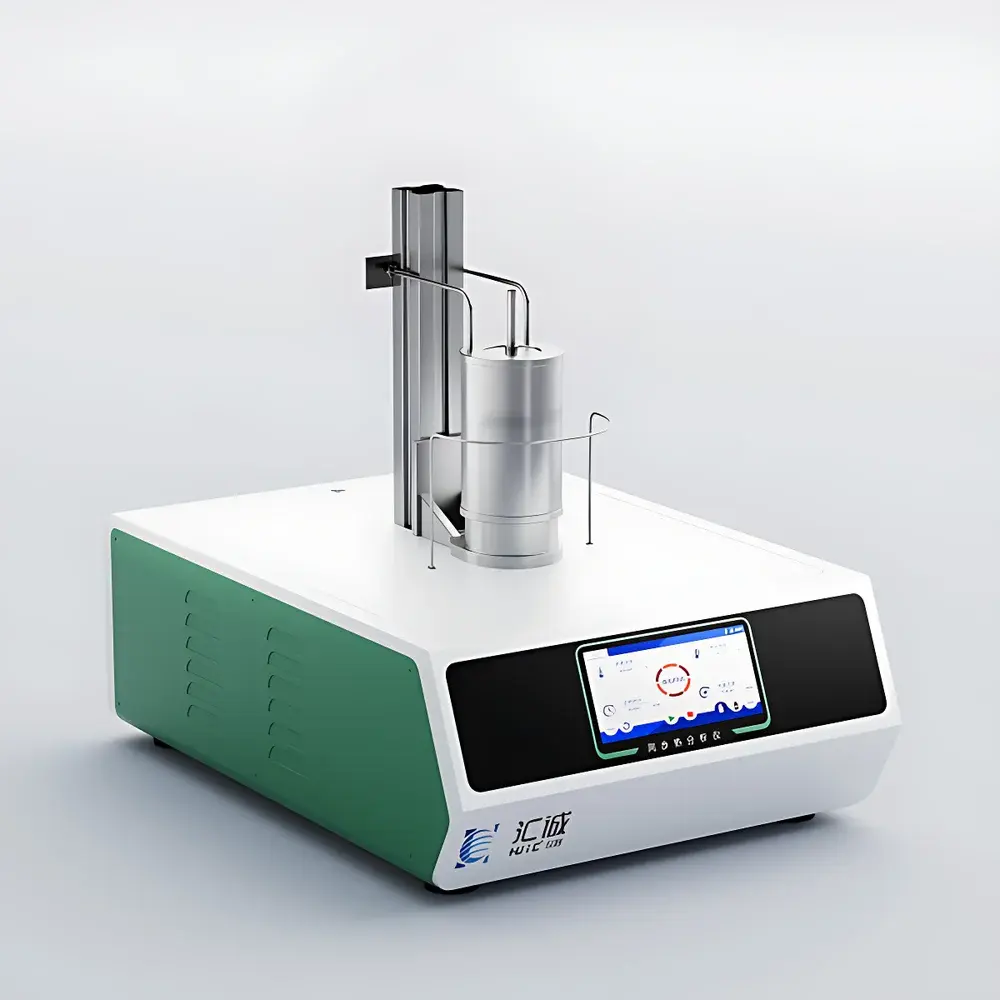
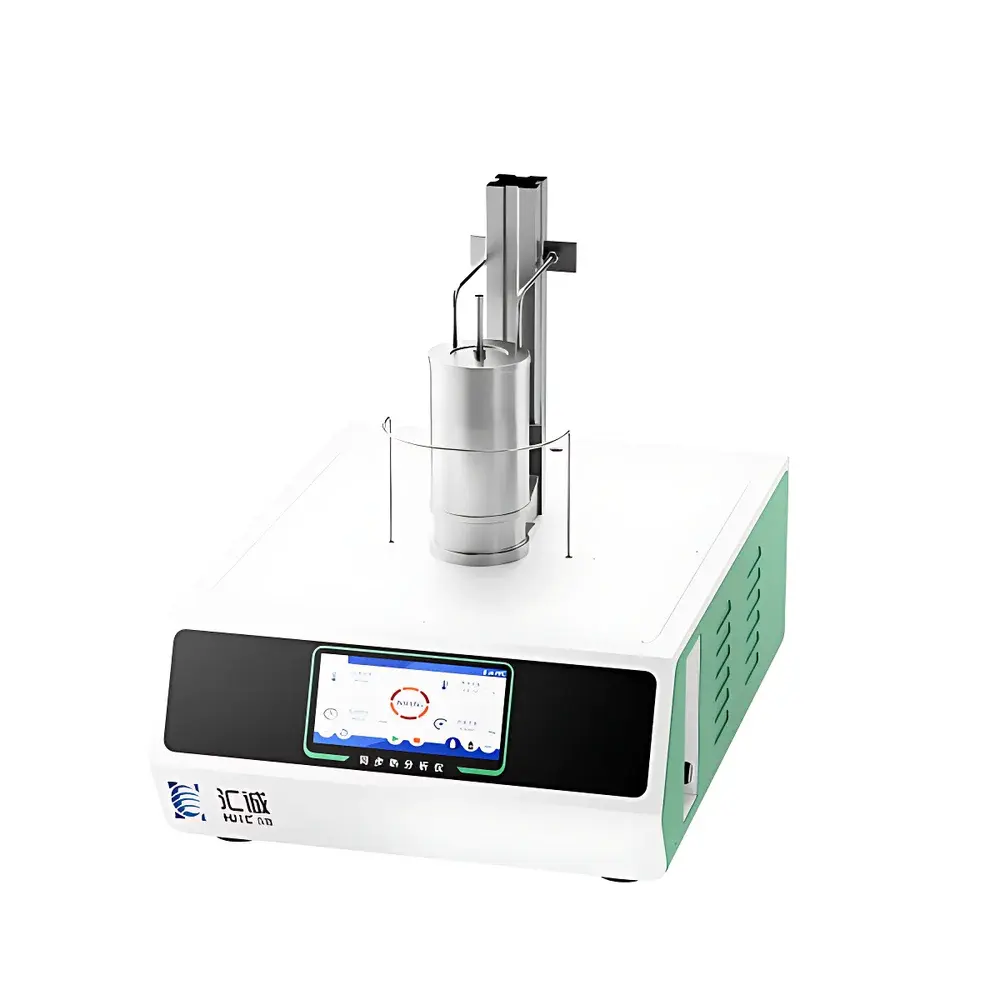
Huicheng Instrument HCYQ-STA-1550 High-Temperature Simultaneous Thermal Analyzer
| Brand | Huicheng Instrument |
|---|---|
| Origin | Jiangsu, China |
| Manufacturer Type | Direct Manufacturer |
| Model | HCYQ-STA-1550 |
| Heating Rate | 0.1–100 °C/min |
| Temperature Range | Ambient to 1550 °C |
| Temperature Stability | ±0.1 °C |
| Max Sample Mass | 5 g |
| Atmosphere Options | N₂, O₂ |
Overview
The Huicheng Instrument HCYQ-STA-1550 is a high-temperature simultaneous thermal analyzer engineered for precision-critical research and quality control in advanced materials science, metallurgy, ceramics, and energy storage applications. It integrates thermogravimetric analysis (TGA) and differential scanning calorimetry (DSC) into a single measurement platform, enabling real-time, mass-synchronized acquisition of weight change (Δm), heat flow (dH/dt), and temperature response from one homogeneous sample under identical thermal and atmospheric conditions. This co-located measurement architecture eliminates inter-run variability inherent in sequential TGA/DSC testing and ensures strict thermal history fidelity—critical for kinetic modeling of decomposition, oxidation, phase transitions, and solid-state reactions above 1000 °C. The instrument’s furnace core utilizes high-purity noble-metal alloy heating elements wound with optimized thermal inertia profiles, delivering stable ramp control and minimal thermal lag across its full 1550 °C operational envelope.
Key Features
- Integrated dual-sensor design: High-resolution microbalance (0.01 mg resolution, 2 g capacity) and DSC sensor (±500 mW range, 0.01 mW resolution) mounted on a common sample stage for true simultaneity.
- Self-calibrating balance mechanism with internal reference weights, ensuring long-term mass accuracy and repeatability without external intervention.
- Corrosion-resistant alloy load cell and inert ceramic sample holder assembly, compatible with aggressive atmospheres including oxidizing (O₂), inert (N₂), and controlled dynamic gas flows.
- Dual-channel mass flow controller system with integrated digital flow meters, supporting automated gas switching and programmable flow rate modulation (0–200 mL/min per channel).
- ARM Cortex-M3-based embedded controller for deterministic real-time temperature regulation, achieving ±0.1 °C stability during isothermal holds up to 300 minutes.
- 7-inch 24-bit color capacitive touchscreen interface with intuitive navigation, live curve overlay, and status diagnostics—no external PC required for basic operation.
- Top-opening furnace architecture with vertical lift mechanism, minimizing mechanical stress on the sample rod and eliminating misalignment risks associated with side-loading designs.
- USB 2.0 bidirectional communication protocol compliant with Windows-based analysis software, supporting firmware updates and remote parameter synchronization.
Sample Compatibility & Compliance
The HCYQ-STA-1550 accommodates solid powders, granules, thin films, and small metallic coupons (≤5 g max loading) in standard alumina, platinum, or graphite crucibles. Its extended temperature range (ambient to 1550 °C) supports ASTM E1131 (standard test method for compositional analysis by TGA), ISO 11358 (polymer thermal degradation), and ISO 17225-2 (solid biofuel ash fusion characterization). The atmosphere control system meets GLP requirements for traceable gas delivery, with audit-ready logging of flow rates, switching events, and dwell times. Optional integration with FTIR or MS coupling enables evolved gas analysis (EGA), satisfying USP <467> residual solvent screening and ICH Q5C stability protocol needs.
Software & Data Management
The proprietary Huicheng Thermal Analysis Suite provides ISO/IEC 17025-aligned data handling: automatic baseline correction, peak deconvolution, kinetic modeling (Ozawa-Flynn-Wall, Kissinger), and quantitative residue calculation. All raw and processed data—including time-stamped gas control logs—are stored in encrypted SQLite databases with configurable backup intervals. The software supports 21 CFR Part 11-compliant user access levels, electronic signatures, and immutable audit trails. Export formats include CSV, ASCII, and universal .tdms for MATLAB or OriginLab interoperability. Free periodic software updates ensure continued compatibility with evolving OS platforms and regulatory reporting templates.
Applications
- High-temperature oxidation kinetics of Ni-based superalloys and refractory metals
- Decomposition thermodynamics of battery cathode materials (e.g., NMC, LFP) under air and argon
- Quantification of bound water, carbonate content, and organic/inorganic ratios in geological samples and cementitious systems
- Thermal stability assessment of ceramic precursors and aerogel matrices
- Phase transition mapping in shape-memory alloys and ferroelectric oxides
- Residue yield and char formation analysis in biomass pyrolysis and waste-to-energy feedstocks
FAQ
What is the maximum recommended sample mass for optimal DSC signal-to-noise ratio?
For high-fidelity heat flow measurement, we recommend ≤200 mg for most inorganic solids and ≤50 mg for low-thermal-mass organics; the 5 g upper limit applies strictly to TGA-only stability screening.
Does the system support purge gas switching during a single run?
Yes—programmable multi-step gas protocols allow automatic N₂ → O₂ transitions at defined temperatures or time points, with synchronized data tagging and flow validation.
Is calibration traceable to national standards?
Mass calibration uses NIST-traceable stainless-steel reference weights; temperature calibration follows ITS-90 via certified Pt/Rh thermocouples and certified reference materials (e.g., Ag, Al, Zn melting points).
Can the instrument be integrated into an automated lab workflow?
Via USB HID emulation and exposed API commands, the HCYQ-STA-1550 supports scheduling, batch processing, and trigger-based start/stop through third-party LIMS or MES platforms.
What maintenance intervals are recommended for long-term reliability?
Annual verification of furnace emissivity, balance linearity, and gas flow accuracy is advised; sensor recalibration is required only after mechanical impact or exposure to corrosive volatiles beyond specification limits.
Related Products



