
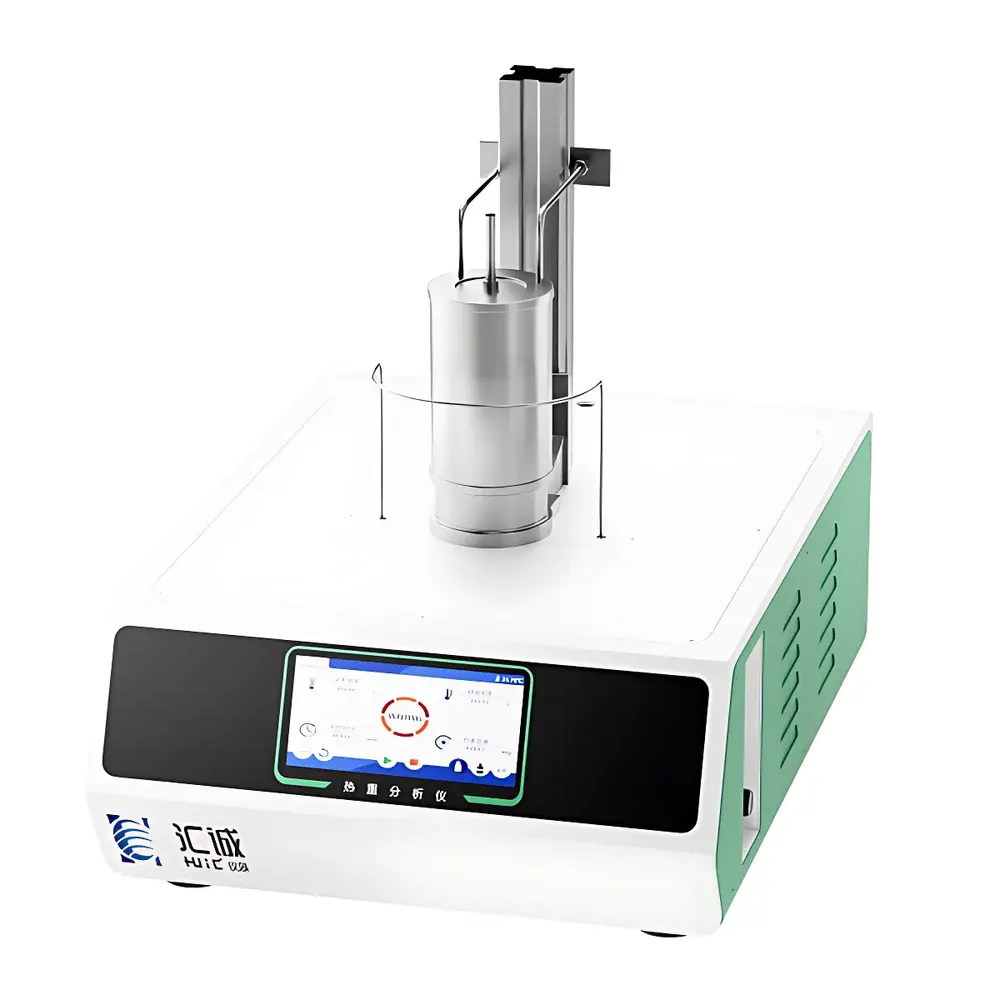
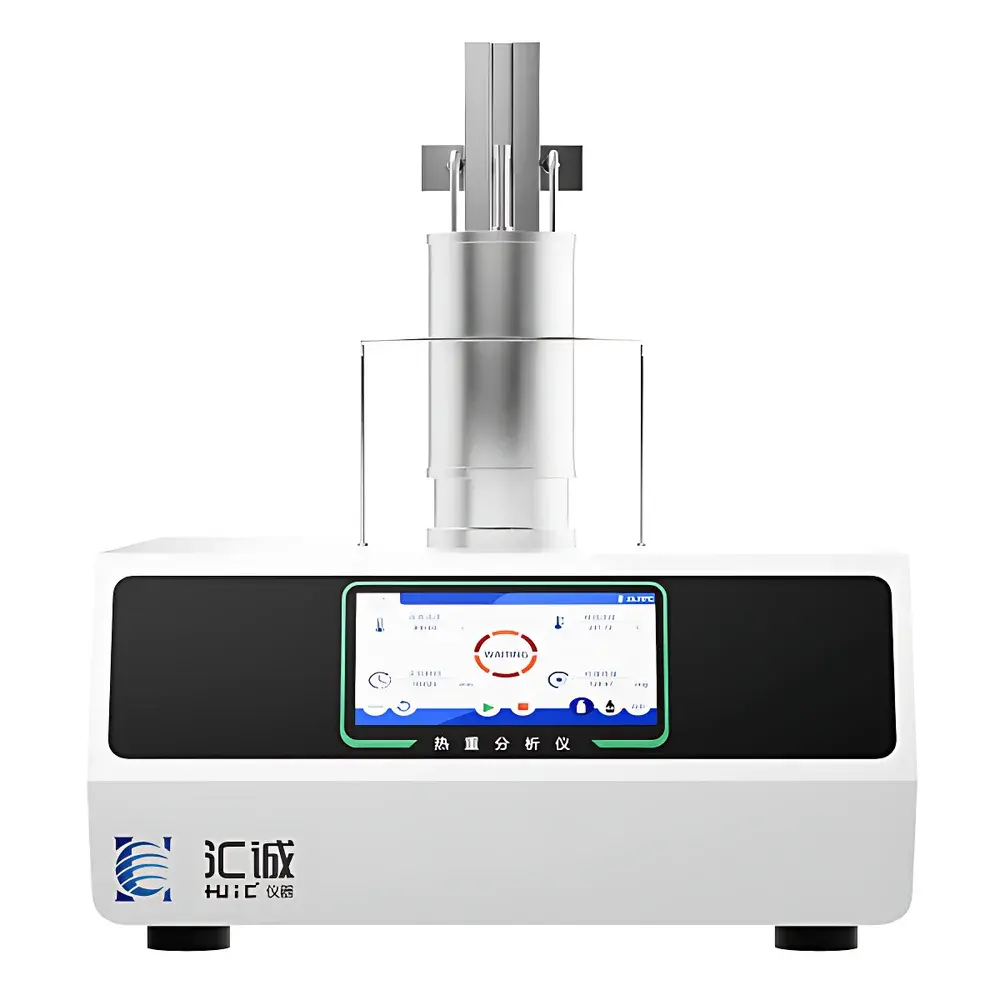
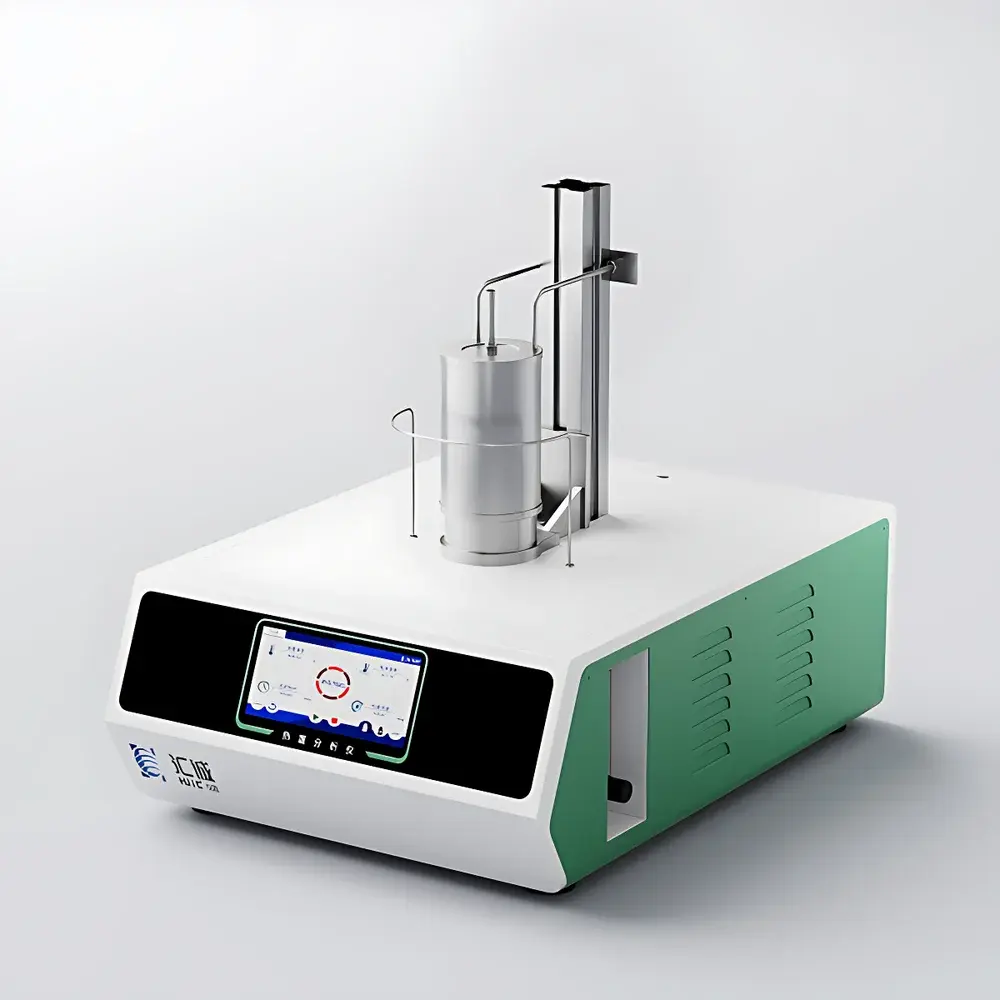
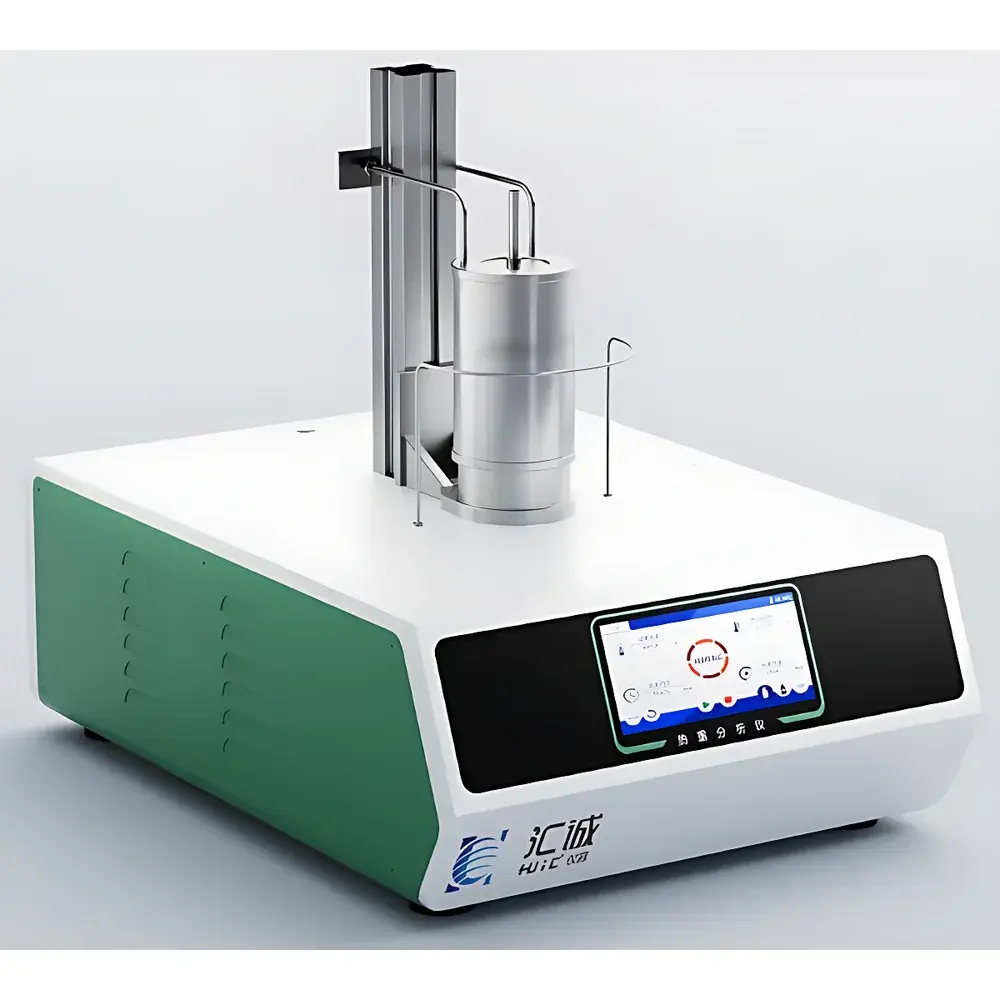
Huicheng Instrument TGA-605 High-Temperature Thermogravimetric Analyzer
| Brand | Huicheng Instrument |
|---|---|
| Origin | Jiangsu, China |
| Manufacturer Type | Direct Manufacturer |
| Model | TGA-605 |
| Temperature Range | Ambient to 1550 °C |
| Temperature Accuracy | ±0.1 °C |
| Temperature Resolution | 0.01 °C |
| Dynamic Weighing Range | 0.01 mg to 5 g |
| Mass Sensitivity | 0.01 mg |
| Mass Repeatability | ±0.01 mg |
| Heating/Cooling Rate | 0.1–100 °C/min |
| Baseline Drift | ±0.1 °C |
| Baseline Reproducibility | ±0.1 °C |
| Sampling Frequency | 0.05–10 Hz (programmable) |
| Dual-Temperature Sensing | Furnace & Sample |
| Control Modes | FTC (Fixed Temperature Control) & STC (Sample Temperature Control) |
| Programmable Temperature Stages | Up to 12 |
| Cycle Repetition | Up to 9999 cycles with auto-data retention |
| Atmosphere Control | Two independent gas lines with software-driven switching |
| Display | 7-inch 24-bit color LCD touchscreen |
| Cooling System | Integrated capillary water-circulation furnace jacket |
| Furnace Design | Modular ceramic insulation with dual-purge gas channels |
| Optional Exhaust Interface | Dedicated port for off-gas coupling to FTIR or MS |
Overview
The Huicheng Instrument TGA-605 is a high-precision, high-temperature thermogravimetric analyzer engineered for rigorous quantitative thermal stability assessment under controlled atmospheric conditions. Based on the fundamental principle of measuring real-time mass change as a function of temperature or time, the TGA-605 employs microbalance technology coupled with dual-point temperature monitoring—simultaneously tracking both furnace and sample temperatures—to deliver high-fidelity thermogravimetric data across an extended operational range from ambient to 1550 °C. Its design integrates metrological best practices including internal mass calibration, active thermal compensation, and a thermally stabilized balance chamber maintained via recirculating water bath—ensuring minimal baseline drift (<±0.1 °C) and exceptional mass repeatability (±0.01 mg). The instrument supports both weight-loss (e.g., decomposition, volatilization, oxidation) and weight-gain (e.g., adsorption, oxidation under reactive atmospheres) experiments, making it suitable for comprehensive material characterization in R&D, quality assurance, and regulatory-compliant environments.
Key Features
- High-stability microbalance with 0.01 mg sensitivity and integrated automatic calibration, featuring active temperature compensation and horizontal load positioning tolerance—eliminating positional error across the full 5 g capacity.
- Modular ceramic furnace with dual-gas purge channels and hermetic sealing architecture, enabling precise atmosphere control and minimizing convection-induced noise for superior signal-to-noise ratio.
- Dual-temperature sensing system using Pt/Rh thermocouples: one embedded in the furnace wall, another in direct thermal contact with the sample crucible—enabling accurate distinction between programmed and actual sample temperature.
- Advanced thermal management: capillary-based water-jacketed cooling system achieves rapid cooldown (30 min from 1000 °C to 100 °C), while the insulated balance chamber maintains stable weighing conditions independent of furnace transients.
- Intelligent control firmware powered by a high-frequency industrial processor, implementing optimized dynamic PID algorithms for robust dual-mode temperature regulation (FTC and STC), eliminating overshoot and improving ramp fidelity.
- 12-stage programmable temperature profile support with up to 9999 repeat cycles; all data automatically timestamped and saved with metadata (gas flow rates, setpoints, sampling frequency).
- Two independently controllable gas lines with solenoid-driven switching, configurable via intuitive touchscreen interface—supporting inert, oxidative, reductive, or sequential atmosphere protocols without manual intervention.
- 7-inch 24-bit color LCD touchscreen with real-time visualization of mass, temperature, derivative (DTG), and gas flow parameters—designed for unattended operation and GLP-aligned workflow documentation.
Sample Compatibility & Compliance
The TGA-605 accommodates standard platinum, alumina, and quartz crucibles (up to 5 g nominal load), supporting solids, powders, fibers, and thin films. It complies with ASTM E1131, ISO 11358, and USP <641> for thermogravimetric analysis, and its architecture supports 21 CFR Part 11-ready data integrity when integrated with validated LIMS or ELN systems. The optional exhaust port enables direct coupling to Fourier-transform infrared (FTIR) spectrometers or quadrupole mass spectrometers (QMS) for evolved gas analysis (EGA), facilitating mechanistic interpretation of decomposition pathways. All temperature and mass calibrations are traceable to NIST-certified reference materials, and the dual-point calibration capability—available at both firmware (lower-level controller) and software (host PC) layers—ensures long-term measurement consistency across laboratory shifts and instrument lifecycles.
Software & Data Management
Control and analysis are performed via Huicheng’s proprietary TGA Analysis Suite, a Windows-based application supporting method creation, real-time monitoring, automated report generation (PDF/CSV/XLSX), and derivative curve (DTG) calculation with peak deconvolution. The software implements audit-trail functionality compliant with GLP and GMP requirements—including user login, parameter change logging, and electronic signature capture. Raw data files are stored in a structured binary format with embedded metadata (instrument ID, operator, calibration status, gas configuration), ensuring full traceability. Export modules support ASTM E131-compliant spectral interchange formats for cross-platform compatibility with third-party thermal analysis tools such as TA Instruments Universal Analysis or Netzsch Proteus.
Applications
- Quantitative determination of moisture, solvent residue, and volatile content in pharmaceutical excipients and APIs per ICH Q5C guidelines.
- Thermal degradation kinetics of polymer composites, including filler decomposition onset, char yield, and oxidative induction time (OIT) under air/N₂ switching protocols.
- Decomposition profiling of catalysts and battery electrode materials (e.g., LiCoO₂, NMC) under controlled oxygen partial pressures.
- Adsorption/desorption isotherms of MOFs and activated carbons using programmed temperature swing (PTS) methods.
- High-temperature phase stability evaluation of refractory ceramics, superalloys, and nuclear fuel matrix materials.
- Residue quantification and ash content validation in food packaging polymers and flame-retardant additives per ISO 3451 and ASTM D5630.
FAQ
What is the maximum operating temperature of the TGA-605, and what sensor type enables this range?
The TGA-605 operates up to 1550 °C using dual Pt/Rh (Type S) thermocouples—one for furnace control and one for direct sample temperature feedback.
Does the instrument support simultaneous measurement of sample temperature and furnace temperature?
Yes. The dual-sensor architecture provides independent, real-time readings of both furnace wall temperature and actual sample temperature—critical for accurate kinetic modeling.
Can the TGA-605 perform isothermal holds at high temperatures, and what is the maximum duration?
Isothermal segments are fully programmable up to 500 minutes at any temperature within the operating range, with mass stability monitored continuously.
Is evolved gas analysis (EGA) supported out-of-the-box?
The instrument includes a dedicated exhaust port with standardized flange interface (KF-25); FTIR or MS coupling requires optional transfer line and interface module.
How is temperature calibration verified during routine use?
The system includes certified reference materials (e.g., Ni, Cu, Al₂O₃) and supports multi-point calibration routines at both firmware and software levels—traceable to NIST standards.
What data security and compliance features are included for regulated industries?
Audit trail, electronic signatures, role-based access control, and raw data immutability are implemented in accordance with 21 CFR Part 11 and EU Annex 11 when used with validated software configurations.



