
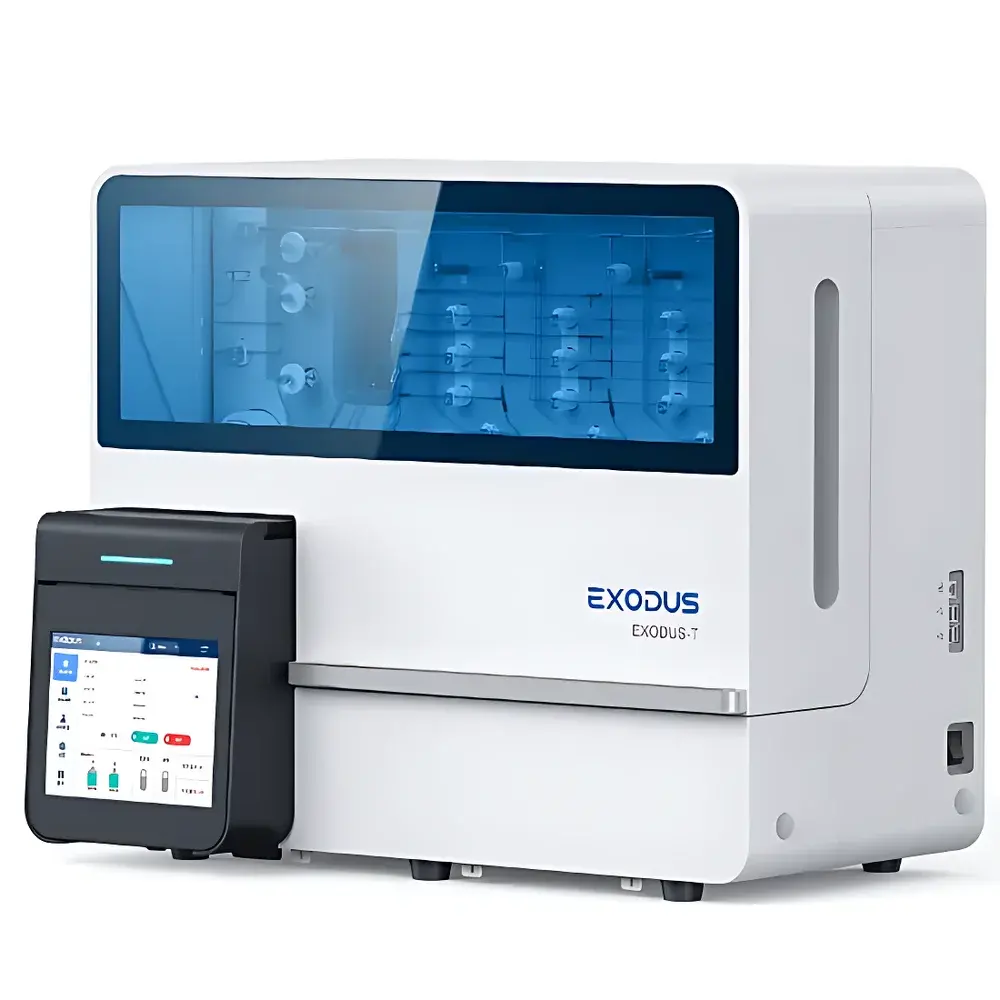
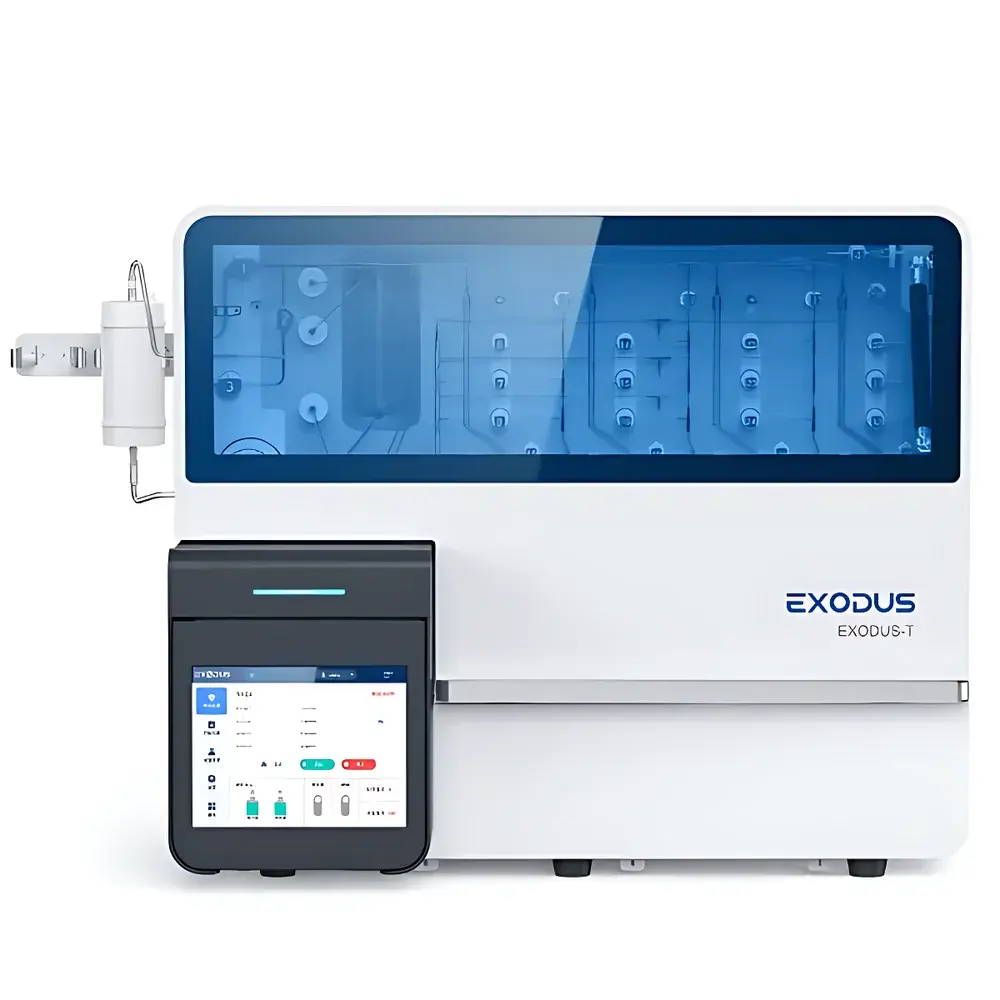
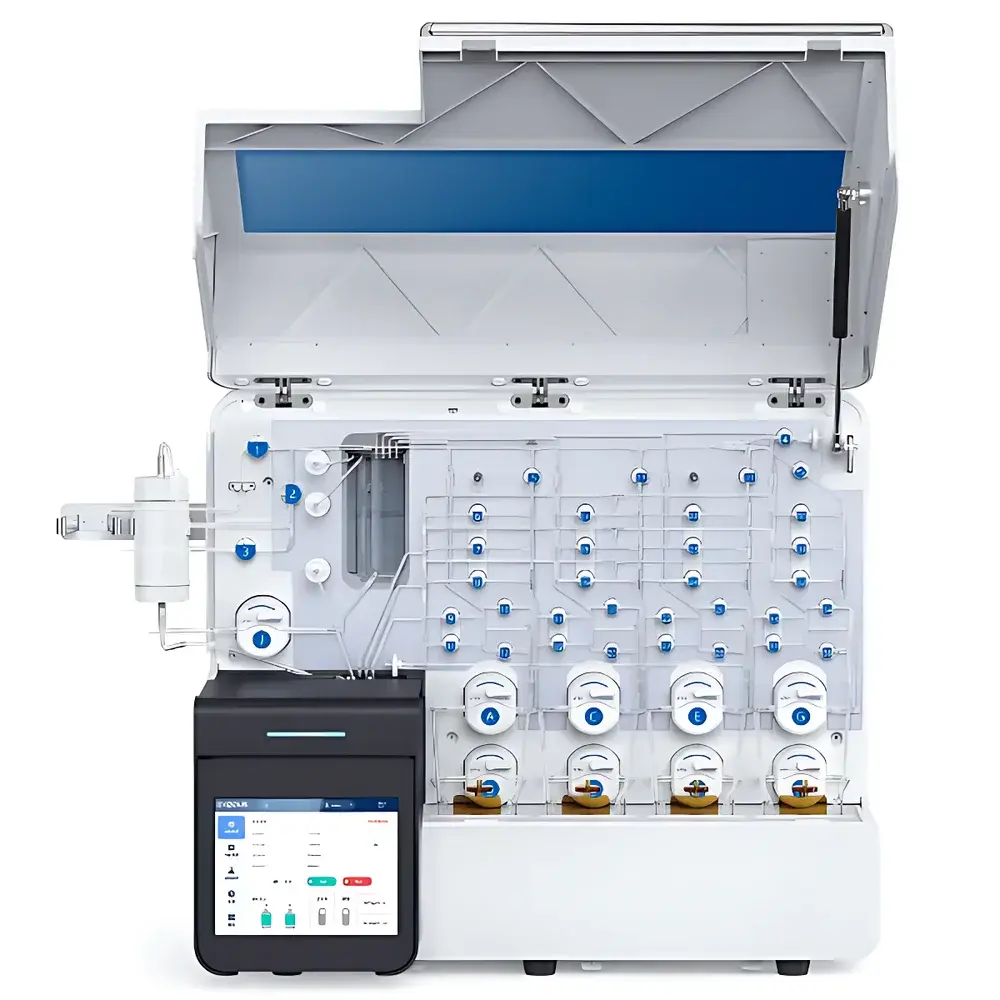
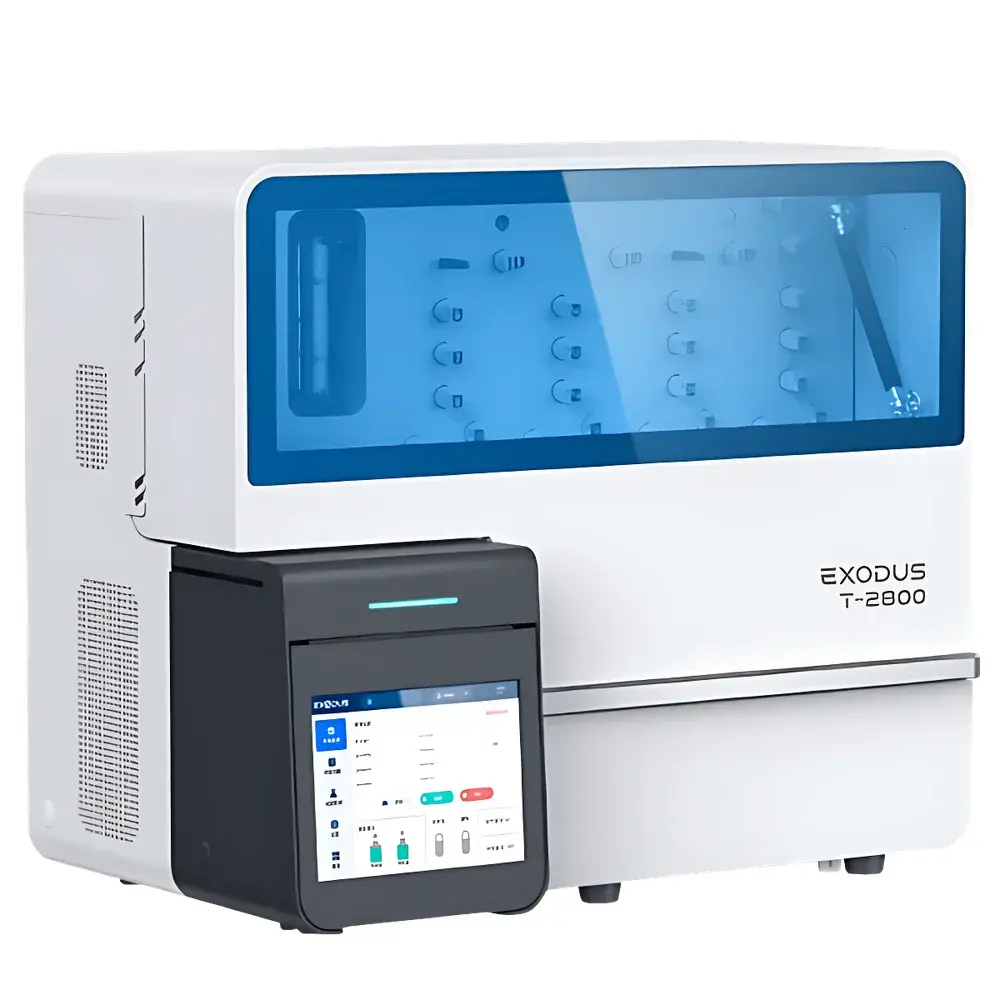
Huixin Bio EXODUS-T2800 Non-Labeling Fully Automated Exosome Isolation System
| Brand | EXODUS |
|---|---|
| Origin | Shenzhen, China |
| Manufacturer Type | Authorized Distributor |
| Country of Origin | China |
| Model | T-2800 |
| Temperature Control Range | 2–8 °C |
| Sample Processing Volume | 0.5–10 L |
| Sterilization Method | Ethylene Oxide (EO) Gas |
| Operating Principle | Ultrasonic Nanofiltration |
| Purification Throughput | 1–2 L/h |
Overview
The Huixin Bio EXODUS-T2800 is a GMP-aligned, fully automated exosome isolation system engineered for scalable, reproducible, and label-free purification of extracellular vesicles (EVs) from large-volume biological supernatants and biofluids. It implements a proprietary ultrasonic nanofiltration principle—distinct from conventional tangential flow filtration (TFF), ultracentrifugation, or immunoaffinity capture—by integrating synchronized negative-pressure oscillation with dual-coupled high-frequency ultrasound directly applied to a nanostructured filtration chip. This physical separation mechanism exploits differential hydrodynamic behavior: soluble contaminants—including free proteins, nucleic acids, and lipoprotein aggregates—rapidly permeate sub-100 nm pores under acoustic cavitation-enhanced mass transfer, while intact exosomes (30–150 nm diameter) are retained based on size exclusion and surface interaction dynamics. The system operates within a thermally stabilized 2–8 °C environment to preserve exosome integrity, membrane fluidity, and cargo functionality—critical for downstream therapeutic loading, in vitro functional assays, and regenerative medicine applications.
Key Features
- GMP-compatible architecture with stainless-steel fluidic pathways, EO-sterilizable disposable cartridge sets, and closed-system processing to minimize cross-contamination and operator exposure.
- Automated end-to-end workflow: sample loading → buffer exchange → concentration → wash → elution → collection—requiring no manual intervention post-initiation.
- Real-time process monitoring via integrated pressure sensors, temperature loggers, and flow rate controllers; all parameters logged with timestamped audit trails compliant with FDA 21 CFR Part 11 requirements.
- Modular nano-filtration chip design with validated pore uniformity and low non-specific binding surface chemistry, enabling consistent recovery (>75% by nanoparticle tracking analysis, NTA) across batch sizes from 500 mL to 10 L.
- Programmable protocol library supporting customizable ramp rates, sonication duty cycles, and hold steps—enabling method transfer between research, process development, and clinical manufacturing environments.
Sample Compatibility & Compliance
The EXODUS-T2800 processes clarified supernatants from adherent or suspension cell cultures (e.g., mesenchymal stromal cells, HEK293, dendritic cells), human plasma, serum, urine, and cerebrospinal fluid—provided samples undergo pre-filtration through 0.22 µm PVDF membranes. All wetted materials comply with USP Class VI biocompatibility standards. Device validation documentation includes IQ/OQ/PQ protocols aligned with ISO 13485:2016 and supports regulatory submissions under ICH Q5A(R2) for EV-based therapeutics. Process consistency meets GLP/GMP traceability requirements, with full electronic batch records (EBR) exportable in CSV and PDF formats.
Software & Data Management
Controlled via the EXODUS Control Suite v3.2—a Windows-based application with role-based access control (RBAC), multi-level user permissions, and encrypted local database storage. Software features include: automated calibration verification, deviation alerting with root cause tagging, electronic signature support per ALCOA+ principles, and seamless integration with LIMS via HL7 or RESTful API. All raw sensor data, method files, and event logs are stored with SHA-256 hash integrity checks and support retrospective audit review without data reconstruction.
Applications
- Clinical-scale production of exosomes for autologous/allogeneic cell-free therapies in oncology, neurodegeneration, and wound healing.
- Process development of exosome-loaded therapeutics (e.g., siRNA, miRNA, CRISPR ribonucleoproteins) requiring high-purity, low-aggregate fractions.
- Standardized EV isolation for biomarker discovery studies where reproducibility across multi-site cohorts is essential.
- Regulatory-grade material generation for IND-enabling toxicology and biodistribution studies in accordance with FDA Guidance for EV-Based Products (2023).
FAQ
What is the maximum recommended viscosity limit for feed samples?
Feed solutions should not exceed 3.5 cP at 4 °C; higher viscosities require dilution with isotonic PBS or formulation buffer prior to loading.
Can the system be validated for use with human platelet lysate (HPL)-supplemented media?
Yes—validation kits and SOPs for HPL-containing supernatants are available upon request and include residual HPL protein quantification by ELISA.
Is remote monitoring supported during operation?
The system supports secure remote access via TLS 1.2–encrypted VNC connection for real-time status viewing; however, remote parameter modification requires local administrative authentication.
How often must the nano-filtration chip be replaced?
Each chip is rated for up to 20 purification cycles (cumulative volume ≤ 50 L) under standard operating conditions; replacement is automatically flagged in software based on pressure decay trend analysis.
Does the system meet ISO 22870:2021 requirements for point-of-care testing devices?
While not classified as a PoCT device, its environmental controls, alarm response latency (<500 ms), and failure mode analysis align with critical subsystem elements defined in ISO 22870:2021 Annex B for diagnostic instrumentation.
Related Products




