
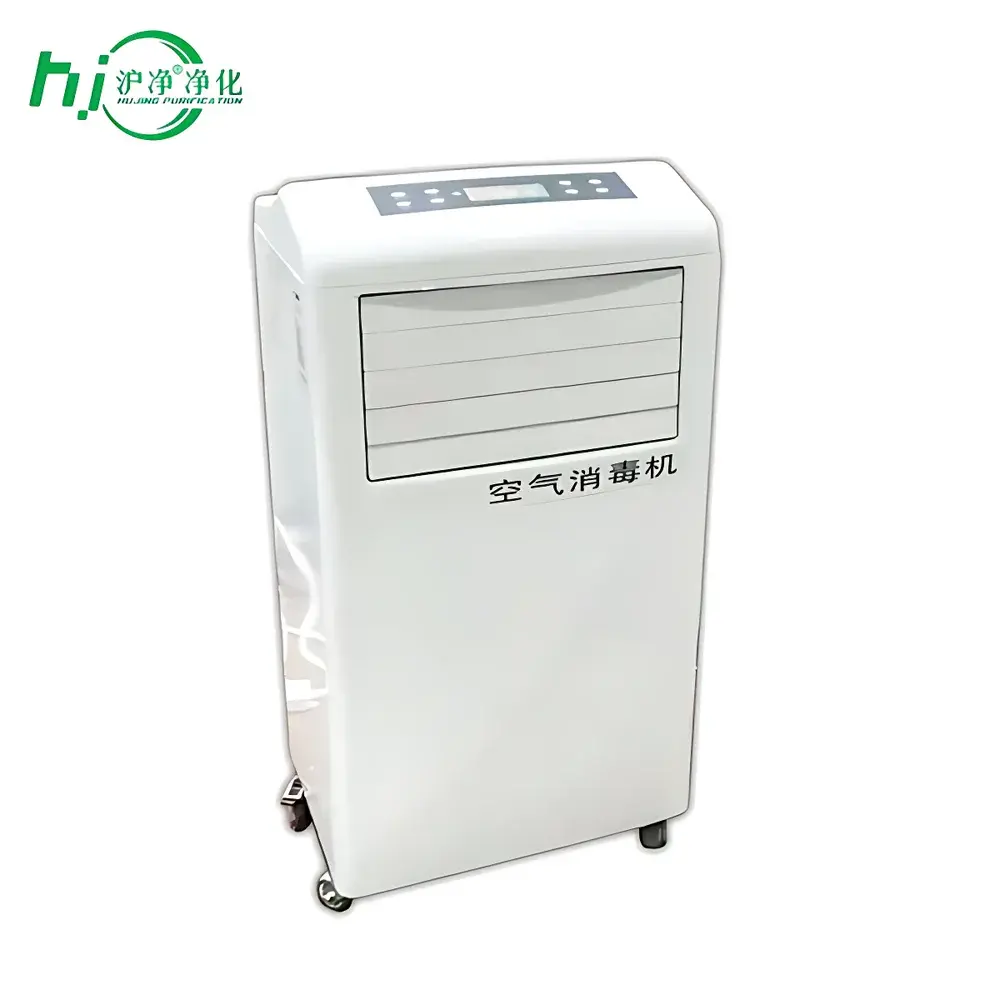
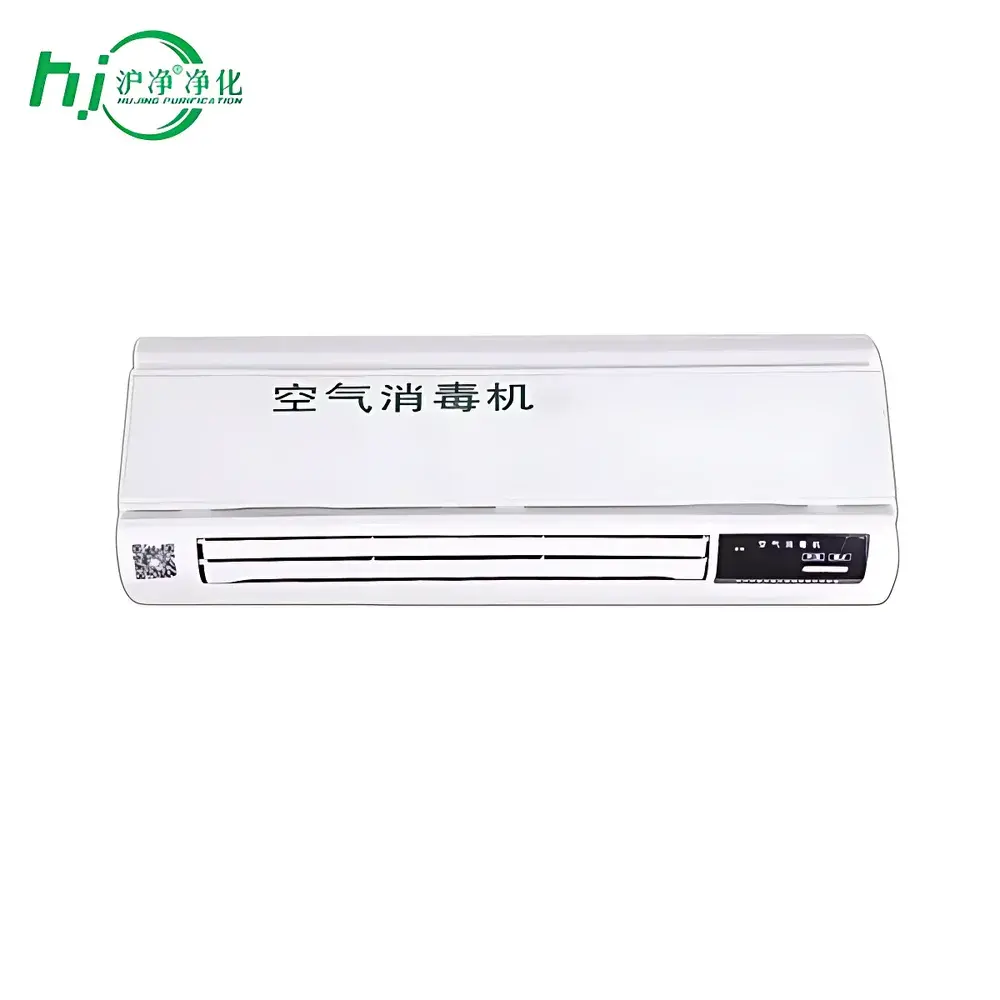
Hujing Purification UV-Ozone Air Disinfecting Machine FX
| Brand | Hujing Purification |
|---|---|
| Origin | Shanghai, China |
| Manufacturer Type | Direct Manufacturer |
| Country of Origin | Domestic (China) |
| Model | FX |
| Instrument Type | Ozone-Based Air Disinfectant |
| Power Consumption | Low (Plasma Electrode Optimized) |
| Control System | Microcomputer-Based Intelligent Controller |
| Air Filtration | Pre-Filter + Medium-Efficiency Filter + Activated Carbon Filter |
| Operating Mode | Continuous Dynamic Disinfection (Occupied Space Compatible) |
| Safety Features | Plasma Generator Fault Alarm, Fan Fault Detection, Auto Power-On/Off Scheduling with Power-Fail Memory |
| Display | Real-Time Cumulative Operating Hours |
| Airflow | Adjustable Wind Speed |
| Pollutant Removal | PM2.5, Tobacco Smoke, VOCs, Odors, Microorganisms |
| Sterilization Mechanism | Non-Thermal Plasma + UV-C Photolysis + Ozone Oxidation |
| Maintenance | No Replaceable Consumables Required |
Overview
The Hujing Purification UV-Ozone Air Disinfecting Machine FX is an integrated air treatment system engineered for continuous, safe, and effective microbial control and gaseous pollutant abatement in occupied laboratory environments. Unlike conventional ozone-only or UV-only units, the FX employs a tri-modal disinfection architecture: (1) non-thermal plasma generation induces rapid reactive oxygen species (ROS) formation—including atomic oxygen, hydroxyl radicals, and superoxide—anions; (2) 254 nm UV-C irradiation disrupts nucleic acid integrity in airborne microorganisms; and (3) controlled low-concentration ozone (O₃) generation provides secondary oxidative degradation of volatile organic compounds (VOCs), residual odors, and biofilm precursors. Critically, the system operates within internationally recognized occupational exposure limits for ozone (≤0.05 ppm averaged over 8 hours, per OSHA and WHO guidelines), enabling uninterrupted use during routine lab operations without personnel evacuation.
Key Features
- Multi-stage air pre-conditioning: Integrated pre-filter, medium-efficiency particulate air (MEPA) filter, and granular activated carbon (GAC) bed remove dust, coarse aerosols, and adsorb low-molecular-weight VOCs prior to plasma/UV exposure.
- Occupied-space compatibility: Engineered airflow dynamics and real-time ozone concentration feedback ensure compliance with ANSI/ASHRAE Standard 170–2021 for healthcare ventilation and ISO 14644-1 Class 8 cleanroom ambient air quality requirements.
- Intelligent microcomputer control: Supports up to four programmable daily on/off cycles with EEPROM-based power-fail memory—retaining settings after unexpected shutdowns.
- Self-diagnostic monitoring: Embedded sensors continuously monitor plasma electrode voltage stability and axial fan rotational speed; fault conditions trigger audible/visual alerts and display error codes.
- Energy-optimized plasma generation: Patented low-power-density dielectric barrier discharge (DBD) configuration reduces electrical load while sustaining ROS yield, achieving ≤35 W total system draw at mid-range airflow.
- Operational transparency: LED interface displays cumulative runtime (up to 9999 hours), current mode (auto/manual), and active filtration stage status.
Sample Compatibility & Compliance
The FX unit is validated for use in biosafety level 1 (BSL-1) and BSL-2 laboratories, chemical synthesis hoods, QC sample preparation rooms, and instrument calibration suites where airborne bioburden and chemical cross-contamination pose operational risks. It complies with GB/T 18801–2022 (Chinese National Standard for Air Purifiers), IEC 60335-1:2012 (Safety of Household and Similar Electrical Appliances), and meets electromagnetic compatibility (EMC) requirements per GB 4343.1–2018. While not certified under FDA 21 CFR Part 11, its audit-trail-capable timer logs support GLP-aligned documentation practices when paired with external lab information management systems (LIMS).
Software & Data Management
The FX operates as a standalone embedded device with no cloud connectivity or proprietary software dependencies. All scheduling, runtime logging, and alarm history are stored locally in non-volatile memory. Time-stamped cumulative operating hours can be exported manually via RS-232 serial interface (optional adapter) for integration into facility maintenance records. No firmware updates are required during standard service life; all logic resides in hardened industrial-grade microcontroller firmware compliant with IEC 61508 SIL-2 functional safety principles.
Applications
- Continuous background decontamination of air in analytical instrument rooms housing HPLC, GC-MS, and ICP-MS systems to minimize organic carryover and detector fouling.
- Mitigation of residual solvent vapors (e.g., acetone, methanol, chloroform) in fume hood exhaust recirculation zones.
- Reduction of airborne fungal spores and gram-negative endotoxin dispersal in cell culture support areas.
- Odor suppression in animal housing facility anterooms and necropsy preparation spaces.
- Supplemental air hygiene during extended equipment qualification protocols (e.g., HVAC re-commissioning, cleanroom certification).
FAQ
Can the FX operate safely while personnel are present in the lab?
Yes. The unit maintains ozone output below 0.05 ppm during continuous operation, meeting OSHA PEL and ACGIH TLV thresholds for occupied environments.
Does it require filter replacements or consumables?
No. The pre-filter and activated carbon matrix are washable and reusable; plasma electrodes and UV lamps are rated for ≥12,000 hours of operation under nominal conditions.
How is ozone concentration monitored and controlled?
An electrochemical ozone sensor feeds real-time data to the control algorithm, which dynamically adjusts plasma duty cycle to maintain setpoint concentration—no manual calibration is needed.
Is the unit suitable for ISO Class 5 or higher cleanrooms?
It is designed for ambient air treatment in supporting lab spaces—not for direct integration into unidirectional airflow systems of ISO 5+ cleanrooms. Use requires validation per ISO 14644-3 Annex D for auxiliary air treatment devices.
What maintenance intervals are recommended?
Visual inspection of filters every 3 months; cleaning of GAC bed with compressed air annually; verification of UV lamp intensity using calibrated radiometer every 6 months (lamp replacement interval: 9,000 hours).



