
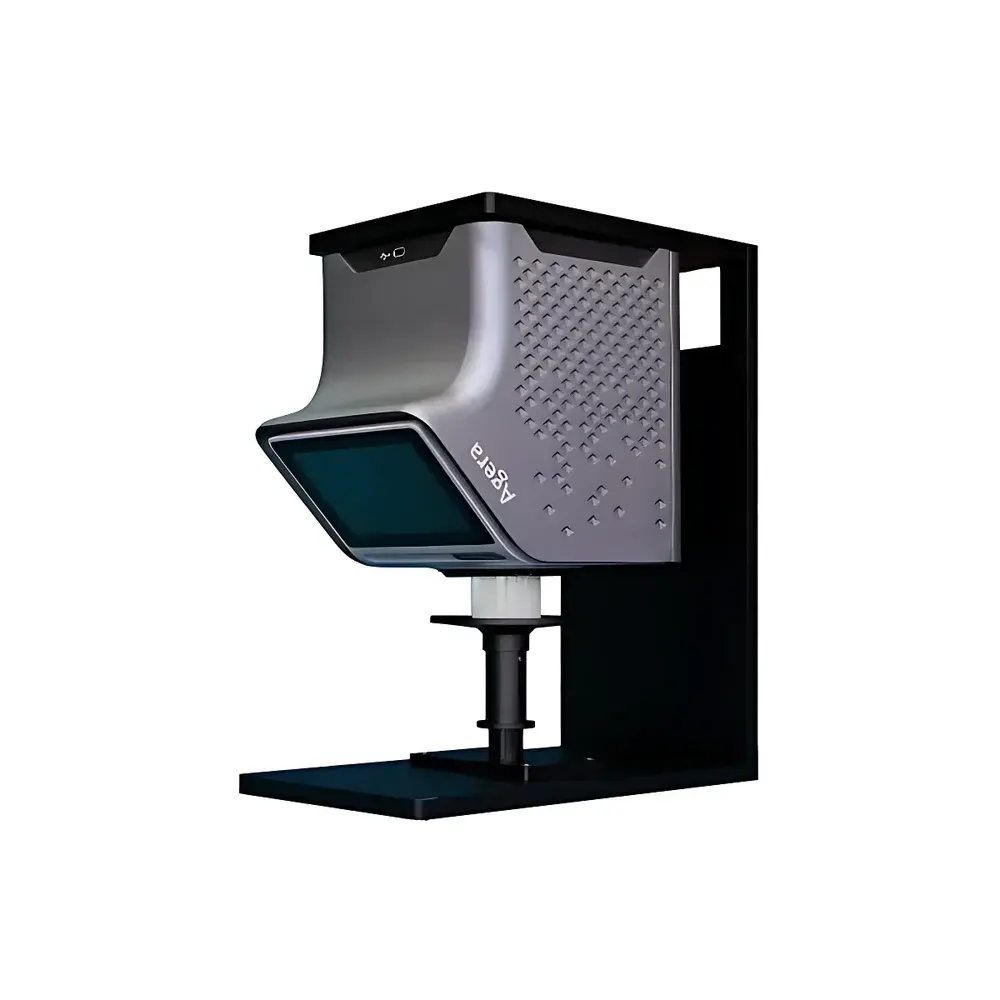
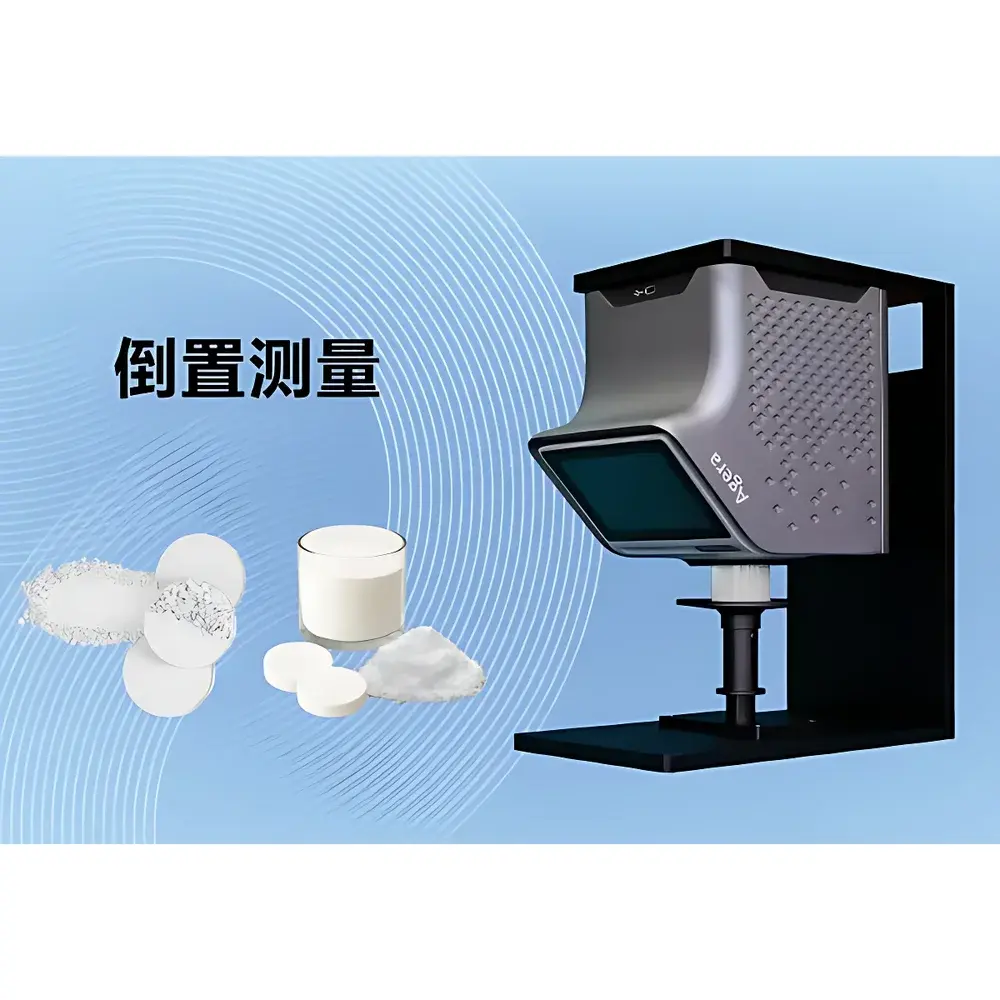
HunterLab Agera-Compatible Inverted Powder & Pellet Measurement Stand
| Brand | HunterLab |
|---|---|
| Origin | USA |
| Manufacturer Type | Authorized Distributor |
| Origin Category | Imported |
| Model Compatibility | Agera Spectrophotometer |
| Product Category | Spectrophotometric Colorimeter |
| Instrument Type | Benchtop |
| Optical Geometry | 0/45° Integrating Sphere |
| Light Source | Full-Spectrum Balanced LED Array |
| Spectral Range | 400 nm – 700 nm |
| Repeatability | ΔE*ab ≤ 0.03 |
Overview
The HunterLab Agera-Compatible Inverted Powder & Pellet Measurement Stand is an engineered mechanical accessory designed to enable robust, contamination-resistant color measurement of opaque, non-uniform solid samples—specifically powdered and granular materials—using the HunterLab Agera benchtop spectrophotometer. Unlike conventional top-down measurement configurations, this stand reorients the instrument’s optical port vertically downward, allowing the sample (e.g., pressed titanium dioxide or PTA pellets) to be placed *beneath* the measurement aperture. This inverted geometry eliminates direct contact between loose particulate matter and the spectrophotometer’s critical optical lens and integrating sphere entrance port—significantly reducing risk of surface contamination, spectral drift, and long-term calibration degradation. The design supports standardized color evaluation per major national and international pigment testing protocols, including GB/T 1706, GB/T 5211 series, ASTM E313, and ASTM D1925, with particular relevance to white pigment quality control where trace yellowness (b* value) and whiteness index (TCX) are primary performance indicators.
Key Features
- Optimized inverted mounting configuration for HunterLab Agera spectrophotometers—no hardware modification required.
- Stable, precision-machined aluminum base with integrated alignment pins ensuring repeatable sample positioning relative to the 0/45° optical axis.
- Accommodates standard pellet dimensions per GB/T 1706: 40–50 mm diameter × ~2 mm thickness, with flat, non-reflective sample support surface.
- Non-contact sample interface minimizes risk of lens soiling from TiO₂, PTA, calcium carbonate, or polymer granules during routine QC workflows.
- Compatible with HunterLab’s Unified Software Suite (Version 8.0+), enabling automated data capture, pass/fail tolerancing, and audit-ready reporting.
- Designed for integration into GLP-compliant laboratories; supports 21 CFR Part 11–enabled user authentication and electronic signature workflows when paired with validated software configuration.
Sample Compatibility & Compliance
This stand is validated for use with pressed powder compacts and thermoplastic pellets requiring high-reproducibility reflectance measurement under controlled geometry. Primary applications include titanium dioxide (TiO₂) pigment grading, purified terephthalic acid (PTA) purity assessment, and white masterbatch color consistency verification. It meets the physical sample preparation requirements outlined in GB/T 5211.15–2014 (determination of color of white pigments), HG/T 3862–2006 (industrial-grade PTA specifications), and QB/T 2953–2008 (color measurement of synthetic resins). All measurements conform to CIE 15:2018 spectral evaluation principles and utilize the CIELAB color space (L*, a*, b*, ΔE*ab) as defined in ISO 11664-4. The 0/45° optical geometry ensures compliance with ASTM D2244 and ISO 13655 for non-diffuse, directional reflectance measurement of matte and semi-matte surfaces.
Software & Data Management
When used with HunterLab’s Unified Software, the inverted stand enables full traceability of measurement conditions—including aperture size, illuminant (D65, A, C), observer angle (10°), and color scale selection (CIELAB, XYZ, TCX, SCX). Raw spectral data (31-point, 10 nm intervals across 400–700 nm) is stored with metadata tags for sample ID, operator, timestamp, and environmental conditions (optional via optional ambient sensor integration). Audit trail functionality records all parameter changes, result exports, and calibration events in accordance with FDA 21 CFR Part 11 and ISO/IEC 17025:2017 documentation requirements. Export formats include CSV, XML, and PDF reports compliant with internal QA templates and external regulatory submissions.
Applications
- Titanium dioxide (TiO₂) quality control: Quantification of yellowness index (b*) and total color difference (ΔE*ab) against reference standards to detect iron or chromium impurities.
- Purified terephthalic acid (PTA) whiteness evaluation: Monitoring b* drift during crystallization and drying processes to ensure compliance with HG/T 3862–2006 Class I specifications.
- Plastic pellet batch release testing: Rapid comparison of L*, a*, b* values across extrusion lots to verify color stability prior to injection molding.
- Pharmaceutical excipient color screening: Reflectance measurement of talc, starch, or microcrystalline cellulose compacts per USP guidance on visual appearance assessment.
- Paint and coating pigment dispersion analysis: Correlation of pellet-based color metrics with final film performance using multivariate regression models.
FAQ
Does this stand require recalibration of the Agera spectrophotometer?
No—mechanical repositioning does not affect the instrument’s factory calibration. However, a system verification check using NIST-traceable ceramic tiles is recommended before first use and after any transport event.
Can it be used with other HunterLab instruments besides the Agera?
It is mechanically and optically optimized for the Agera platform. Use with other models (e.g., UltraScan VIS, MiniScan EZ) is not supported due to differences in port geometry, height clearance, and software handshake protocols.
Is the stand compatible with automated sample changers?
Not natively. The inverted configuration requires manual placement and removal of pellets; however, custom robotic integration has been implemented by several Tier-1 chemical manufacturers using third-party motion control APIs.
What maintenance is required?
Routine cleaning of the sample support surface with lint-free isopropyl alcohol wipes; no lubrication or adjustment is necessary. Annual verification of mechanical alignment tolerance (±0.1 mm) is advised for labs operating under ISO/IEC 17025 accreditation.
Does it support transmission mode measurements?
No—this accessory is exclusively for reflectance-mode operation. Transmission measurements of powders require separate cell holders and dilution protocols per ISO 13655 Annex B.





