
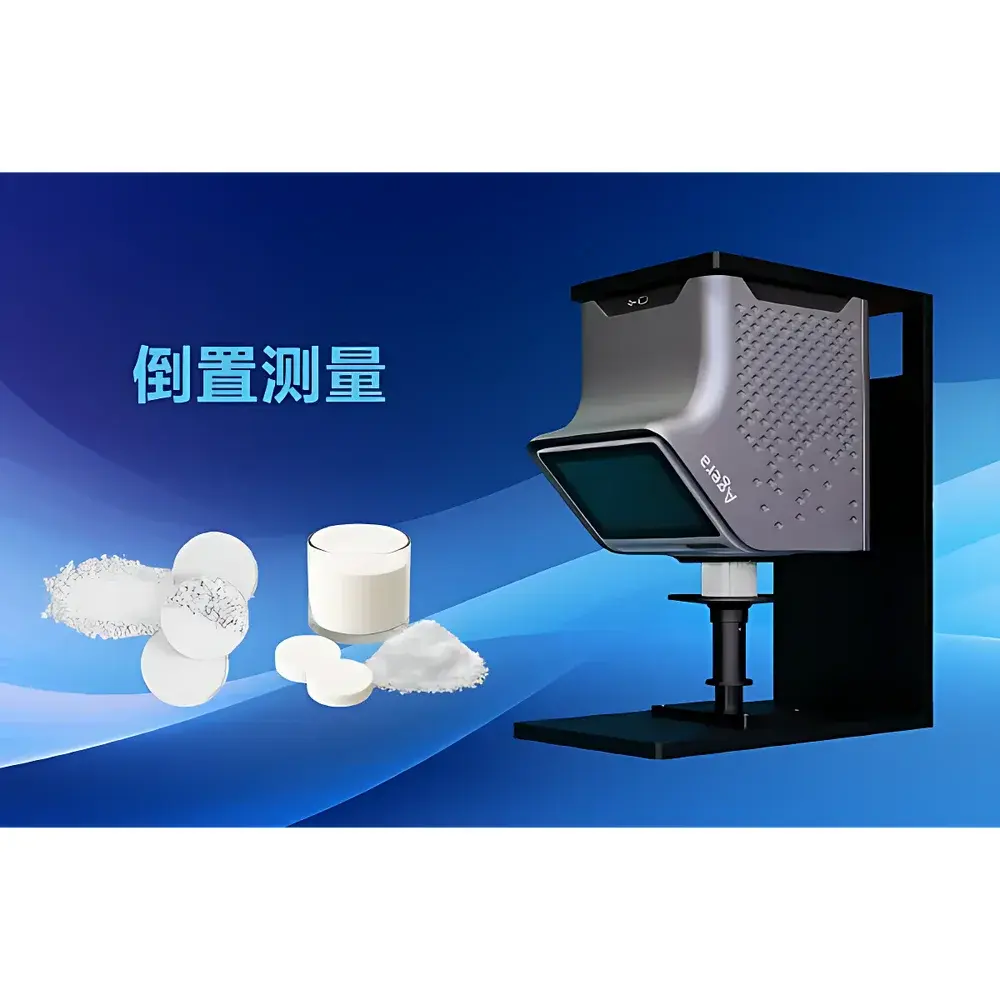
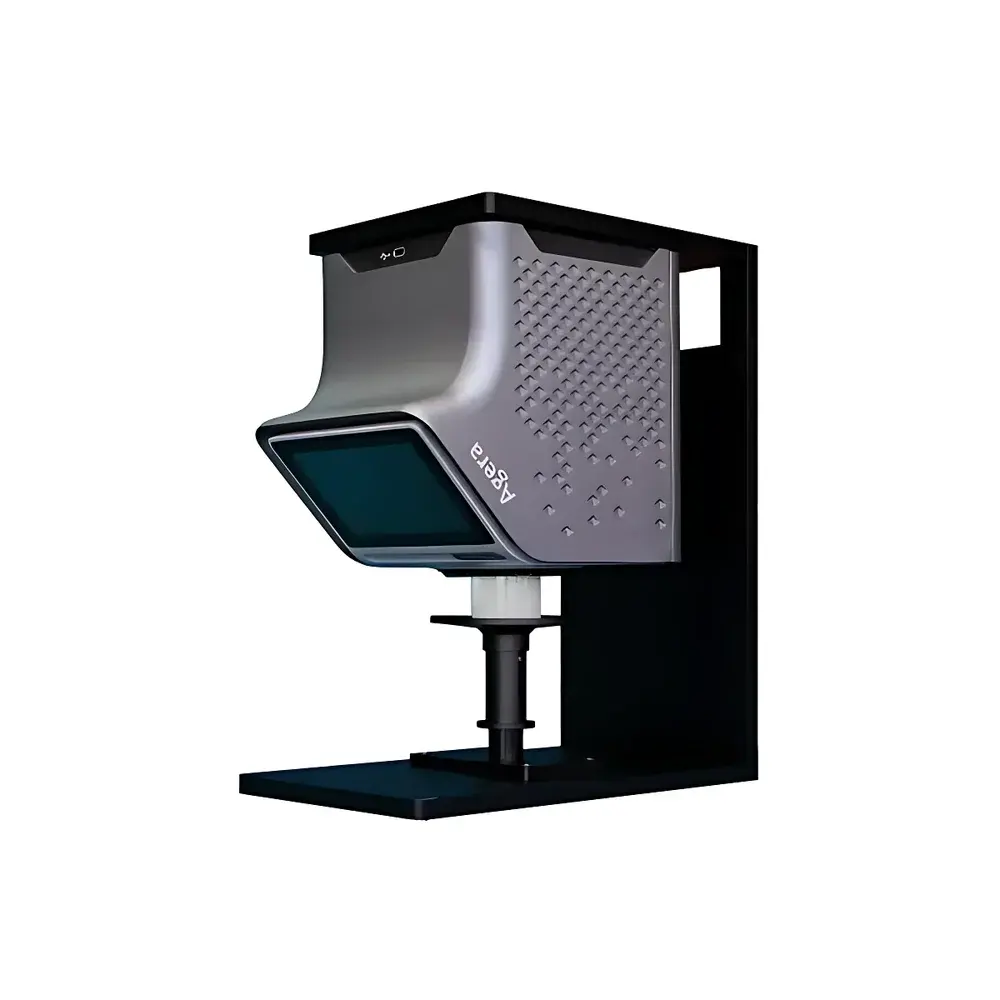
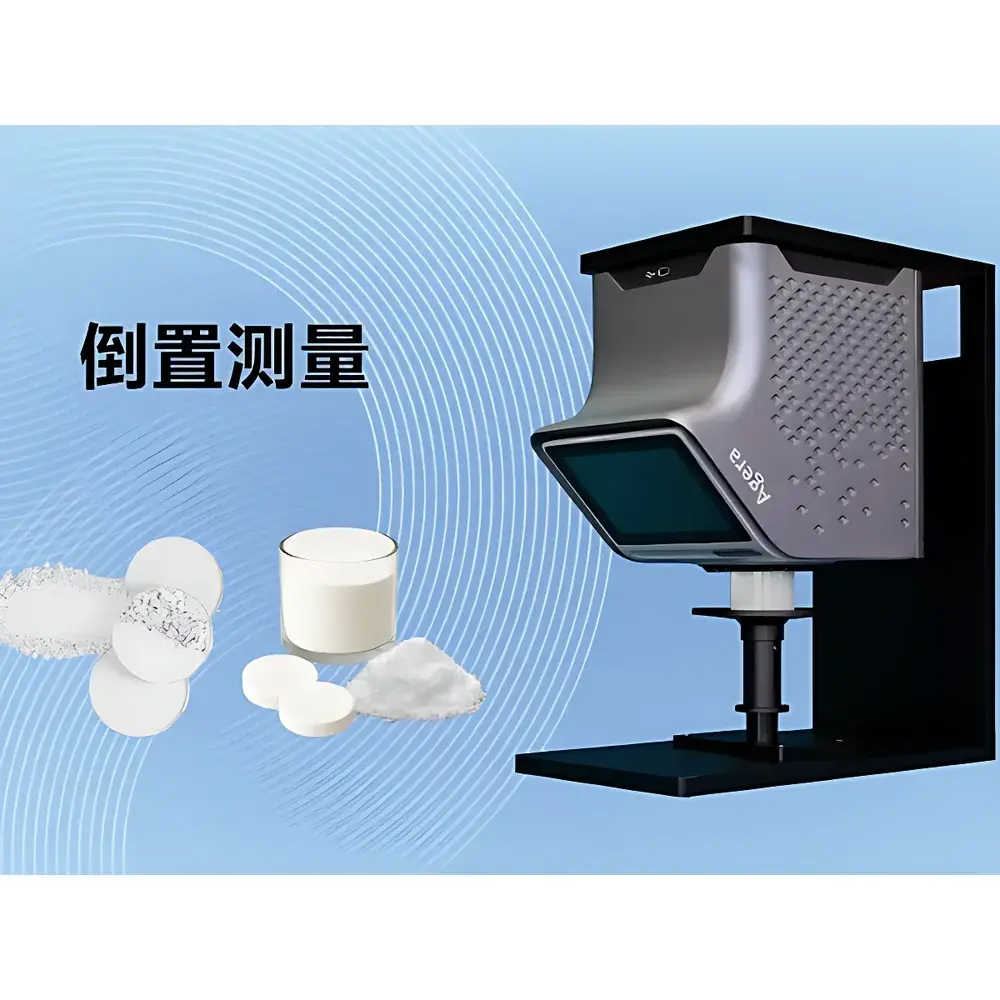
HunterLab Powder & Pellet Inverted Measurement Stand for Titanium Dioxide (TiO₂) Applications
| Brand | HunterLab |
|---|---|
| Origin | USA |
| Model | Inverted Powder/Pellet Pressing Stand |
| Optical Geometry | 0/45° Integrating Sphere |
| Light Source | Full-Spectrum Balanced LED Array |
| Spectral Range | 400–700 nm |
| Repeatability | ΔE* ≤ 0.03 |
| Compliance | GB/T 1706, GB/T 5211.15–2014, HG/T 3862–2006, QB/T 2953–2008, ASTM E313, ASTM D1925 |
Overview
The HunterLab Inverted Powder/Pellet Pressing Stand is a purpose-engineered mechanical accessory designed exclusively for high-precision color measurement of opaque, non-uniform particulate samples—particularly titanium dioxide (TiO₂) pigment and purified terephthalic acid (PTA) powders—when used in conjunction with HunterLab’s 0/45° geometry benchtop spectrophotometers. Unlike conventional horizontal or upright sample holders, this stand reorients the instrument’s optical path vertically downward, enabling stable, contamination-resistant measurement of pressed discs. The design directly addresses the core metrological challenge in white pigment analysis: minimizing spectral interference from airborne or adherent particulates that compromise lens integrity and photometric stability. By positioning the sensor aperture facing downward onto a fixed, level tablet placed on the stand’s precision-machined anvil, the system eliminates gravitational settling of fine TiO₂ particles onto critical optical surfaces—thereby preserving long-term calibration fidelity, reducing maintenance frequency, and ensuring traceable compliance with national and international colorimetric standards.
Key Features
- Optimized inverted configuration: Sensor faces downward onto a stationary, horizontally aligned pressed disc—eliminating particle migration toward optics during measurement.
- Compatible with standard 40–50 mm diameter, ~2 mm thick tablets per GB/T 1706 and GB/T 5211.15–2014 requirements for TiO₂ and PTA color evaluation.
- Robust aluminum alloy construction with black anodized finish to minimize stray light reflection and thermal drift.
- Integrated leveling feet and micro-adjustable height stop ensure consistent sample-to-aperture distance (critical for 0/45° geometry reproducibility).
- No moving parts or electrical components—designed for GLP-compliant environments where mechanical simplicity supports auditability and validation.
- Directly interfaces with HunterLab’s UltraScan VIS, ColorFlex EZ, and MiniScan EZ platforms without firmware modification or adapter kits.
Sample Compatibility & Compliance
This stand supports standardized preparation and measurement of pressed powder specimens across multiple regulated industries. For titanium dioxide pigments, it enables full adherence to GB/T 1706 (“Pigments—Determination of White Pigments”) and GB/T 5211.15–2014 (“Pigments and Extenders—General Methods of Colour Determination—Part 15: Determination of Whiteness and Tinting Strength of White Pigments”), including specification of tablet thickness (2.0 ± 0.1 mm), diameter (45 ± 0.5 mm), and surface flatness (Ra ≤ 0.8 µm). For PTA quality control, the stand facilitates compliant execution of HG/T 3862–2006 (“Industrial Purified Terephthalic Acid”) and QB/T 2953–2008 (“Chemical Products—Determination of Colour”), particularly b* value monitoring for yellowish impurity detection. All measurements are traceable to CIE 1931 2° standard observer and illuminant D65, satisfying ASTM E313 (Yellowness Index) and ASTM D1925 (Standard Test Method for Yellowness of Plastics) reporting frameworks.
Software & Data Management
When paired with HunterLab’s EasyMatch QC software (v5.0+), the inverted stand integrates seamlessly into validated laboratory workflows. Measurement protocols—including tablet ID, press force, dwell time, and environmental metadata (temperature/humidity)—are programmable and stored with each spectral acquisition. The software enforces audit trails per FDA 21 CFR Part 11 requirements, including electronic signatures, change history, and user-level access controls. Batch reports auto-generate L*, a*, b*, ΔE*, TCX (tinting strength), SCX (shade), and YI (yellowness index) values against master references, with pass/fail logic configurable per internal QC limits or regulatory thresholds (e.g., b* ≤ 0.8 for premium-grade TiO₂). Export formats include CSV, PDF, and XML for LIMS integration.
Applications
- Routine QC of rutile and anatase titanium dioxide batches for whiteness, brightness, and chromatic purity.
- Stability testing of PTA under thermal or oxidative stress—tracking b* drift as an early indicator of aldehyde impurity formation.
- Raw material qualification for coatings, plastics, and paper manufacturers requiring ISO/IEC 17025-compliant color data.
- Method validation studies supporting ICH Q5 and Q7 guidelines for pigment-based pharmaceutical excipients.
- Inter-laboratory comparison programs coordinated under CNAS accreditation (CNAS-CL01:2018).
FAQ
Is this stand compatible with non-HunterLab spectrophotometers?
No—it is mechanically and optically calibrated for HunterLab’s proprietary 0/45° optical path length, aperture size, and field-of-view alignment. Use with other brands may result in vignetting, geometric mismatch, or repeatability loss.
Does the stand require recalibration of the base spectrophotometer?
No—installation does not alter the instrument’s factory calibration. However, a system verification using NIST-traceable ceramic tile standards is recommended after initial setup and annually thereafter.
Can it accommodate irregularly shaped pellets or granules?
It is optimized for flat, circular pressed discs. Non-planar or oversized samples (>55 mm) will compromise optical geometry and invalidate compliance with GB/T or ASTM methods.
What maintenance is required?
Wipe the anvil surface with lint-free isopropyl alcohol wipes before each use; inspect for scratches or embedded particles monthly. No lubrication or periodic servicing is needed.
Is ISO 17025 validation support available?
Yes—HunterLab provides IQ/OQ documentation templates, uncertainty budgets per GUM (JCGM 100:2008), and on-site installation qualification services upon request.



