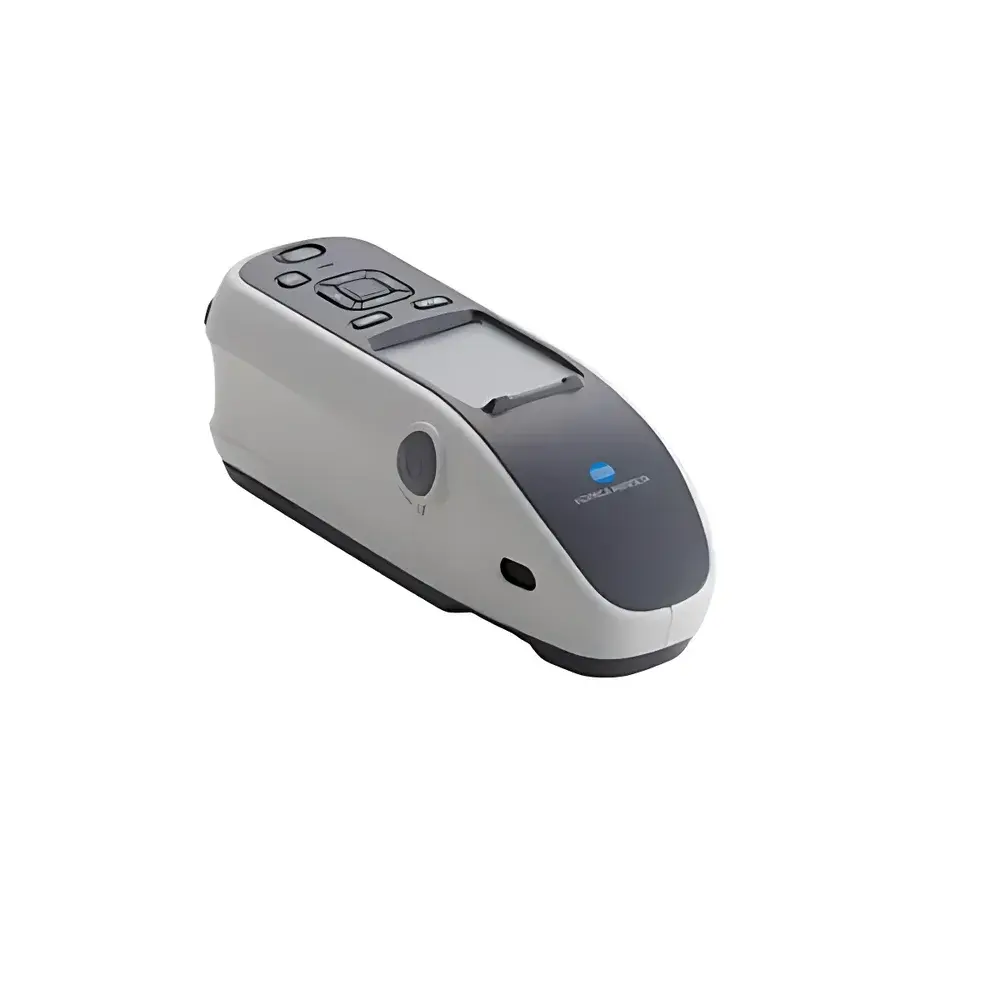
HunterLab UltraScan PRO Benchtop Spectrophotometer
| Brand | HunterLab |
|---|---|
| Origin | USA |
| Product Type | Benchtop Spectrophotometer |
| Optical Geometry | d/8° Integrating Sphere |
| Light Source | Pulsed Xenon Lamp |
| Spectral Range | 350–1050 nm |
| Spectral Resolution | 1.37 nm |
| Data Interval | 5 nm |
| Repeatability (ΔE*ab) | ≤ 0.03 |
| Compliance | CIE, ASTM D2244/D6290/D313/D5386, ISO 7724/1, DIN 5033, JIS Z 8722, USP <1061>, FDA 21 CFR Part 11 (with audit trail enabled in EasyMatch QC) |
Overview
The HunterLab UltraScan PRO is a high-precision benchtop spectrophotometer engineered for rigorous color measurement, spectral analysis, and optical property characterization across industrial R&D, quality control, and regulatory-compliant manufacturing environments. Operating on the principle of diffuse illumination and 8° viewing geometry (d/8°) with a highly stable pulsed xenon lamp and dual-beam optical path, it delivers exceptional photometric accuracy and long-term repeatability. Its extended spectral range—from ultraviolet (350 nm) through visible light to near-infrared (1050 nm)—enables comprehensive evaluation of materials whose appearance or functional response depends on non-visible wavelengths, including camouflage textiles, IR-responsive pigments, UV-stabilized polymers, and pharmaceutical film coatings. Unlike conventional colorimeters, the UltraScan PRO captures full reflectance and transmittance spectra at 5 nm intervals, supporting advanced calculations such as K/S (Kubelka-Munk), whiteness (CIE Whiteness Index, Ganz), yellowness (ASTM E313), haze (ASTM D1003), absorbance, luminance, metamerism index, and opacity—all traceable to international photometric standards.
Key Features
- High-fidelity d/8° integrating sphere with barium sulfate–based coating engineered for minimal spectral drift and resistance to yellowing over time
- Pulsed xenon light source providing consistent spectral output across UV–Vis–NIR without thermal load or lamp aging artifacts
- Narrow-band, high-density holographic grating delivering 1.37 nm optical resolution and enabling precise spectral deconvolution
- Multi-point photodiode array detector ensuring high signal-to-noise ratio and robustness against spatial non-uniformity
- UV output management via integrated 400 nm cutoff filter to suppress excessive fluorescence excitation while retaining UV sensitivity
- Automated calibration verification using built-in ceramic tile standards and optional NIST-traceable reference tiles
- Modular optical path design supporting both reflectance (opaque, translucent) and transmittance (clear, hazy, colored liquids/solids) measurements
Sample Compatibility & Compliance
The UltraScan PRO accommodates diverse sample forms—including powders, granules, films, molded plastics, coated substrates, gels, and liquid solutions—via interchangeable sample holders and aperture kits (e.g., 4 mm, 8 mm, 12 mm, and large-area ports). Its optical architecture meets the geometric and spectral requirements of ASTM D2244 (color difference), ASTM D6290 (plastics), ASTM D313 (whiteness/yellowness), ASTM D5386 (liquid color), ISO 7724-1 (general colorimetry), and JIS Z 8722 (Japanese industrial standard). In regulated industries, it supports 21 CFR Part 11 compliance when paired with EasyMatch QC software configured with electronic signatures, audit trails, and role-based access control—fulfilling GLP/GMP documentation needs for pharmaceutical, food, and medical device manufacturers.
Software & Data Management
EasyMatch QC v5.x serves as the validated application platform for instrument control, method development, statistical process monitoring (SPC), and report generation. It enables user-defined tolerances per color space (CIELAB, CMC, ΔE00), real-time pass/fail decision logic, multi-instrument network synchronization, and export to LIMS or ERP systems via CSV, XML, or ODBC. All spectral data are stored with metadata (operator ID, timestamp, instrument serial number, calibration status), and raw .spc files retain full 350–1050 nm reflectance/transmittance curves at 5 nm resolution. Software validation packages—including IQ/OQ documentation and test protocols—are available for regulated laboratories requiring formal system qualification.
Applications
- Textile & Apparel: Quantifying batch-to-batch color consistency in dyed fabrics, evaluating metamerism under multiple illuminants (D65, A, F2), and validating NIR-absorbing camouflage performance
- Coatings & Plastics: Measuring color stability after UV exposure, determining pigment dispersion efficiency via K/S analysis, and assessing haze in transparent automotive lenses
- Pharmaceuticals: Verifying color uniformity of tablets and capsules per USP , monitoring excipient interactions via spectral shift detection, and supporting stability-indicating assays
- Food & Beverage: Objective assessment of natural pigment degradation (e.g., anthocyanins, carotenoids) across shelf life, quantifying browning indices in dairy and baked goods
- Electronics: Characterizing anti-reflective coatings, evaluating display panel chromaticity coordinates, and measuring IR transmission in sensor filters
- Research & Development: Supporting spectral modeling of complex scattering media, calibrating hyperspectral imaging systems, and generating reference datasets for machine learning-based color prediction
FAQ
What spectral data formats does the UltraScan PRO output?
It exports full-spectrum reflectance/transmittance data at 5 nm intervals (350–1050 nm) in .spc format, plus calculated colorimetric values (L*a*b*, XYZ, Yxy, etc.) in CSV, PDF, or XML.
Can it measure fluorescent or phosphorescent samples?
Yes—using the optional UV-filtered mode (400 nm cutoff) and customizable illuminant settings, it enables controlled excitation and quantification of fluorescence contribution in accordance with CIE 15:2018 guidelines.
Is instrument-to-instrument agreement guaranteed?
HunterLab provides inter-instrument agreement (IIA) testing per ASTM E2539, with typical ΔE*ab < 0.15 between units using NIST-traceable standards.
How often must the instrument be calibrated?
Zero calibration is performed automatically at startup; white calibration is recommended before each measurement session or after ambient temperature shifts > 5°C. Annual factory recalibration is advised for ISO/IEC 17025 compliance.
Does it support Good Manufacturing Practice (GMP) workflows?
When deployed with EasyMatch QC’s 21 CFR Part 11 module—including electronic signatures, audit trail logging, and secure user authentication—it fully supports GMP-aligned color release testing and documentation.