
HUXI HM-24S High-Throughput Vertical Bead Mill Tissue Grinder
| Brand | HUXI |
|---|---|
| Origin | Shanghai, China |
| Manufacturer Type | Direct Manufacturer |
| Model | HM-24S |
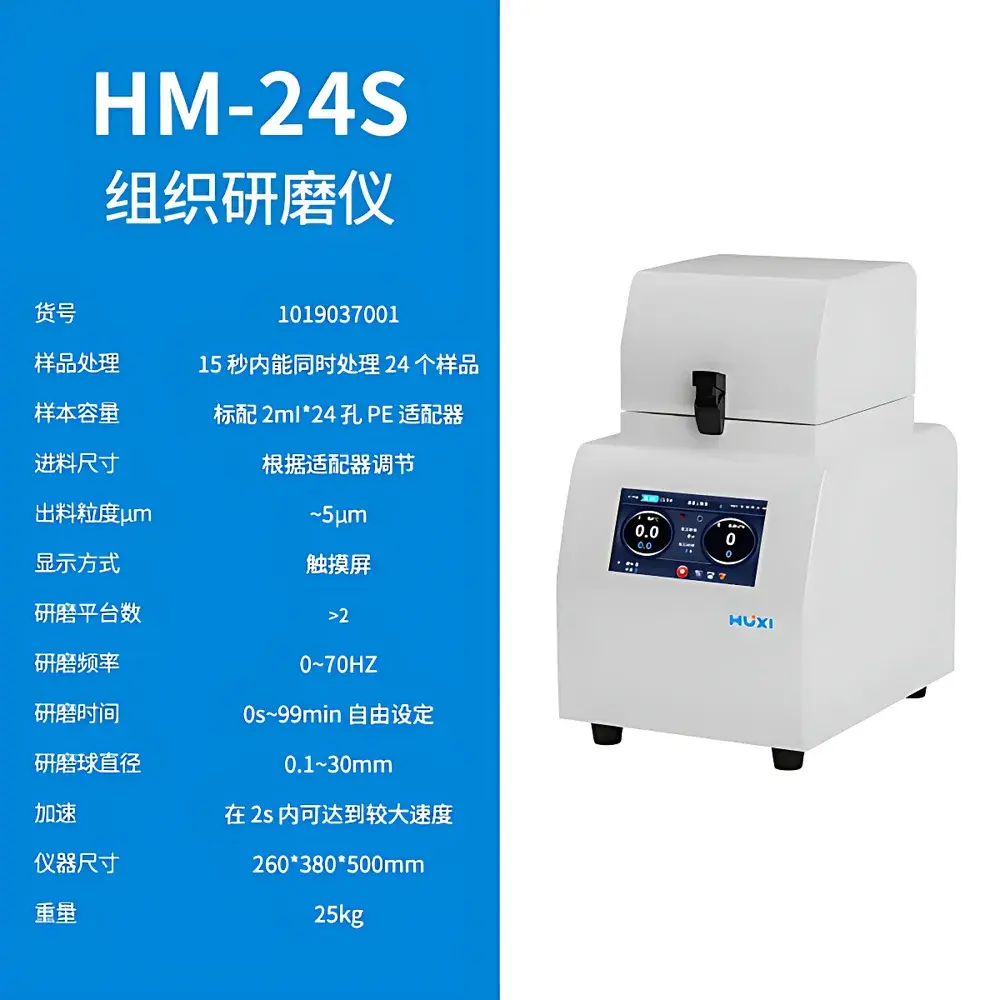
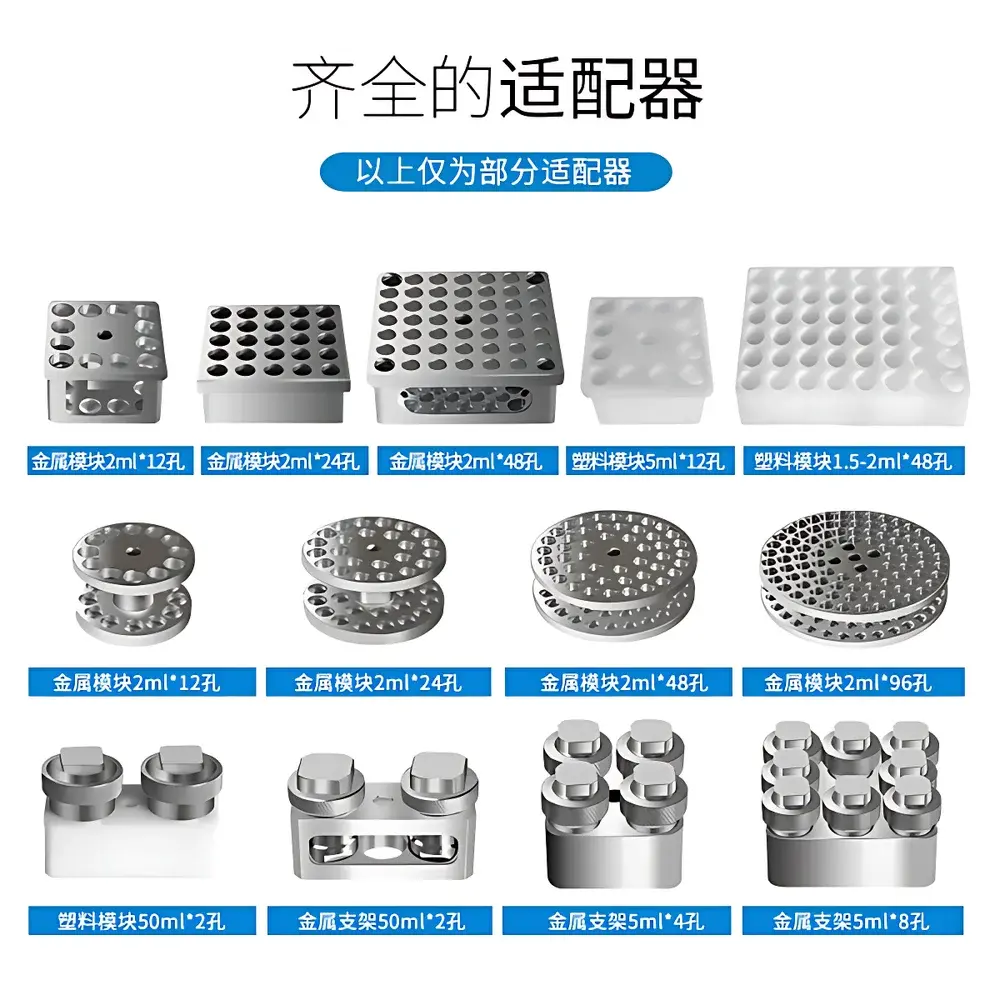
| Sample Capacity | 24 × 2 mL tubes (standard) |
| Grinding Frequency | 0–70 Hz |
| Grinding Time | 0 s–99 min adjustable |
| Noise Level | <55 dB(A) |
| Sample Temperature Control | Compatible with liquid nitrogen pre-cooling |
| Grinding Method | Vertical reciprocating bead-based homogenization (dry, wet, cryogenic) |
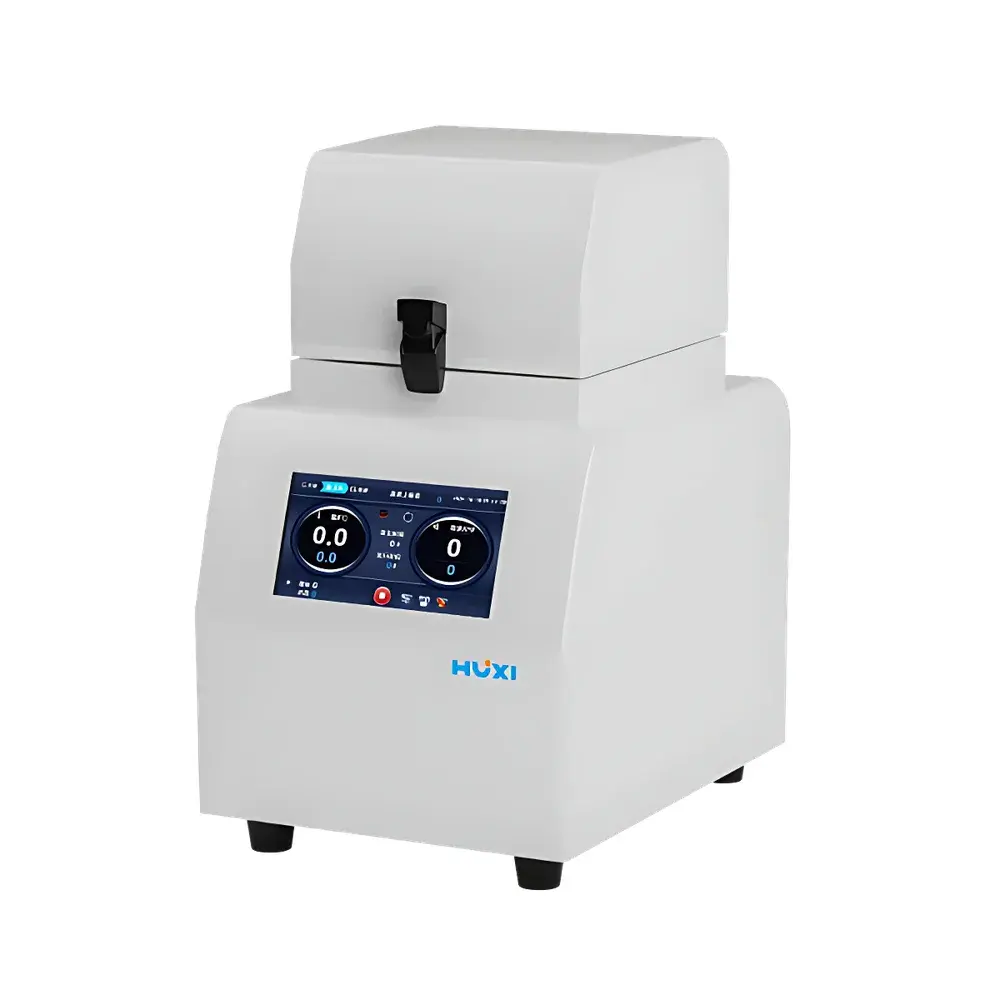
| Display | Touchscreen interface |
| Dimensions (L×W×H) | 260 × 380 × 500 mm |
| Weight | 25 kg |
| Max Acceleration | Achieved within 2 s |
| Bead Diameter Range | 0.1–30 mm |
| Bead Material Options | Stainless steel, chrome steel, zirconia, tungsten carbide, quartz sand |
| Chamber Safety Lock | Integrated metal housing with interlocked lid |
| Platform Configuration | Dual grinding platforms (>2 active stations) |
Overview
The HUXI HM-24S is a high-throughput, vertically oriented bead mill tissue grinder engineered for rapid, reproducible mechanical lysis of biological samples under controlled conditions. It operates on the principle of high-frequency vertical reciprocating motion, driving grinding beads (e.g., zirconia, stainless steel, or tungsten carbide) to impact, shear, and homogenize tissue, cells, or other soft/hard biomaterials within sealed tubes. Unlike horizontal shakers or rotor-stator systems, its vertical oscillation architecture minimizes heat generation and maximizes energy transfer efficiency—critical for preserving labile analytes such as native proteins, intact RNA, and enzymatically active complexes. Designed for compatibility with standard microcentrifuge formats, the HM-24S supports scalable processing across diverse sample types while maintaining strict containment integrity and operational safety.
Key Features
- High-throughput capability: Simultaneous processing of up to 24 × 2 mL samples in ≤15 seconds per cycle, ensuring minimal batch-to-batch variability and enhanced downstream assay consistency.
- Vertical bead-mill homogenization: Optimized kinetic profile delivers superior cell disruption efficiency compared to orbital or horizontal agitation, especially for fibrous or lipid-rich tissues.
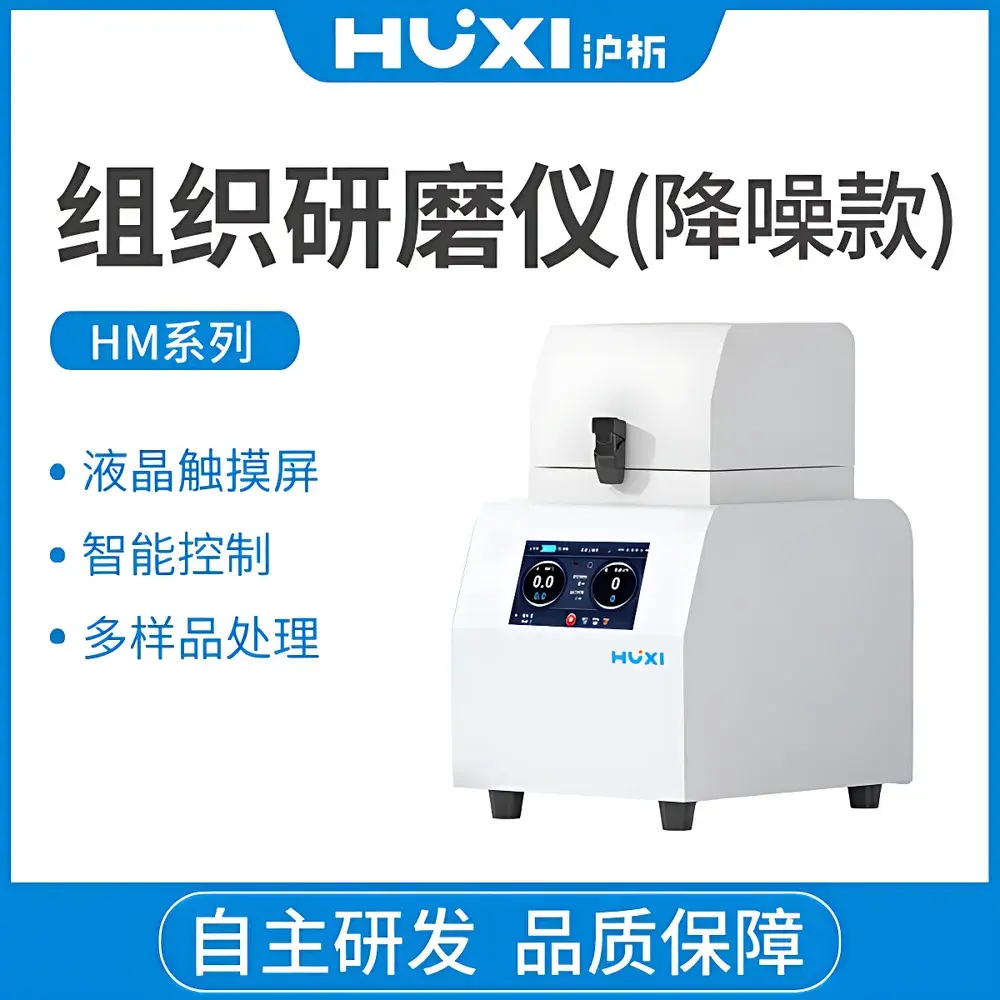
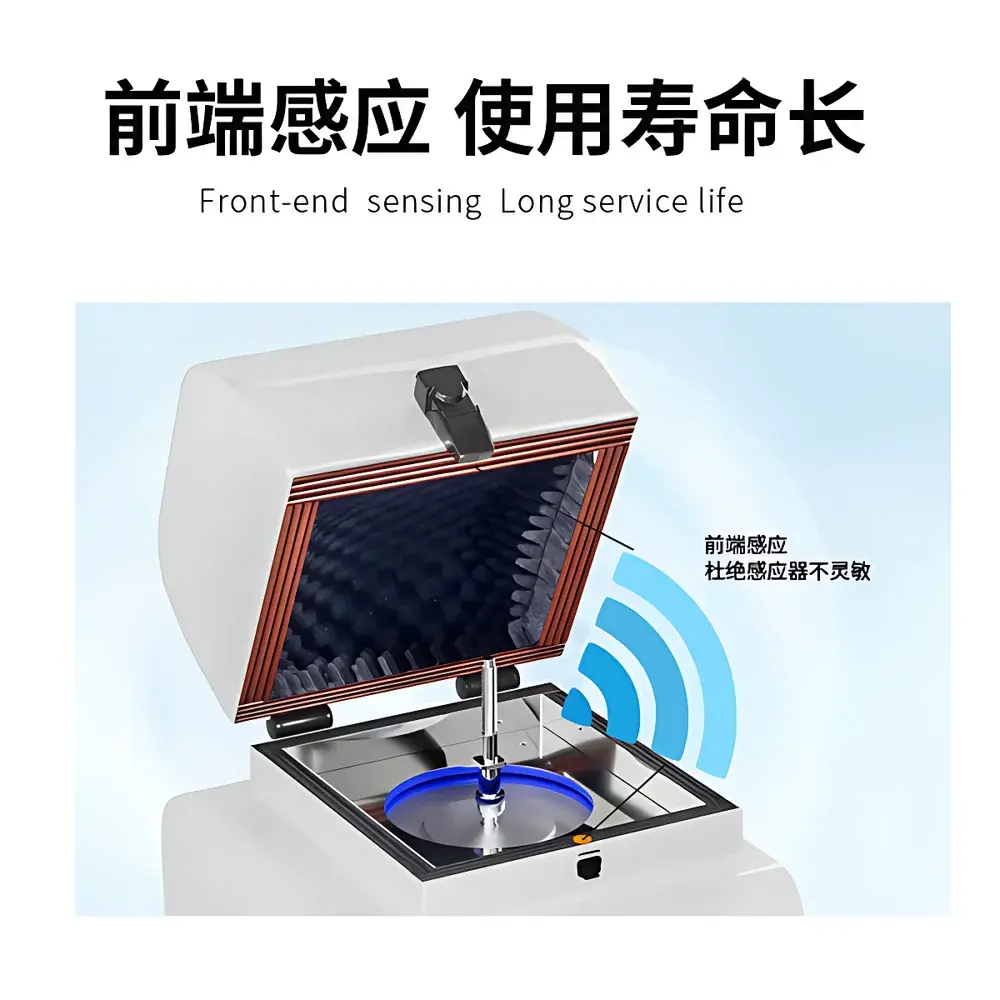
- Acoustic noise suppression: Engineered metal chassis and vibration-damping isolation reduce operational sound pressure to <55 dB(A), enabling use in shared laboratory environments without interference.
- Cryogenic-ready design: Sample adapters can be pre-cooled in liquid nitrogen (1–2 min immersion) and transferred directly to the instrument—no re-cooling required during setup—enabling low-temperature grinding without dedicated cryo-chambers.
- Sealed-tube workflow: All samples remain fully enclosed in disposable or reusable tubes throughout lysis; eliminates cross-contamination risk and ensures operator biosafety compliance.
- Dual-platform configuration: Supports parallel operation of multiple adapter configurations (e.g., 24 × 2 mL + 12 × 5 mL), increasing experimental flexibility without hardware modification.
- Intuitive touchscreen control: Programmable parameters include frequency (0–70 Hz), duration (0 s–99 min), and pause intervals; all settings are stored with timestamped audit trails for GLP/GMP traceability.
Sample Compatibility & Compliance
The HM-24S accommodates a broad spectrum of biological matrices—including mammalian tissues (liver, brain, muscle), plant leaves, yeast pellets, bacterial cultures, and frozen biobank specimens—when paired with appropriate bead compositions and sizes (0.1–30 mm). Its closed-tube protocol aligns with ISO 15195:2018 (clinical laboratory quality requirements) and supports adherence to FDA 21 CFR Part 11 when integrated with validated LIMS or ELN systems. The instrument’s all-metal construction, interlocked safety lid, and automatic shutdown upon lid opening meet IEC 61010-1:2010 safety standards for laboratory equipment. Optional accessories—including PE, stainless steel, and ceramic grinding vessels—facilitate method development for applications ranging from proteomics (high-molecular-weight protein extraction) to elemental analysis (XRF-ready powder homogenization).
Software & Data Management
The embedded controller features non-volatile memory for ≥100 user-defined protocols, each configurable with granular parameter resolution (e.g., 0.1 Hz frequency steps, 1-second time increments). All run logs—including start/stop timestamps, actual frequency deviation, and lid-open events—are exportable via USB to CSV format. While the base system does not include cloud connectivity, its deterministic behavior and parameter repeatability support integration into validated workflows compliant with ISO/IEC 17025 and CLIA requirements. Audit trail functionality satisfies basic data integrity expectations under ALCOA+ principles, particularly when combined with external electronic lab notebook (ELN) documentation.
Applications
- Routine nucleic acid isolation: Yields longer DNA fragments and higher RNA integrity numbers (RIN >9.0) versus vortex-based or sonication methods, especially for adipose or cartilage tissues.
- Proteomic sample prep: Enables efficient solubilization of membrane proteins and phosphoproteins without thermal denaturation, supporting downstream LC-MS/MS workflows.
- Metabolomics: Rapid quenching and homogenization in cold methanol/acetonitrile preserves labile metabolites (e.g., ATP, NADH) prior to extraction.
- Environmental microbiology: Effective lysis of Gram-positive bacteria and fungal spores for qPCR-based pathogen detection.
- Materials science: Homogenization of polymer composites or pharmaceutical excipients for particle size distribution analysis (e.g., laser diffraction).
FAQ
What bead materials are recommended for RNA extraction?
Zirconia or stainless steel beads (0.5–2 mm diameter) are optimal for RNA work due to their density, chemical inertness, and minimal RNase adsorption potential.
Can the HM-24S be used for hard tissue like bone or teeth?
Yes—when paired with tungsten carbide beads (≥3 mm) and stainless steel grinding jars, it achieves effective pulverization of decalcified or lyophilized hard tissues.
Is validation documentation available for GMP environments?
HUXI provides IQ/OQ templates and calibration certificates for frequency and timing accuracy; full PQ must be performed per site-specific SOPs.
How is temperature rise controlled during extended runs?
The vertical motion design inherently limits frictional heating; measured temperature increase in 2 mL tubes remains <3°C after 60 s at 60 Hz without cryo-precooling.
Does the instrument support remote monitoring or network connectivity?
No native Ethernet or Wi-Fi interface is included; however, USB-based log exports enable integration with centralized lab data management platforms.



