
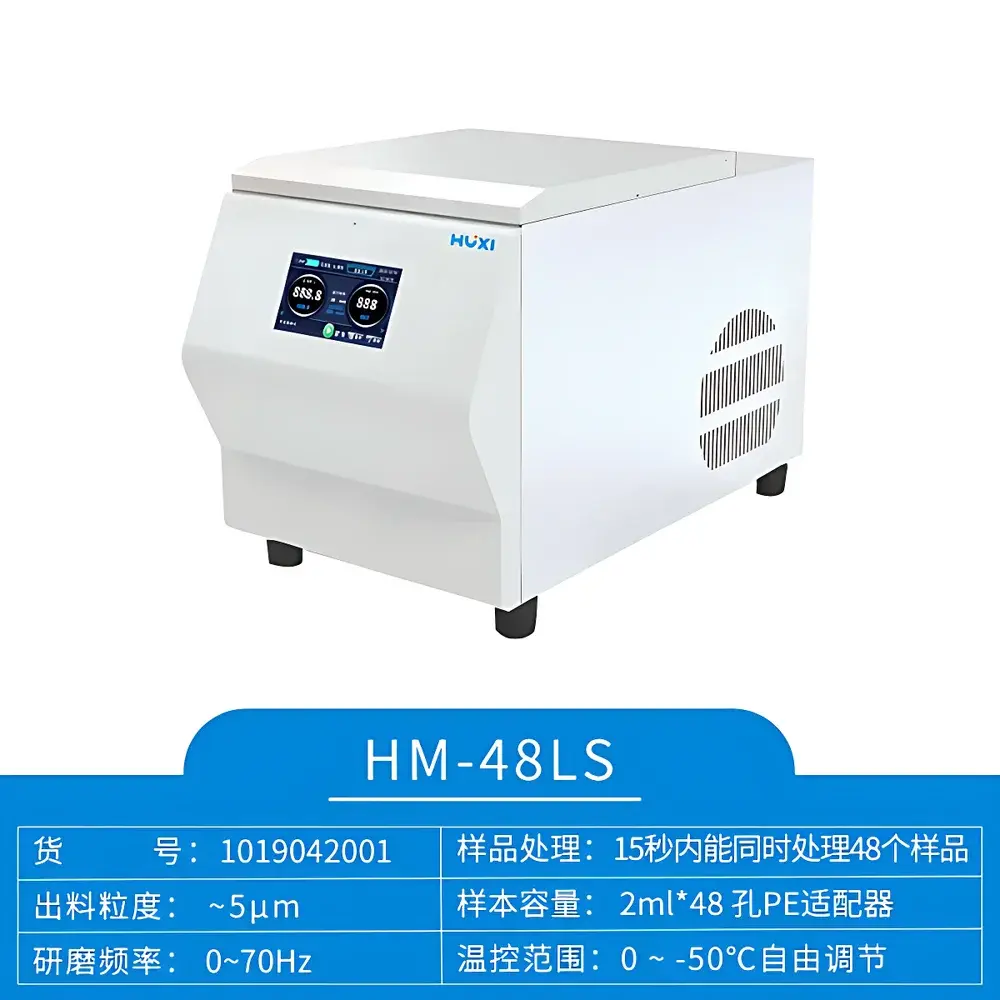
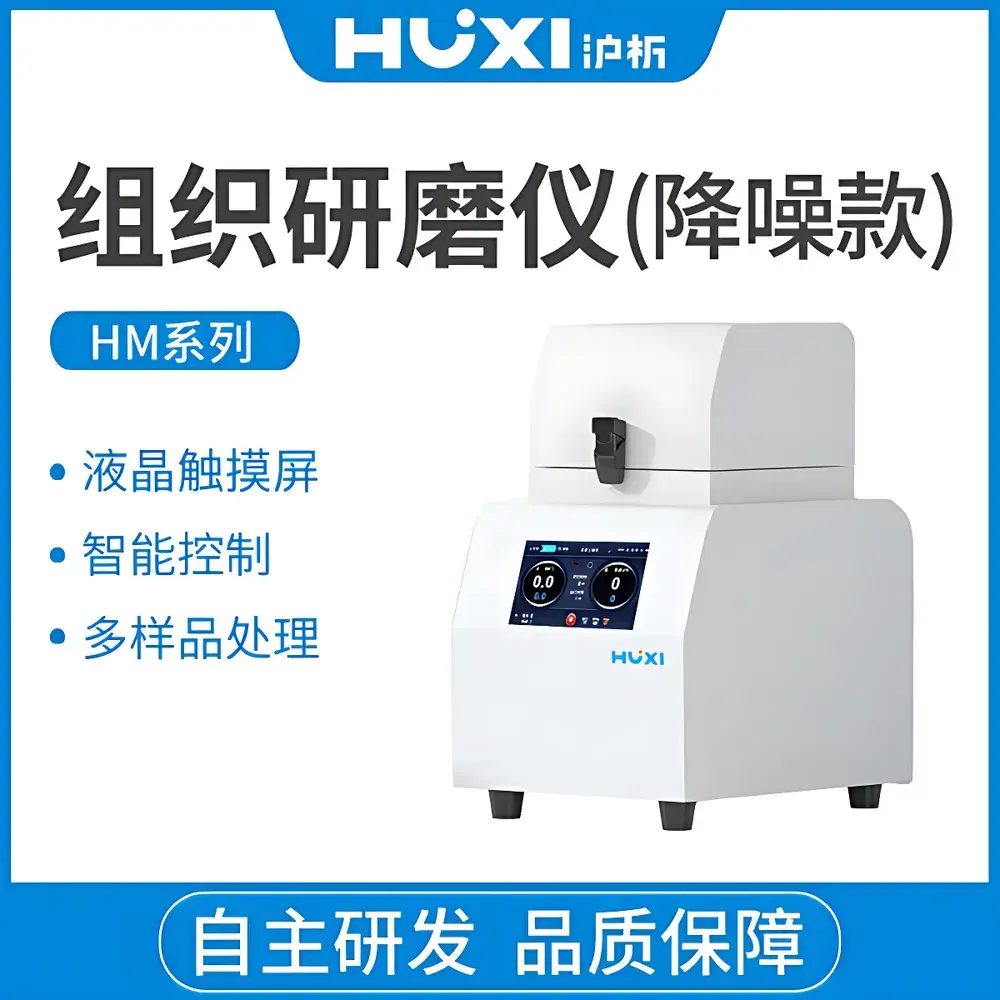
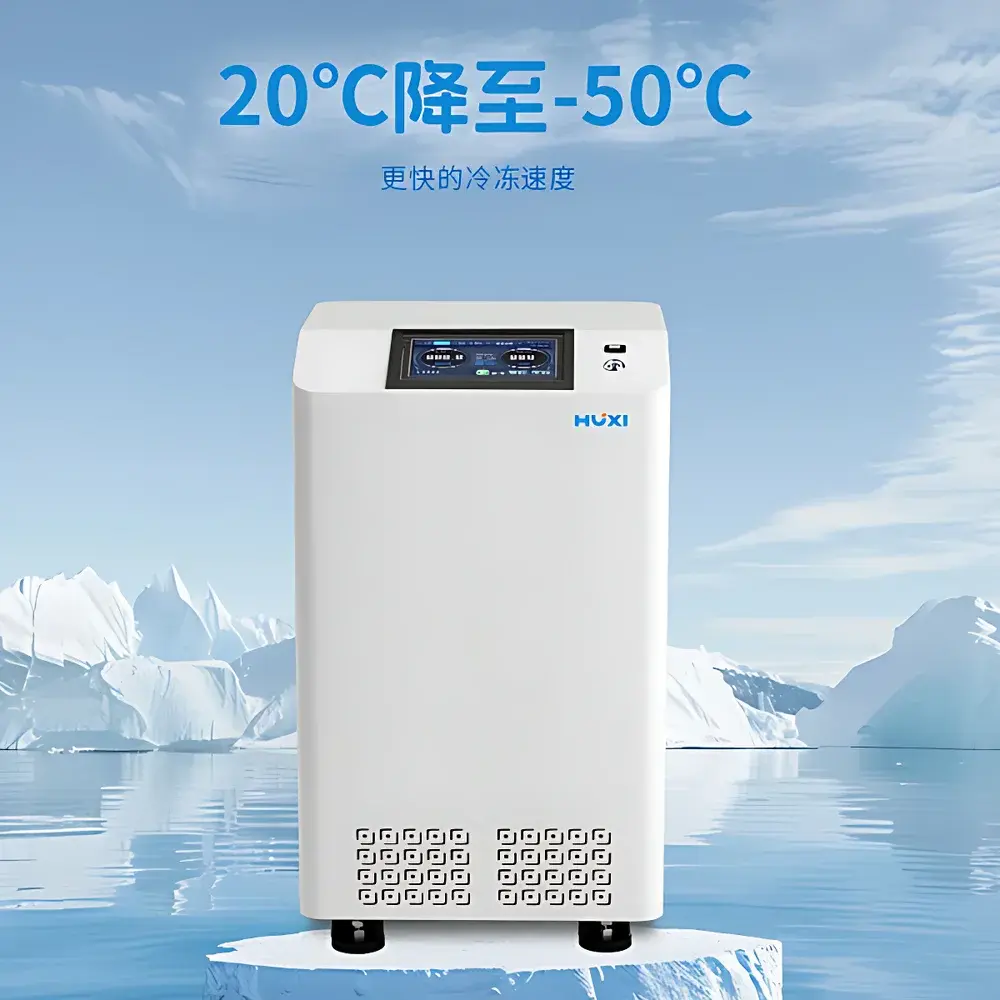
HUXI HM-48LS Desktop Cryogenic Bead Mill Grinder
| Brand | HUXI |
|---|---|
| Origin | Shanghai, China |
| Manufacturer Type | Direct Manufacturer |
| Country of Origin | China |
| Model | HM-48LS |
| Price | ¥49,400 CNY |
| Throughput | 48 × 2 mL samples in ≤15 s |
| Sample Chamber Temperature Range | 0°C to –50°C |
| Grinding Frequency | 0–70 Hz |
| Noise Level | <55 dB(A) |
| Max Acceleration Time | ≤2 s |
| Grinding Method | Vertical reciprocating bead-beating |
| Display | Touchscreen interface |
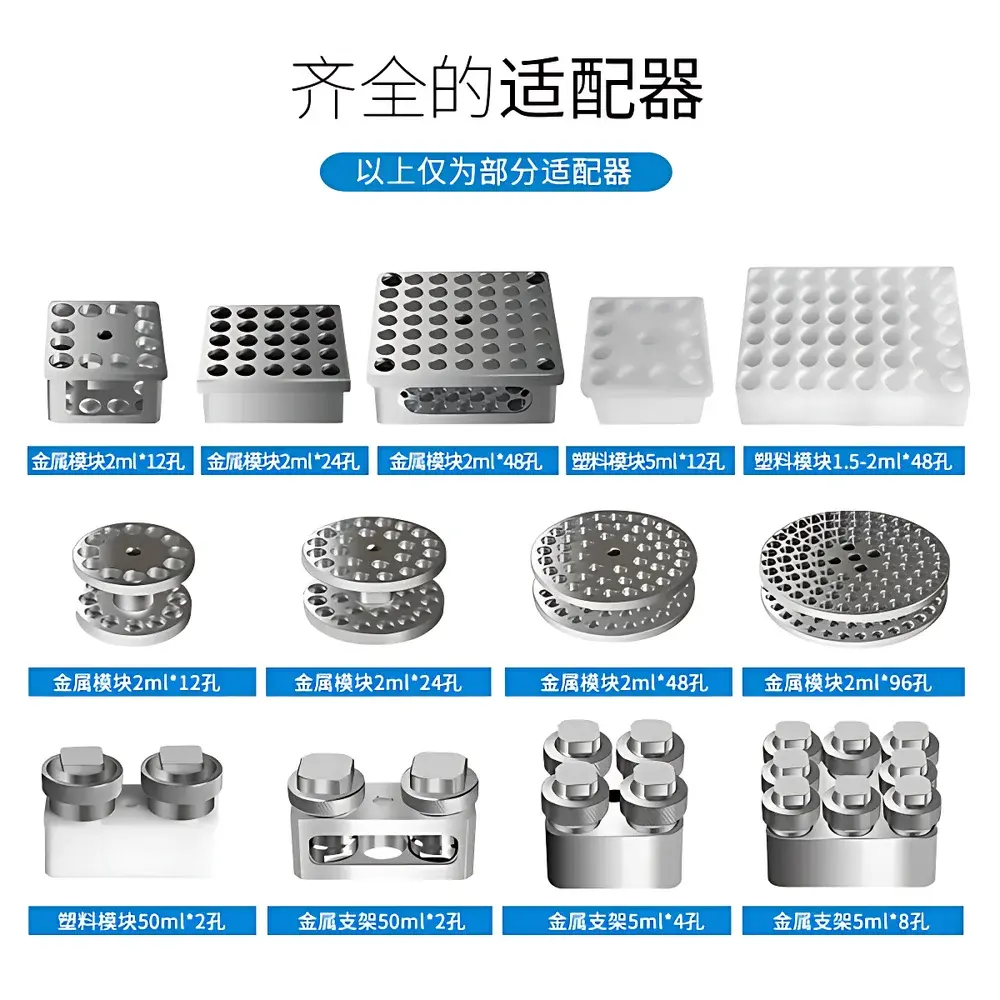
| Standard Adapter | 48-position 2 mL PE rack |
| Optional Adapters | 12 × 5 mL, 4 × 10/15/25 mL, 2 × 50 mL |
| Grinding Media Diameter | 0.1–30 mm |
| Compatible Bead Materials | Stainless steel, chromium steel, zirconia, tungsten carbide, quartz sand |
| Final Particle Size | ~5 µm |
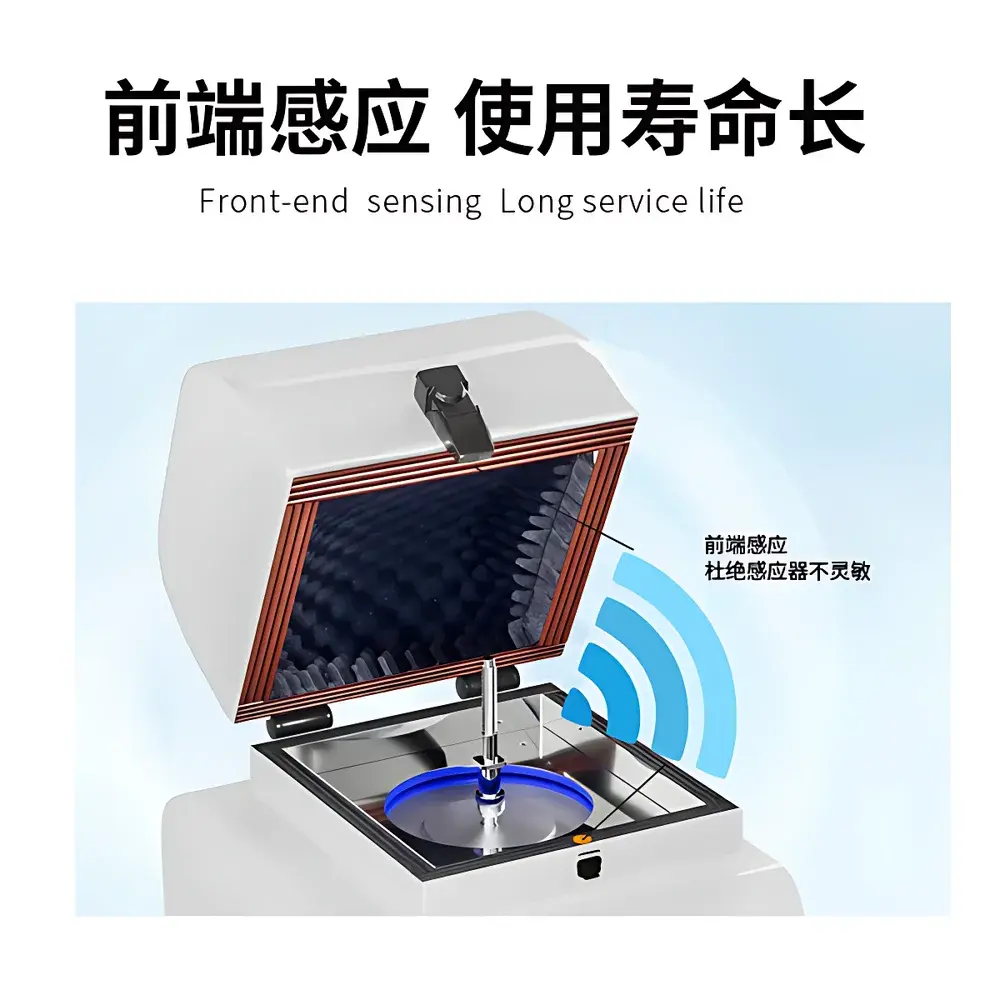
| Enclosure Safety Lock | Yes |
| Weight | 50 kg |
| Dimensions (L×W×H) | 700 × 400 × 500 mm |
Overview
The HUXI HM-48LS Desktop Cryogenic Bead Mill Grinder is an engineered solution for high-throughput, low-temperature mechanical homogenization of biological, botanical, and mineral samples. It operates on the principle of vertical reciprocating bead-beating—where kinetic energy from rapid oscillation is transferred through grinding media (e.g., zirconia or stainless-steel beads) to disrupt cellular structures, lyse tissues, or reduce particle size via impact, shear, and compression forces. Unlike orbital shakers or rotor-stator homogenizers, the HM-48LS employs a precisely controlled vertical vibration axis that minimizes heat generation and ensures uniform energy distribution across all sample positions. Its integrated cryogenic cooling system maintains sample chamber temperatures between 0°C and –50°C during operation, preserving thermolabile analytes—including native proteins, RNA integrity, and enzymatic activity—while enabling reproducible lysis and comminution. Designed for laboratories requiring stringent batch consistency, the instrument delivers sub-5 µm final particle size with minimal thermal drift (<2°C rise under standard 2 mL tube protocols), making it suitable for downstream applications such as proteomics, genomics, XRF sample preparation, and pharmaceutical excipient milling.
Key Features
- High-throughput capability: Simultaneous processing of up to 48 × 2 mL samples in ≤15 seconds, with optional adapters supporting 5–50 mL tubes for flexible scale-up.
- Cryogenic precision: Programmable temperature control from 0°C to –50°C ensures consistent thermal management across runs—critical for RNA stability and protein conformation preservation.
- Low-noise architecture: Acoustic emission <55 dB(A) achieved through balanced motor dynamics, vibration-dampening chassis, and optimized enclosure design—compatible with shared lab environments and adjacent sensitive instrumentation.
- Contamination-free workflow: Fully enclosed sample chamber with safety interlock; use of disposable tubes and single-use beads eliminates cross-contamination between batches.
- Programmable operation: Touchscreen interface supports user-defined protocols including grinding frequency (0–70 Hz), duration (0 s–99 min), and ramp profiles—enabling method transfer and SOP compliance.
- Robust mechanical construction: All-metal frame, reinforced base plate, and dual-locking lid mechanism ensure long-term operational stability and operator safety per ISO 13857 and IEC 61000-6-2 requirements.
Sample Compatibility & Compliance
The HM-48LS accommodates diverse sample matrices—including mammalian tissues, plant leaves, microbial pellets, soil, polymers, and ceramic powders—without requiring pre-freezing or liquid nitrogen immersion. Its vertical bead-milling action achieves efficient disruption of fibrous, fatty, or silica-rich materials while maintaining compatibility with common laboratory consumables (e.g., polypropylene, polyethylene, and stainless-steel grinding vials). The system meets general laboratory safety standards (EN 61000-6-4, EN 61326-1) and supports GLP/GMP-aligned workflows through audit-trail-capable parameter logging (when paired with optional data export modules). While not FDA 21 CFR Part 11-certified out-of-the-box, its programmable parameters and locked protocol execution enable traceable method implementation in regulated QC environments.
Software & Data Management
The onboard touchscreen controller stores up to 99 user-defined methods with timestamped execution logs. Parameters—including frequency, duration, temperature setpoint, and start/stop time—are retained in non-volatile memory and exportable via USB port in CSV format for external LIMS integration. No proprietary software installation is required; raw log files are human-readable and compatible with Excel-based QA review. For laboratories implementing electronic records, optional firmware upgrades support configurable audit trails, user-level access controls, and password-protected method editing—facilitating alignment with ISO/IEC 17025 documentation requirements.
Applications
- Genomic DNA/RNA extraction: Consistent lysis of tough tissues (e.g., liver, muscle, root nodules) with reduced shearing and improved fragment length retention.
- Proteomics sample prep: High-yield, low-heat disruption preserving post-translational modifications and native protein complexes prior to LC-MS analysis.
- Pharmaceutical solid dosage form development: Rapid micronization of APIs and excipients for dissolution testing and content uniformity assessment.
- Environmental analysis: Homogenization of soil, sediment, and biofilm samples for heavy metal quantification (XRF, ICP-MS) and microbial community profiling.
- Material science: Preparation of nanocomposite precursors and ceramic green bodies requiring sub-10 µm particle size distribution.
FAQ
What types of grinding media are compatible with the HM-48LS?
Stainless steel, chromium steel, zirconium oxide, tungsten carbide, and quartz sand beads ranging from 0.1 mm to 30 mm in diameter can be used depending on sample hardness and desired particle size.
Can the instrument operate without active cooling?
Yes—the cryogenic module is independently controllable; ambient-temperature grinding is supported for heat-tolerant samples, though thermal management remains recommended for biological integrity.
Is method validation support available?
HUXI provides basic protocol optimization guidelines and repeatability data (CV <3% for protein yield across 48 replicates); full IQ/OQ documentation packages are available upon request for GxP-compliant installations.
How is sample cross-contamination prevented?
Each sample resides in a sealed, disposable tube; the instrument’s fully enclosed chamber and absence of shared moving parts eliminate aerosol or residue transfer between runs.
What maintenance is required for long-term reliability?
Routine inspection of the vibration coupling assembly, periodic calibration of the temperature sensor (annually), and replacement of worn adapter gaskets every 6–12 months under continuous use.



