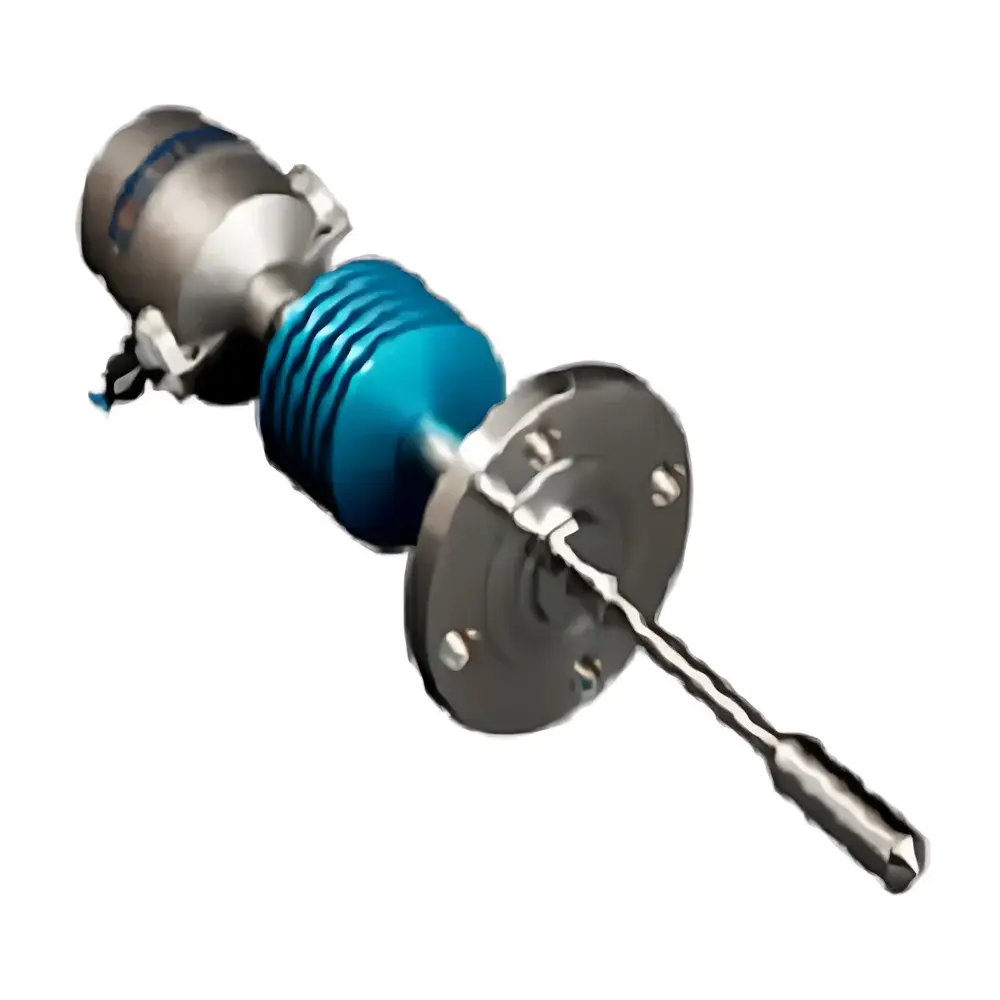
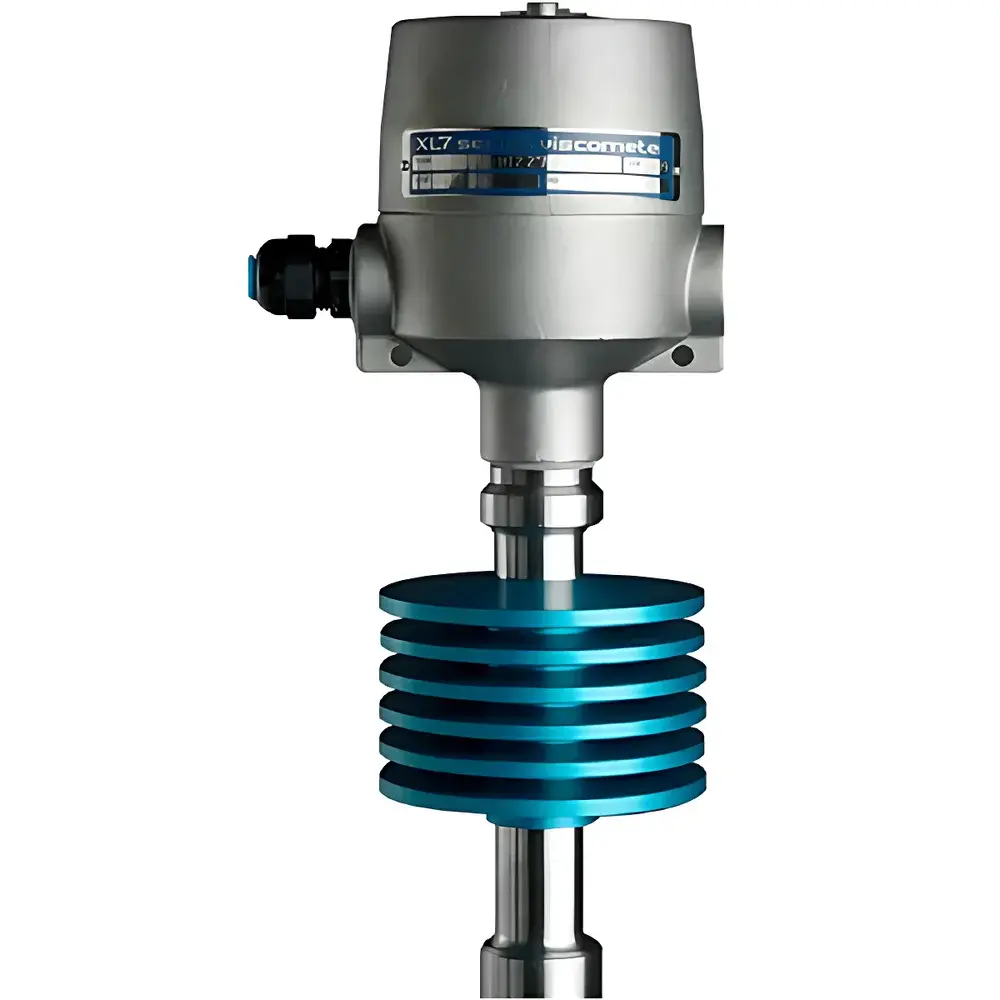
Hydramotion XL7-HT High-Temperature Online Viscometer
| Brand | Hydramotion |
|---|---|
| Origin | United Kingdom |
| Model | XL7-HT |
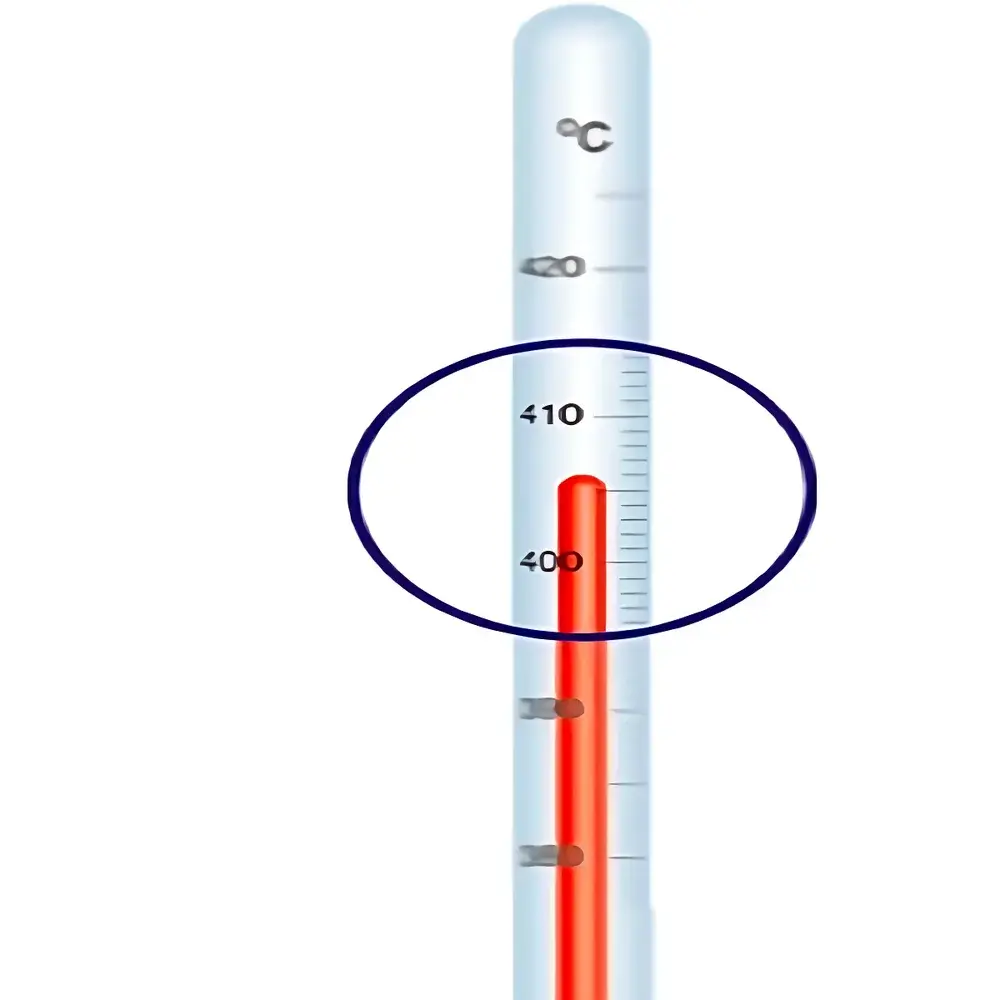
| Temperature Range (HT) | –50 °C to +400+ °C |
| Viscosity Range | 0–1 mPa·s to 0–10⁹ mPa·s |
| Accuracy | ±1% of reading or ±1 digit |
| Repeatability | ±0.3% of reading or ±1 digit |
| Measurement Interval | 1 s |
| Process Connection | Customizable (flanged, threaded, sanitary clamp) |
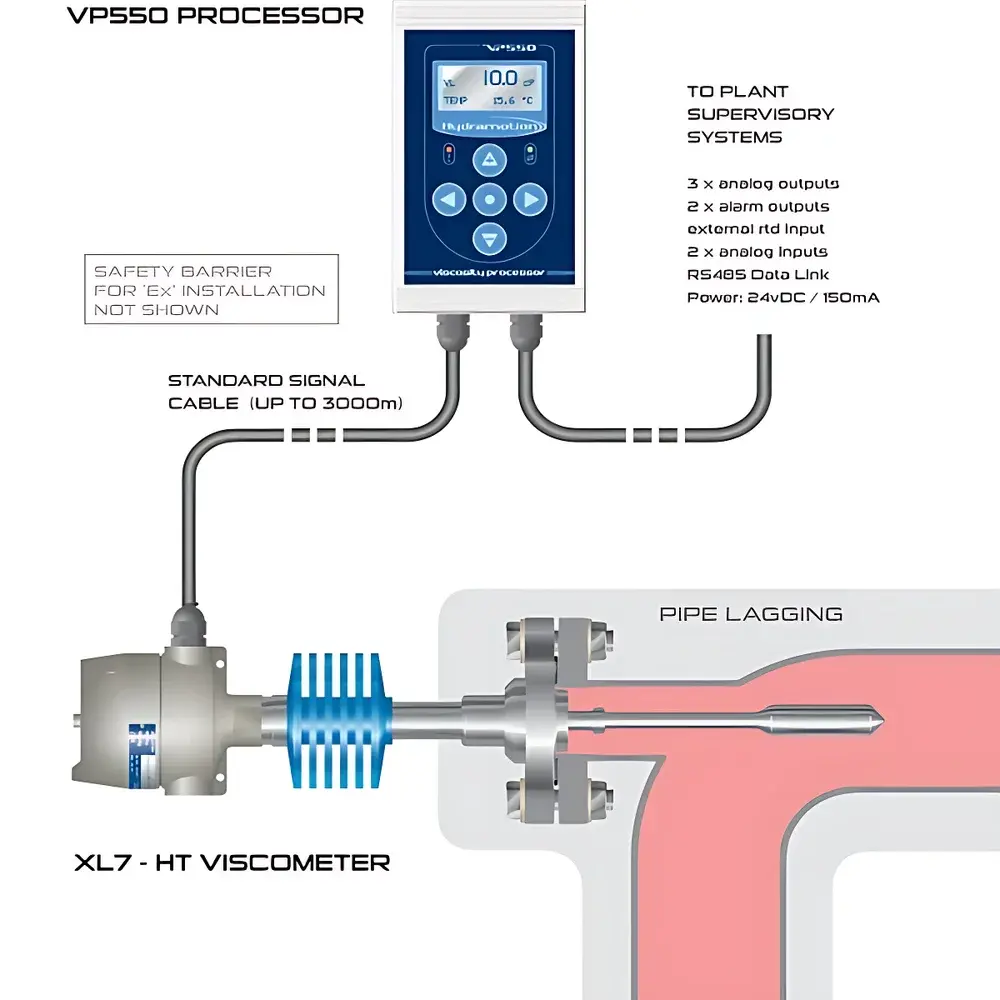
| Electrical Output | 4–20 mA analog + digital serial (RS-485/Modbus RTU) |
| Intrinsically Safe Certification | ATEX 2014/34/EU, IECEx Ex ia IIC T1–T6 Ga, Ex ia IIIC T135 °C Da, UL Class I Div 1 Groups A–D |
| Enclosure Rating | IP67 |
| Max Cable Length | 1000 m |
| Sensor Material Standard | SS316 (EN 1.4401) / SS316L (EN 1.4404) |
| Optional Materials | Alloy C22 (EN 2.4602), Alloy C276 (EN 2.4819), S32750 Duplex (EN 1.4410) |
| Software | ViscoLink PC-based data acquisition & logging |
Overview
The Hydramotion XL7-HT is a robust, intrinsically safe, high-temperature online viscometer engineered for continuous, real-time viscosity measurement directly in process streams operating up to +400 °C (+752 °F). Unlike conventional cooled-sensor designs that introduce thermal lag and measurement error through artificial fluid cooling, the XL7-HT employs a thermally harmonized architecture: its sensing element reaches full thermal equilibrium with the process fluid, while electronics remain isolated and temperature-stable via passive thermal management. This eliminates calibration drift induced by thermal gradients and ensures traceable accuracy under extreme thermal conditions—critical for polymer melt processing, asphalt production, molten salt systems, and high-temperature chemical synthesis. The device operates on Hydramotion’s proprietary torsional resonator principle: a precisely tuned stainless-steel probe oscillates at its natural resonant frequency, which shifts predictably with fluid damping—directly correlating to dynamic viscosity without moving parts, bearings, or seals exposed to the process.
Key Features
- True in-line measurement at temperatures up to +400 °C without external cooling jackets, bypass lines, or heat exchangers
- Thermally harmonized sensor design ensures zero thermal offset between probe and fluid—no correction algorithms required
- Intrinsically safe (IS) certification for Zone 0 (ATEX/IECEx/UL) enables deployment in explosive atmospheres without flameproof enclosures or complex barrier systems
- Full-welded, hermetically sealed construction with no gaskets or O-rings—eliminates leakage paths and maintenance intervals
- 1-second measurement cycle time supports closed-loop viscosity control in fast-response industrial automation systems
- Configurable process connections: ANSI, DIN, JIS flanges; NPT, BSP threads; tri-clamp (3A); custom sanitary or high-pressure fittings
- Support for extended material options—including Alloy C276, C22, and super duplex S32750—for aggressive media such as chlorinated solvents, molten sulfur, or caustic alkalis
- VP550 processor provides dual-output capability: isolated 4–20 mA analog signal compliant with ISA-50.00.01 and Modbus RTU over RS-485 for integration into DCS/SCADA platforms
Sample Compatibility & Compliance
The XL7-HT is validated for homogeneous liquids, melts, and suspensions exhibiting Newtonian or near-Newtonian behavior under process conditions—including thermoplastics (e.g., PET, PP, PC), bitumen, hot asphalt emulsions, molten glass batch precursors, and high-boiling-point hydrocarbon fractions. It is not intended for highly aerated, fibrous, or abrasive slurries where mechanical wear or signal attenuation may compromise long-term stability. Regulatory compliance includes full adherence to IEC 60079-11 (Intrinsic Safety), EN 61326-1 (EMC for industrial environments), and EN 61000-6-2/-6-4. All IS-certified units are supplied with documented traceability to UKAS-accredited calibration standards and support audit-ready documentation per ISO/IEC 17025 requirements. For pharmaceutical or food-grade applications, optional electropolished SS316L wetted surfaces and FDA-compliant fluoropolymer coatings are available upon specification.
Software & Data Management
ViscoLink is a Windows-based configuration, monitoring, and data-logging application supporting real-time trend visualization, alarm thresholding, and CSV export for statistical process control (SPC) analysis. It records timestamped viscosity, temperature, and diagnostic parameters—including resonator Q-factor and drive voltage—with configurable sampling intervals from 100 ms to 1 hour. Data files are structured for direct import into LIMS or MES platforms and include embedded metadata (instrument ID, firmware version, calibration date). The software supports user-level access control (administrator/operator modes) and generates audit trails compliant with FDA 21 CFR Part 11 when paired with Windows domain authentication and write-protected storage. Remote diagnostics via Ethernet-enabled VP550 gateways allow secure firmware updates and health monitoring without physical site access.
Applications
- Polymer extrusion: Real-time melt viscosity feedback for screw speed and barrel temperature modulation
- Asphalt production: In-line consistency control during hot mixing and storage tank blending
- Chemical manufacturing: Reaction endpoint detection in condensation polymerizations (e.g., polyesters, polyurethanes)
- Energy sector: Molten salt viscosity monitoring in concentrated solar power (CSP) thermal storage loops
- Refining: Heavy fuel oil (HFO) and vacuum residue viscosity stabilization prior to combustion or further processing
- Pharmaceutical intermediates: Hot-melt extrusion (HME) process validation under GMP Annex 15 guidelines
FAQ
Can the XL7-HT be installed vertically, horizontally, or inverted?
Yes—the sensor has no orientation dependency due to its symmetrical torsional resonator geometry and gravity-independent measurement principle.
Is recalibration required after installation or thermal cycling?
No—factory calibration remains valid across the full temperature and viscosity range; the thermally harmonized design prevents zero-shift drift.
What is the maximum allowable process pressure?
Standard configurations support up to 100 bar (1450 psi); higher-pressure variants (up to 400 bar) are available with reinforced housings and custom flange ratings.
Does ViscoLink support OPC UA or MQTT protocols?
Native OPC UA is not included, but Modbus RTU output can be bridged to OPC UA via standard industrial protocol gateways; MQTT integration requires third-party edge middleware.
How is sensor fouling addressed in viscous or deposit-prone streams?
The XL7-HT’s smooth, fully welded wetted surface minimizes adhesion; optional ultrasonic cleaning modules (integrated or external) are available for critical applications requiring periodic in-situ cleaning.
Related Products