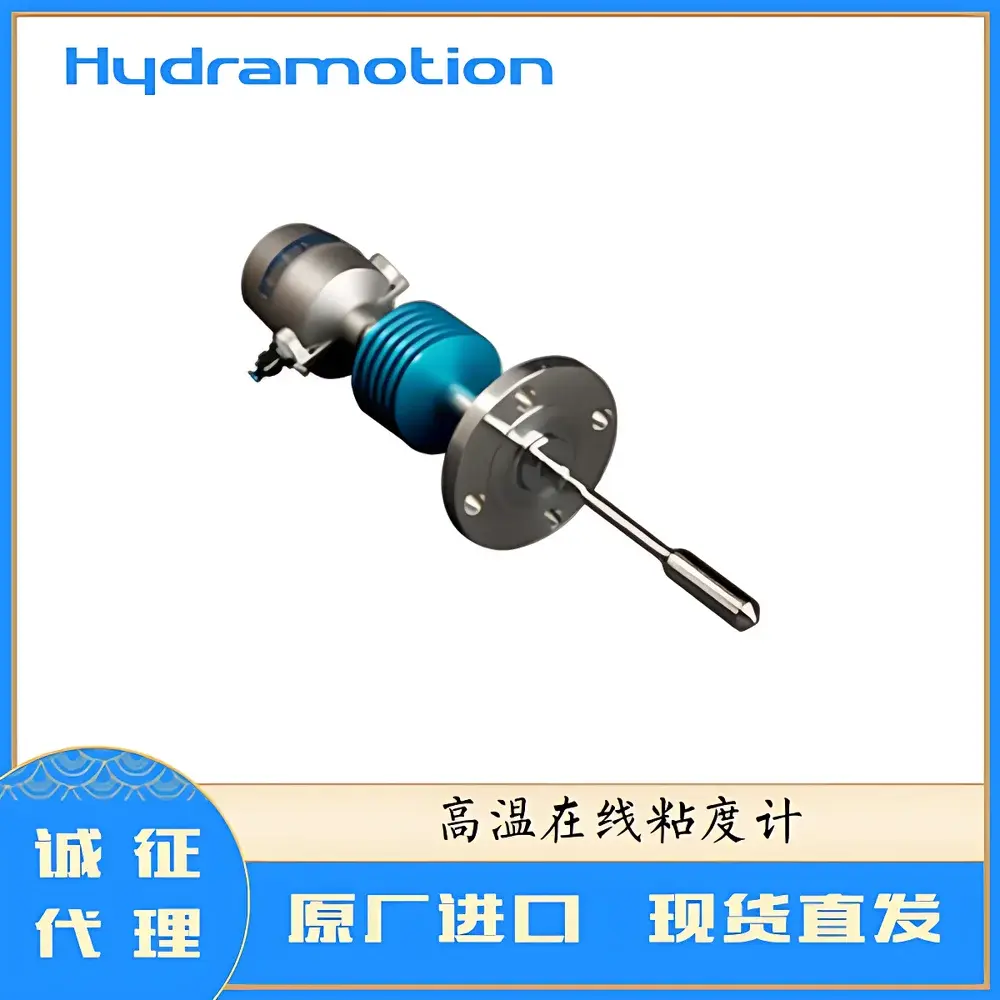
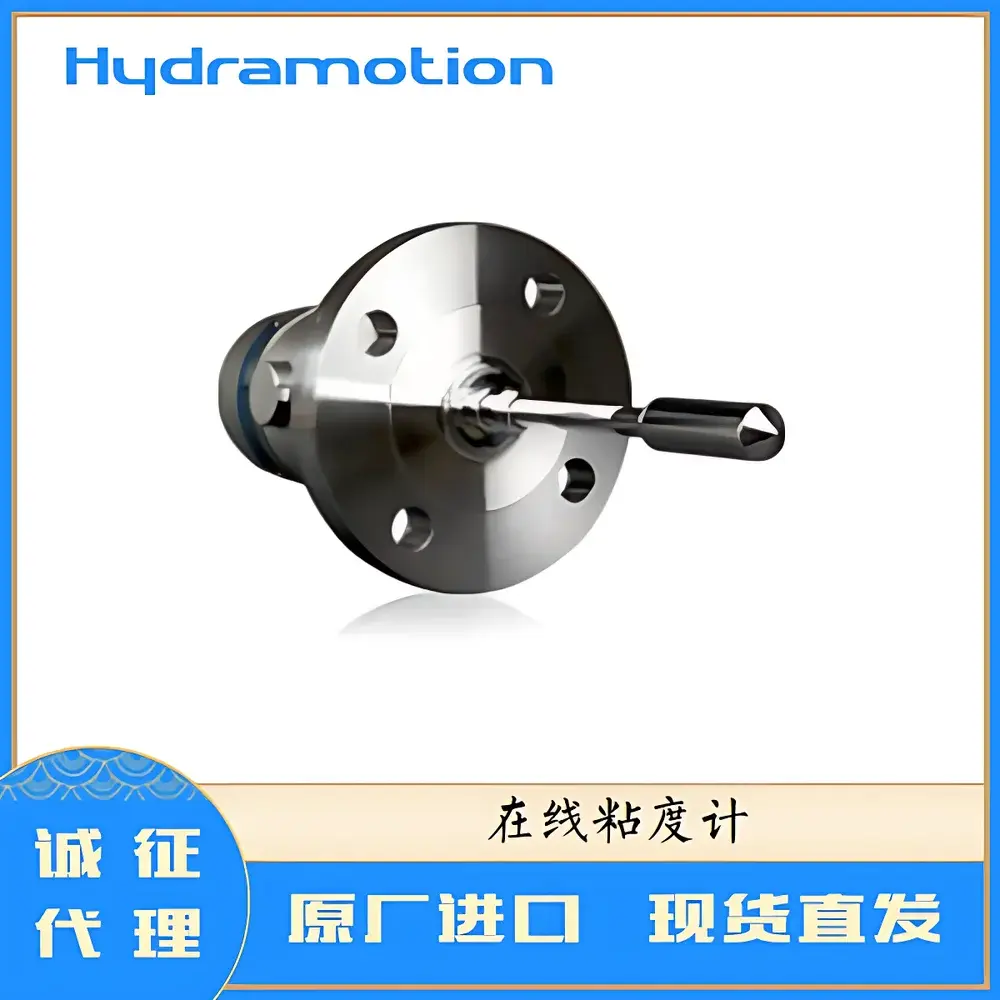
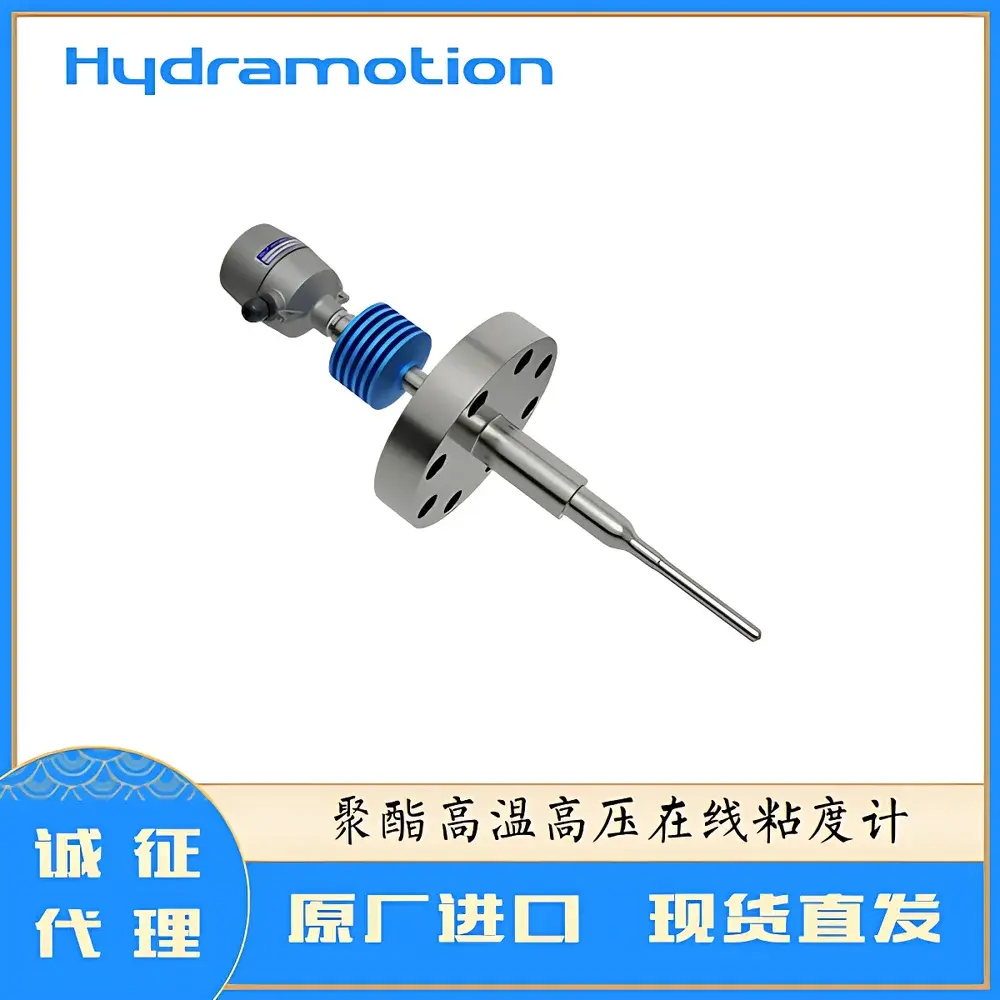
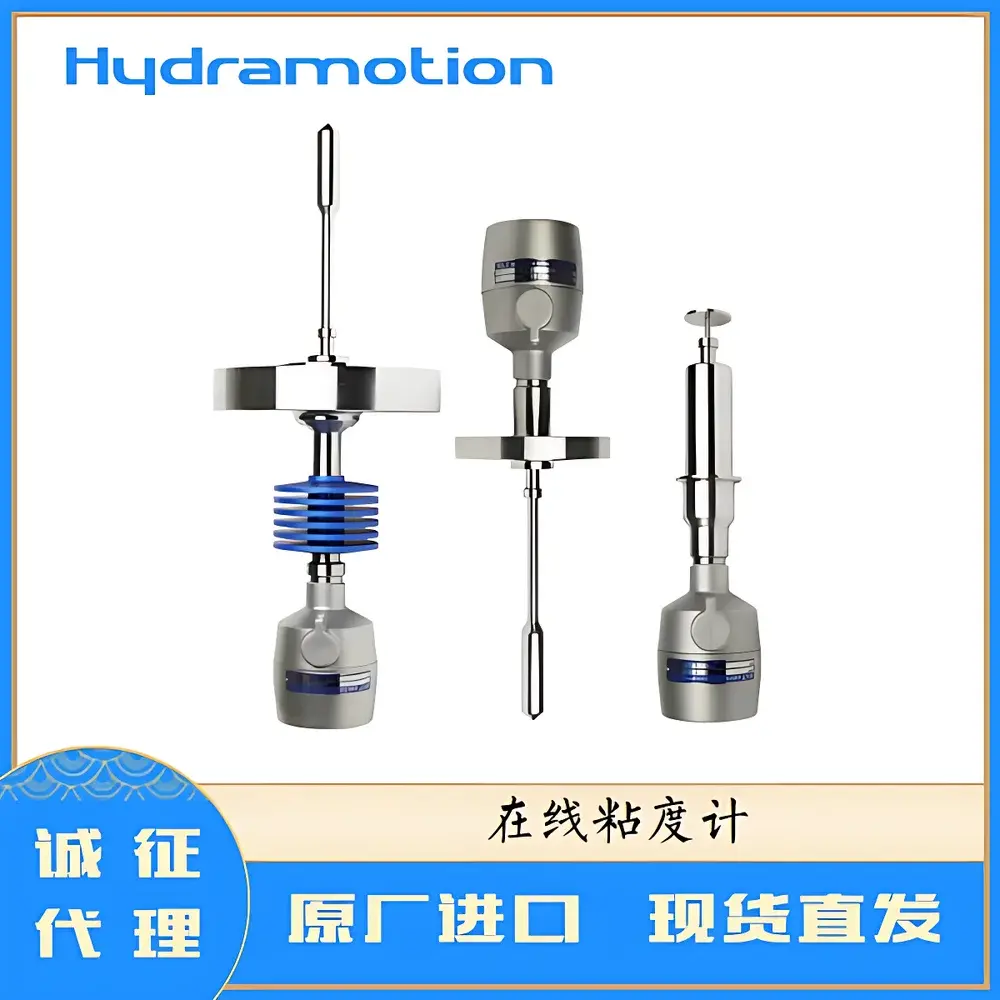
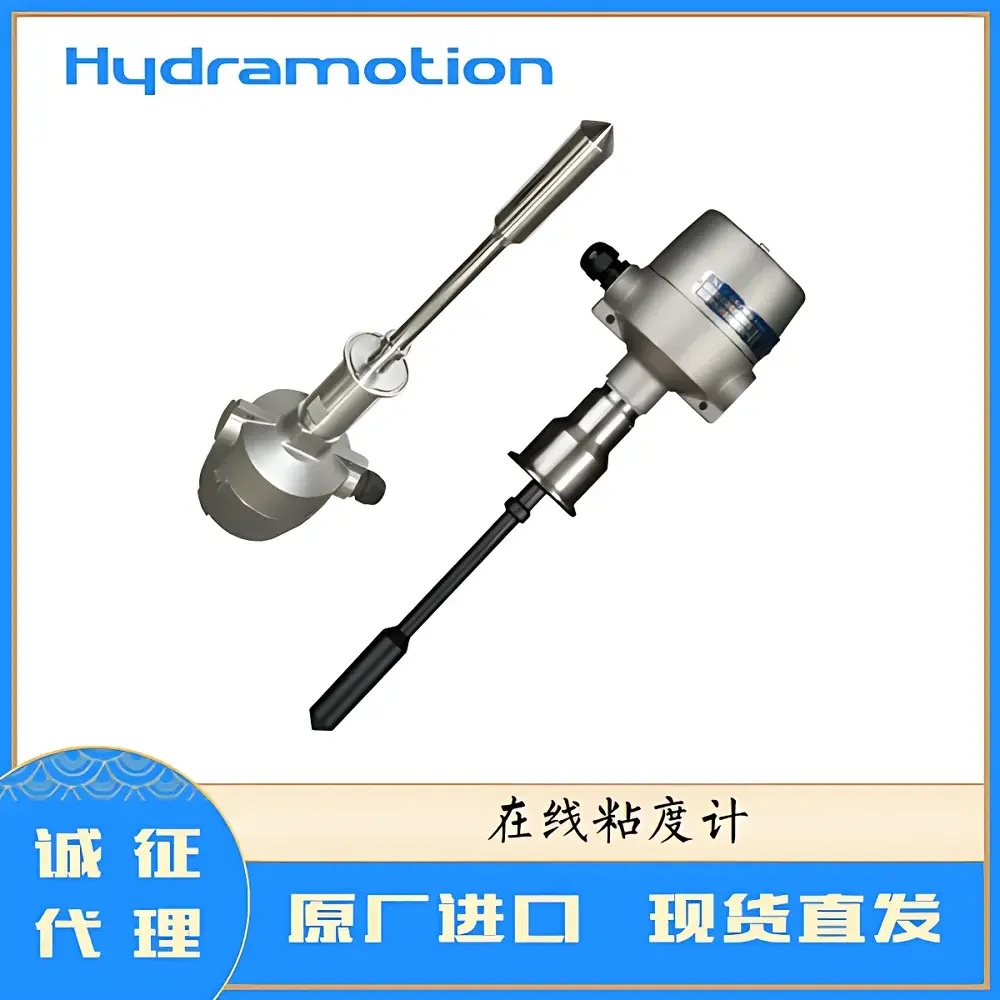
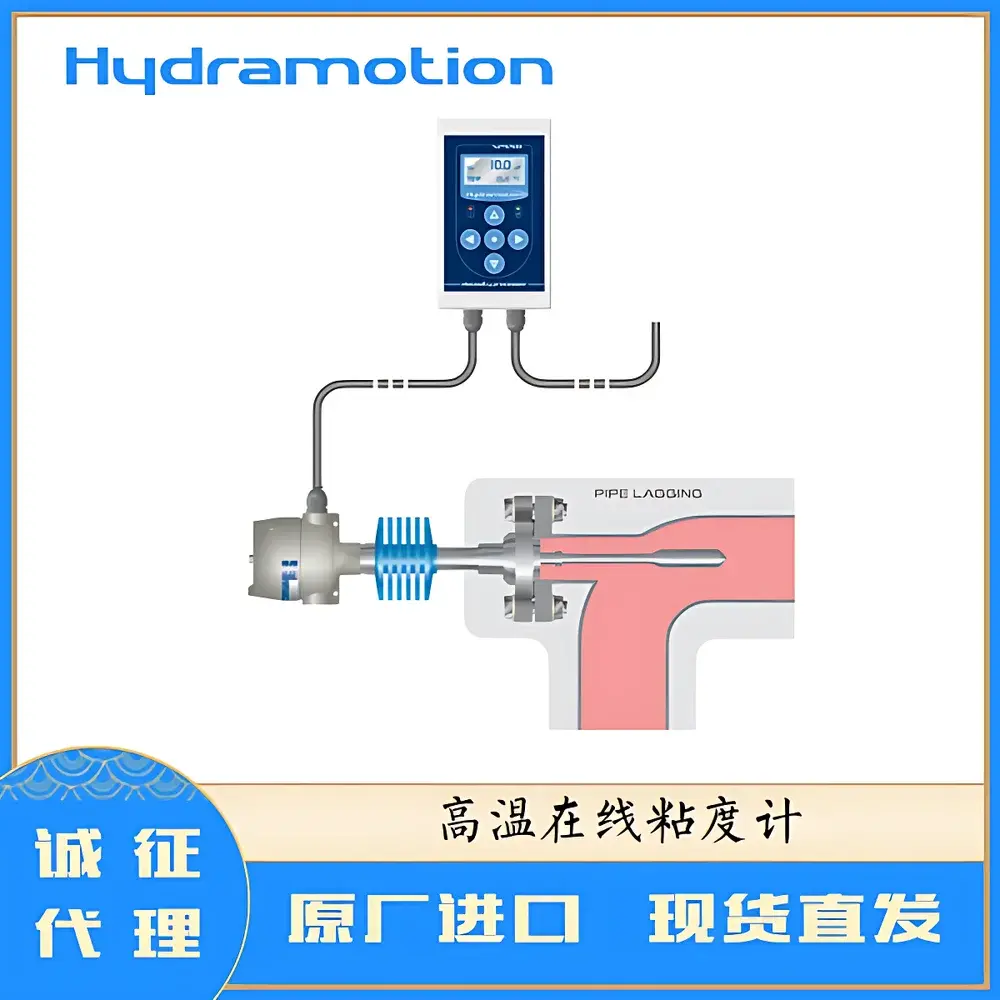
Hydramotion XL7 Online Viscometer
| Brand | Hydramotion |
|---|---|
| Origin | United Kingdom |
| Model | XL7 |
| Measurement Range | 0–10 cP |
| Accuracy | ±1% of reading |
| Temperature Range | −50 to +400 °C |
| Pressure Rating | 700 bar |
| Sensor Repeatability | ±0.3% |
| Process Connections | Customizable flanged, threaded, or sanitary clamp interfaces |
| Wetted Materials | Super Duplex Stainless Steel (S32750 / UNS S32750, marketed as SAR2507) |
| Sensor IP Rating | IP67 |
| Transmitter IP Rating | IP65 |
| Safety Certifications | ATEX II 2G Ex ia IIC T1–T6 Ga, IECEx Ex ia IIC T1–T6, UKCA, CE, ISO 9001 certified |
| Electrical Supply | 24 VDC ±10%, 150 mA max |
| Analog Outputs | Three isolated 4–20 mA outputs (e.g., dynamic viscosity, intrinsic viscosity, temperature-compensated viscosity) |
| Digital Interfaces | RS485 Modbus RTU, USB for configuration and diagnostics |
| Alarm Outputs | Two voltage-free relay contacts (SPST, 250 VAC/30 VDC, 2 A) |
| Dimensions (Transmitter) | 200 × 120 × 90 mm |
| Enclosure Material | Polycarbonate (UL94 V-0 rated) |
| Weight | 920 g |
Overview
The Hydramotion XL7 Online Viscometer is a high-integrity, intrinsically safe viscometric sensor engineered for continuous, real-time monitoring of dynamic viscosity in demanding industrial process environments. Based on Hydramotion’s proprietary vibrating rod technology — a resonant shear-mode principle insensitive to fluid density, flow velocity, or particulate loading — the XL7 delivers stable, drift-free measurements under extreme thermal and pressure conditions. Unlike rotational or capillary-based systems, the XL7 operates without moving parts in contact with the process stream, eliminating mechanical wear, seal degradation, and calibration drift over time. Its design targets critical applications in polymer synthesis (e.g., PET, PBT, and nylon melt processing), chemical reaction monitoring, solvent recovery loops, and high-pressure hydrogenation reactors where viscosity serves as a direct proxy for molecular weight, conversion rate, or polymer branching. The system comprises two modular components: a ruggedized, explosion-proof sensor probe rated to 700 bar and −50 °C to +400 °C, and a compact transmitter housing with dual-certified safety compliance for Zone 1/21 hazardous areas.
Key Features
- Vibrating rod sensing principle ensures immunity to flow turbulence, suspended solids, and gas entrainment — ideal for non-Newtonian and shear-thinning melts.
- Intrinsically safe sensor assembly certified to ATEX II 2G Ex ia IIC T1–T6 Ga and IECEx standards, enabling deployment in classified hydrocarbon, pharmaceutical, and fine chemical facilities.
- Super duplex stainless steel (S32750/SAR2507) wetted parts provide exceptional resistance to chloride stress corrosion cracking and high-temperature oxidation up to 400 °C.
- Three independent 4–20 mA analog outputs support simultaneous transmission of dynamic viscosity, temperature-compensated viscosity, and process temperature — fully configurable via USB or Modbus.
- Integrated dual relay alarm outputs enable local interlocks for viscosity deviation, sensor fault, or temperature excursion — compatible with DCS, PLC, and SIS logic solvers.
- Modular mechanical interface options include ANSI/ISO/DIN flanges, NPT/BSP threads, and tri-clamp sanitary fittings; custom probe lengths and insertion depths available per ASME B16.5 or PED 2014/68/EU requirements.
Sample Compatibility & Compliance
The XL7 is validated for use with thermoplastic melts (PET, PC, PA6/66), reactive resins (epoxies, polyurethanes), hot asphalt emulsions, and aggressive solvents (chlorinated hydrocarbons, concentrated acids). It meets EN 60079-0, EN 60079-11, and IEC 60079-26 for equipment protection in explosive atmospheres. Electromagnetic compatibility conforms to EN 61326-1 (industrial environment) and EN 61000-6-2/6-4. The transmitter carries CE marking under the Low Voltage Directive (2014/35/EU), EMC Directive (2014/30/EU), and RoHS 2011/65/EU. Full traceability documentation — including Factory Acceptance Test (FAT) reports, material certifications (EN 10204 3.1), and SIRA/IECEx Type Examination Certificates (IECEx HYD 19.0010X) — is supplied with each unit.
Software & Data Management
Configuration and diagnostics are performed using Hydramotion’s Windows-based ViscoLink™ software via USB or RS485. The software supports full parameterization of linearization curves, temperature compensation algorithms (Arrhenius or WLF models), damping filters, and alarm thresholds. All configuration changes are logged with timestamp and user ID, satisfying audit requirements under FDA 21 CFR Part 11 when deployed in validated pharmaceutical or biotech processes. Modbus RTU implementation adheres to standard function codes (03, 04, 06, 16) for seamless integration into DeltaV, Emerson DeltaV DCS, Siemens PCS7, or Rockwell ControlLogix platforms. Optional HART-IP or OPC UA gateways are available for enterprise-level data aggregation via MES or historian systems.
Applications
- Real-time control of esterification and polycondensation reactions in PET bottle-grade resin production.
- In-line monitoring of melt viscosity during extrusion compounding of engineering thermoplastics.
- Endpoint detection in batch polymerization of acrylics and vinyl acetate copolymers.
- Viscosity surveillance in high-pressure Fischer–Tropsch synthesis loops and catalytic hydrotreating units.
- Quality assurance in hot-fill beverage concentrate blending and syrup viscosity stabilization.
- Process safety interlocks for thermal runaway detection in nitration and sulfonation reactors.
FAQ
What measurement principle does the XL7 employ?
The XL7 uses a resonant vibrating rod technique, where a cylindrical probe oscillates at its natural frequency; changes in fluid damping directly correlate to dynamic viscosity without requiring fluid motion or pressure drop.
Can the XL7 be used in sanitary applications?
Yes — with optional tri-clamp (ISO 2852) or DIN 11851 sanitary fittings and electropolished S32750 surfaces meeting ASME BPE-2022 surface finish requirements (Ra ≤ 0.4 µm).
Is temperature compensation mandatory for accurate readings?
Yes — the XL7 measures raw resonant damping, which is inherently temperature-dependent; built-in Pt100 or Pt1000 RTD input enables automatic real-time compensation using user-defined or factory-loaded viscosity-temperature models.
Does the XL7 require periodic recalibration?
No routine recalibration is needed; the sensor’s zero point is stable over time due to solid-state resonance physics. Verification against a reference fluid (e.g., silicone oil traceable to NIST SRM) is recommended annually per ISO/IEC 17025 quality programs.
How is hazardous area certification maintained during field maintenance?
All field-replaceable components (cables, connectors, transmitter modules) retain intrinsic safety integrity when used with Hydramotion-approved accessories and installed per IEC 60079-14 wiring practices; no re-certification is required after routine servicing.
Related Products