
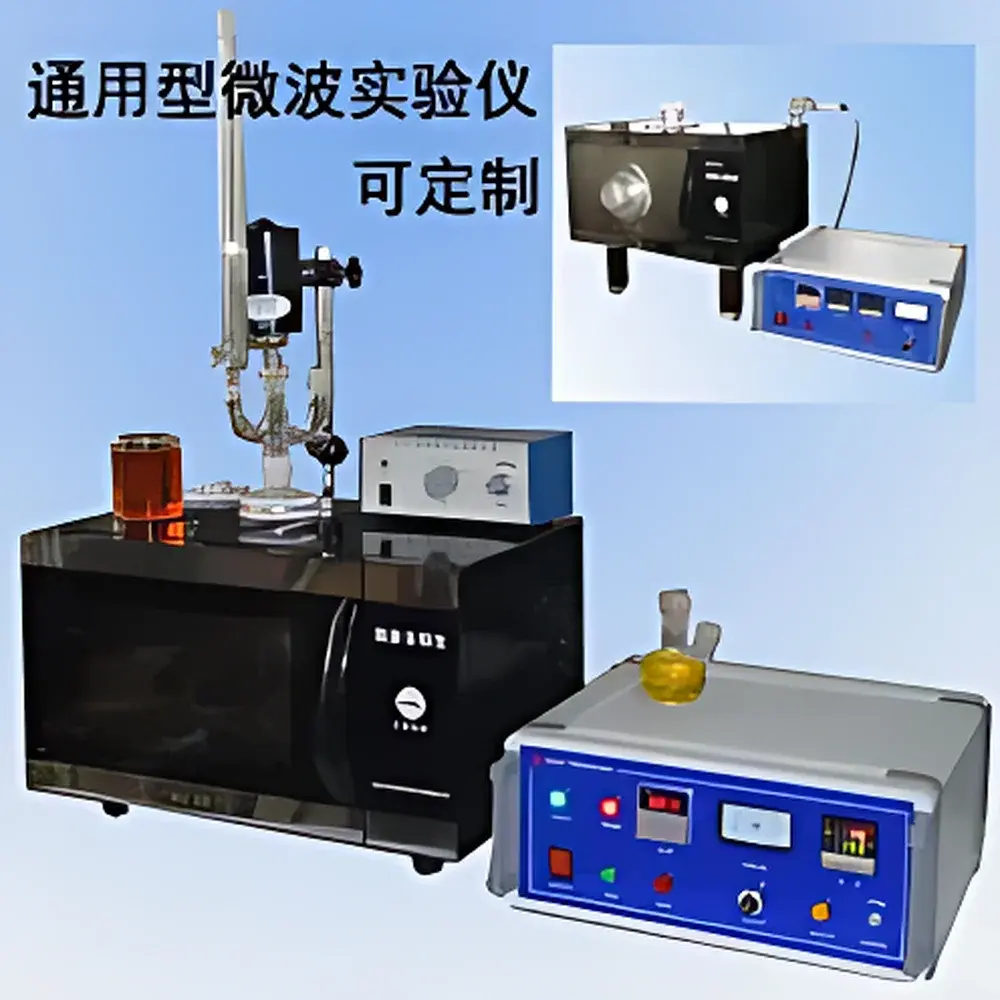
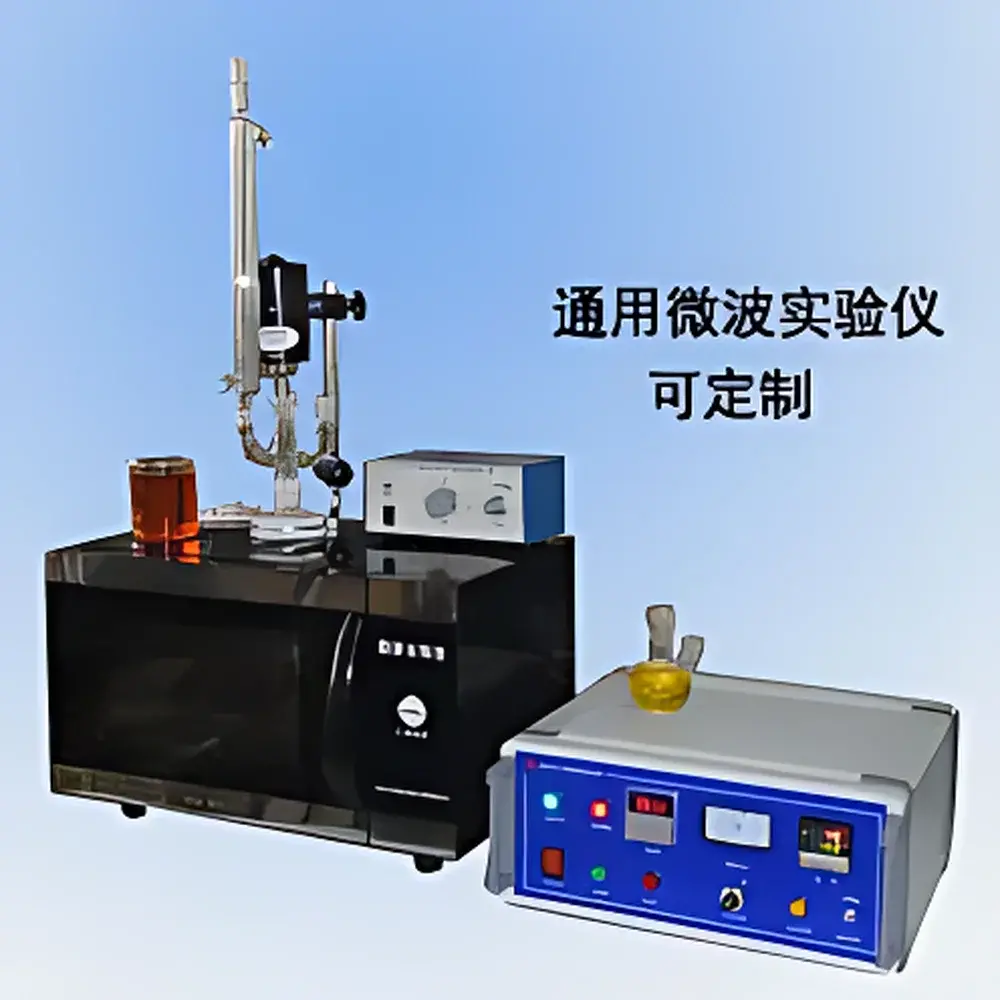
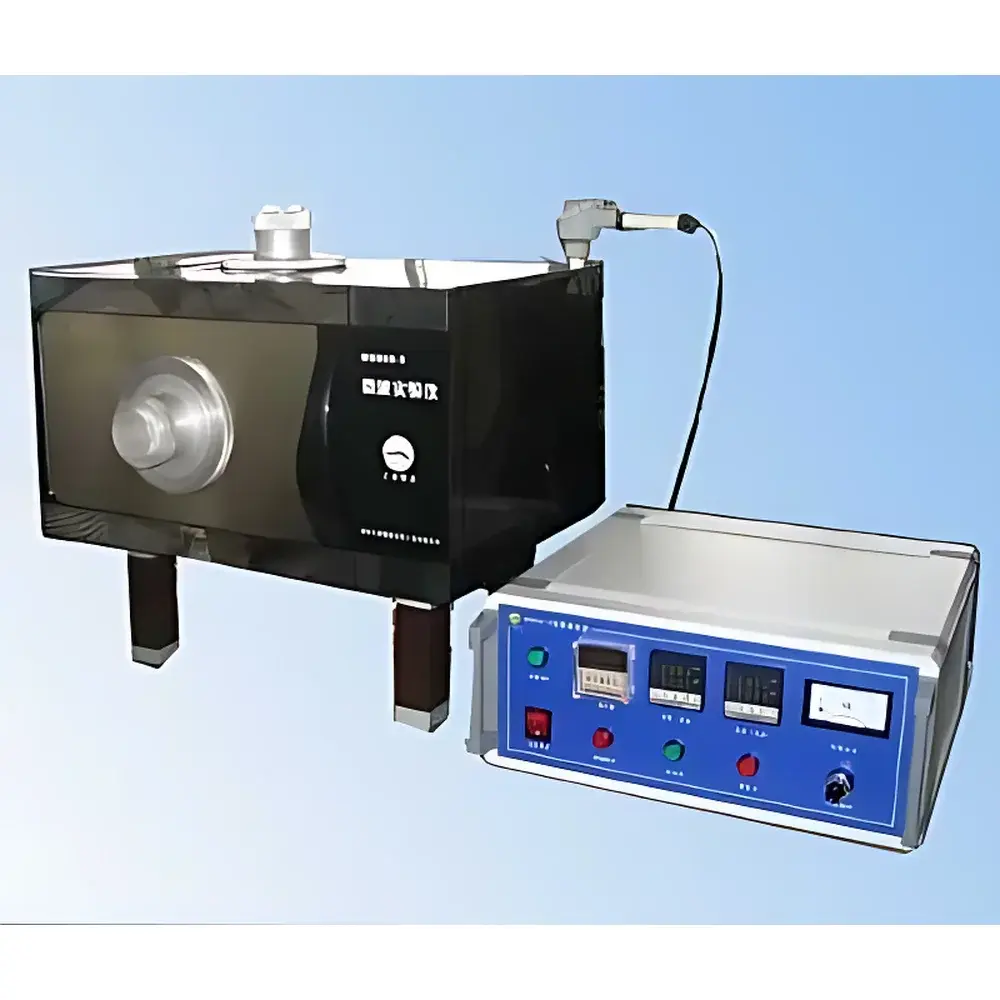
Hyway MG08S-2B Universal Microwave Synthesis Instrument (Customizable)
| Brand | Hyway |
|---|---|
| Model | MG08S-2B |
| Origin | Jiangsu, China |
| Microwave Power | 0–900 W (continuous linear adjustment) |
| Frequency | 2450 MHz ±50 MHz |
| Temperature Range | 0–300 °C (±1 °C accuracy) |
| Temperature Sensor | Shielded Pt100 contact probe |
| Timer Range | 0–900 min |
| Cavity Volume | 23 L |
| Reaction Vessel Capacity | 10–1000 mL |
| Stirring | Dual-mode (built-in magnetic + external mechanical, both continuously adjustable) |
| Safety Features | Microwave leakage < GB 10436-2008 limit, interlocked door switch, magnetron overtemperature protection, waveguide-mounted microwave suppressors |
| Inlet/Outlet Ports | Two rear-mounted, wave-suppressed ports for gas/liquid feed or inert atmosphere purging |
| Reflux Interface | Top-mounted standard taper port with integrated microwave suppression |
Overview
The Hyway MG08S-2B Universal Microwave Synthesis Instrument is an engineered platform for controlled, reproducible microwave-assisted chemical synthesis, catalytic reactions, solvent extraction, sample digestion, and thermal material processing under laboratory and pilot-scale conditions. It operates on the principle of dielectric heating—where electromagnetic energy at 2450 MHz induces molecular rotation and friction in polar media—enabling rapid, volumetric, and selective heating of reaction mixtures. Unlike conventional conductive heating, microwave irradiation delivers energy directly to the reactants, significantly reducing thermal gradients and improving reaction kinetics, yield, and selectivity. Designed for flexibility and safety, the MG08S-2B integrates a high-shielding cavity, real-time temperature feedback via a corrosion-resistant Pt100 sensor, and dual stirring modalities—making it suitable for heterogeneous catalysis, organometallic synthesis, nanoparticle preparation, and green chemistry workflows requiring precise thermal management.
Key Features
- Continuous linear microwave power control (0–900 W), enabling fine-tuned energy delivery across the full operational range without stepwise increments
- Real-time closed-loop temperature regulation using a shielded, high-accuracy Pt100 contact probe (±1 °C over 0–300 °C), compatible with acidic, basic, and organic media
- Dual stirring architecture: integrated magnetic stirrer (speed continuously adjustable) and externally mounted mechanical stirrer with microwave-safe shaft and customizable timing
- Top-mounted standard taper reflux port (e.g., 24/40 or 29/32) equipped with integrated wave-suppression geometry to permit condensation and vapor return without compromising shielding integrity
- Two rear-access, wave-suppressed inlet/outlet ports facilitating continuous liquid addition, gas sparging (e.g., N₂, Ar), or dynamic atmosphere control during active irradiation
- Interlocked safety system including magnetron overtemperature cutoff, door position sensing, and redundant microwave leakage monitoring compliant with GB 10436-2008 (<5 mW/cm² at 5 cm)
- Full digital interface displaying real-time temperature, setpoint, elapsed time, and power output; timer resolution to 1 second across 0–900 min range
Sample Compatibility & Compliance
The MG08S-2B accommodates a broad spectrum of reaction vessels—from sealed quartz or borosilicate glass tubes (10–100 mL) to open-necked round-bottom flasks (up to 1000 mL)—with compatibility for standard ground-glass joints (e.g., ISO K, DIN 17, ASTM E287). Its modular design supports integration with commercially available reflux condensers, gas adapters, and inert-atmosphere manifolds. The instrument conforms to national electromagnetic safety standards (GB 10436-2008) and incorporates engineering controls aligned with IEC 61000-6-3 (EMC emission limits) and IEC 61010-1 (safety requirements for laboratory equipment). While not certified to UL/CSA or CE for direct EU/US commercial placement, its architecture permits third-party validation for GLP-compliant environments when operated within documented SOPs and maintained per manufacturer-recommended calibration intervals.
Software & Data Management
The MG08S-2B operates via embedded firmware with no proprietary software dependency—ensuring long-term operability without licensing constraints. All critical process parameters (temperature, power, time, stirring mode) are logged internally and exportable via USB to CSV format for traceability. Timestamped records support audit-ready documentation for internal quality assurance protocols. For laboratories operating under FDA 21 CFR Part 11 or ISO/IEC 17025 frameworks, optional external data acquisition modules (e.g., LabVIEW-compatible DAQ interfaces) can be integrated to provide electronic signatures, user access logs, and immutable audit trails—subject to site-specific validation.
Applications
- Accelerated organic synthesis (e.g., Suzuki coupling, esterification, amidation) with improved regioselectivity and reduced byproduct formation
- Materials science: solvothermal synthesis of MOFs, metal oxides, and quantum dots under controlled thermal ramping
- Environmental analysis: microwave-assisted acid digestion of soils, sediments, and biological tissues prior to ICP-MS or AAS quantification
- Natural product extraction: enhanced recovery of thermolabile phytochemicals (e.g., flavonoids, alkaloids) from plant matrices using ethanol/water mixtures
- Heterogeneous catalysis screening: evaluation of supported catalysts (e.g., Pd/C, Ni/Al₂O₃) under varying microwave power profiles and inert atmospheres
- Method development for USP , ASTM D5291, or ISO 11885-compliant digestion protocols
FAQ
Is the MG08S-2B compatible with sealed-vessel high-pressure reactions?
No—the MG08S-2B is designed for ambient-pressure or reflux-mode operation only. It does not include pressure-rated cavities or vessel clamping systems required for sealed-bomb synthesis.
Can the instrument be validated for GMP-regulated environments?
Yes, provided users implement supplementary controls: calibrated temperature verification (e.g., NIST-traceable reference probes), periodic microwave leakage testing, and documented maintenance logs. Full 21 CFR Part 11 compliance requires external data capture infrastructure.
What types of vessels are recommended for magnetic stirring?
Standard glass vials or flasks fitted with PTFE-coated stir bars (≤40 mm length); avoid ferromagnetic materials or oversized bars that impede rotation under microwave fields.
Does the unit support multi-step temperature ramping programs?
No—the current firmware supports single-setpoint temperature control. Complex ramp/hold profiles require external programmable controllers interfaced via analog I/O.
How often should the magnetron and waveguide components be serviced?
Annual inspection is recommended; cleaning of waveguide apertures and verification of door seal integrity should occur after every 500 operating hours or as part of routine preventive maintenance.



