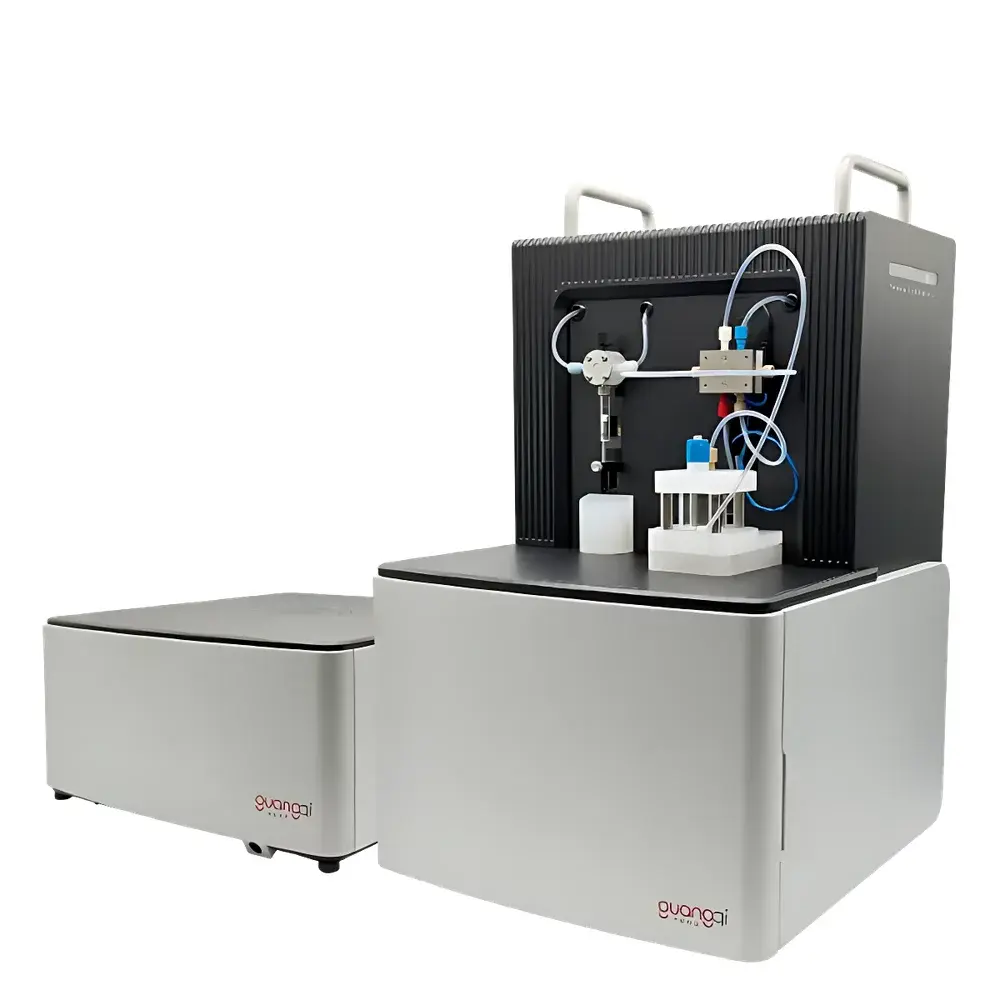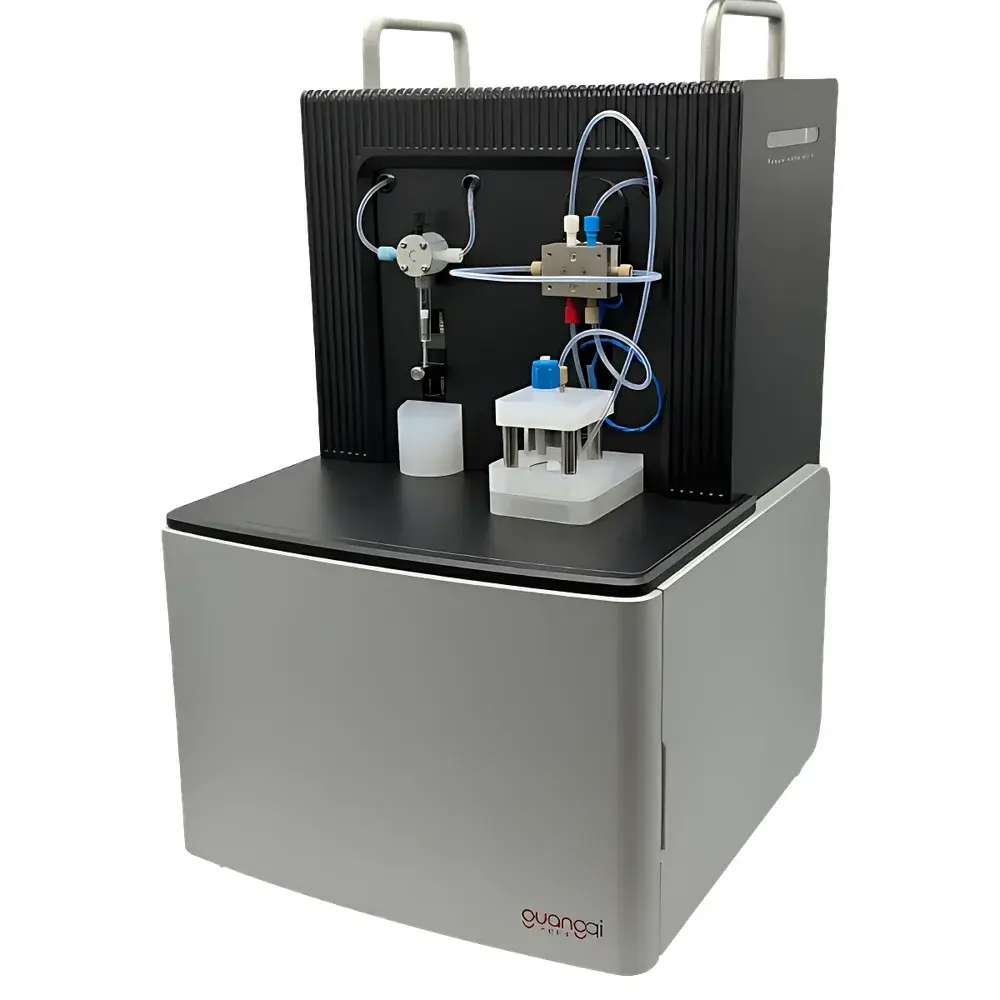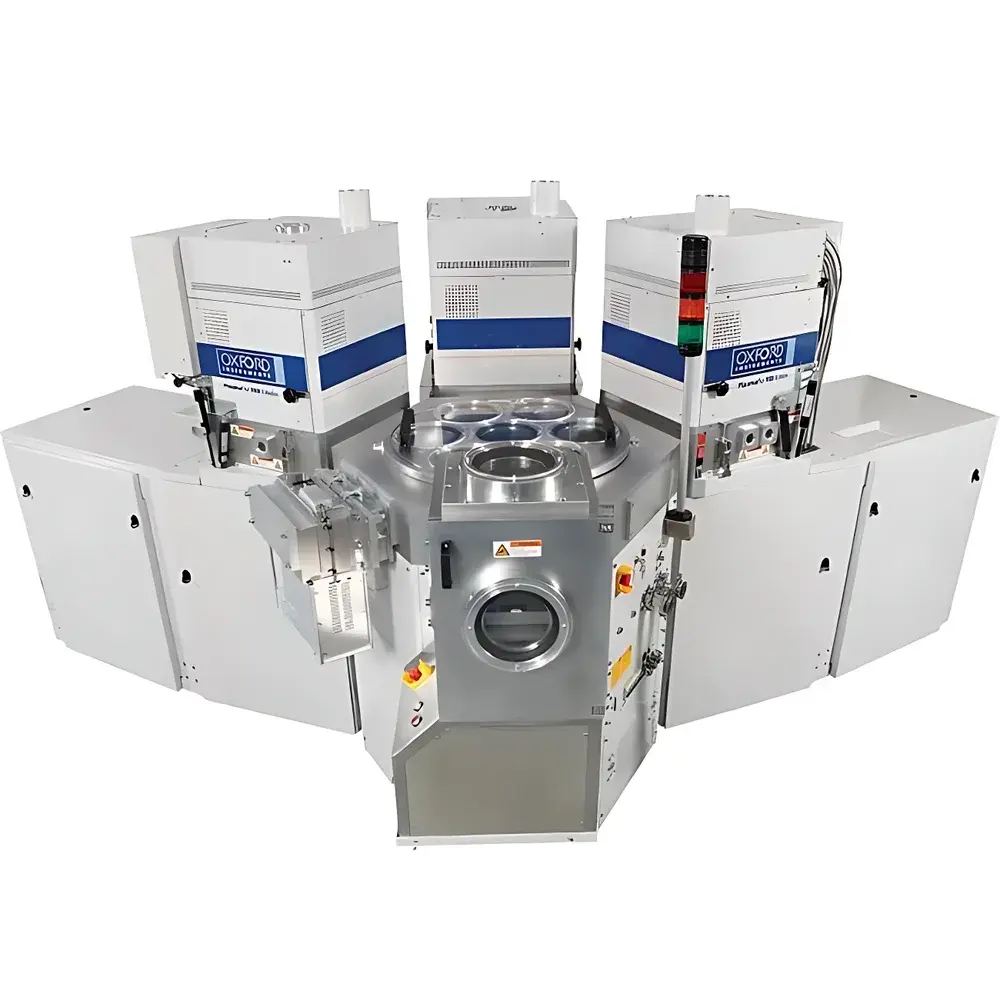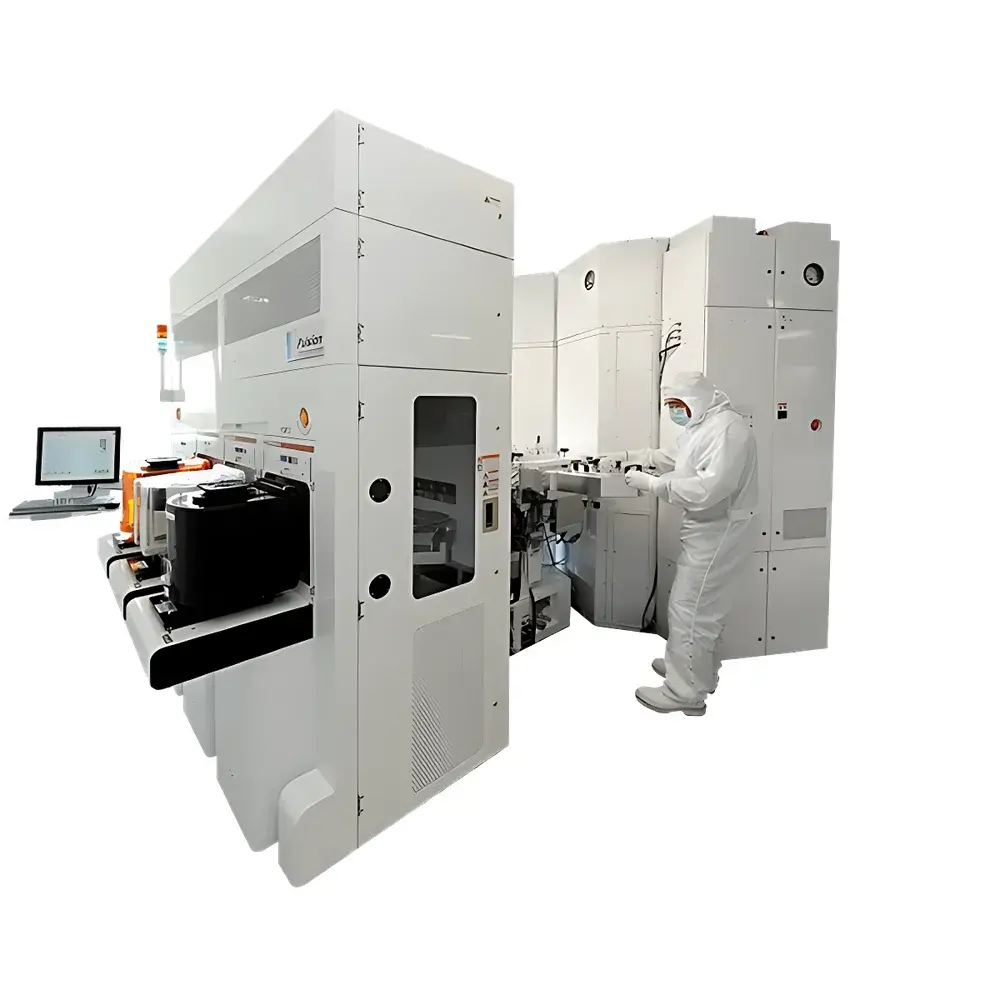
IBS FLEXion 200/400 Medium-Current Ion Implanter
| Brand | IBS |
|---|---|
| Origin | France |
| Model | FLEXion 200/400 |
| Product Type | Medium-Current Ion Implanter |
| Wafer Size Compatibility | 8-inch to 12-inch |
| Implant Energy Range | 50 keV (configurable down to 3 keV or up to 400–600 keV for multiply charged species) |
| Primary Implant Species | p⁺ (¹¹B, ³¹P, ⁷⁵As, etc.) |
| Beam Current | >600 µA (¹¹B⁺), >1500 µA (³¹P⁺ or ⁷⁵As⁺) at 120–200 keV |
| Dose Range | 1×10¹¹ – 1×10¹⁸ atoms/cm² |
| Uniformity | <1.0% (1σ) across wafer under standard conditions |
| Vacuum | <7×10⁻⁷ mbar in beamline and target chamber |
| Gas Lines | 5 integrated (BF₃, PH₃, AsH₃, Ar, N₂) with real-time gas consumption monitoring and cylinder-end detection |
Overview
The IBS FLEXion 200/400 is a high-precision, medium-current ion implanter engineered for semiconductor process development and production-scale doping of silicon wafers up to 12 inches in diameter. Designed and manufactured by IBS INFORMATION—a French company founded in 1987 with deep expertise in ion source physics, beam optics, and vacuum system integration—the FLEXion platform implements electrostatic acceleration and mass-analyzed beam delivery to ensure reproducible, high-fidelity dopant incorporation. Its architecture follows the industry-standard single-ended, serial implantation configuration, where ions are extracted from a plasma source, mass-separated via a 90° magnetic sector analyzer, accelerated through a precisely controlled high-voltage column, and scanned electrostatically across the substrate. The system supports both monatomic and molecular species (e.g., BF₂⁺, PH₂⁺), with optional multi-charged ion capability enabling higher effective energies without proportional voltage scaling. It is fully compliant with semiconductor cleanroom environmental requirements and meets mechanical, electrical, and radiation safety standards per IEC 61000-6-2/4 and ISO 14644-1 Class 5.
Key Features
- Modular high-vacuum architecture: Separate turbo-molecular pumping for ion source (<2×10⁻⁶ mbar), cryo-pumped beamline and target chamber (<7×10⁻⁷ mbar), ensuring minimal beam-gas scattering and long mean free path stability.
- Integrated 5-channel gas distribution system with digital mass flow controllers, real-time gas consumption logging, and automatic cylinder depletion detection—reducing downtime and supporting traceable process documentation.
- Adjustable tilt mechanism enabling fixed-angle implantation at 0° or 7°, with optional manual fixture exchange for angles up to 45°—critical for channeling control and ultra-shallow junction formation.
- High-current ion source optimized for boron, phosphorus, and arsenic: delivers >600 µA of ¹¹B⁺ and >1500 µA of ³¹P⁺ at 120–200 keV, enabling throughput-competitive processing for advanced CMOS and power device fabrication.
- Full software-defined operation with role-based access control (operator, engineer, administrator), audit-trail-enabled parameter logging, and configurable alarm thresholds aligned with ISO 9001 and FDA 21 CFR Part 11 data integrity requirements.
Sample Compatibility & Compliance
The FLEXion 200/400 accommodates standard semiconductor substrates from 8-inch to 12-inch diameter wafers, with optional adaptors for smaller formats (2–5 inch) and irregular-shaped samples down to 1 cm². Substrate temperature is actively monitored but not actively controlled; thermal management relies on backside He cooling and beam-duty-cycle optimization. All hardware interfaces—including load-lock transfer, end-effector design, and RF grounding—are compatible with SEMI E10/E19 standards. The system conforms to CE marking directives (EMC, LVD, Machinery), meets EU RoHS and REACH material restrictions, and includes full radiation shielding certified to deliver <0.6 µSv/h at 10 cm from any external surface—verified per IEC 61000-4-3 and national nuclear regulatory guidelines.
Software & Data Management
The embedded control software—based on a deterministic real-time Linux kernel—provides synchronized acquisition of beam current, dose integration, chamber pressure, gas flows, and high-voltage stability metrics at 100 Hz resolution. Each implant recipe stores metadata including operator ID, timestamp, lot number, and calibration certificate references. Historical data is archived in SQLite3 format with SHA-256 checksums, supporting GLP/GMP-compliant review workflows. Remote diagnostics and firmware updates are performed over TLS-encrypted Ethernet connections, with optional integration into factory MES systems via SECS/GEM protocol stack. Software version history, change logs, and validation reports are supplied with each release under IBS’s ISO 9001-certified development lifecycle.
Applications
The FLEXion 200/400 serves as a primary tool for dopant profiling in front-end-of-line (FEOL) semiconductor manufacturing, including source/drain extension, well formation, and halo implants for FinFET and nanosheet transistor architectures. It is widely deployed in R&D labs for rapid prototyping of novel materials such as SiC, GaN, and SOI substrates—where precise stoichiometric control and low lattice damage are essential. Additional applications include MEMS surface functionalization, photonic device waveguide tailoring, and quantum dot array definition. Its robust beam stability and dose repeatability make it suitable for qualification runs under JEDEC JESD22-A108 and ASTM F1470 test protocols.
FAQ
What ion species can the FLEXion 200/400 implant?
It supports common semiconductor dopants including B, P, As, and Al in atomic or molecular form (e.g., BF₂, PH₃, AsH₃), as well as inert gases (Ar, N₂, He) and light elements (H, C, O) for specialty applications.
Is the system qualified for use in ISO Class 5 cleanrooms?
Yes—mechanical design, material selection, and outgassing performance comply with ISO 14644-1 Class 5 specifications, and all internal surfaces are electropolished stainless steel or ceramic-coated to minimize particle generation.
Can the system be upgraded to support high-energy implantation beyond 200 keV?
Yes—optional high-voltage column retrofit kits extend the nominal energy range to 400 keV or 600 keV for doubly or triply charged ions, maintaining beam current and angular resolution within specification.
Does the software support electronic signature and audit trail for regulated environments?
Yes—the system implements ALCOA+ principles: attributable, legible, contemporaneous, original, accurate, complete, consistent, enduring, and available—with full 21 CFR Part 11 compliance achievable via optional validation package.
What maintenance intervals are recommended for the ion source and beamline components?
Source cleaning is recommended every 200–300 hours of operation depending on species and dose; beamline inspection and gauge recalibration are scheduled quarterly, with full vacuum system bake-out every 12 months per IBS Preventive Maintenance Protocol v3.2.