
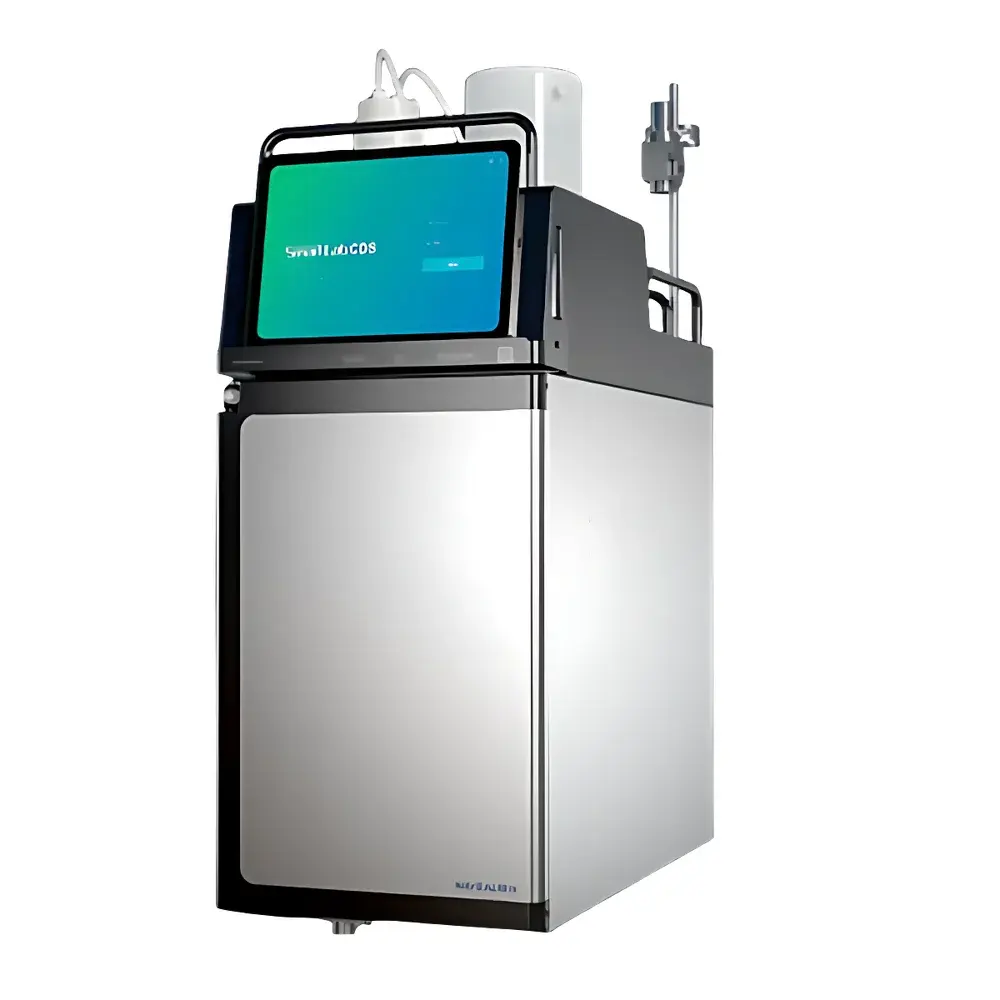
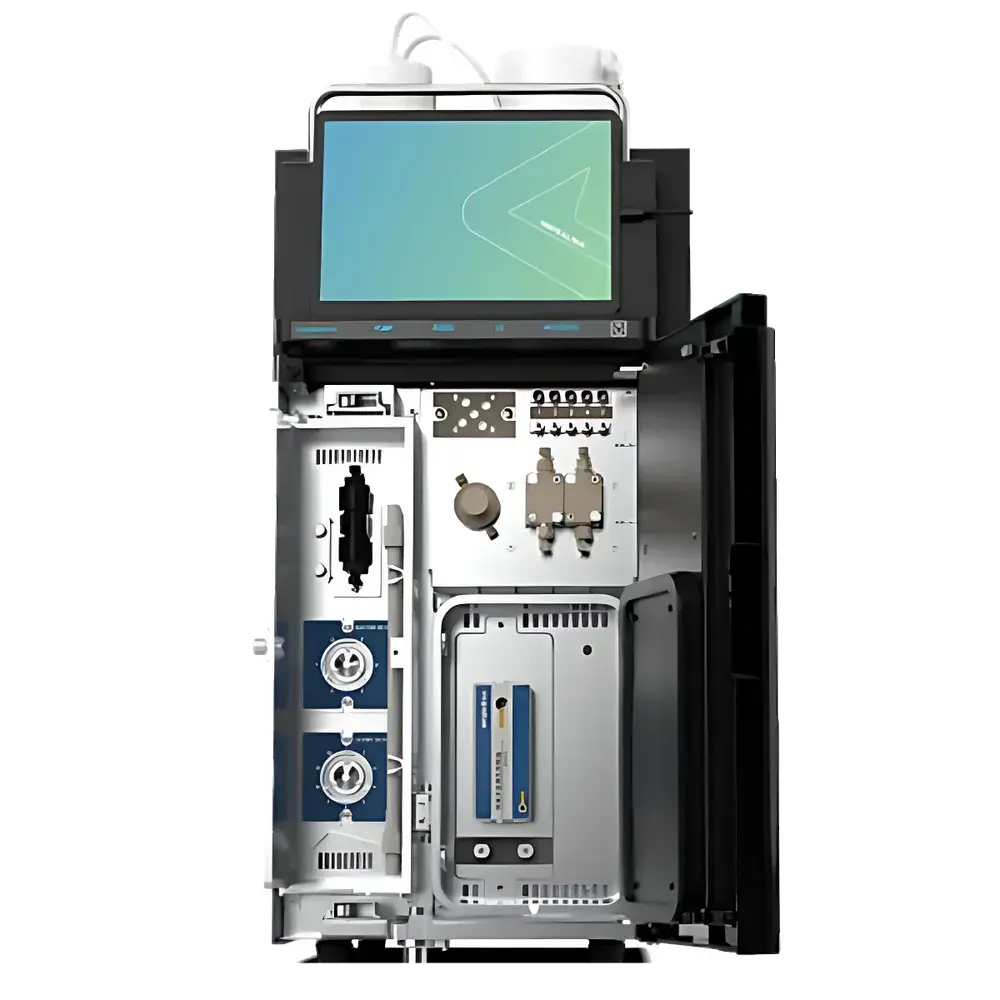
IC6300 Intelligent Ion Chromatograph
| Brand | 1124123/13213112 |
|---|---|
| Origin | Jiangsu, China |
| Manufacturer Type | Authorized Distributor |
| Instrument Type | Laboratory Benchtop System |
| Application Scope | General-Purpose Ion Analysis |
| Maximum Operating Pressure | 42 MPa |
| Fluidic Path Material | Full-PEEK & PTFE/PEEK/PP Non-Metallic Construction |
| Pump Configuration | Integrated Quaternary Gradient Pump with Electrolytic Eluent Generation |
| Detector Options | Conductivity, Pulsed Amperometric (PAD), UV-Vis, Fluorescence |
| Compliance Support | ASTM D4327, ISO 10304-1/-3, USP <645>, EPA Methods 300.0/317.0/321.8 |
Overview
The IC6300 Intelligent Ion Chromatograph is a fully integrated, laboratory-grade ion chromatography (IC) system engineered for precision, reproducibility, and operational flexibility in routine and advanced anion/cation analysis. Based on suppressed conductivity detection and compatible with non-suppressed modes, the system employs high-efficiency ion-exchange separation principles—utilizing capillary- or analytical-scale columns packed with pellicular or macroporous ion-exchange resins—to resolve inorganic and small organic ionic species in complex matrices. Its core architecture integrates an on-demand electrolytic eluent generator (EG), a low-pulse, full-PEEK quaternary gradient pump capable of sustained operation up to 42 MPa (6000 psi), and a modular detector interface supporting conductivity, pulsed amperometric (PAD), UV-Vis, and fluorescence detection. Designed for compliance-critical environments, the IC6300 supports method validation workflows aligned with ASTM D4327 (anions in water), ISO 10304-1 (determination of dissolved anions), USP (conductivity of purified water), and U.S. EPA Methods 300.0 (anions), 317.0 (perchlorate), and 321.8 (disinfection byproducts).
Key Features
- Electrolytic Eluent Generation (EG): On-line production of high-purity KOH, NaOH, or methanesulfonic acid (MSA) eluents from deionized water—eliminating manual preparation, reducing carryover risk, and enhancing retention time stability and inter-day reproducibility (RSD < 0.3% for retention time, < 1.5% for peak area).
- Full-PEEK Quaternary Gradient Pump: Chemically inert fluidic path constructed entirely from PEEK, PTFE, and polypropylene; delivers precise, pulse-free flow across 0.001–10.000 mL/min with pressure tolerance up to 42 MPa—enabling high-resolution separations using sub-2-µm particle columns and HPIC (High-Performance Ion Chromatography) methods.
- Modular Detector Architecture: Hot-swappable conductivity and PAD detectors with automatic electronic recognition; PAD module supports DC amperometry, pulsed amperometric detection (PAD), and integrated pulsed amperometric detection (IPAD) for carbohydrates, amino acids, and thiols.
- Intelligent Flow Path Design: Zero-dead-volume connections throughout the entire fluidic path; color-coded low- and high-pressure tubing (blue/yellow) for rapid visual identification; optimized thermal management in the column oven (ambient to 60 °C, ±0.1 °C stability).
- Multi-Dimensional Capability: Built-in valve ports and TTL-triggered switching support for 2D-IC (heart-cutting or comprehensive), online matrix elimination, and automated preconcentration—validated for environmental, food safety, and pharmaceutical applications requiring trace-level quantitation in high-salt or protein-rich samples.
Sample Compatibility & Compliance
The IC6300 accommodates aqueous samples across wide concentration ranges—from µg/L (ppt) to mg/L (ppm)—including drinking water, wastewater, biological fluids (serum, urine), food extracts, pharmaceutical excipients, and semiconductor process chemicals. All wetted materials comply with ISO 15195 (reference measurement systems for clinical laboratories) and FDA 21 CFR Part 11 requirements when operated with validated software configurations. The system meets GLP/GMP documentation standards through audit-trail-enabled method storage, user-access controls, electronic signatures, and instrument event logging. Column chemistries include AS-series (anion), CS-series (cation), and specialized columns for organic acids, amines, and transition metals—each qualified per manufacturer specifications and traceable to NIST SRMs.
Software & Data Management
Controlled via IC Navigator™ v3.x (Windows-based), the software provides full sequence scheduling, real-time pressure/temperature monitoring, automated calibration curve generation, and peak integration using ISO 11095-compliant linear/non-linear regression models. Raw data files (.icd) are stored in vendor-neutral format with embedded metadata (instrument ID, method parameters, operator ID, timestamp). Export options include CSV, PDF reports compliant with LIMS interfaces (ASTM E1482, ASTM E2500), and direct output to third-party platforms including Empower™, Chromeleon™, and LabArchives™ ELN. Audit trail functionality records all critical actions—including method edits, result overrides, and user logins—with immutable timestamps and operator attribution.
Applications
- Environmental Monitoring: Quantification of F⁻, Cl⁻, NO₂⁻, Br⁻, NO₃⁻, PO₄³⁻, SO₄²⁻, ClO₃⁻, ClO₄⁻ in surface water, groundwater, and wastewater per EPA Method 300.0 and ISO 10304-3.
- Pharmaceutical Quality Control: Counter-ion profiling (Na⁺, K⁺, Ca²⁺, Mg²⁺) in APIs and injectables; residual acetate, citrate, or phosphate in biologics formulations per ICH Q5C and USP .
- Food & Beverage Safety: Nitrate/nitrite in cured meats; iodide in dairy; sulfite in wines; bromate in bread—all aligned with EU Regulation (EC) No 1881/2006 and FDA Food Code Chapter 3.
- Electronics Grade Chemicals: Trace anion impurities (Cl⁻, SO₄²⁻, NO₃⁻) in ultrapure H₂SO₄, HNO₃, and NH₄OH used in semiconductor cleaning processes (SEMI C1/C36 standards).
- Clinical Research: Simultaneous determination of lactate, pyruvate, citrate, and short-chain fatty acids in plasma and fecal supernatants using suppressed conductivity with post-column derivatization.
FAQ
What eluents can be generated in situ using the electrolytic eluent generator?
KOH (0.1–100 mM), NaOH (0.1–50 mM), and methanesulfonic acid (MSA, 0.1–50 mM) are supported. Custom concentration ramps and gradient profiles are programmable within the method editor.
Is the IC6300 compatible with mass spectrometry coupling?
Yes—the system includes a dedicated ESI-compatible interface port and pressure-regulated split-flow module for robust IC-MS and IC-MS/MS hyphenation, with demonstrated compatibility with Thermo Scientific™ Q Exactive™ and Agilent 6495B platforms.
Can the system perform automated sample pretreatment?
Integrated multi-position selection valves enable programmable online dilution, matrix elimination (e.g., Ag/H cartridge for chloride removal), and large-volume injection with trap-column enrichment—fully scriptable via IC Navigator™.
What regulatory documentation is provided for GxP environments?
Factory-installed IQ/OQ protocols, 21 CFR Part 11 readiness package (including electronic signature templates and audit trail configuration guide), and a complete DQ document set aligned with ASTM E2500-22 are supplied standard.
How is column lifetime extended under high-pressure operation?
The pump’s active pulse-dampening algorithm and floating seal design reduce mechanical stress on column frits and packing beds; combined with inline 0.2-µm filtration and EG-derived ultra-pure eluents, typical column lifetimes exceed 2,000 injections under 42 MPa conditions.





