
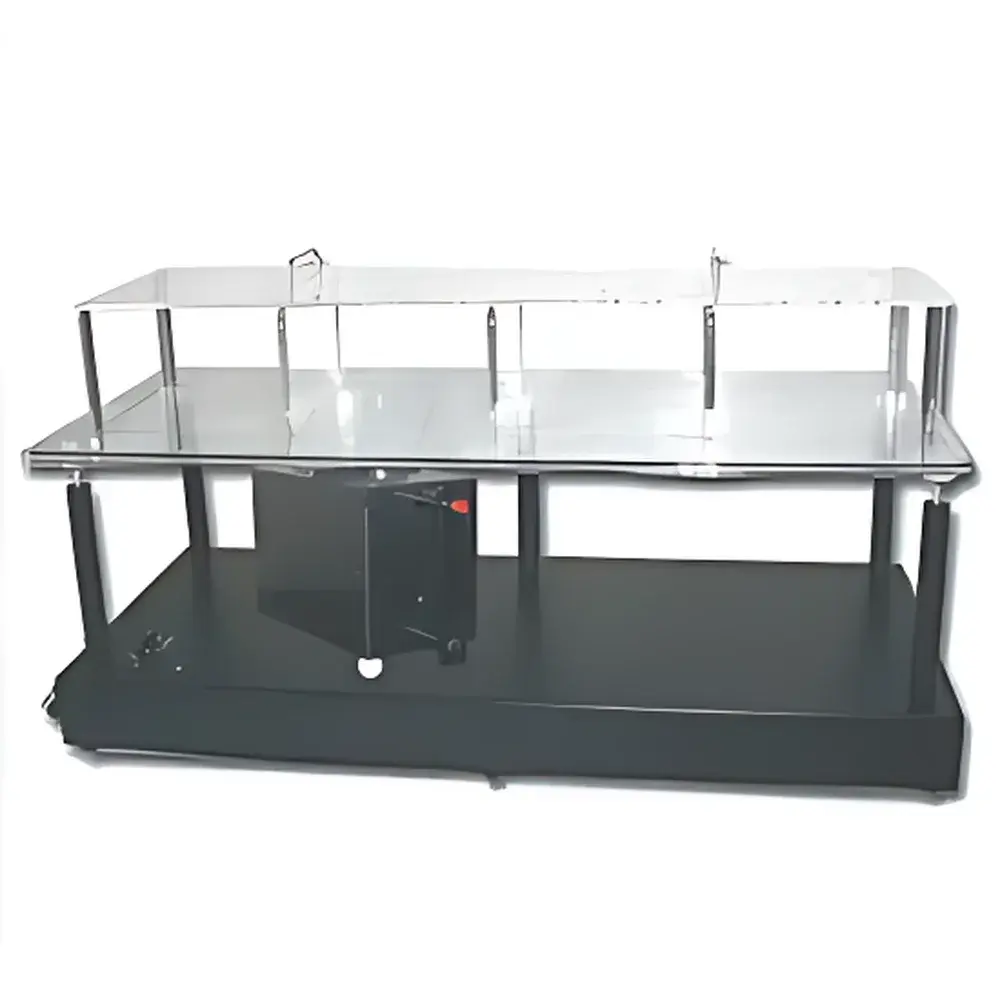
IITC Life Science Model 390 / 390G Paw Withdrawal Analgesia Tester – High-Throughput Rodent Thermal Nociception System (6 Rats or 12 Mice)
| Origin | USA |
|---|---|
| Supplier Type | Authorized Distributor |
| Import Status | Imported |
| Model | 390 or 390G (Capacity: 6 Rats or 12 Mice) |
| Pricing | Available Upon Request |
Overview
The IITC Life Science Model 390 and 390G Paw Withdrawal Analgesia Tester is a precision-engineered thermal nociception assessment platform designed for objective, non-invasive quantification of hindpaw withdrawal latency in rodents. Operating on the principle of focused radiant heat stimulation, the system delivers calibrated infrared thermal energy to the plantar surface of unrestrained animals—eliminating restraint-induced stress artifacts such as adrenergic activation that confound baseline pain thresholds and response kinetics. Unlike manual tail-flick or mechanical pressure assays, this instrument enables bilateral, within-subject comparison (left vs. right paw), supporting rigorous experimental design aligned with NIH and ARRIVE guidelines. The device integrates real-time behavioral observation capabilities with automated thermal stimulus control, making it suitable for longitudinal pharmacodynamic studies, opioid tolerance screening, neuropathic pain modeling, and preclinical evaluation of novel analgesics under GLP-compliant workflows.
Key Features
- Non-restraint testing protocol: Animals remain freely ambulatory during assay, minimizing stress-mediated modulation of nociceptive thresholds and improving inter-session reproducibility.
- Programmable thermal cutoff: Adjustable auto-shutoff timer (0–30 s) prevents tissue damage while ensuring consistent exposure duration across subjects and trials.
- High-resolution timing: Withdrawal latency measured with 0.01 s resolution using manual stop initiation; supports both operator-triggered and foot-pedal–activated start/stop functions.
- Adjustable radiant heat source: Precision-controlled heating element (0–250 °C range, ±1% accuracy) with focused beam geometry (4 × 6 mm spot size) ensures spatially defined thermal delivery.
- Multi-modal input interface: Numeric keypad for entry of subject ID, cutoff temperature, date/time stamp, and auto-shutoff duration; intuitive front-panel controls complement foot switch and push-button operation.
- Integrated optical monitoring: Adjustable rear-view mirror enables unobstructed visualization of paw positioning without disturbing animal posture or introducing observer bias.
- Optional heated glass platform (30–40 °C): Reduces baseline thermal gradient between paw and surface, shortening acclimation time and stabilizing baseline latency values.
Sample Compatibility & Compliance
The Model 390/390G accommodates up to six adult Sprague-Dawley or Wistar rats (200–300 g) or twelve C57BL/6 or CD-1 mice (18–25 g) per session via modular chamber configuration. All hardware components comply with IEC 61000-6-3 (EMC emissions) and UL 61010-1 safety standards. Data acquisition meets ALPACO and FDA 21 CFR Part 11 requirements when paired with validated PC software (optional audit trail, electronic signatures, and user-access controls). The system supports documentation traceability for ISO/IEC 17025-accredited laboratories and aligns with ASTM E1992-22 (Standard Guide for Preclinical Pain Research in Rodents).
Software & Data Management
Test data—including subject ID, trial number, latency (s), maximum applied temperature (°C), cutoff time (s), and operator notes—are stored internally and exportable via RS-232 or USB to Windows-based analysis platforms. Optional IITC AcqView™ software provides automated CSV/Excel export, batch statistical summary (mean ± SEM, ANOVA-ready formatting), graphing tools for time-course analysis, and configurable report templates compliant with institutional animal care and use committee (IACUC) submission requirements. All data files retain embedded metadata (timestamp, operator ID, calibration log reference) to support full auditability in regulatory submissions.
Applications
- Quantitative assessment of antinociceptive efficacy in opioid, NSAID, and cannabinoid pharmacology studies.
- Longitudinal tracking of thermal hyperalgesia in chronic constriction injury (CCI), spared nerve injury (SNI), or streptozotocin-induced diabetic neuropathy models.
- Screening for central versus peripheral mechanisms of action using selective receptor antagonists or intrathecal delivery paradigms.
- Validation of genetically modified rodent lines (e.g., TRPV1-KO, Nav1.7 conditional knockouts) in thermal sensitivity phenotyping.
- Supporting OECD TG 407 (Repeated Dose 28-Day Oral Toxicity) and ICH S7A (Safety Pharmacology) thermal nociception endpoints.
FAQ
Is the Model 390G compatible with automated video-based behavior scoring systems?
Yes—RS-232 TTL output signals can be synchronized with third-party video acquisition hardware (e.g., Noldus EthoVision XT, CleverSys TopScan) for frame-locked latency annotation and secondary behavioral coding (e.g., licking, guarding, weight-bearing asymmetry).
What calibration procedures are recommended for routine maintenance?
Annual traceable calibration of the thermocouple sensor and optical intensity profile is advised using NIST-traceable blackbody sources; field verification with certified thermal reference plates (±0.5 °C at 55 °C) is performed prior to each study cohort.
Can the system be used for juvenile or aged rodent cohorts?
Yes—adjustable ramp rate, variable cutoff duration, and optional low-temperature pre-warming protocols accommodate developmental and senescent physiological variability in thermal sensitivity and motor response latency.
Does the device meet requirements for multi-site preclinical consortia?
Yes—standardized firmware versioning, shared calibration protocols, and centralized data schema enable cross-laboratory harmonization per IMI PREMISE and EU-ADR consortium benchmarks.
Related Products




