
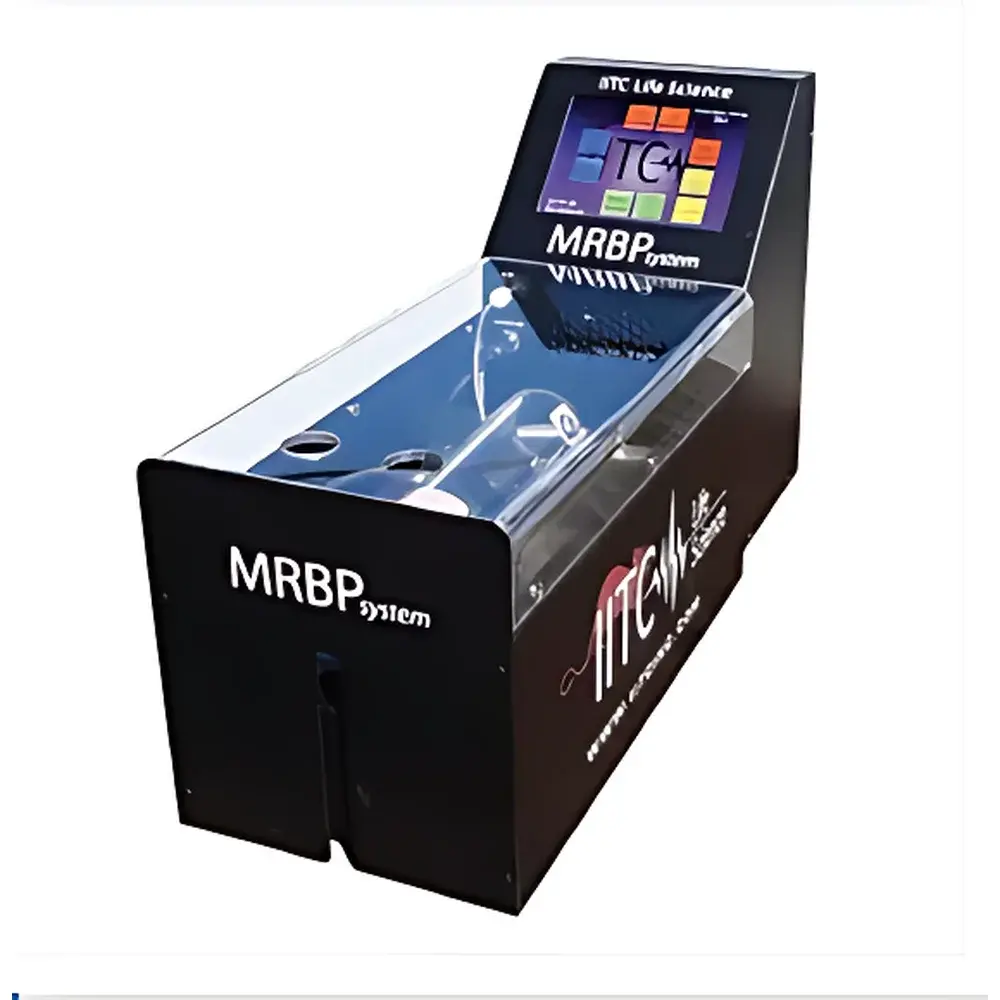
IITC MRBP-R01 Non-Invasive Rodent Blood Pressure Monitoring System
| Origin | USA |
|---|---|
| Manufacturer Type | Authorized Distributor |
| Origin Category | Imported |
| Model | MRBP-R01 |
| Pricing | Upon Request |
Overview
The IITC MRBP-R01 is a non-invasive, tail-cuff based blood pressure monitoring system engineered for precise, repeatable hemodynamic assessment in conscious or anesthetized rodents. It operates on the principle of photoplethysmography (PPG), utilizing high-sensitivity optical sensors to detect volumetric pulsations in the tail artery during controlled cuff inflation and deflation. Unlike invasive catheter-based methods requiring surgical implantation, the MRBP-R01 delivers indirect but physiologically relevant systolic, diastolic, and mean arterial pressure values—alongside heart rate and ambient temperature—without compromising animal welfare or experimental continuity. Designed specifically for compliance with NIH Guide for the Care and Use of Laboratory Animals and AAALAC International standards, the system supports longitudinal studies across diverse preclinical models including mice, rats, guinea pigs, hamsters, rabbits, and cats. Its robust architecture enables reliable operation under controlled environmental conditions—including low-temperature acclimation protocols—and maintains measurement integrity during MRI-compatible setups when paired with non-ferromagnetic accessories.
Key Features
- Photoplethysmographic sensing technology optimized for rodent tail vasculature, validated for use in conscious, anesthetized, and MRI-constrained environments
- Intuitive 7-inch capacitive touchscreen interface enabling full parameter configuration: cuff inflation/deflation rate (1–10 mmHg/sec), pressure ceiling (adjustable up to 300 mmHg), cycle duration, thermal calibration, and session protocol storage
- Three-button rapid calibration sequence—completed in under 30 seconds—minimizing handling stress and procedural variability
- Simultaneous acquisition of systolic blood pressure (SBP), diastolic blood pressure (DBP), mean arterial pressure (MAP), heart rate (0–1000 bpm), and ambient temperature (±0.1°C resolution)
- High-fidelity real-time pulse waveform display on integrated LED-LCD screen with onboard waveform zoom, freeze, and annotation functions
- Scalable deployment architecture: MRBP-R01 is a standalone single-channel unit for rat studies; modular expansion to up to 200 channels is supported via MRBP-RMC add-on modules (sold separately)
- Extended data retention: All raw waveforms, summary statistics, and metadata are stored permanently in internal flash memory and exportable via USB 2.0 interface
Sample Compatibility & Compliance
The MRBP-R01 accommodates a broad range of rodent species and physiological states. Validated weight ranges include: mice (15–40 g), rats (100–500 g), guinea pigs (200–800 g), hamsters (50–150 g), rabbits (1–5 kg), and domestic cats (2–6 kg). Tail cuff sizes are interchangeable and selected per species-specific vascular diameter and thermal regulation profile. The system meets ISO 13485 design control requirements for Class IIa medical device equivalents and conforms to ASTM F2919-21 guidelines for non-invasive blood pressure measurement validation in small animals. All firmware and data handling workflows support audit trails compliant with GLP and GCP documentation standards, including timestamped operator ID logging and immutable data file generation.
Software & Data Management
Data acquisition and analysis are managed through embedded firmware with optional PC-based IITC BP Analysis Suite v4.2 (Windows 10/11 compatible). The suite provides batch processing, statistical comparison across groups (ANOVA, t-test), trend visualization over time, and automated report generation in PDF or CSV formats. Raw PPG waveforms are saved in IEEE 11073-10471-compliant binary format, ensuring interoperability with third-party platforms such as MATLAB, LabChart, and Python-based analysis pipelines. USB export supports encrypted memory sticks meeting NIST SP 800-111 encryption standards. Audit logs record all user actions—including parameter changes, calibration events, and data exports—with SHA-256 hashing for forensic traceability, satisfying FDA 21 CFR Part 11 electronic record requirements when configured with password-protected administrator access.
Applications
- Pharmacological evaluation of antihypertensive agents, vasodilators, and sympathomimetic compounds in chronic hypertension models (e.g., SHR, DOCA-salt, AngII-infused)
- Cardiovascular phenotyping in genetically modified mouse strains (e.g., ACE2 KO, eNOS−/−, TRPV4−/−)
- Neurocardiovascular coupling studies during behavioral assays or optogenetic stimulation
- Thermoregulatory response assessment under cold exposure or metabolic challenge protocols
- Longitudinal monitoring of blood pressure recovery post-surgical intervention or drug washout periods
- Preclinical safety pharmacology core battery testing per ICH S7B and S7A guidance
FAQ
What species and weight ranges are supported by the MRBP-R01?
The MRBP-R01 is validated for mice (15–40 g), rats (100–500 g), guinea pigs (200–800 g), hamsters (50–150 g), rabbits (1–5 kg), and cats (2–6 kg). Cuff selection must match species-specific tail anatomy.
Can the MRBP-R01 be used in MRI suites?
Yes—the system uses non-ferromagnetic components and fiber-optic signal transmission; however, RF shielding and gradient noise mitigation require site-specific validation prior to installation.
Is the MRBP-R01 compliant with regulatory documentation standards for IND-enabling studies?
When deployed with enabled audit trail, electronic signature, and data integrity features, the MRBP-R01 meets FDA 21 CFR Part 11 and EMA Annex 11 expectations for electronic records in nonclinical safety studies.
Does the system support automated batch processing of multiple animals?
The MRBP-R01 is a single-channel unit; high-throughput workflows require integration with MRBP-RMC expansion modules (up to 200 channels), each operating independently with synchronized timing and centralized data aggregation.
How is calibration performed, and how often is it required?
Calibration is initiated via three tactile inputs on the touchscreen and completes automatically using built-in reference pressure transducers; recalibration is recommended before each experimental session or after any mechanical impact to the cuff assembly.






