
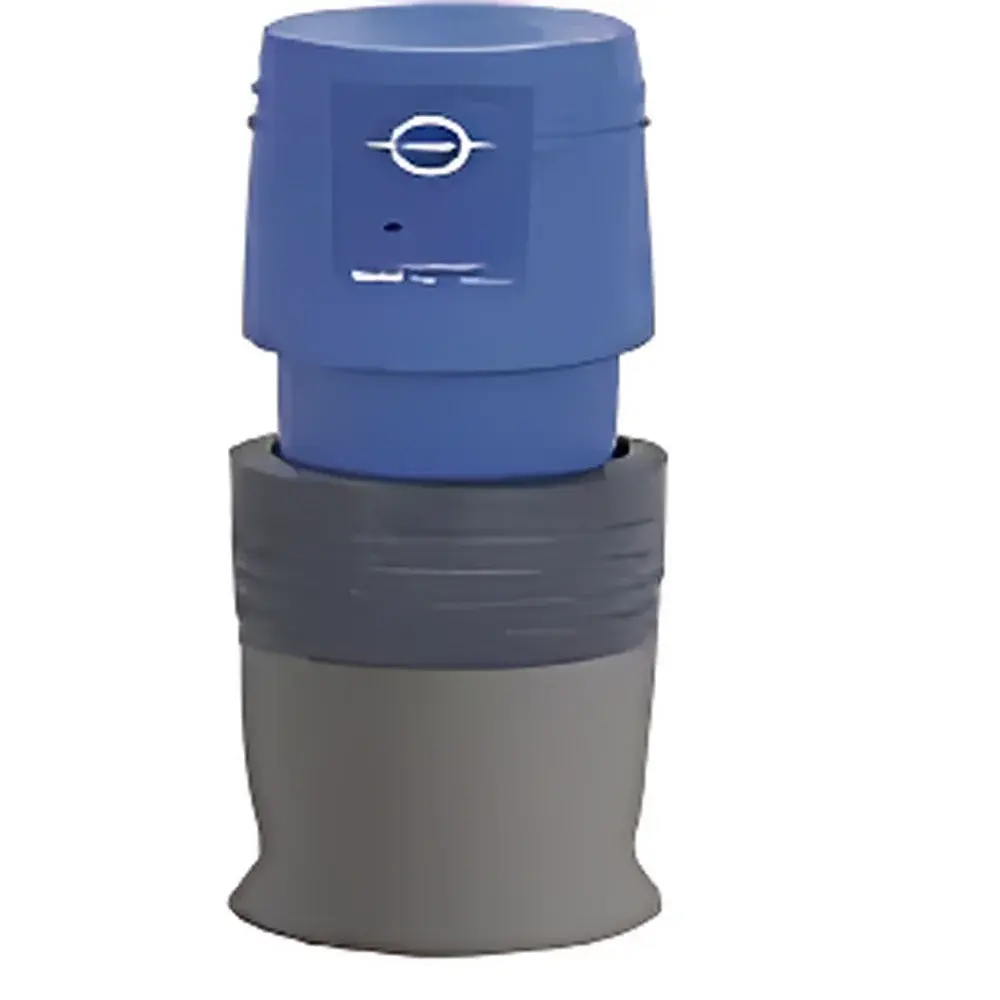
IKA A11, A10, and M20 Analytical Grinding Mills
| Brand | IKA |
|---|---|
| Origin | Germany |
| Model Series | A10, A11, M20 |
| Grinding Principle | Shear/Impact |
| Max Feed Size | <10 mm |
| Batch Capacity | 50–250 mL |
| Max Hardness | 6 Mohs |
| Motor Input Power | 160–620 W |
| Max Speed | 20,000–28,000 rpm |
| Cooling Options | Water, Dry Ice (A11 & M20), Liquid Nitrogen (A11 only) |
| Protection Rating | IP21 (A10/M20), IP43 (A11) |
| Materials | Stainless Steel 1.4034 (cutting tools), 1.4301/1.4571 (grinding chambers), PTFE-reinforced glass fiber (A11.5 cup) |
Overview
The IKA A10, A11, and M20 analytical grinding mills are precision-engineered benchtop instruments designed for reproducible, controlled size reduction of solid samples in research, quality control, and routine laboratory environments. These mills operate on a dual-mode shear/impact principle—utilizing high-speed rotating cutting elements to fracture brittle materials via impact forces while simultaneously applying shearing action for fibrous or elastic substances. Each model is purpose-built for batch processing under defined thermal and mechanical constraints, ensuring minimal sample degradation and consistent particle size distribution across replicates. The A10 serves as an entry-level solution for low-volume, low-heat-sensitive applications; the A11 offers enhanced versatility with interchangeable grinding heads and cryogenic compatibility; and the M20 delivers higher throughput and robust thermal management for demanding industrial QC workflows. All units comply with DIN EN 60529 for ingress protection and are constructed from certified corrosion-resistant stainless steels (1.4034, 1.4301, 1.4571) meeting material traceability requirements per ISO 1043-1 and ASTM A276.
Key Features
- Modular grinding architecture: Interchangeable impact and shear cutting heads (A11 supports optional shear head A11.3; A10 includes fixed impact head; M20 integrates M21 impact rotor)
- Cryogenic adaptability: A11 accommodates liquid nitrogen cooling for thermolabile or polymeric samples; both A11 and M20 support dry ice pre-cooling; A10 and M20 feature jacketed chambers for continuous water circulation
- Thermal duty cycle control: Programmable ON/OFF intervals (A10: 5/10 min; A11: 1/10 min; M20: 7/10 min) prevent overheating and preserve sample integrity
- Material-compliant contact surfaces: Grinding chambers fabricated from electropolished stainless steel (1.4571 for A11, 1.4301 for A10/M20); A11.5 cup combines PTFE matrix with glass-fiber reinforcement for chemical inertness and low adhesion
- Integrated safety systems: Electronic overload protection (A10/A11), IP21 (A10/M20) or IP43 (A11) enclosure rating, and automatic motor shutdown upon lid disengagement
- Regulatory-ready design: No RS232 or analog outputs—ensuring compliance with legacy instrument validation protocols under FDA 21 CFR Part 11 Annex 11 where standalone operation is required
Sample Compatibility & Compliance
These mills accept feed particles up to 10 mm (A11) and handle materials rated ≤6 Mohs hardness—including ceramics, pharmaceutical tablets, plant tissues, polymers, minerals, and food matrices. The A11’s liquid nitrogen capability extends applicability to rubber, elastomers, and biological tissues requiring sub-zero embrittlement. All models meet EU Machinery Directive 2006/42/EC and carry CE marking. Chamber materials conform to USP Class VI biocompatibility standards for pharmaceutical use. Cleaning validation is supported by fully detachable grinding chambers and autoclavable components (excluding PTFE cups). Routine maintenance aligns with GLP documentation practices, with logbook-ready operational parameters (speed, runtime, cooling mode) recorded manually per batch.
Software & Data Management
As stand-alone mechanical instruments, the A10, A11, and M20 do not incorporate embedded microprocessors or digital interfaces. This architecture eliminates firmware dependencies, simplifies IQ/OQ validation, and ensures long-term operational stability without software obsolescence. All operating parameters—including voltage (100–240 V AC), frequency (50/60 Hz), and thermal duty cycles—are manually set and verified via calibrated mechanical timers and analog tachometers. For laboratories requiring electronic audit trails, external data loggers may be connected to power supply inputs to capture runtime, current draw, and ambient temperature—supporting 21 CFR Part 11-compliant record retention when paired with validated LIMS integration.
Applications
- Pharmaceutical QA/QC: Homogenization of tablet blends prior to HPLC or dissolution testing (USP & EP compliant sample prep)
- Materials science: Particle size reduction of catalysts, battery electrode powders, and ceramic precursors for SEM/EDS analysis
- Food safety labs: Rapid comminution of nutraceuticals, spices, and fortified cereals for heavy metal screening (AOAC 999.10)
- Environmental testing: Preparation of soil, sediment, and sludge samples for EPA Method 3050B acid digestion
- Academic research: Cryo-milling of RNA-stabilized tissue for transcriptomic profiling; mechanical alloying of metal powders
FAQ
Can the A11 grind samples below –196°C using liquid nitrogen?
Yes—the A11 grinding chamber and A11.5 PTFE cup are rated for direct LN₂ immersion; however, operator PPE and dewar handling protocols must follow ISO 20471 and local cryogenic safety standards.
Is the M20 suitable for GMP-regulated environments?
Yes—its stainless steel construction, absence of embedded electronics, and deterministic mechanical operation facilitate straightforward qualification per Annex 15 and WHO TRS 986.
What is the recommended cleaning procedure between batches?
Disassemble the grinding chamber and rotor; rinse with ethanol or IPA, followed by ultrasonic cleaning in deionized water; air-dry in laminar flow hood before reassembly.
Do these mills require calibration certificates?
No—speed and time settings are mechanically fixed; however, users should verify rotational speed annually using a handheld tachometer traceable to NIST standards.
Can the A10 process wet samples?
No—A10 is strictly for dry grinding; for aqueous suspensions, consider IKA Ultra-Turrax dispersers or the A11 with added water-based slurry protocols.



