
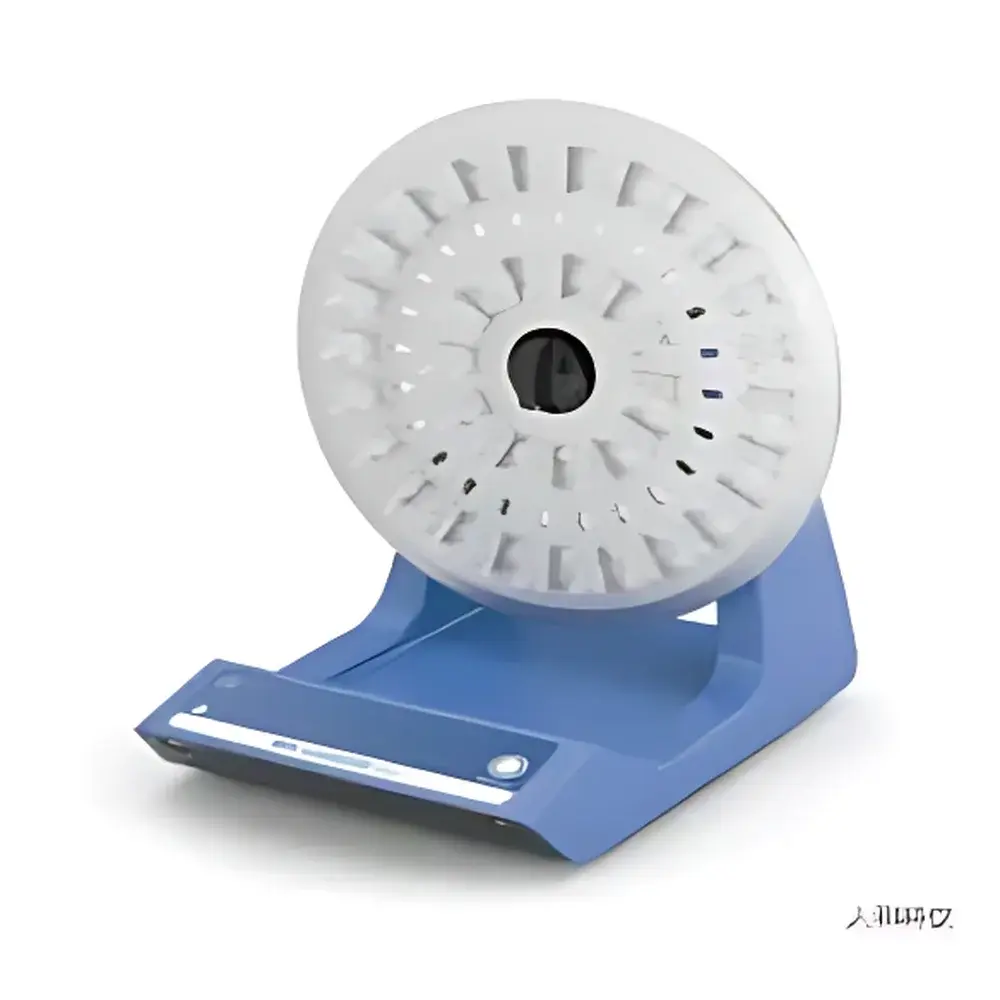
IKA Loopster basic Orbital Shaker
| Brand | IKA |
|---|---|
| Origin | Germany |
| Model | Loopster basic |
| Oscillation Frequency | 0–20 rpm |
| Oscillation Amplitude | 20 mm |
| Temperature Range | 4–50 °C |
| Max Load (incl. clamp) | 2 kg |
| Operating Environment | 4–50 °C, ≤80 % RH |
| Protection Rating | IP21 |
| Power Supply | 100–240 V AC, 50/60 Hz |
| Dimensions (W×D×H) | 300 × 360 × 300 mm |
| Weight | 3 kg |
Overview
The IKA Loopster basic is a compact, microprocessor-controlled orbital shaker engineered for gentle, reproducible mixing of biological and laboratory samples under non-temperature-controlled or ambient-to-moderate temperature conditions. Unlike incubated shakers, the Loopster basic operates without active heating or cooling elements—its design centers on precise, low-shear orbital motion (20 mm diameter) at fixed or adjustable speeds between 0 and 20 rpm. This makes it especially suited for applications requiring minimal mechanical stress, such as resuspension of sedimented cells, uniform mixing of blood derivatives (e.g., platelet-rich plasma), gentle reagent homogenization, or stabilization of immunoassay plates prior to analysis. Its robust aluminum housing, IP21-rated enclosure, and 2 kg load capacity ensure stable operation in standard laboratory environments—from cold rooms (4 °C) to warm preparation areas (up to 50 °C). The device complies with DIN EN 60529 for ingress protection and meets essential safety requirements per IEC 61010-1 for laboratory electrical equipment.
Key Features
- Gentle orbital motion with precisely defined 20 mm amplitude—optimized to minimize foaming, cell lysis, or phase separation in sensitive biological suspensions.
- Adjustable speed range from 0 to 20 rpm, enabling fine-tuned control for low-viscosity liquids, viscous gels, or particulate suspensions.
- Fixed-speed mode at 20 rpm for standardized, hands-free operation—ideal for routine workflows where consistency outweighs variable tuning.
- Modular, tool-free clamp system compatible with common labware: 0.2–2.0 mL PCR tubes, 1.5–2.0 mL Eppendorf tubes, 15 mL and 50 mL conical centrifuge tubes, and standard microtiter plates (with optional accessories).
- Chemically resistant, smooth stainless-steel work surface and removable clamps facilitate rapid decontamination after accidental spills—critical for biosafety Level 1 and 2 labs.
- Continuous-duty rated motor with 100% duty cycle capability; no thermal cut-off or forced cooldown required during extended runs.
- Compact footprint (300 × 360 × 300 mm) and lightweight construction (3 kg) allow flexible placement on benchtops, inside cold cabinets, or stacked configurations when used with compatible support frames (sold separately).
Sample Compatibility & Compliance
The Loopster basic supports a broad spectrum of sample types without compromising integrity: whole blood units, serum/plasma aliquots, bacterial culture suspensions, antibody dilutions, agarose gel trays, and powdered reagent reconstitution. Its 20 mm orbital path ensures uniform agitation across heterogeneous mixtures while avoiding vortex formation or excessive shear. All materials in contact with samples conform to EU Directive 2002/72/EC for food-contact plastics and USP Class VI biocompatibility standards where applicable. The instrument is CE-marked and conforms to EN 61326-1 (EMC) and EN 61010-1 (safety). While not equipped with integrated data logging or audit trail functionality, its operational parameters align with GLP-compliant workflows when paired with external environmental monitoring and manual logbook documentation.
Software & Data Management
The Loopster basic operates as a stand-alone, hardware-controlled unit with no embedded software, USB, RS232, or analog output interfaces. Speed selection is managed via a tactile rotary dial with mechanical detents—eliminating dependency on firmware updates, driver installation, or network connectivity. This architecture enhances long-term reliability and reduces validation burden in regulated environments where software qualification (per FDA 21 CFR Part 11 or ISO/IEC 17025) would otherwise be required. For laboratories requiring traceable operation records, integration with external timer systems or building management platforms (via dry-contact relay modules) is feasible through third-party accessories.
Applications
- Resuspension of pelleted cells or precipitated proteins in low-volume buffers.
- Uniform mixing of ELISA, lateral flow, or rapid diagnostic assay reagents prior to dispensing.
- Stabilization of blood-derived products—including platelet concentrates and cryoprecipitate—during storage at 20–24 °C.
- Rehydration and dispersion of lyophilized enzymes, antibodies, or molecular biology reagents.
- Agitation of staining solutions in histology or immunohistochemistry protocols.
- Supporting dissolution testing of pharmaceutical powders under pharmacopeial guidelines (e.g., USP <711>) when used with validated vessels and temperature-controlled enclosures.
FAQ
Does the Loopster basic include temperature control?
No—the Loopster basic is a non-incubated shaker. It operates within ambient environments ranging from 4 °C to 50 °C but does not regulate sample temperature.
Can it accommodate microtiter plates?
Yes—with optional universal or deep-well microplate clamps (not included), the device supports 96-well and 384-well formats for assay prep and coating steps.
Is the unit suitable for use inside a refrigerated cabinet?
Yes—its IP21 rating, wide operating temperature range, and absence of internal condensation-prone electronics make it appropriate for cold room deployment.
What maintenance is required?
Routine cleaning of the platform and clamps with 70% ethanol or isopropanol; no lubrication or calibration is necessary due to its brushless DC motor and mechanical speed regulation.
How is speed verified for quality assurance purposes?
Users may validate rotational frequency using a calibrated handheld tachometer or strobe light—no factory recalibration is needed, as speed accuracy is maintained within ±1 rpm across the full 0–20 rpm range.





