
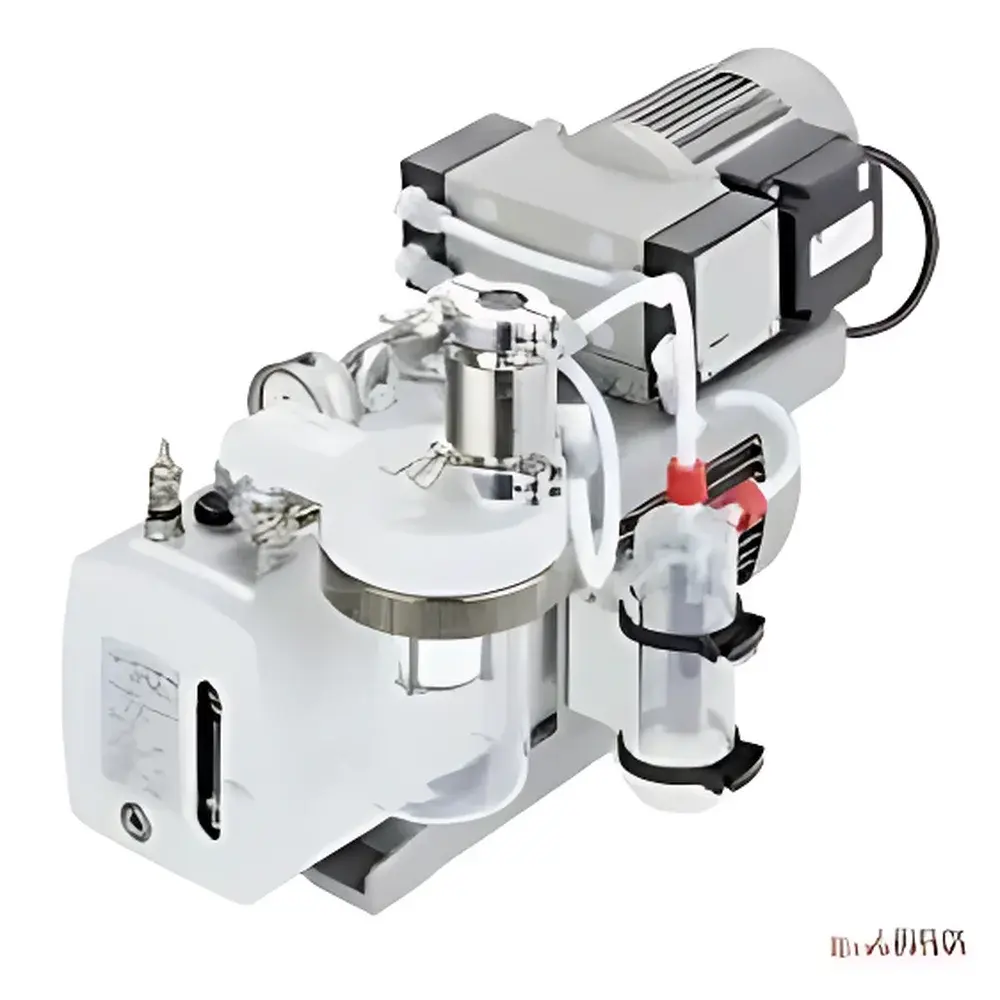
ILMVAC Hybrid Corrosion-Resistant Vacuum Pump P12Z-301
| Brand | ILMVAC |
|---|---|
| Origin | Germany |
| Model | P12Z-301 |
| Pump Type | Diaphragm–Rotary Vane Hybrid Vacuum Pump |
| Ultimate Vacuum | <2×10⁻³ mbar |
| Pumping Speed | 11 m³/h |
| External Dimensions (W×D×H) | 590 × 345 × 420 mm |
| Weight | 42.5 kg |
| Motor Power | 900 W |
| Oil Capacity | 1400 mL |
| Electrical Supply | 230 V, 50 Hz |
| Inlet Port | DN 25 KF |
| Oil-Lubricated Rotary Vane Stage | Yes |
| Chemical Resistance | Enhanced via Integrated Corrosion-Resistant Diaphragm Stage |
| Steam Tolerance | High |
| Safety Features | Integrated Pressure Relief Valve, Oil Aeration Bubble Device, Liquid–Gas Separation Bottle |
Overview
The ILMVAC P12Z-301 is a purpose-engineered hybrid vacuum pump designed for laboratories and industrial processes requiring sustained high vacuum performance in chemically aggressive environments. It integrates two complementary pumping technologies: a high-efficiency oil-lubricated rotary vane stage—capable of achieving ultimate pressures below 2×10⁻³ mbar—and a chemically resistant, dry diaphragm pump stage configured as a forepump and gas scavenger. Unlike conventional single-stage rotary vane pumps, the P12Z-301 employs the diaphragm stage to continuously evacuate residual corrosive vapors and condensable gases from the oil sump and exhaust path of the rotary vane section. This design minimizes residence time of reactive species (e.g., HCl, Cl₂, SO₂, organic solvents, acidic or alkaline vapors) within the oil-lubricated chamber, thereby preserving oil integrity, reducing degradation-induced sludge formation, and extending service intervals. The system operates on the principle of staged differential pumping: the diaphragm stage maintains low backpressure at the outlet of the rotary vane pump while simultaneously removing volatile contaminants before they recondense or react with hot oil. This architecture ensures long-term vacuum stability, reproducible base pressure, and robust operation under variable load conditions typical of distillation, solvent recovery, freeze drying, and plasma etch support applications.
Key Features
- Hybrid dual-stage architecture combining an oil-lubricated rotary vane pump (rated for <2×10⁻³ mbar) with a chemically inert, PTFE-coated diaphragm pump stage
- Integrated oil aeration bubble device that increases oil surface area and accelerates outgassing of dissolved volatiles and moisture
- Inline liquid–gas separation bottle to trap condensate and prevent liquid ingress into the rotary vane chamber
- Factory-installed pressure relief valve compliant with EN 60204-1 for overpressure protection during sudden vapor bursts or cold trap failure
- Single-point power control enabling synchronized start/stop of both pump stages via one switch
- DN 25 KF inlet flange compatible with standard ISO-KF vacuum tubing and fittings; oil fill port accessible without disassembly
- Oil reservoir capacity of 1400 mL using ILMVAC-approved synthetic hydrocarbon-based vacuum oil (ISO VG 100)
Sample Compatibility & Compliance
The P12Z-301 is validated for continuous operation with moderately to highly corrosive process gases and saturated vapors, including but not limited to chlorinated hydrocarbons, acetic acid, methanol, ethanol, acetone, and low-concentration HNO₃/H₂SO₄ vapors. Its construction utilizes fluoropolymer-coated diaphragms, EPDM elastomers rated for steam exposure up to 120 °C, and stainless-steel wetted parts where applicable. The pump meets CE marking requirements under the EU Machinery Directive 2006/42/EC and Electromagnetic Compatibility Directive 2014/30/EU. While not intrinsically safe, it is suitable for use in non-classified laboratory zones per IEC 60079-0. No modifications are required to comply with GLP documentation standards; all operational parameters—including motor current draw, runtime, and oil change logs—can be recorded manually or interfaced via optional analog output modules.
Software & Data Management
The P12Z-301 operates as a standalone hardware system without embedded firmware or digital controls. However, its electrical interface supports integration into centralized lab monitoring systems via 0–10 V analog outputs (optional accessory), enabling real-time tracking of motor load and thermal status. For regulatory traceability, users may log maintenance events—including oil replacement, filter changes, and diaphragm inspection—using standardized templates aligned with ISO/IEC 17025 clause 6.4.2 (equipment management). Audit trails remain fully compatible with electronic lab notebooks (ELNs) and LIMS platforms when paired with external data acquisition units. The pump does not implement FDA 21 CFR Part 11-compliant electronic signatures, as it lacks user-accessible software; manual records satisfy GMP Annex 11 requirements for non-critical auxiliary equipment.
Applications
- Routine and preparative vacuum distillation of acid-sensitive or halogenated compounds
- Short-path and molecular distillation systems handling thermally labile natural extracts
- Freeze-drying (lyophilization) cycles involving solvent-laden vapors (e.g., tert-butanol, ethyl acetate)
- Chemical vapor deposition (CVD) and plasma cleaning pre-vacuum stages exposed to reactive precursors
- Environmental analysis workflows involving purge-and-trap GC sample preparation with high-moisture or sulfur-containing matrices
- Materials science labs performing vacuum impregnation of porous ceramics or composites under corrosive atmospheres
FAQ
What types of corrosive gases is the P12Z-301 certified to handle?
The pump is engineered for intermittent and continuous exposure to common laboratory vapors such as alcohols, ketones, organic acids, and low-concentration inorganic acid mists. Full compatibility requires verification against specific chemical exposure duration, concentration, and temperature profiles.
Can the rotary vane stage operate independently of the diaphragm stage?
No—the control logic and mechanical interlock require simultaneous activation. Operating the rotary vane pump alone voids warranty and risks rapid oil contamination and premature wear.
How often should the diaphragm be inspected or replaced?
Under typical laboratory usage (8 h/day, moderate vapor load), visual inspection is recommended every 500 operating hours; replacement intervals range from 1,500 to 3,000 hours depending on chemical exposure severity.
Is the oil used in the rotary vane stage specially formulated?
Yes—ILMVAC specifies a synthetic hydrocarbon-based vacuum oil with oxidation resistance and low vapor pressure (ISO VG 100); mineral oils are not recommended due to accelerated degradation in hybrid service.
Does the pump include vibration isolation mounts?
The unit ships with integrated rubber damping feet; for sensitive instrumentation (e.g., electron microscopes), optional active anti-vibration platforms are available as accessories.



