
Always Imaging AX-4000CT Industrial Micro-Computed Tomography System
| Brand | Always Imaging |
|---|---|
| Origin | Zhejiang, China |
| Manufacturer Type | OEM Manufacturer |
| Country of Origin | China |
| Model | AX-4000CT |
| Detector Type | Flat-Panel Detector |
| Scanning Mode | Translation-Rotation (TR) |
| Spatial Resolution | 3–5 µm / 3–5 lp/mm |
| Density Resolution | <1% |
| X-ray Energy Options | 225 kV / 240 kV / 300 kV (microfocus source) |
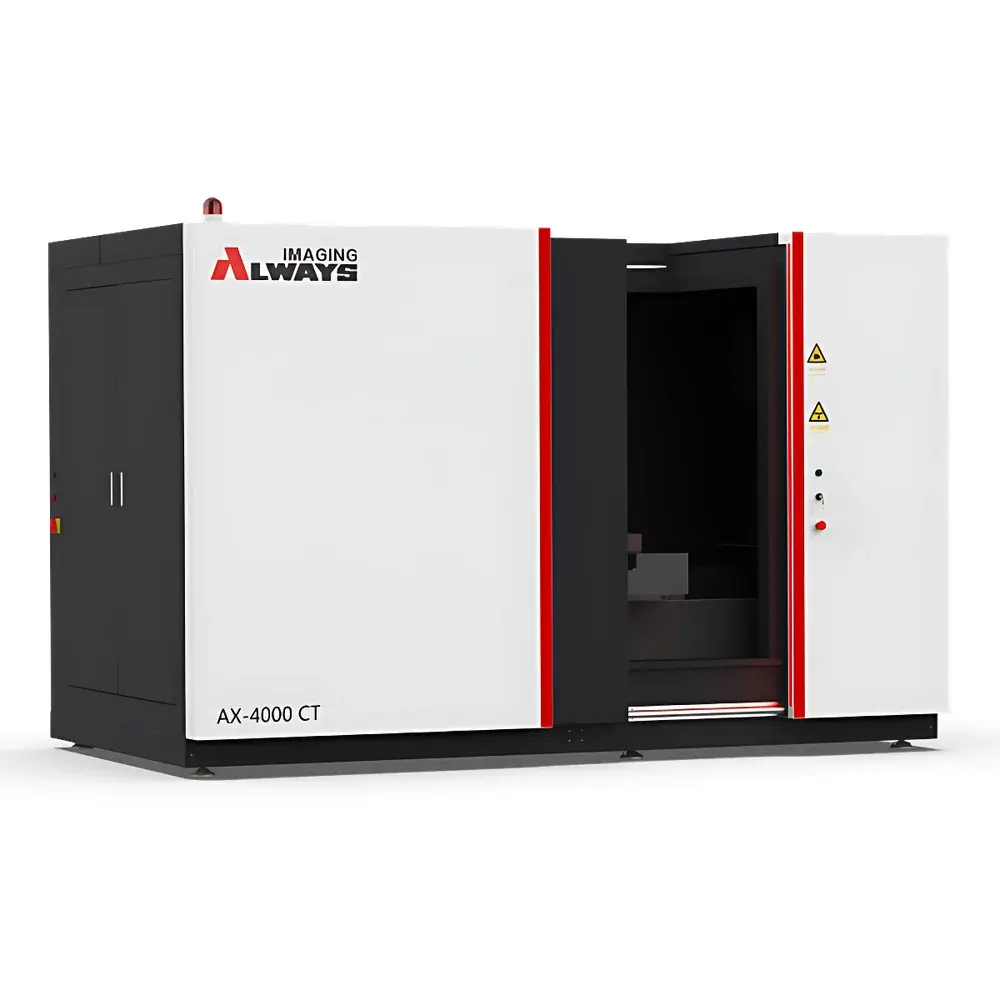
| Maximum Sample Dimensions | Ø1000 mm × H1200 mm |
| Sample Weight Capacity | 50 kg / 100 kg / 200 kg |
| System Footprint | 4000 mm × 2600 mm × 3000 mm |
| Focal Spot Size | ≤5 µm (microfocus), 0.4 mm / 1 mm (high-energy source) |
| Detector Pixel Sizes | 139–200 µm (flat-panel) |
| Pixel Count | up to 4096 (line-array), 2048×2048–3072×3072 (flat-panel) |
| Field of View | up to 427×427 mm (flat-panel), 400–800 mm effective length (line-array) |
Overview
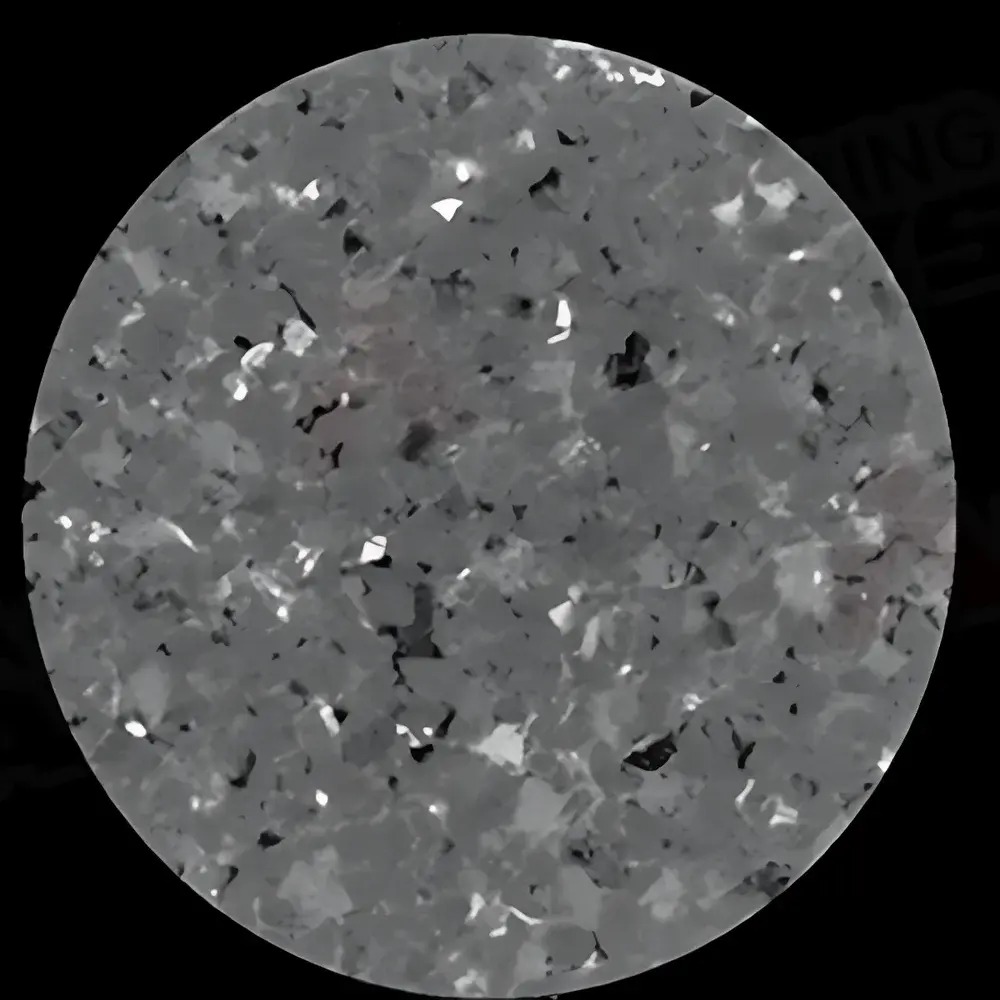
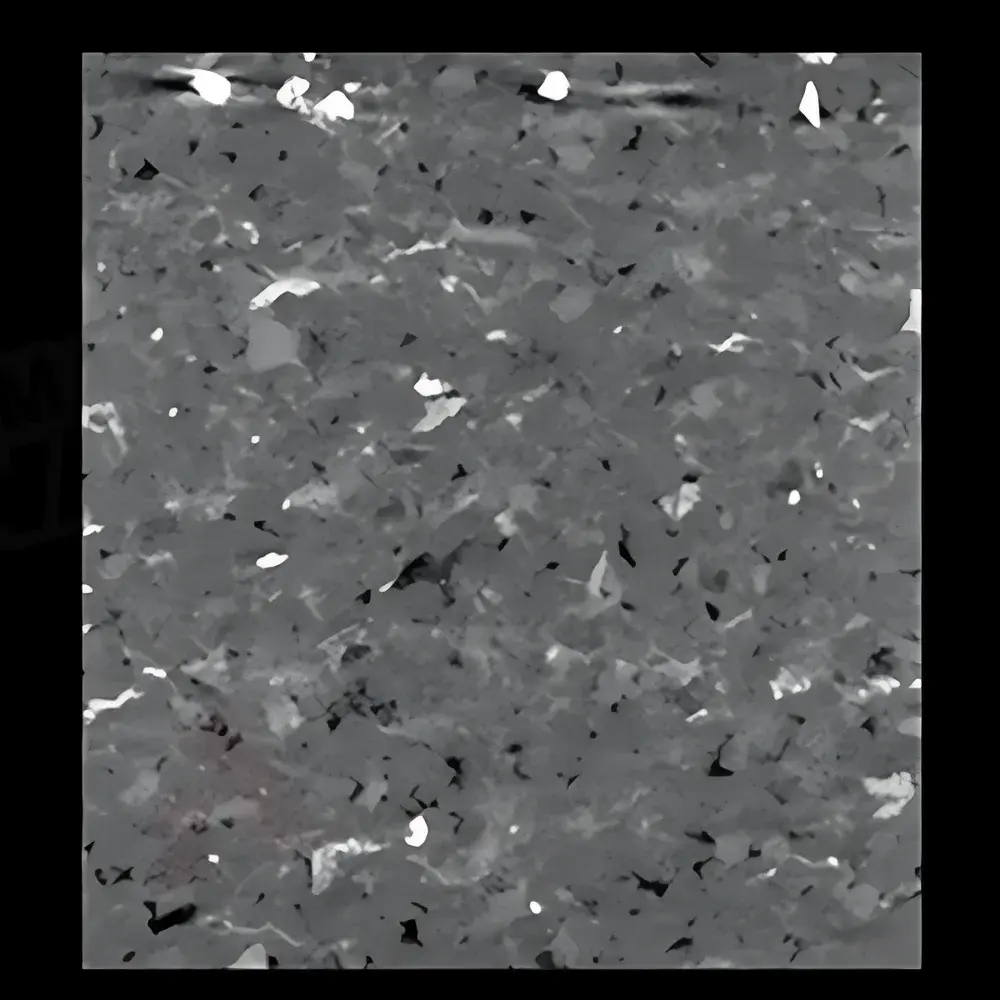
The Always Imaging AX-4000CT is a fully integrated, walk-in industrial micro-computed tomography (micro-CT) system engineered for non-destructive, high-fidelity 3D volumetric imaging of large and dense engineering components. Built around a rigid granite monolithic frame with dual-column structural architecture, the system delivers exceptional mechanical stability and thermal inertia—critical prerequisites for sub-micron geometric reproducibility across multi-hour scanning protocols. Its core measurement principle relies on cone-beam X-ray computed tomography: a high-brightness X-ray source projects polychromatic radiation through a rotating and translating sample, while a high-dynamic-range flat-panel or line-array detector captures hundreds to thousands of projection images. These projections are reconstructed into isotropic 3D voxel datasets using filtered back-projection or iterative algorithms (e.g., SART, OS-SART), enabling quantitative analysis of internal geometry, material density distribution, porosity, crack propagation, and assembly integrity without physical sectioning.
Key Features
- Integrated lead-shielded walk-in cabin compliant with GBZ 130–2020 and IEC 61331-1 radiation safety standards; top-opening shielded door facilitates overhead lifting of heavy or irregularly shaped parts.
- Dual-source configuration: interchangeable microfocus X-ray tube (≤5 µm focal spot, 225–300 kV) for high-resolution imaging of composites, ceramics, and thin-walled structures; and high-energy dual-focus tube (450–600 kV, 700–1500 W) optimized for penetration of thick-section aluminum, titanium, nickel-based superalloys, and reinforced concrete.
- Modular detector options: high-sensitivity amorphous silicon flat-panel detectors (2048×2048 to 3072×3072 pixels, pixel pitch 139–200 µm) for general-purpose CT; and high-efficiency line-array detectors (up to 4096 channels, 0.2–0.4 mm pitch) specifically designed to suppress scatter-induced artifacts in high-Z materials such as turbine blades and engine casings.
- Precision motion control system with laser-interferometer feedback ensures sub-micron positional repeatability during TR (translation-rotation) scanning—essential for metrology-grade dimensional analysis per ISO 15530-3 and VDI/VDE 2630 Part 1.3.
- Thermally stabilized marble base and vibration-damped foundation minimize drift during long-duration acquisitions, supporting consistent resolution performance across repeated scans under identical environmental conditions.
Sample Compatibility & Compliance
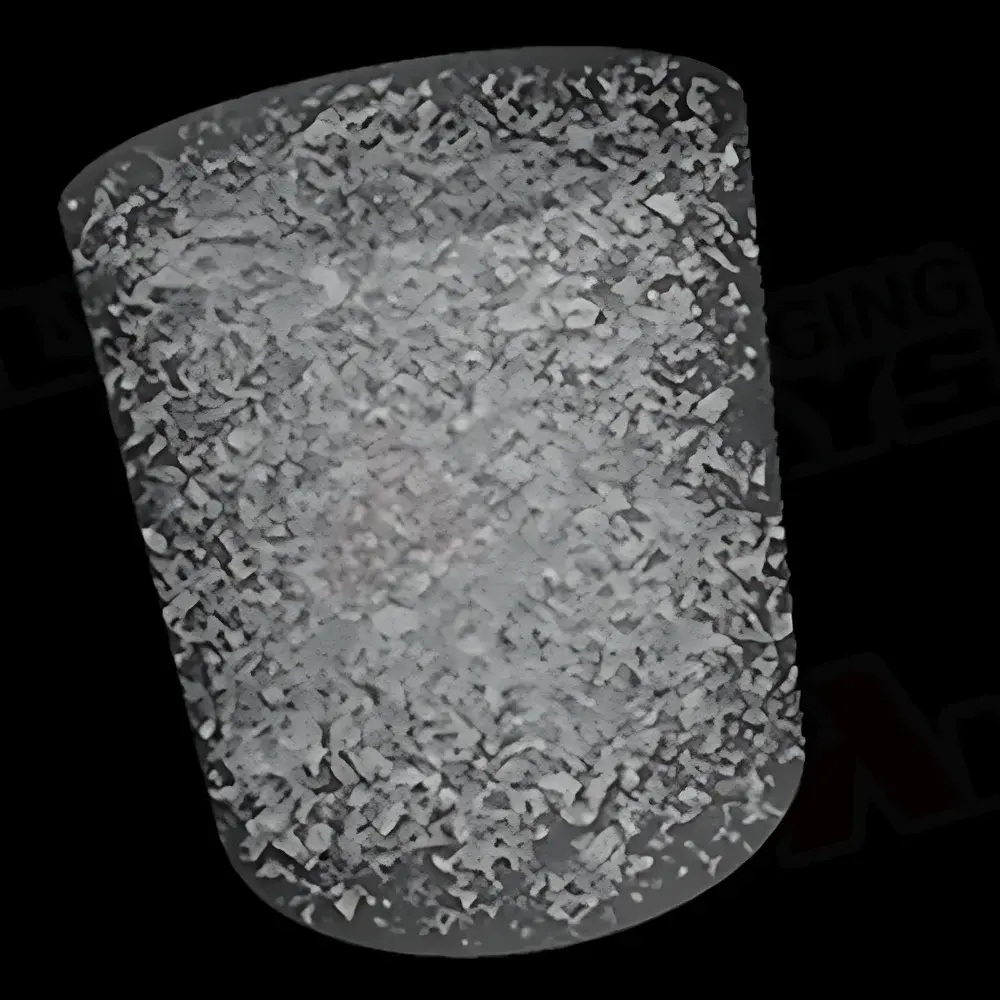
The AX-4000CT accommodates specimens up to Ø1000 mm × H1200 mm and 200 kg, making it suitable for full-scale castings, composite airframe sections, battery modules, geological cores, and heritage artifacts. Its dual-energy capability enables robust contrast differentiation across heterogeneous materials—from low-density polymers and foams to high-attenuation tungsten alloys. All hardware and reconstruction workflows are designed to support compliance with industry-specific regulatory frameworks: raw projection data and reconstructed volumes retain full audit trails required for GLP/GMP environments; metadata embedding (including source parameters, detector gain, rotation angle, exposure time) conforms to ASTM E2737-22 digital radiographic data archiving standards; and optional 21 CFR Part 11–compliant software modules provide electronic signatures, role-based access control, and immutable revision history for QA/QC documentation.
Software & Data Management
The system ships with Always Imaging’s proprietary CT Suite v5.x—a modular platform supporting acquisition planning, real-time projection monitoring, GPU-accelerated reconstruction (FDK, SART), and post-processing tools including segmentation (region-growing, threshold-based, deep-learning-assisted), defect quantification (pore size distribution per ISO 23803), wall thickness analysis (per ASME Y14.41), and GD&T evaluation (ISO 1101). Raw data is stored in DICOM-RT and HDF5 formats, ensuring interoperability with third-party platforms such as VGStudio MAX, Avizo, and Simpleware. Automated batch processing pipelines support unattended overnight scanning and scheduled report generation—including PDF-based inspection summaries with embedded 3D volume renderings and cross-sectional annotations.
Applications
The AX-4000CT serves mission-critical roles across regulated and research-intensive sectors: in aerospace, it validates additive-manufactured turbine disk integrity and detects subsurface cold shuts in investment castings; in power electronics, it characterizes solder joint voiding and delamination in EV battery modules; in geoscience, it quantifies pore network topology and fluid saturation dynamics in reservoir rock analogs; in cultural heritage, it reveals internal tool marks and restoration history in bronze statuary without surface contact; and in advanced manufacturing, it supports first-article inspection, process validation, and reverse engineering of legacy components where CAD data is unavailable.
FAQ
What radiation safety certifications does the AX-4000CT cabin meet?
The integrated lead-lined cabin complies with China’s GBZ 130–2020 and aligns with international benchmarks including IEC 61331-1 for primary and secondary barrier design, with measured dose rates <0.5 µSv/h at 5 cm from any external surface during operation.
Can the system perform dimensional metrology traceable to national standards?
Yes—when operated with calibrated step gauges and certified reference objects, the AX-4000CT achieves volumetric measurement uncertainty < (5 + L/100) µm (k=2) per VDI/VDE 2630 Part 1.3, supporting ISO/IEC 17025–accredited laboratory workflows.
Is line-array detector data compatible with standard reconstruction software?
All projection data—whether from flat-panel or line-array detectors—is exported in standardized HDF5 containers with embedded geometry metadata, enabling direct import into open-source (Tomopy, ASTRA) and commercial (Octopus, Datos) reconstruction engines.
How is system calibration maintained over time?
The system includes automated daily geometric calibration routines that monitor detector tilt, source-to-detector distance, and rotational axis misalignment using embedded fiducial markers; results are logged and trigger alerts if deviations exceed ISO 15788–defined thresholds.
Does the platform support automated defect classification for production QA?
Optional AI inference modules integrate trained convolutional neural networks (CNNs) for real-time anomaly detection—trained on customer-specific defect libraries—and output classified reports aligned with IPC-A-610 or MIL-STD-883H acceptance criteria.



