
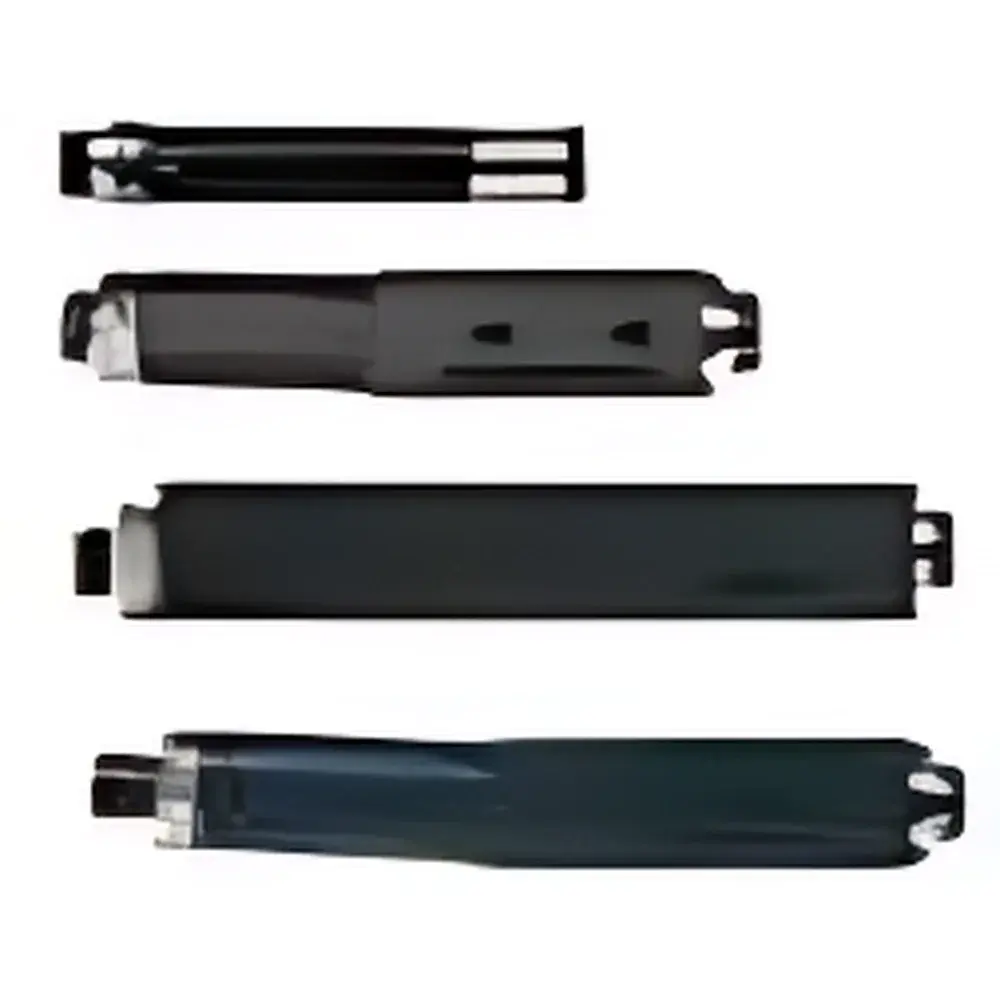
ImSpector Standard Hyperspectral Imaging Spectrometer
| Origin | Finland |
|---|---|
| Manufacturer Type | Authorized Distributor |
| Origin Category | Imported |
| Model Series | ImSpector |
| Spectral Range (Standard Config) | 380–800 nm (V8) / 400–1000 nm (V10) |
| Slit Width | 50 µm (25/80/150 µm optional) |
| Slit Length | 9.6–9.8 mm |
| Relative Aperture | f/2.8 |
| Optical Design | Transmissive Grating-Based Push-Broom Imaging |
| Image Plane Size | 4.3 × 6.6 mm or 6.6 × 8.8 mm |
| Spatial Resolution | <30 µm RMS (V8), <40 µm RMS (V10) |
| Spectral Resolution | 6–11.2 nm |
| Stray Light | <0.5% |
| Throughput Efficiency | >50% |
| Housing Material | Anodized Aluminum |
| Dimensions | Ø35 × 139 mm |
| Weight | 300 g |
| Interface | Standard C-Mount |
| Optical Aberration Control | Optimized for minimal astigmatism, pincushion (<30–45 µm), and trapezoidal distortion (<20–40 µm) |
Overview
The ImSpector Standard Hyperspectral Imaging Spectrometer is a compact, high-efficiency push-broom imaging spectrometer engineered for laboratory-scale spectral analysis and industrial inline monitoring applications. Based on a transmissive grating optical architecture, it spatially disperses incident light across a linear CCD sensor array to simultaneously capture both spatial and spectral dimensions of a target scene. Unlike scanning monochromator-based systems, the ImSpector operates in real-time line-scan mode—each acquired image line contains full spectral information at every pixel position along that line, enabling rapid construction of hyperspectral data cubes (x, y, λ). Its mechanical design integrates precision-machined aluminum housing with fully sealed optical pathways, eliminating contamination risk from ambient dust and ensuring long-term radiometric stability. The f/2.8 aperture and optimized diffraction efficiency (>50%) support high signal-to-noise ratio acquisition under moderate illumination conditions, while its modular C-mount interface enables seamless integration with industry-standard 1/2″ and 2/3″ format scientific CCD cameras.
Key Features
- Compact form factor (Ø35 × 139 mm, 300 g) optimized for benchtop setups and embedded OEM integration
- Transmissive grating optics delivering high throughput (>50%) and low stray light (<0.5%) across visible and near-infrared bands
- Factory-aligned, aberration-corrected optical path minimizing astigmatism, pincushion distortion (<45 µm), and trapezoidal error (<40 µm)
- Interchangeable slit widths (25, 50, 80, 150 µm) for balancing spectral resolution and light throughput per application requirement
- Hermetically sealed internal optics preventing dust ingress and preserving calibration integrity over extended operational life
- C-mount compatible input and output interfaces enabling direct coupling with commercial CCD/CMOS line-scan and area-scan cameras
- Two standard configurations: V8 (380–800 nm, 1/2″ or 2/3″ sensor support) and V10 (400–1000 nm, same sensor options)
Sample Compatibility & Compliance
The ImSpector Standard is designed for non-contact, reflection- or transmission-mode analysis of solid, semi-solid, and liquid samples. Its optical layout supports macro-scale imaging of surfaces up to ~100 mm wide (depending on working distance and lens focal length), making it suitable for flat-panel displays, pharmaceutical tablets, agricultural produce, textile swatches, and cultural heritage artifacts. While the instrument itself does not carry regulatory certification, its performance characteristics align with measurement requirements specified in ASTM E1777 (Standard Practice for Hyperspectral Imaging), ISO 13655 (Graphic technology — Spectral measurement and colorimetric computation), and FDA guidance for analytical instrument qualification (AIQ) under GMP environments. When integrated into validated workflows—including calibrated light sources, NIST-traceable reference standards, and controlled environmental enclosures—the system supports GLP-compliant data generation for QC release testing and R&D documentation.
Software & Data Management
The ImSpector Standard operates as a hardware engine within third-party hyperspectral acquisition and analysis platforms such as Specim’s INSIGHT, MATLAB with Image Processing Toolbox, Python-based libraries (e.g., scikit-image, hylite), or ENVI/Spectral Python (SPy). Raw data output follows standard 16-bit TIFF or BSQ/BIL formats compatible with HDF5 and NetCDF container structures. All configurations support timestamped frame metadata, exposure synchronization triggers (TTL), and ROI-based region-of-interest readout. For regulated environments, users may implement audit-trail-capable acquisition software compliant with 21 CFR Part 11 requirements—including electronic signatures, user access controls, and immutable raw data archiving. No proprietary vendor lock-in is imposed; firmware updates and calibration files are distributed in open binary formats with documented checksums.
Applications
- Quality Assurance & Process Monitoring: Real-time detection of coating thickness variation on solar cells, pigment uniformity in printed electronics, moisture content in paper rolls, and defect mapping in LCD/OLED panels
- Agricultural Science: Quantitative assessment of chlorophyll distribution, nitrogen stress indicators, pesticide residue persistence, and post-harvest spoilage onset via spectral vegetation indices (e.g., NDVI, PRI)
- Pharmaceutical Manufacturing: Identification of API crystallinity differences, excipient homogeneity verification in tablet compacts, and counterfeit drug screening using spectral fingerprint libraries
- Cultural Heritage Analysis: Non-invasive pigment identification in historical manuscripts, detection of restoration interventions in oil paintings, and differentiation of authentic vs. forged banknotes based on spectral reflectance anomalies
- Environmental Remote Sensing Simulation: Ground-truth validation of airborne/satellite hyperspectral sensors using controlled lab-scale analogs of soil, water, and vegetation spectra
- Biomedical Research: Label-free tissue characterization in ex vivo skin sections, fluorescence lifetime estimation in stained histological slides, and microarray spot intensity normalization
FAQ
What camera types are compatible with the ImSpector Standard?
It supports any C-mount scientific camera with 1/2″ or 2/3″ sensor format and programmable exposure timing—including CCD, sCMOS, and EMCCD models from manufacturers such as Basler, FLIR, Hamamatsu, and Teledyne DALSA.
Can the ImSpector be used for Raman spectroscopy?
No—the Standard variant is not optimized for Raman applications. For Raman-shifted signals, the dedicated R6E or R10E models (530–630 nm and 770–980 nm ranges) feature notch-filter-integrated designs and higher spectral resolution.
Is factory recalibration required after shipment?
The unit ships with factory-applied wavelength and radiometric calibration coefficients stored in onboard EEPROM. Users receive a traceable calibration report; no routine recalibration is needed unless subjected to mechanical shock or extreme thermal cycling.
How is spatial-spectral registration maintained during thermal drift?
The all-aluminum monolithic housing provides matched thermal expansion coefficients across optical mounts and grating substrates, limiting pixel shift to <0.3 pixels over a 20 °C ambient range—well within typical sub-pixel interpolation tolerances.
Does the system support real-time processing?
Raw frame acquisition occurs at camera-limited speeds (up to several kHz depending on sensor readout). Real-time spectral unmixing or classification requires external GPU-accelerated computing; the spectrometer itself delivers uncompressed, low-latency digital video streams via Camera Link or USB3 Vision protocols.
Related Products






