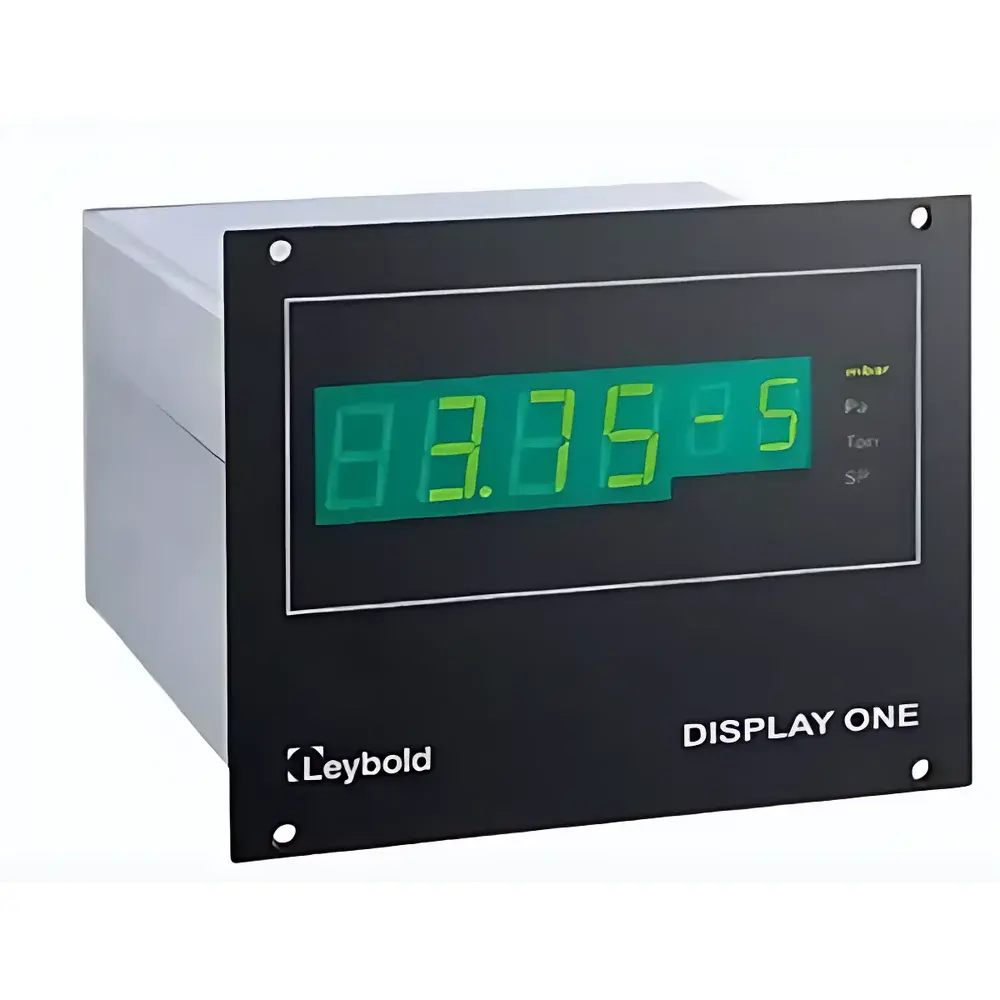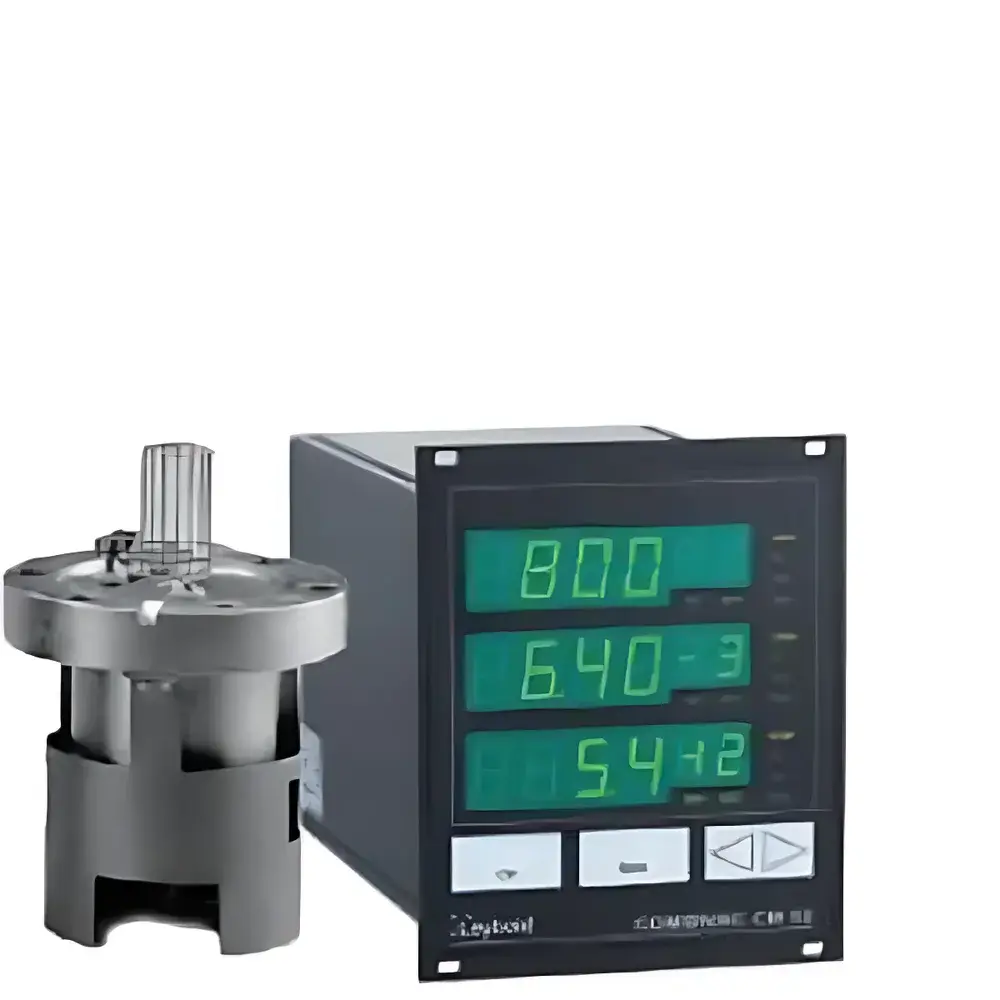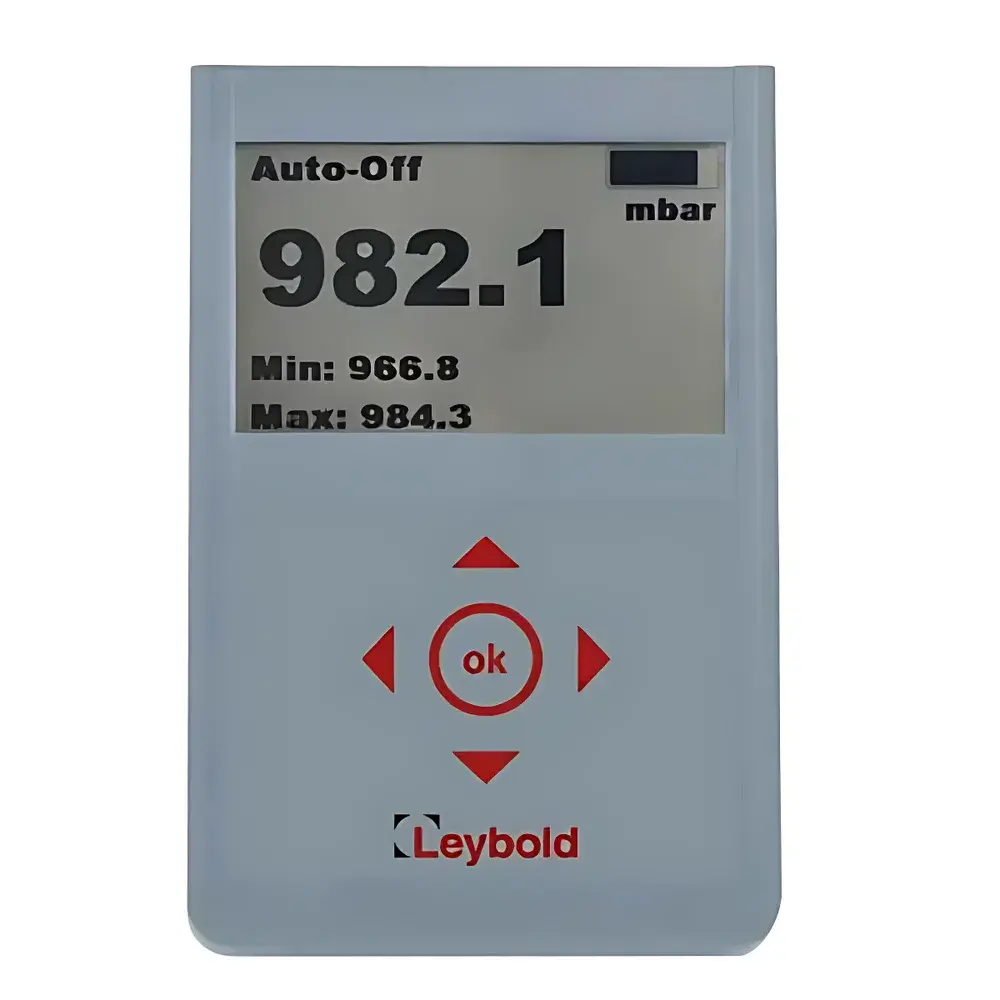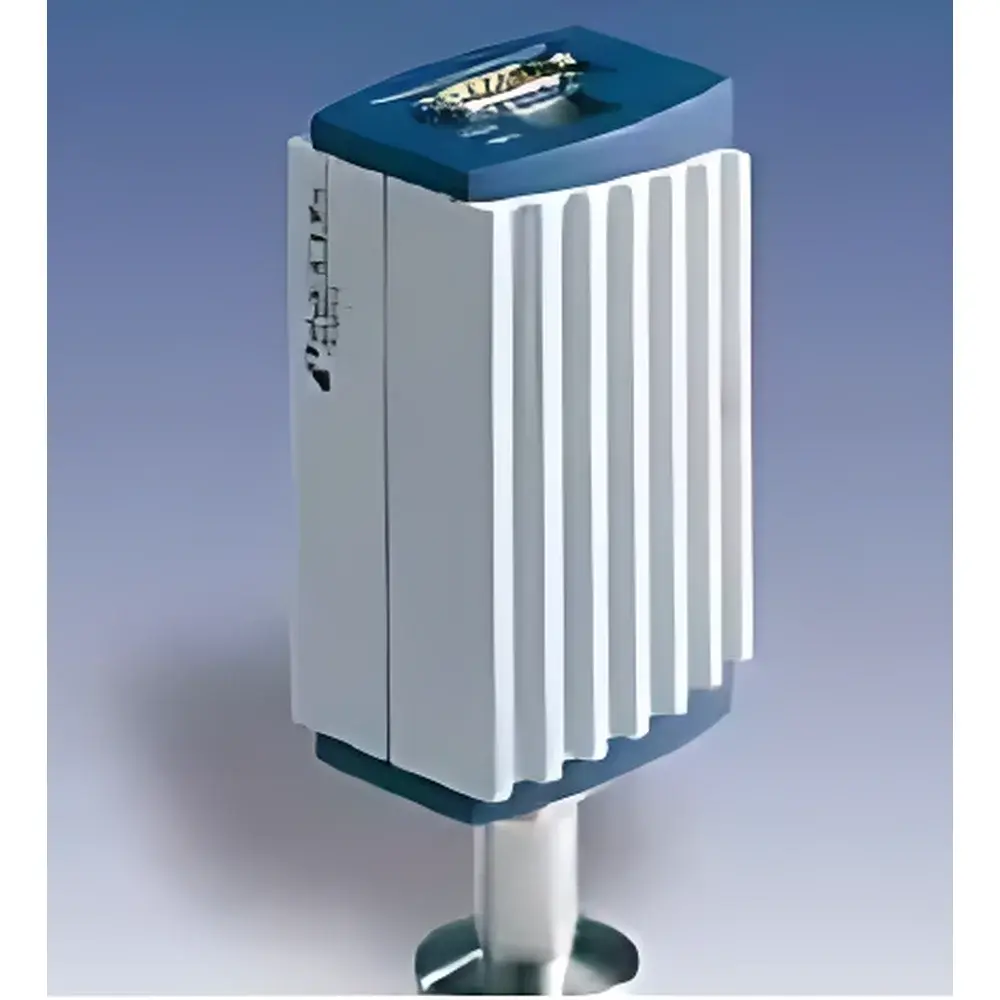
INFICON HPG400 High-Pressure Ionization-Pirani Vacuum Gauge
| Origin | Switzerland |
|---|---|
| Manufacturer Type | Authorized Distributor |
| Origin Category | Imported |
| Model | HPG400 |
| Pricing | Available Upon Request |
Overview
The INFICON HPG400 is a dual-sensor, compact vacuum gauge engineered for high-reliability pressure measurement across an extended dynamic range—from 2 × 10⁻⁶ mbar to 1000 mbar (equivalent to 1.5 × 10⁻⁶ Torr to 750 Torr). It integrates two complementary sensing principles within a single, space-efficient housing: a thermocouple-stabilized Pirani sensor for low-to-medium vacuum and a hot-cathode ionization sensor optimized for high-pressure ionization regimes. This hybrid architecture enables seamless transition between convection-dominated, thermal-conductivity-based measurement (Pirani mode) and electron-impact ion current measurement (ionization mode), eliminating the need for separate gauges or manual switching in multi-stage vacuum processes. Designed specifically for semiconductor sputtering, thin-film deposition, and industrial coating systems, the HPG400 delivers metrologically traceable, high-reproducibility readings under demanding process conditions—particularly where rapid pressure transients, gas composition variability, and long-term sensor stability are critical performance factors.
Key Features
- Dual-mode operation: Automatic, hysteresis-free switching between Pirani and high-pressure ionization measurement based on real-time pressure feedback.
- User-selectable ionization activation threshold: Configurable start-up of thermionic emission between 5 × 10⁻² mbar and 1 mbar, minimizing unnecessary cathode wear during routine medium-vacuum operation.
- Pirani interlock protection: Hardware-level circuitry disables ionization filament power when pressure exceeds safe operating limits, preventing premature filament oxidation or burnout.
- Self-calibrating Pirani element: Adaptive zero and span compensation adjusts for ambient temperature drift and sensor aging, reducing operator dependency and maintenance frequency.
- Modular electronics architecture: Supports optional fieldbus interfaces—including PROFIBUS DP, DeviceNet, and RS-485 Modbus RTU—for integration into automated vacuum control systems compliant with SEMI E10 and E30 standards.
- Compact stainless-steel housing (ISO-KF 16 or CF 16 flange options): Rated for bake-out up to 150 °C; compatible with UHV-compatible cleaning protocols.
Sample Compatibility & Compliance
The HPG400 is calibrated and validated for use with common process gases including Ar, N2, O2, and air. While absolute accuracy varies with gas species due to differences in thermal conductivity and ionization cross-section, factory-provided gas correction factors (GCFs) enable software-based compensation for Ar, N2, and O2. The gauge complies with IEC 60068-2 environmental testing standards for shock, vibration, and thermal cycling. Its electrical design meets EN 61326-1 (EMC for laboratory equipment) and UL 61010-1 safety requirements. For regulated environments, the optional digital interface supports audit-trail-capable data logging aligned with FDA 21 CFR Part 11 principles when used with compliant SCADA or MES platforms.
Software & Data Management
INFICON provides the free-to-download VACUUBRIDGE™ PC software suite, enabling real-time monitoring, configurable alarm thresholds, trend logging (CSV export), and firmware updates. When deployed with optional graphical display modules (e.g., HPG-DISPLAY), the gauge supports local visualization of dual-sensor status, pressure history (up to 72 hours), and diagnostic flags—including filament health indicators and Pirani resistance drift alerts. All communication protocols support timestamped, signed data packets suitable for GLP/GMP documentation workflows. Raw sensor outputs (analog 0–10 V or 4–20 mA) are linearized per ISO 3567:1999 for vacuum instrument signal conditioning.
Applications
- Sputter deposition process control in semiconductor front-end and back-end manufacturing lines, especially for Ti, Ta, Al, and Cu metallization steps requiring stable 1–10 mbar argon partial pressures.
- Industrial PVD and CVD coating systems for optical filters, architectural glass, and wear-resistant tooling—where simultaneous monitoring of roughing, pre-pump, and process-pressure phases improves recipe repeatability.
- R&D vacuum chambers requiring continuous coverage from atmospheric down to high vacuum without sensor swapping or recalibration.
- Leak detection support systems using pressure-rise methods in sealed enclosures operating between 10−3 and 102 mbar.
- Plasma etch and ash system endpoint monitoring where transient pressure spikes must be captured with sub-second response time.
FAQ
What gases is the HPG400 calibrated for out-of-the-box?
The gauge is factory-calibrated for dry air and argon. Correction factors for nitrogen and oxygen are embedded in firmware and selectable via software configuration.
Can the HPG400 operate continuously at atmospheric pressure?
Yes—the Pirani sensor remains fully functional up to 1000 mbar, and the ionization sensor is protected by automatic interlock; however, prolonged exposure above 10 mbar is not recommended for optimal filament longevity.
Is the HPG400 suitable for ultra-high vacuum (UHV) applications below 10−7 mbar?
No—the lower measurement limit is 2 × 10⁻⁶ mbar; for UHV, a separate Bayard-Alpert or extractor gauge is required.
Does the HPG400 support analog output with NIST-traceable calibration?
Yes—analog outputs are linearized and supplied with individual calibration certificates traceable to national standards; optional ISO/IEC 17025-accredited calibration is available upon request.
How often does the ionization filament require replacement?
Under typical sputtering conditions (average pressure ~5 mbar, 8 h/day), filament lifetime exceeds 12 months; built-in filament health diagnostics provide advance warning of degradation.