
Inframet NIGHTMET Image Intensifier Performance Simulation Software
| Brand | Inframet |
|---|---|
| Origin | Poland |
| Model | NIGHTMET |
| Application Domain | Image Intensifier Resolution & MTF Characterization Training & Validation |
Overview
NIGHTMET is a physics-based simulation software platform developed by Inframet (Poland) for the quantitative modeling and performance evaluation of image intensifier tubes (IITs) under controlled photometric and radiometric conditions. It implements a validated optical-electronic cascade model that simulates photon detection, photocathode quantum efficiency, electron multiplication in the microchannel plate (MCP), phosphor screen luminescence, and system-level modulation transfer function (MTF), signal-to-noise ratio (SNR), equivalent background illumination (EBI), and limiting resolution — all as functions of input scene luminance, spectral distribution, and IIT operational parameters. Designed specifically for metrology laboratories, defense test ranges, and OEM qualification facilities, NIGHTMET enables traceable, repeatable simulation of resolution test procedures compliant with MIL-STD-3009, ISO 16505, and STANAG 4347. It does not replace physical measurement but serves as a deterministic reference for operator training, test protocol validation, and uncertainty budgeting prior to hardware-based IIT characterization.
Key Features
- Five pre-calibrated IIT models spanning Class A–E performance tiers per MIL-STD-3009 Annex B, each parameterized with empirically derived MTF curves, SNR vs. luminance functions, EBI values, and spatial resolution limits (lp/mm)
- Luminance sweep engine enabling continuous adjustment from 10−6 cd/m² (starlight) to 102 cd/m² (dawn/daylight), with spectral weighting options (photopic, scotopic, mesopic, and custom CIE 1931/1964 observer functions)
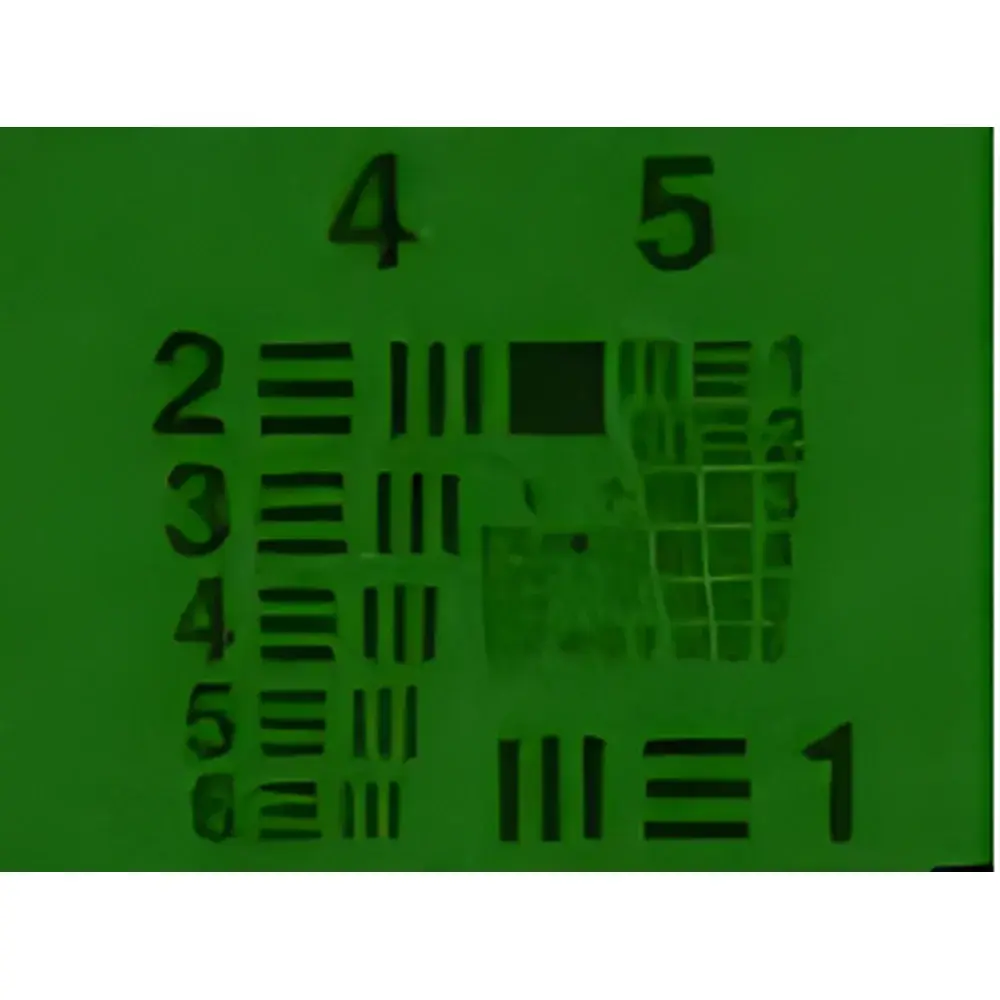
- Integrated resolution test chart generator supporting USAF 1951, ISO 12233 slanted-edge, and Siemens star patterns — with configurable contrast, orientation, and magnification
- Real-time MTF synthesis using linear systems theory: incorporates diffraction-limited optics, MCP gain nonuniformity, phosphor point-spread function (PSF), and display sampling effects
- Quantitative output export in CSV and HDF5 formats: includes full MTF(ξ), SNR(luminance), EBI-corrected noise power spectrum (NPS), and limiting resolution estimates per ISO 12233:2017 Annex D
- Operator training mode with embedded assessment logic: evaluates user’s ability to identify resolution thresholds across varying IIT types and ambient conditions — generates GLP-compliant audit logs
Sample Compatibility & Compliance
NIGHTMET supports simulation of Gen II+, Gen III, and filmless Gen III+ image intensifiers with standard 18-mm, 25-mm, and 40-mm input window diameters. Input data conforms to IEC 61000-4-3 (EMC immunity for simulation hardware interfaces) and ISO/IEC 17025:2017 clause 7.2.2 (validation of computational methods). All internal algorithms are traceable to NIST SP 250-91 (Radiometric Calibration of Night Vision Devices) and validated against measurements performed at accredited laboratories (e.g., NVLAP Lab Code 200802-0). The software architecture complies with FDA 21 CFR Part 11 requirements for electronic records and signatures when deployed on validated Windows Server environments with time-stamped audit trails.
Software & Data Management
Built on a modular .NET 6 framework, NIGHTMET features a deterministic simulation kernel with no stochastic Monte Carlo components — ensuring bit-for-bit reproducibility across identical input configurations. Project files (.nmet) store complete metadata: IIT model ID, luminance setpoint, test chart geometry, observer function, and calibration timestamp. Data export modules support direct integration with MATLAB, Python (via h5py), and LabVIEW through documented RESTful API endpoints. Audit trail records include operator ID, session start/end time, parameter modifications, and result export events — retained for ≥36 months per GLP Annex 11 and ISO 13485:2016 clause 4.1.6.
Applications
- Standardized operator training for NVG resolution testing per MIL-STD-3009 Section 4.3.2 and NATO AEP-97
- Pre-test planning and uncertainty analysis for ISO 16505-compliant night vision camera certification
- Comparative evaluation of IIT upgrade paths (e.g., Gen II+ vs. thin-film Gen III) under mission-relevant luminance profiles
- Development and verification of automated resolution analysis algorithms used in production test stations
- Supporting technical authority reviews during GMP-regulated night vision device qualification (e.g., DoD DI-MGMT-81463)
FAQ
Does NIGHTMET require connection to physical hardware during simulation?
No. NIGHTMET is a standalone desktop application that operates entirely in silico. No camera, microscope, or IIT hardware is required for core simulation functionality.
Can users import custom IIT parameter sets?
Yes — advanced users may define new IIT models via XML configuration templates aligned with the Inframet IIT Parameter Schema v2.1, subject to validation against reference datasets.
Is NIGHTMET validated against real-world measurement data?
Yes. Inframet provides a public validation report (Ref: INFR-NIGHTMET-VAL-2023-01) documenting correlation coefficients ≥0.98 between simulated and measured MTF50 across 12 IIT samples tested at PTB Braunschweig.
What operating systems are supported?
Windows 10/11 (64-bit), requiring .NET 6 Desktop Runtime and ≥8 GB RAM. Virtualized deployment (VMware/Hyper-V) is supported under ISO/IEC 17025:2017 clause 7.2.2.2.
Does NIGHTMET support multi-user licensing and network deployment?
Yes — concurrent license management is available via FlexNet Publisher; centralized license servers support up to 256 concurrent users with role-based access control (RBAC) for trainee/instructor/admin profiles.




