
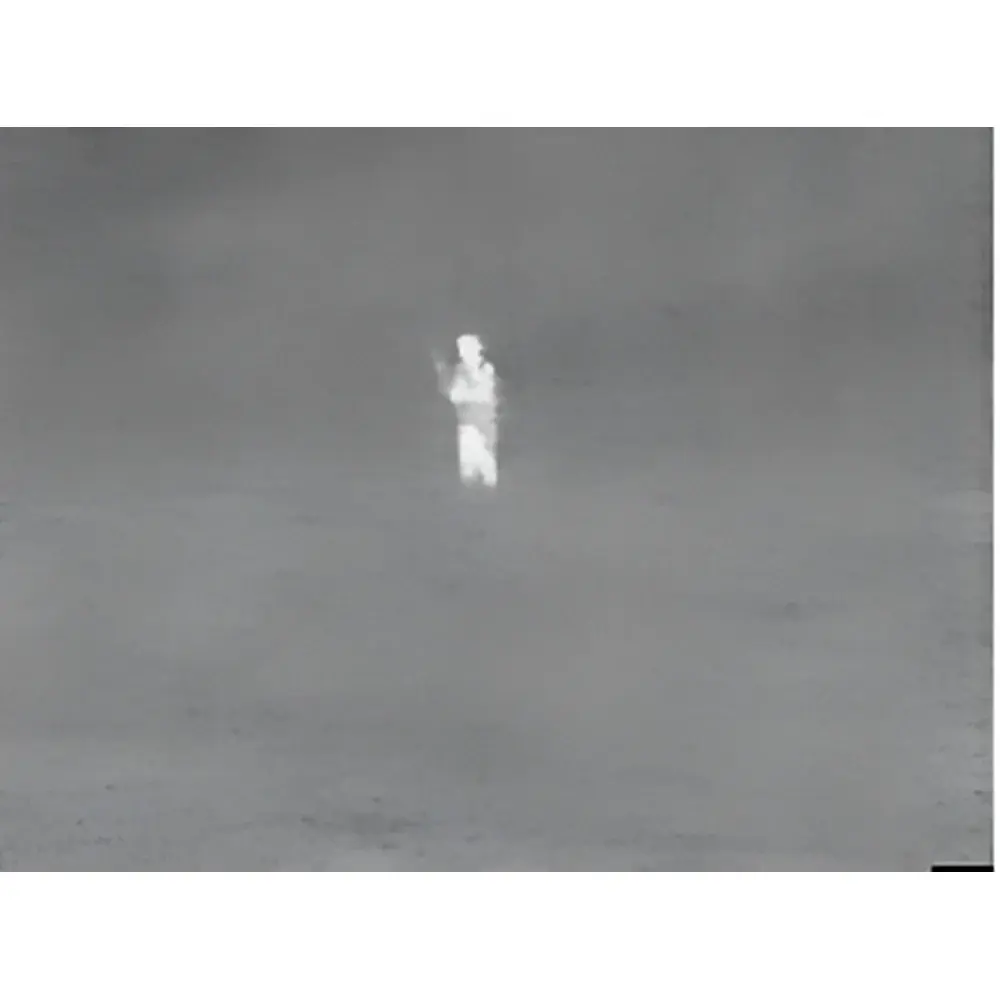
Inframet SIMTERM Thermal Imaging Simulator Software
| Brand | Inframet |
|---|---|
| Origin | Poland |
| Model | SIMTERM |
| Price Range | USD 27,000 – 41,000 (based on EUR/USD exchange and typical import markup) |
| Application Domain | Infrared System Simulation, Thermographic Training & IR Sensor Design Support |
| Compliance Context | Supports ISO 18434-1 (condition monitoring), ASTM E1934 (infrared inspection standards), and GLP-aligned training documentation workflows |
Overview
Inframet SIMTERM Thermal Imaging Simulator Software is a physics-based, high-fidelity simulation platform engineered to replicate the complete infrared imaging chain—from scene radiometry and atmospheric propagation to detector response, signal processing, and display rendering. Unlike generic image generators, SIMTERM models real-world thermal behavior using first-principles calculations of emissivity, reflectivity, transmissivity, and environmental attenuation (e.g., humidity, ambient temperature, path length). It simulates the optical transfer function (OTF), non-uniformity correction (NUC) algorithms, temporal noise characteristics, and dynamic range compression typical of uncooled microbolometer and cooled photon detector systems. Designed for both pedagogical rigor and engineering validation, SIMTERM enables users to generate synthetic thermograms that conform to the spatial resolution, thermal sensitivity (NETD), frame rate, and spectral band (e.g., 3–5 µm or 8–14 µm) specifications of over 120 commercially available thermal cameras—including FLIR, Teledyne FLIR, Leonardo DRS, and Xenics platforms.
Key Features
- Physics-driven scene generation with configurable emissivity maps, background radiation sources, and multi-layer material thermal models (conductive, convective, and radiative heat transfer)
- Atmospheric transmission modeling compliant with MODTRAN and HITRAN databases—supporting variable humidity, CO₂ concentration, aerosol loading, and slant-path geometry
- Camera-specific sensor emulation: pixel pitch, fill factor, integration time, gain stages, and dead-pixel masking
- Real-time post-processing pipeline including temporal filtering, spatial sharpening, level-and-span adjustment, and palette mapping (iron, grayscale, rainbow, etc.)
- Built-in calibration reference tools: blackbody source simulation, uniformity test pattern generation, and drift compensation verification
- Batch-mode scenario scripting for standardized training modules or design-of-experiments (DOE) in IR system development
Sample Compatibility & Compliance
SIMTERM accepts standard input formats including STL (for 3D thermal geometry), CSV (for time-series temperature profiles), and GeoTIFF (for georeferenced thermal basemaps). Output thermograms are exported in IEEE-compliant Radiometric TIFF (with embedded metadata per ASTM E2533), PNG (lossless visual review), and HDF5 (for quantitative analysis and ML training datasets). The software architecture supports audit-ready operation under GLP and GMP environments: all simulation parameters, version stamps, and user actions are logged in tamper-evident SQLite databases with optional encryption. Exported reports include traceable uncertainty budgets aligned with ISO/IEC 17025 requirements for simulated measurement systems.
Software & Data Management
SIMTERM runs on Windows 10/11 (64-bit) with NVIDIA CUDA-enabled GPUs recommended for real-time rendering of complex scenes (>1 Mpixel resolution). License management uses hardware-bound dongles or network floating licenses compliant with IEEE 802.1X authentication. All project files store full provenance: camera model ID, atmospheric profile timestamp, scene boundary conditions, and random seed values for Monte Carlo noise injection. Integration with MATLAB, Python (via PySIMTERM API), and LabVIEW is supported for automated test sequencing. Data exports include EXIF-like metadata headers containing radiometric calibration coefficients, integration time, and spectral response curves—enabling direct ingestion into thermal analysis suites such as ThermaCAM Researcher, IRBIS, or custom Python-based thermography pipelines.
Applications
- Operator Certification Training: Reproducible, scenario-based drills for Level I/II thermographers (per ISO 18436-7), including fault detection in electrical substations, building envelope diagnostics, and mechanical bearing overheating patterns
- IR System Design Validation: Virtual prototyping of new optics, detector arrays, or firmware algorithms—reducing physical prototype iterations by up to 60% in early-stage development cycles
- Algorithm Development: Ground-truth dataset generation for AI/ML model training in automated defect classification (e.g., delamination in composites, solder joint voids)
- Standards Compliance Testing: Verification of thermal measurement repeatability under varying environmental stressors, supporting ISO 13374-2 (machine condition monitoring) and EN 13187 (building thermography)
- Academic Research: Teaching radiometric principles, inverse heat conduction problems, and atmospheric effects on long-range IR surveillance
FAQ
Does SIMTERM require a physical infrared camera to operate?
No. SIMTERM is a standalone simulation environment; no hardware interface or camera driver is needed.
Can SIMTERM simulate cooled versus uncooled detectors with different noise characteristics?
Yes. Detector type, cooling method (Stirling, TE, LN₂), and associated NETD, 1/f noise spectra, and residual non-uniformity are parameterized per manufacturer datasheets.
Is export of radiometrically calibrated data compliant with FDA 21 CFR Part 11?
While SIMTERM itself is not a regulated medical device, its audit trail, electronic signature support, and immutable log files meet foundational requirements for Part 11 compliance when deployed in validated laboratory environments.
How frequently are new camera models added to the simulation library?
Inframet releases biannual updates (Q2 and Q4) incorporating newly released commercial IR cameras, with legacy model support maintained for ≥7 years.
Can users define custom materials with anisotropic thermal conductivity or spectral emissivity curves?
Yes. Material properties are imported via CSV or XML, supporting wavelength-dependent ε(λ), directional reflectance, and transient thermal diffusivity profiles.



