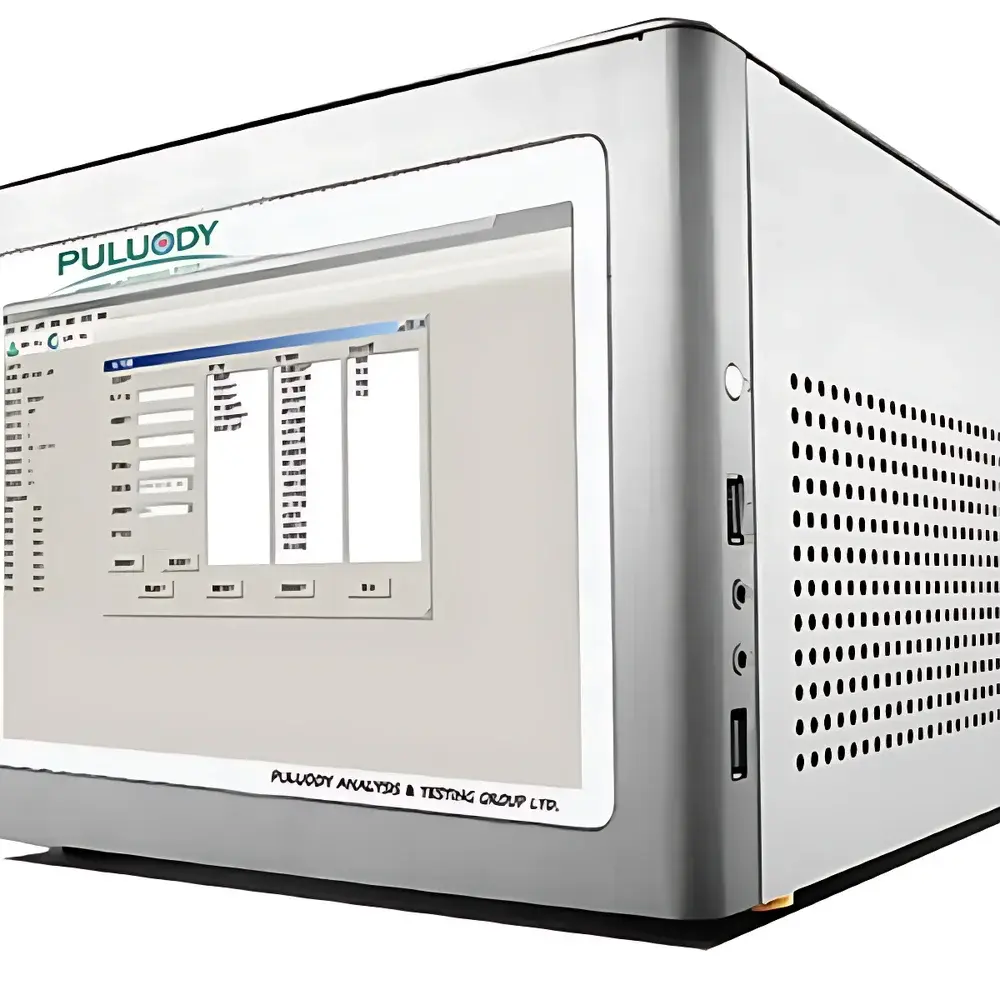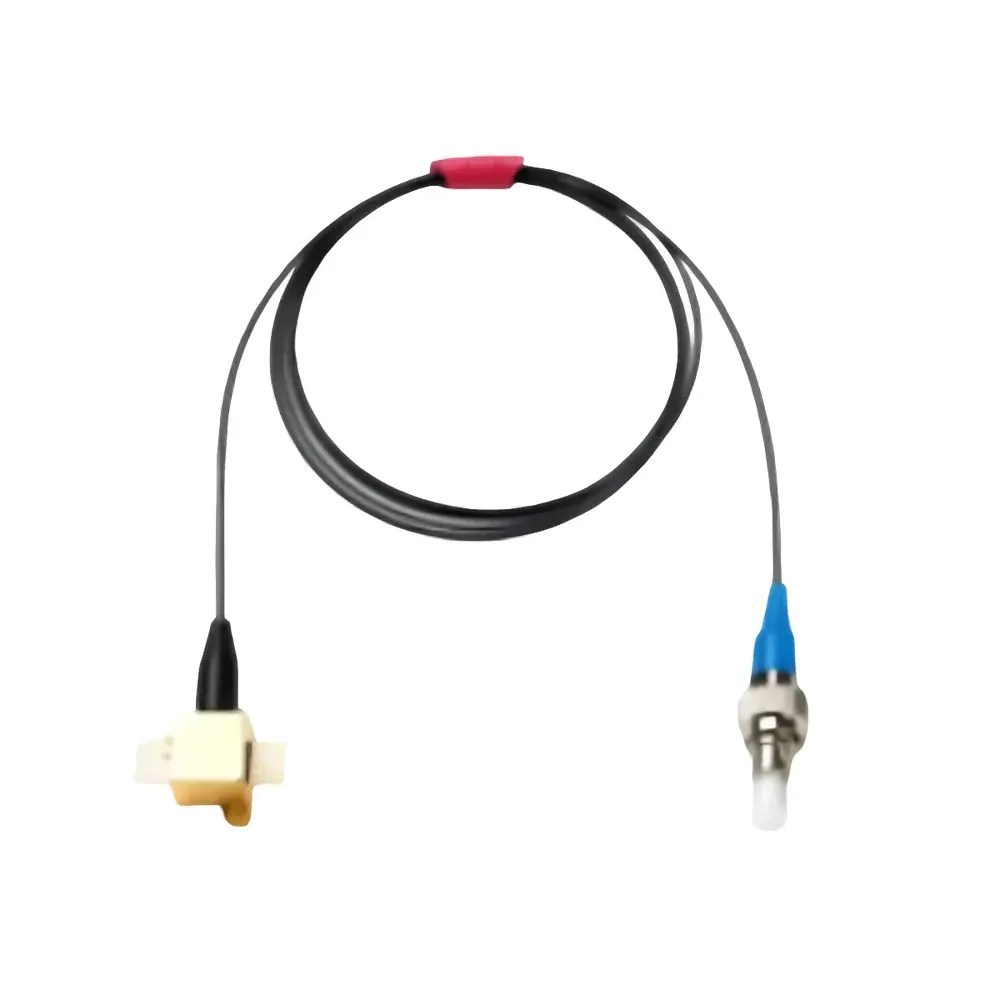
InGaAs SPAD Single-Photon Detector
| Brand | Other Brands |
|---|---|
| Origin | South Korea |
| Supplier Type | General Distributor |
| Import Status | Imported |
| Model | InGaAs SPAD Single-Photon Detector |
| Pricing | Upon Request |
Overview
The InGaAs SPAD Single-Photon Detector is a cryogenically cooled, gated-mode single-photon avalanche diode (SPAD) system engineered for high-sensitivity time-resolved photodetection in the short-wave infrared (SWIR) spectral range (900–1700 nm). Operating on the principle of Geiger-mode avalanche multiplication, this detector achieves photon-level sensitivity by biasing the InGaAs/InP heterostructure diode above its breakdown voltage in synchronized, nanosecond-scale gating windows. Its design prioritizes low dark count rate (DCR), high photon detection efficiency (PDE) at telecom wavelengths, and precise timing resolution—critical for quantum optical applications requiring temporal discrimination below 100 ps FWHM. Unlike broadband photodiodes or PMTs, this device delivers deterministic single-photon response with intrinsic dead-time management, making it suitable for quantum key distribution (QKD), time-of-flight (ToF) LiDAR, fluorescence lifetime imaging (FLIM), and optical time-domain reflectometry (OTDR) in fiber-based quantum networks.
Key Features
- Cryogenic thermoelectric (TE) cooling to −80 °C, suppressing thermal noise and enabling stable operation with DCR < 100 counts per second (cps) under standard gating conditions
- Gated operation with adjustable gate width (1–5 ns) and repetition rate up to 10 MHz, synchronized via external TTL or LVDS trigger inputs
- Timing jitter ≤ 80 ps FWHM (measured with 1550 nm pulsed laser, 1 MHz, 30% PDE), supporting sub-centimeter spatial resolution in OTDR and QKD protocols
- Integrated quenching and recharging circuitry with active hold-off control to minimize afterpulsing probability (< 1% at 10% PDE)
- Compact OEM module form factor (76 × 50 × 25 mm) with SMA-fiber coupling (FC/APC or FC/PC optional), designed for integration into turnkey quantum systems
- Compliance with IEC 61340-5-1 for electrostatic discharge (ESD) protection and RoHS 2015/863/EU for hazardous substance restrictions
Sample Compatibility & Compliance
This detector interfaces directly with standard single-mode optical fibers (SMF-28e+, G.652.D) and supports free-space coupling via integrated aspheric lens options. It is compatible with polarization-maintaining (PM) fiber configurations when used with inline polarization controllers. The device meets essential electromagnetic compatibility (EMC) requirements per EN 61326-1:2013 for laboratory measurement equipment and adheres to safety standards under IEC 61010-1:2010 for electrical equipment used in measurement, control, and laboratory use. While not certified for medical or aerospace deployment, its performance parameters align with benchmarking criteria defined in ISO/IEC 15408 (Common Criteria) for quantum-resistant cryptographic hardware evaluation.
Software & Data Management
The detector operates via a USB 2.0 or RS-232 interface using vendor-agnostic ASCII command protocol (SCPI-compatible subset), enabling seamless integration with LabVIEW, Python (PyVISA), MATLAB, and custom C/C++ applications. Included firmware supports real-time histogramming of arrival times with 16-bit time-stamp resolution (minimum bin width: 10 ps), exportable in HDF5 and CSV formats. Audit-trail functionality logs all configuration changes, timestamps, and environmental sensor readings (TE cooler current, junction temperature), satisfying GLP documentation requirements for traceable quantum optics experiments. Optional SDK provides API wrappers for multi-channel synchronization in QKD receiver modules compliant with ETSI GS QKD 014 v1.1.1.
Applications
- Quantum Key Distribution (QKD): Used as the receiving terminal in BB84 and decoy-state protocols over deployed fiber links; supports GHz-clock-rate gated detection synchronized to laser pulse trains
- Optical Time-Domain Reflectometry (OTDR): Enables single-photon-level backscatter analysis for fault localization in quantum-secured fiber infrastructure with dynamic range > 45 dB
- Time-Correlated Single Photon Counting (TCSPC): Paired with pulsed laser sources for ultrafast luminescence decay profiling in semiconductor defect analysis and NIR phosphor characterization
- Quantum Random Number Generation (QRNG): Serves as entropy source in certified physical RNGs meeting NIST SP 800-90B entropy assessment criteria
- Laboratory metrology: Calibration reference for low-light radiometric transfer standards traceable to NPL or PTB SWIR photon flux scales
FAQ
What is the typical photon detection efficiency (PDE) at 1550 nm?
PDE ranges from 15% to 25% depending on operating temperature, gate width, and overbias voltage—optimized at −80 °C, 2 ns gate width, and 3 V overbias.
Does the detector support free-running mode?
No. This model operates exclusively in gated mode to maintain low afterpulsing and dark count rates; free-running InGaAs SPADs require alternative architectures with higher cooling demands.
Is the unit supplied with driver electronics and cooling power supply?
Yes. Each unit includes a compact controller housing the gate generator, TE driver, bias supply, and digital interface—all powered via a single 24 V DC input.
Can multiple detectors be synchronized for coincidence counting?
Yes. The TTL/LVDS trigger input and output ports enable daisy-chain or master-slave synchronization with sub-nanosecond skew across up to eight channels.
What fiber connector types are supported?
Standard configuration uses FC/APC; FC/PC, SC/APC, and bare-fiber pigtails are available upon request with factory calibration.