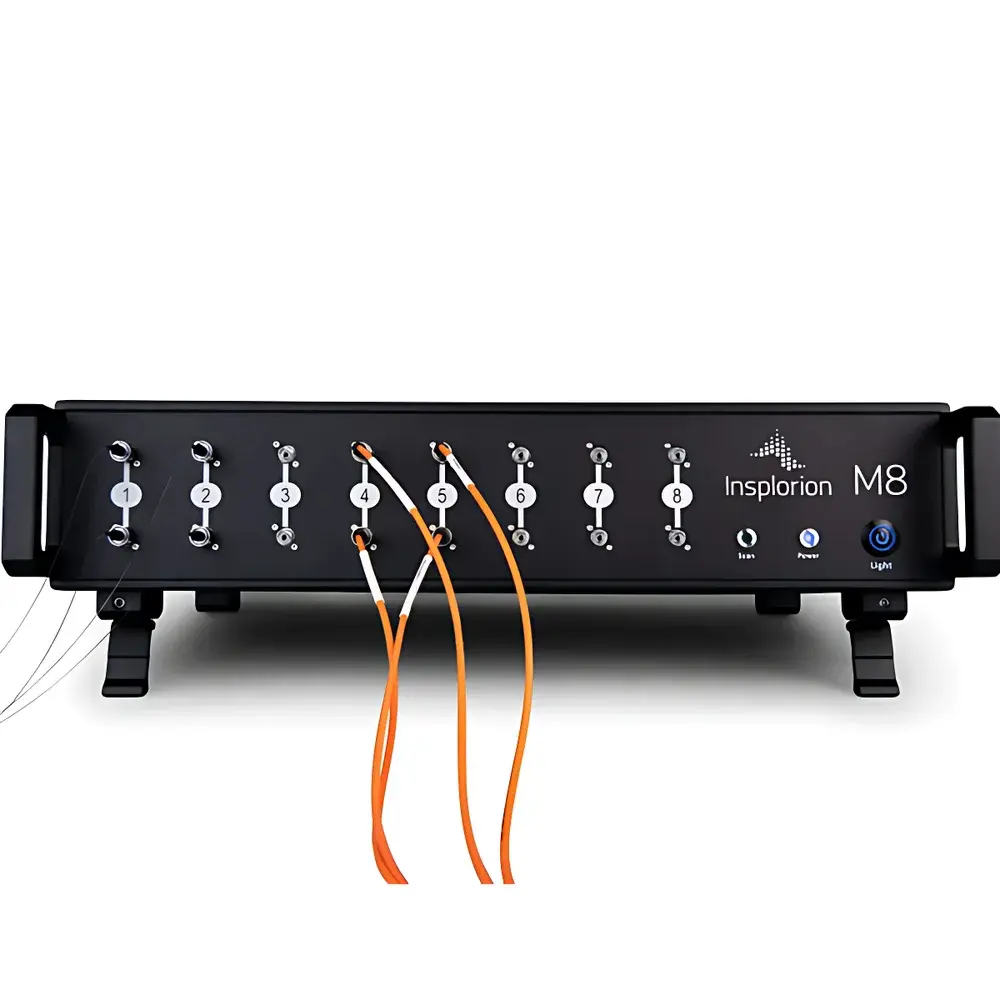
Insplorion M8 Nanoplasmonic Sensing Analyzer
| Brand | Insplorion AB |
|---|---|
| Origin | Sweden |
| Model | M8 |
| Channel Capacity | 8 channels |
| Sensor Diameter | 100 µm |
| Substrate | Optical fiber with customizable polymer coating (standard) |
| Measurement Interval | 250 ms – 10 s (dependent on active channels) |
| OKTA Unit Dimensions | 380 × 265 × 134 mm |
| Optical Unit Dimensions | 250 × 270 × 90 mm |
| Software | Insplorion OKTA Controller |
| OS Compatibility | Microsoft Windows |
| Data Output Format | ASCII-compliant, exportable to MATLAB, Python, Origin, or Excel |
| Sample Interface | Cathode–separator interface (validated for LFP/graphite coin cells) |
Overview
The Insplorion M8 Nanoplasmonic Sensing Analyzer is a turnkey, multi-channel optical instrumentation platform engineered for real-time, in situ, and operando monitoring of electrochemical interfaces at the nanoscale. It leverages localized surface plasmon resonance (LSPR) transduction via Insplorion’s proprietary Nanoplasmonic Plasmon Sensor (NPS) technology—integrated into standard optical fibers—to detect minute refractive index changes occurring within battery electrode–electrolyte interphases. Unlike conventional electrochemical impedance spectroscopy (EIS) or voltage-based diagnostics, the M8 provides label-free, non-invasive optical sensing that correlates directly with local physicochemical state evolution—including solid-electrolyte interphase (SEI) growth, lithium-ion concentration gradients, phase transitions, and interfacial temperature fluctuations. Designed specifically for R&D laboratories focused on next-generation battery materials and cell engineering, the M8 enables high-temporal-resolution interrogation of dynamic processes during galvanostatic cycling, potentiostatic holds, and thermal stress testing—without perturbing cell architecture or electrical performance.
Key Features
- Eight independent optical channels for parallel, synchronized acquisition across multiple cells or spatially distributed sensors within a single cell.
- Fiber-integrated NPS probes with 100 µm outer diameter, enabling minimally invasive insertion at critical interfaces (e.g., cathode–separator or anode–separator boundaries).
- Configurable polymer coatings on sensor tips to optimize chemical compatibility and signal specificity for diverse electrolyte systems (carbonate-, ether-, or sulfide-based).
- Adjustable measurement interval from 250 ms to 10 s, dynamically optimized based on the number of active channels and required temporal resolution.
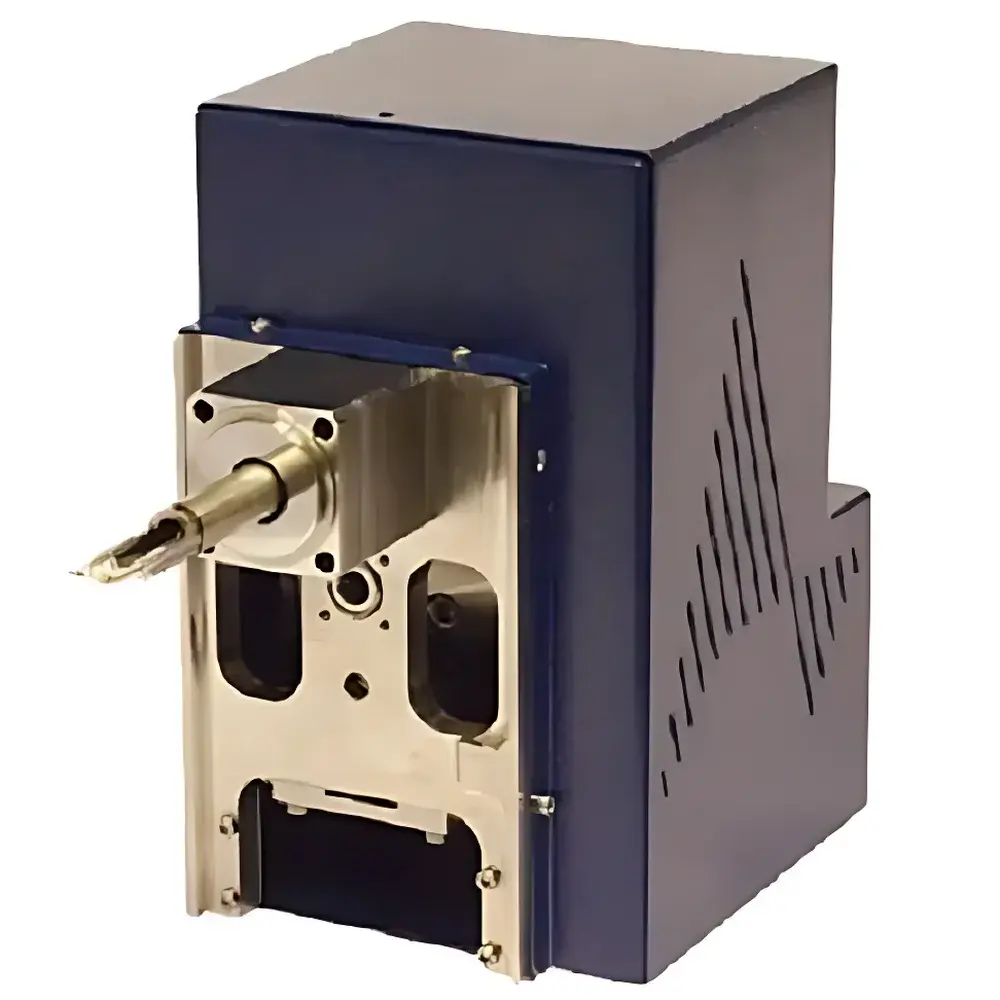
- Modular hardware architecture: OKTA main unit (380 × 265 × 134 mm) houses electronics and power management; dedicated optical unit (250 × 270 × 90 mm) contains precision photodetectors and wavelength-stabilized LED sources.
- Factory-calibrated optical path with <0.5% intensity drift over 8-hour continuous operation, ensuring long-duration stability for aging and cycle-life studies.
Sample Compatibility & Compliance
The M8 supports broad electrochemical cell form factors—including coin cells (CR2032, CR2016), pouch cells, Swagelok-type cells, and custom-designed test fixtures—with mechanical adaptability for both ambient and environmental chamber integration. Its NPS sensors are chemically inert toward common Li-ion chemistries (LFP, NMC, NCA, LCO, Si-anodes) and emerging systems (Li–S, solid-state Li-metal). All firmware and software modules comply with GLP-aligned data integrity principles: audit-trail-enabled session logging, user-access controls, and timestamped metadata embedding (including ambient temperature, channel ID, and calibration epoch). While not certified under FDA 21 CFR Part 11 out-of-the-box, the system supports export of raw ASCII time-series files compatible with validated third-party analysis pipelines used in regulated battery development environments (e.g., ISO 12405-4, IEC 62660-2, ASTM F3048).
Software & Data Management
The Insplorion OKTA Controller software provides a deterministic, low-latency interface for instrument configuration, real-time visualization, and session-based data archiving. It runs natively on Windows 10/11 (64-bit) and implements lossless streaming of all eight channels at full temporal resolution. Each acquired dataset includes embedded header information specifying sensor ID, coating type, channel gain setting, and synchronization markers for concurrent voltage/current logs from external potentiostats (via TTL or analog trigger input). Export formats include plain-text ASCII (.txt), CSV, and HDF5—ensuring seamless interoperability with Python (NumPy/Pandas), MATLAB, OriginLab, and commercial battery analytics platforms. Optional API access (C++/Python SDK) enables integration into automated test sequences governed by LabVIEW or custom CI/CD workflows.
Applications
- Operando characterization of SEI formation kinetics during initial lithiation of silicon anodes.
- Spatially resolved monitoring of lithium plating onset at graphite anodes under fast-charging conditions.
- Correlating interfacial refractive index shifts with voltage hysteresis in LFP cathodes during phase transition (olivine ↔ heterosite).
- Thermal runaway precursor detection via localized interfacial expansion mapping in solid-state batteries.
- Quantitative validation of electrolyte additive efficacy by tracking interfacial stabilization rates across multiple cycles.
- High-throughput screening of novel binder systems through comparative swelling dynamics at electrode–current collector interfaces.
FAQ
Can the M8 be used with solid-state batteries?
Yes—the NPS fiber probes are compatible with ceramic, polymer, and composite solid electrolytes; sensor insertion protocols have been validated for bilayer and trilayer stack configurations.
Is calibration required before each experiment?
No—factory calibration is retained across sessions; users perform only a one-time reference baseline acquisition per sensor before cell assembly.
How is synchronization achieved with external potentiostats?
Via hardware TTL triggers (rising-edge) or analog voltage input (0–5 V), enabling sub-millisecond alignment between optical and electrochemical signals.
Are custom sensor coatings available beyond standard polymer options?
Yes—Insplorion offers application-specific coatings including ALD-deposited metal oxides (e.g., Al₂O₃, TiO₂) and functionalized self-assembled monolayers (SAMs) upon request.
Does the system support remote operation and monitoring?
Yes—OKTA Controller supports networked deployment via Ethernet; secure remote desktop access and scheduled unattended runs are routinely implemented in multi-user lab environments.
Related Products