
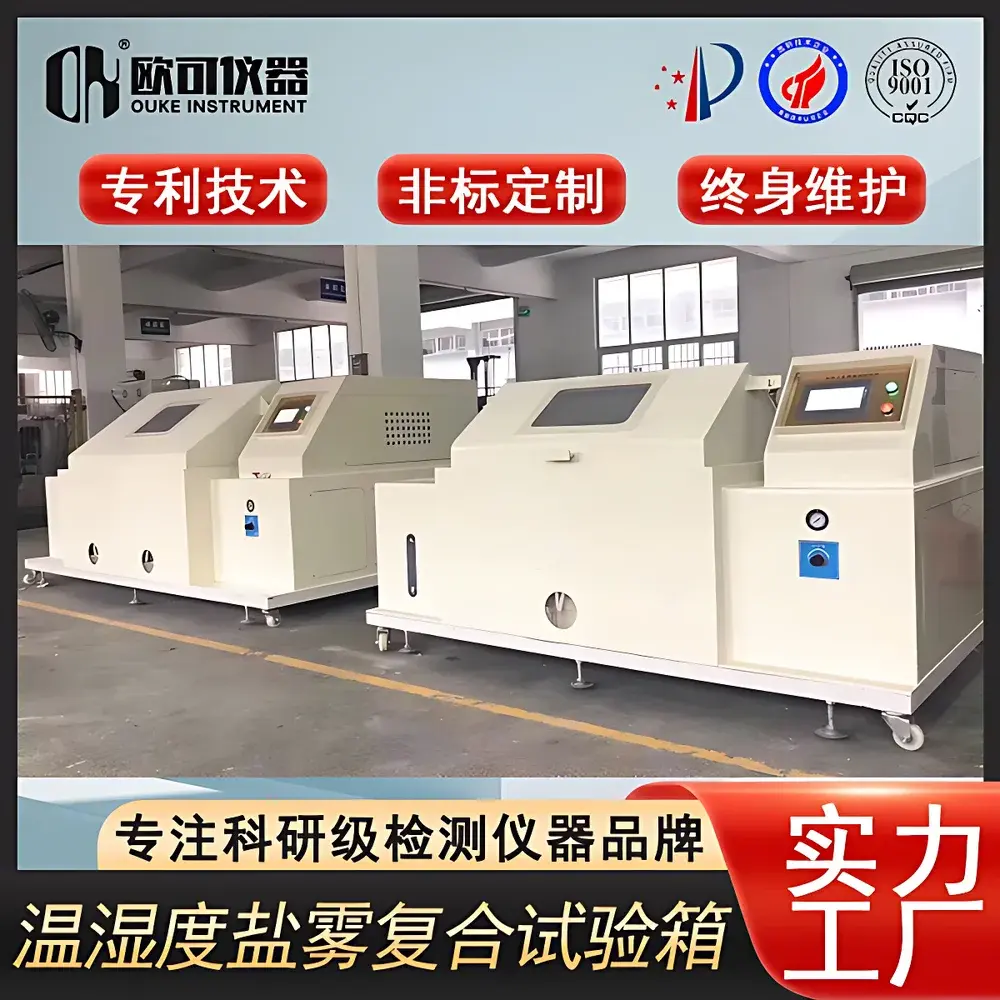
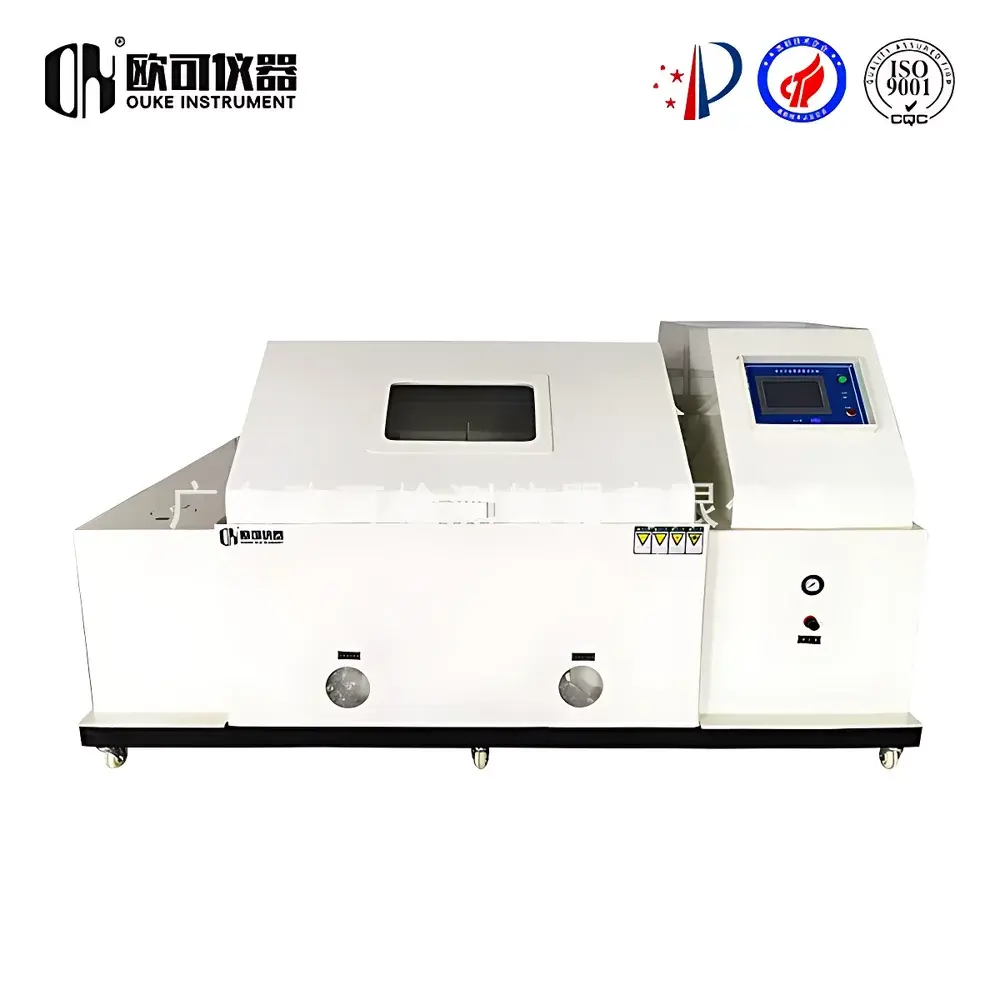
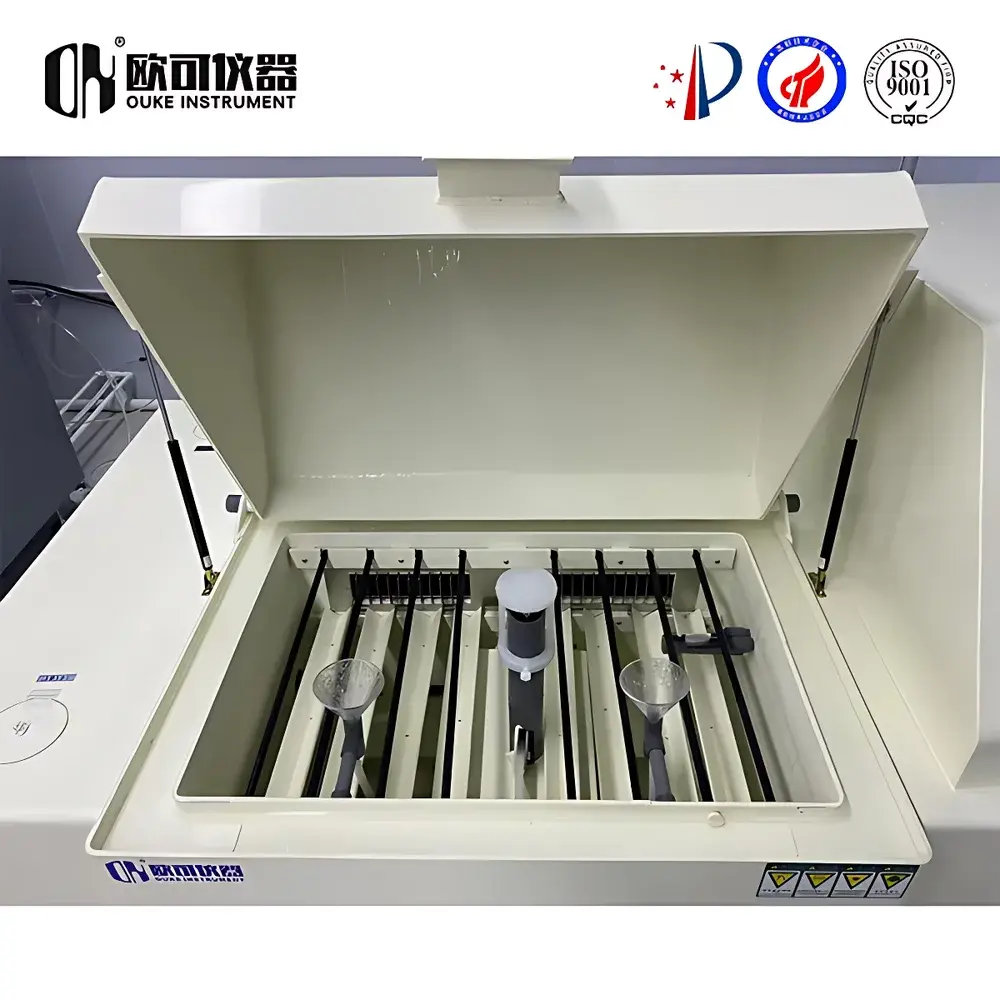
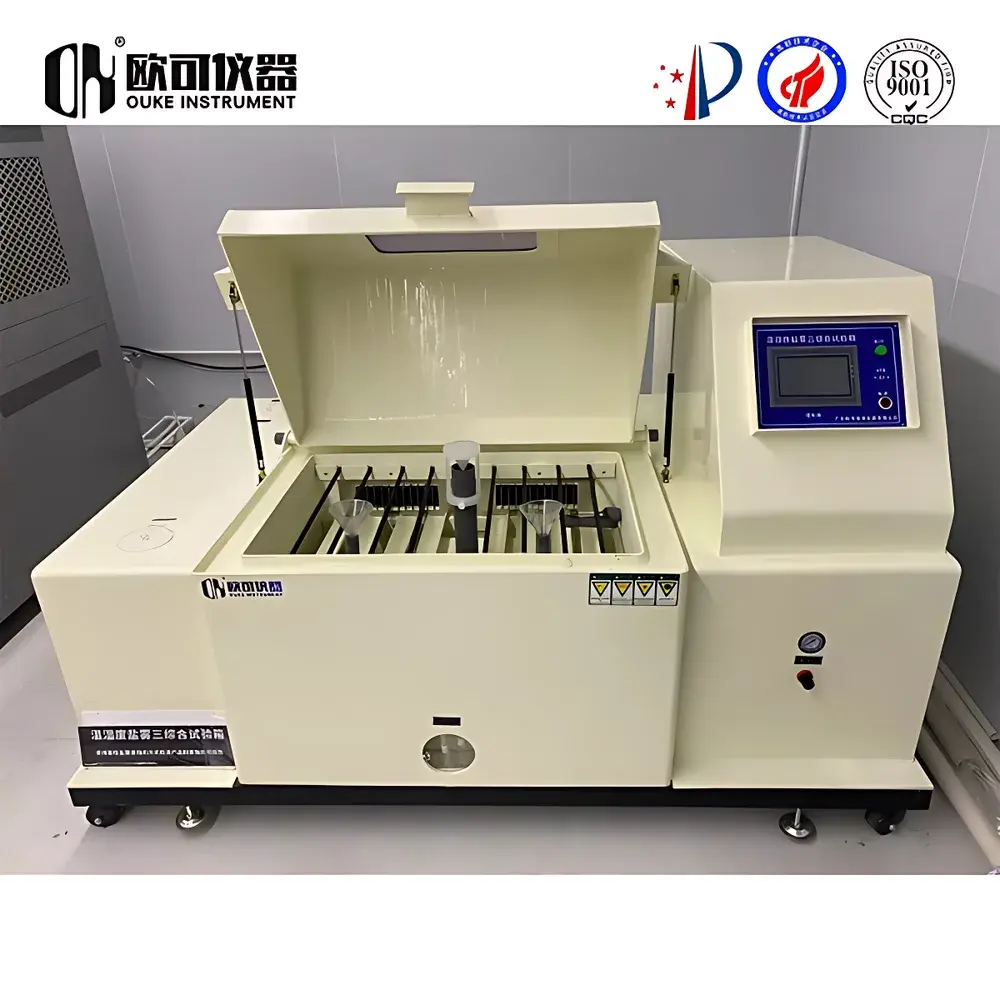
OK Instrument OK-FH-125 Combined Temperature-Humidity-Salt Fog Test Chamber
| Brand | OK Instrument |
|---|---|
| Origin | Guangdong, China |
| Manufacturer Type | Direct Manufacturer |
| Model | OK-FH-125 |
| Temperature Range | Option A: 0°C to 80°C |
| Option B | −20°C to 80°C |
| Option C | −40°C to 80°C |
| Humidity Range | 20–98 %RH at 20–85 °C |
| Temperature Ramp Rate | 5 / 10 / 15 °C/min |
| Temperature Uniformity | ≤ ±0.5 °C |
| Standard Load Capacity | 15 kg aluminum mass with 350 W internal heat dissipation |
Overview
The OK Instrument OK-FH-125 Combined Temperature-Humidity-Salt Fog Test Chamber is an engineered environmental simulation system designed for accelerated cyclic corrosion testing (CCT) in accordance with internationally recognized automotive and industrial standards—including GMW 14872, SAE J2334, ISO 16701, and VDA 621-415. Unlike conventional static salt spray chambers operating at fixed 35 °C and continuous fogging, the OK-FH-125 integrates three independent yet precisely synchronized environmental stressors: programmable temperature control, regulated humidity generation, and controlled neutral salt fog delivery. Its operational principle is grounded in replicating real-world atmospheric corrosion cycles—comprising alternating phases of salt deposition, drying (low RH, elevated temperature), and condensation (high RH, cooling)—thereby inducing electrochemical, hygroscopic, and mechanical degradation mechanisms that closely mirror field exposure. This multi-stress synergy enables correlation between laboratory test duration and years of outdoor service life, making it indispensable for reliability validation in automotive OEM supply chains, battery enclosures, EV power electronics, and coated metallic components.
Key Features
- Triple-stress integration: Simultaneous or sequential control of temperature (−40 °C to +80 °C), relative humidity (20–98 %RH), and ASTM B117-compliant neutral salt fog (5 wt% NaCl, pH 6.5–7.2)
- High-fidelity thermal management: Dual-stage refrigeration system with cascade compressor configuration for stable sub-zero operation; PID-controlled resistive heating elements with titanium alloy sheathing for corrosion resistance
- Dedicated dry-out subsystem: Independent hot-air circulation duct with adjustable airflow and dew point control (down to <10 %RH), critical for simulating evaporation-driven salt concentration and crystallization stress
- Corrosion-resistant chamber construction: Entire interior lined with UV-stabilized PVC and PP composite panels; no ferrous fasteners or stainless-steel components exposed to fog path
- Cross-contamination mitigation architecture: Integrated post-fog purge cycle featuring compressed air blow-off, deionized water rinse, and thermal bake-out (up to 80 °C) to eliminate residual chloride ions from chamber walls, sample racks, and air recirculation ducts
- Precision fog generation: Adjustable nozzle array with calibrated saturation tower, maintaining consistent fog deposition rate (1.0–2.0 mL/h·80 cm²) per ISO 9227 requirements
Sample Compatibility & Compliance
The OK-FH-125 accommodates standard test specimens up to 15 kg (aluminum reference mass) with a maximum internal heat load of 350 W—sufficient for active electronic modules under bias. Chamber geometry supports ISO 9227-compliant sample orientation (15°–30° from vertical) and uniform fog distribution across the working volume (125 L net capacity). All operational parameters are traceable to NIST-traceable references via integrated Class I platinum RTDs and capacitive RH sensors. The system meets essential regulatory frameworks including ISO/IEC 17025 preconditions for test laboratory accreditation, supports GLP-compliant audit trails, and provides optional 21 CFR Part 11–compliant software for FDA-regulated applications.
Software & Data Management
Equipped with OK-TestSuite™ v4.2, a Windows-based control platform supporting up to 999-step cyclic programs with nested subroutines and conditional branching. Real-time monitoring includes dual-channel temperature/humidity logging (1 Hz sampling), fog on/off status, compressor duty cycle, and chamber pressure differential. All data are timestamped, digitally signed, and exportable in CSV, PDF, and XML formats. Optional Ethernet/IP and Modbus TCP interfaces enable integration into factory MES systems. Audit logs record user actions, parameter modifications, and calibration events with immutable timestamps—fully compliant with ISO 17025 clause 7.7 and internal quality system requirements.
Applications
- Automotive: Corrosion validation of chassis components, brake calipers, battery trays, and ADAS sensor housings per GMW 14872 Cycle D
- Electronics: Reliability assessment of conformally coated PCBs, EV charging connectors, and IP67-rated enclosures
- Aerospace: Qualification of fasteners, landing gear alloys, and sealant interfaces under combined thermal shock and chloride exposure
- Renewable Energy: Testing of solar mounting structures, offshore wind turbine hardware, and DC busbar coatings
- Academic Research: Mechanistic studies of pitting initiation, crevice corrosion kinetics, and inhibitor efficacy under dynamic electrolyte film conditions
FAQ
What standards does the OK-FH-125 support out-of-the-box?
It natively executes GMW 14872 (Cycles A–D), SAE J2334, ISO 16701, and VDA 621-415. Custom cycle templates can be imported via .csv or defined manually.
How is chloride residue prevented between test phases?
The system performs an automated post-fog sequence: compressed-air purge → DI-water mist rinse → 60 °C thermal bake for ≥15 minutes, verified by in-chamber conductivity probe.
Can the chamber operate salt fog and humidity simultaneously?
Yes—fog generation is decoupled from humidification; both can run concurrently during wet-dry transition phases per ISO 16701 Annex A.
Is external water purification required?
A built-in 0.2 µm particulate filter and deionization cartridge are standard; feed water must meet ASTM D1193 Type IV specifications (conductivity <1 µS/cm).
What maintenance intervals are recommended?
Saturation tower cleaning every 100 hours of fog operation; full chamber inspection and sensor calibration every 6 months or 1,000 test hours—whichever occurs first.



