
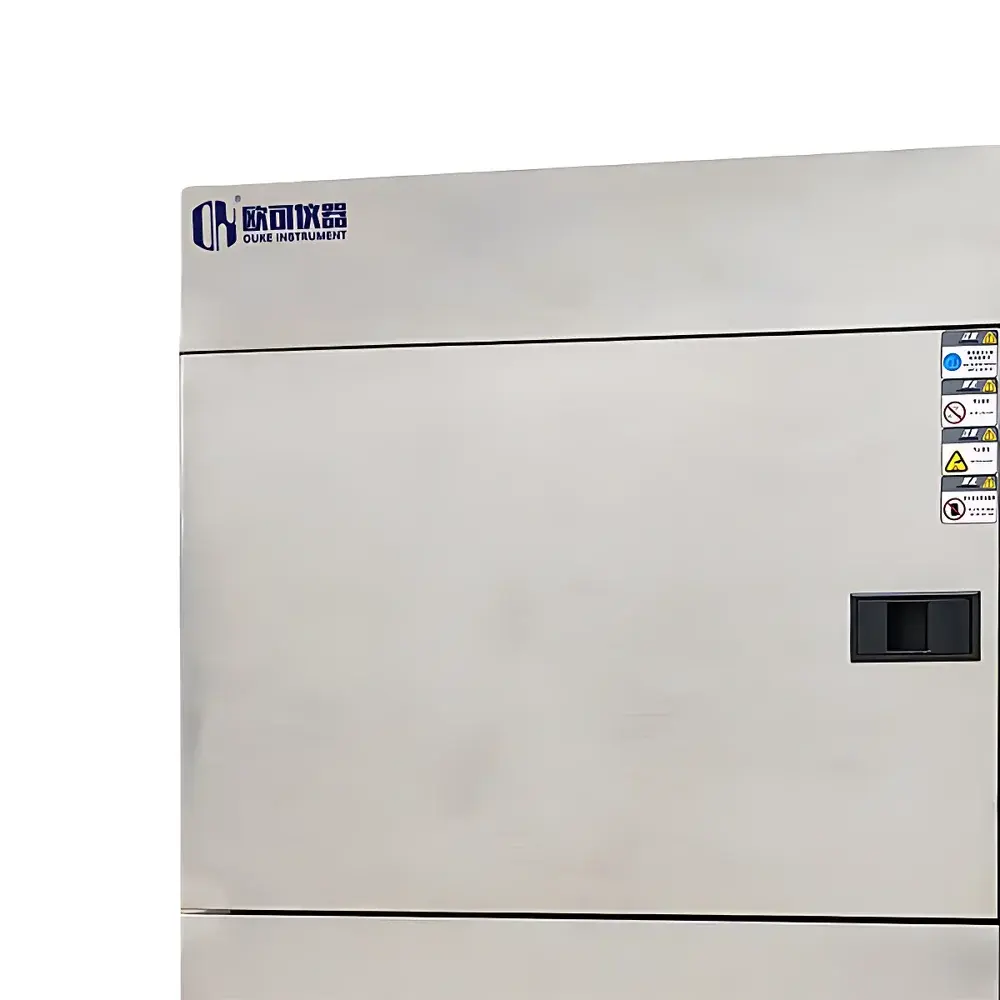
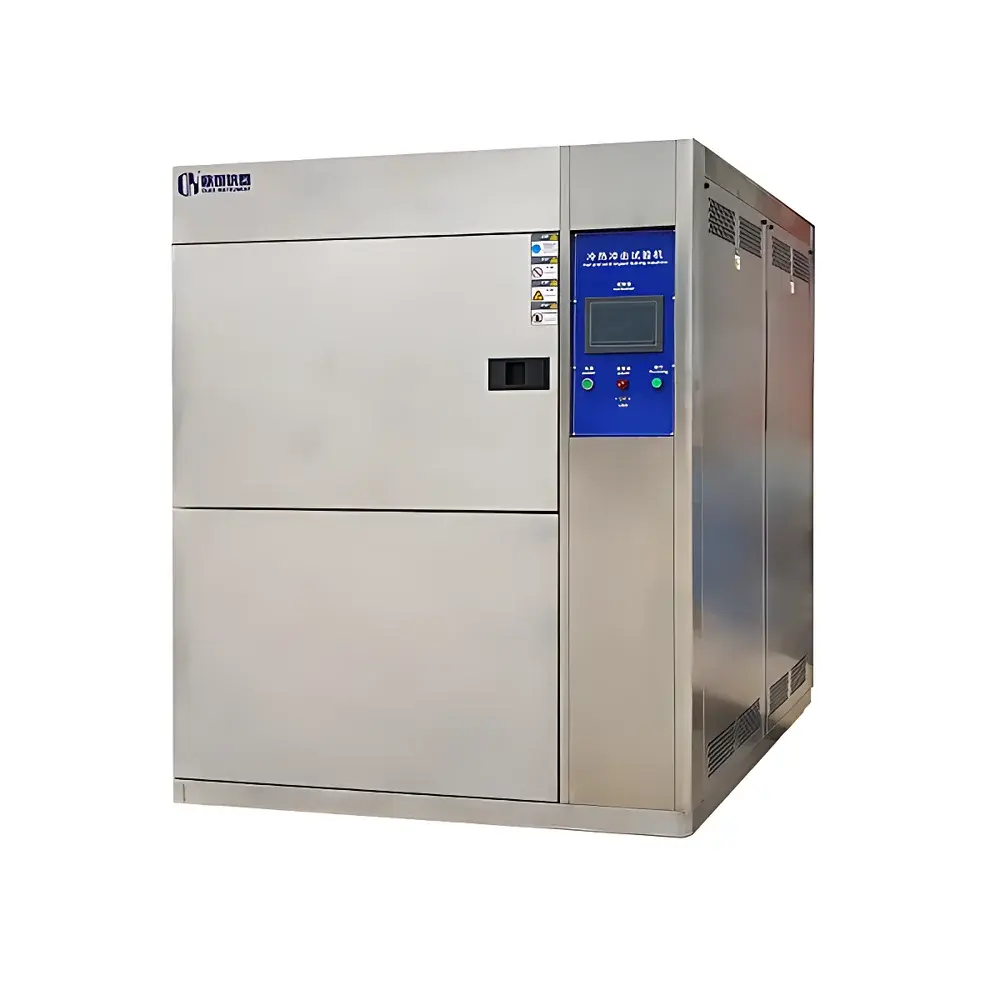
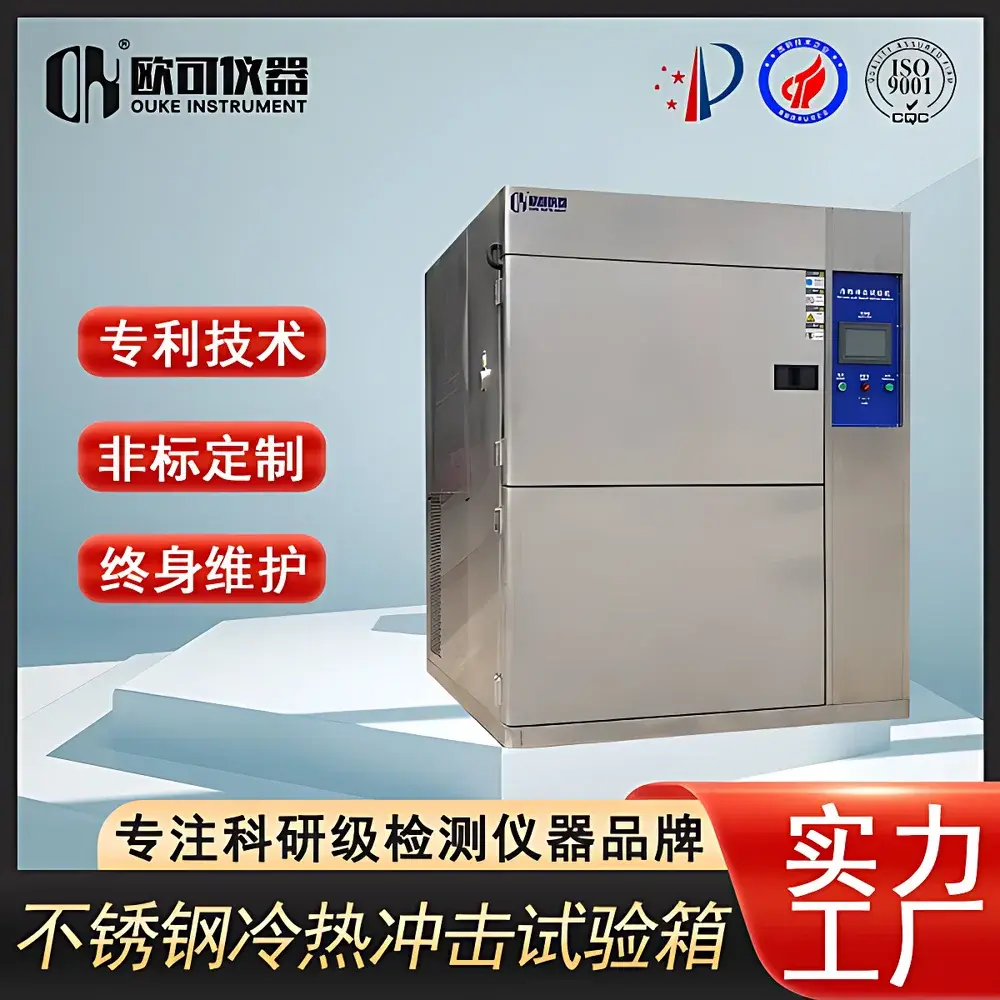
OK Instruments OK-TS-225 Thermal Shock Test Chamber
| Brand | OK Instruments |
|---|---|
| Origin | Guangdong, China |
| Manufacturer Type | OEM/ODM Manufacturer |
| Country of Origin | China |
| Model | OK-TS-225 |
| High Temperature Range | +150 °C |
| Low Temperature Range | −50 °C |
| Thermal Shock Range | −50 °C to +150 °C |
| Temperature Stability | ±2 °C |
| Heating Rate | 15 °C/min |
| Cooling Rate | 15 °C/min |
Overview
The OK Instruments OK-TS-225 Thermal Shock Test Chamber is an engineered environmental test system designed for rapid, repeatable, and highly controlled temperature transitions between extreme thermal conditions. It operates on the principle of mechanical air transfer via pneumatic door actuation—enabling precise, non-contact thermal shock exposure without subjecting test specimens to mechanical vibration or positional displacement during cycling. Unlike single-chamber ramp-based systems, the OK-TS-225 implements a dual-compartment architecture (hot and cold zones) with a specimen-holding basket that moves between them, ensuring true step-change thermal profiles compliant with MIL-STD-810H Method 503.5, IEC 60068-2-14 (Test N), and ASTM D573-04. The chamber’s core function is to accelerate failure mechanisms related to coefficient-of-thermal-expansion (CTE) mismatch, interfacial delamination, solder joint fatigue, and seal integrity degradation in electronic assemblies, automotive components, aerospace composites, and polymer-based medical devices.
Key Features
- Dual-zone configuration with independent hot and cold chambers, eliminating thermal cross-contamination and enabling stable setpoint maintenance (±2 °C stability) during standby phases
- Pneumatically actuated high-speed transfer mechanism with <5 s door switching time and <5 min temperature recovery post-transfer—critical for achieving defined dwell times per IEC 60068-2-14
- Two-stage cascade refrigeration system using environmentally compliant R404A/R23 refrigerant blend, coupled with a water-cooled condenser requiring external 10 m³/h cooling tower (user-supplied)
- Heating and cooling rates independently verified at 15 °C/min across full operational range (−50 °C to +150 °C), supporting accelerated life testing protocols per JEDEC JESD22-A106B
- Interior constructed from mirror-finish SUS#304 stainless steel; exterior options include brushed stainless or powder-coated steel; insulated with high-density, fire-retardant polyurethane foam (≥30 mm thickness)
- Integrated 50 mm diameter cable port with silicone gasket, two adjustable stainless steel shelves, and rear-mounted 3-phase 380 V ±5%, 50 Hz ±0.5 Hz power inlet (2.5 m cable)
Sample Compatibility & Compliance
The OK-TS-225 accommodates samples up to 70 × 60 × 60 cm (W × H × D) within its test compartment, making it suitable for printed circuit board assemblies (PCBAs), ECUs, MEMS sensors, battery modules, and molded plastic housings. Its thermal profile fidelity meets stringent requirements for qualification testing under automotive standards including QC/T 17–92 (Automotive Component Environmental Endurance), EIA-364-32 (Connector Thermal Shock), and ISO 16750-4 (Road Vehicles – Environmental Conditions). All control algorithms and calibration traceability align with ISO/IEC 17025:2017 laboratory accreditation criteria. The system supports audit-ready documentation for GLP and GMP environments, with optional validation packages (IQ/OQ/PQ) available upon request.
Software & Data Management
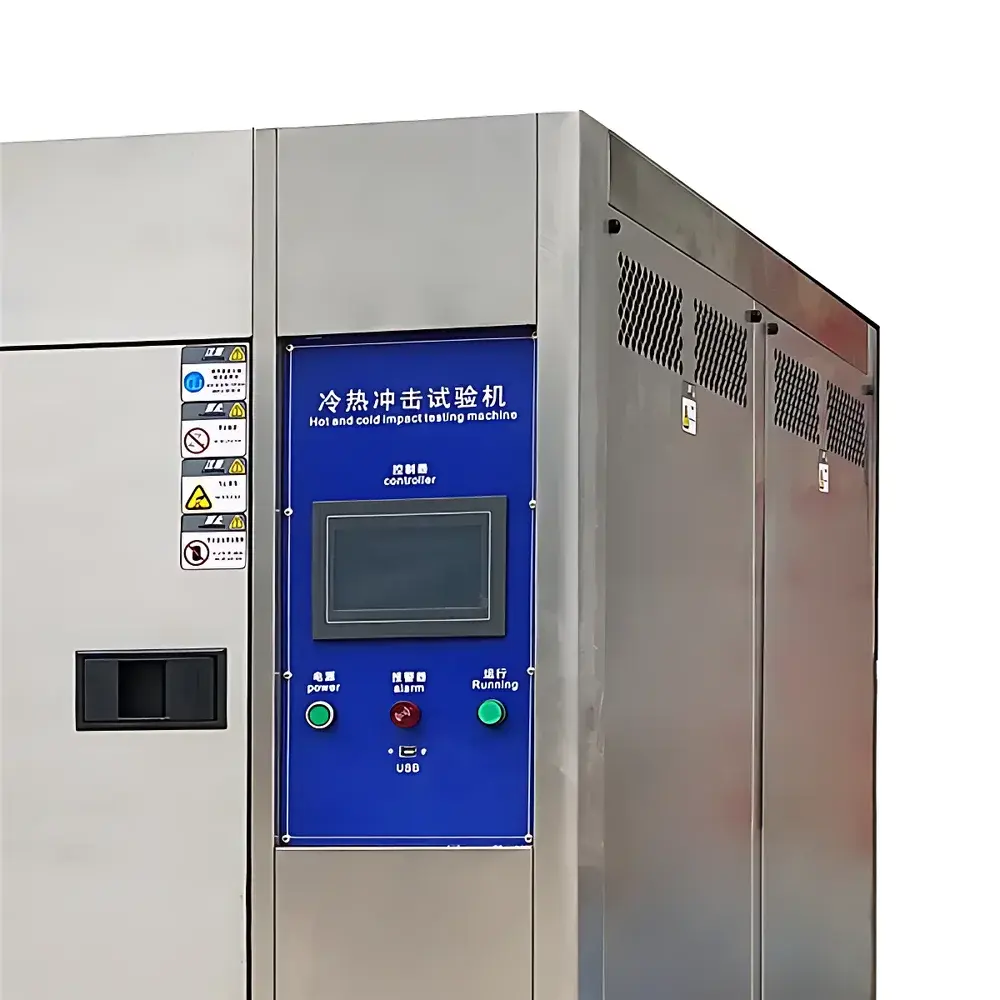
Equipped with a 7-inch color touchscreen HMI running embedded real-time OS, the OK-TS-225 provides intuitive cycle programming—including multi-step shock sequences, dwell time definition, ramp rate selection, and automatic safety interlocks. Data logging records temperature readings from three calibrated PT100 sensors (hot zone, cold zone, test chamber center) at user-defined intervals (1–60 s), exporting CSV files via USB or Ethernet. Optional PC-based software enables remote monitoring, alarm notification via email/SMS, and integration into enterprise LIMS or MES platforms. Full compliance with FDA 21 CFR Part 11 is achievable through optional electronic signature module and audit trail activation—ensuring data integrity for regulated industries.
Applications
- Reliability screening of semiconductor packaging (e.g., QFN, BGA, SiP) per JESD22-A104 and A106
- Validation of thermal interface materials (TIMs) and underfill adhesives under cyclic stress
- Qualification of electric vehicle battery enclosures against rapid ambient transition scenarios
- Testing of optical lenses and infrared sensor housings for condensation resistance and lens mount integrity
- Accelerated aging of conformal coatings, potting compounds, and elastomeric seals used in avionics
- Process development support for reflow soldering profile optimization and lead-free solder joint reliability assessment
FAQ
What is the difference between two-box and three-box thermal shock configurations?
The OK-TS-225 uses a two-box design (separate hot/cold chambers with moving basket), offering faster transition times and lower energy consumption than three-box systems. Three-box variants add a dedicated test chamber but increase footprint and complexity without significant benefit for most industrial qualification needs.
Does the system support custom temperature profiles beyond −50 °C to +150 °C?
Standard operation spans −50 °C to +150 °C. Extended low-temperature options down to −65 °C and high-temperature variants up to +200 °C are available as factory-configured options (OK-TS-225-LT and OK-TS-225-HT models).
Is external cooling infrastructure mandatory?
Yes. The cascade refrigeration system requires a dedicated closed-loop cooling water supply at 10 m³/h flow rate and ≤32 °C inlet temperature—typically delivered via an externally installed cooling tower or chiller unit.
How is temperature uniformity validated across the test volume?
Uniformity is measured per IEC 60068-3-5 using nine PT100 sensors placed in a 3×3 grid per ASTM E742. Reported value of ±2.0 °C reflects worst-case spatial deviation at steady-state conditions.
Can the chamber be integrated into automated test lines?
Yes. Standard digital I/O (8-in/8-out) and Modbus TCP/Ethernet/IP communication protocols enable seamless integration with robotic loaders, MES schedulers, and central test management systems.



