
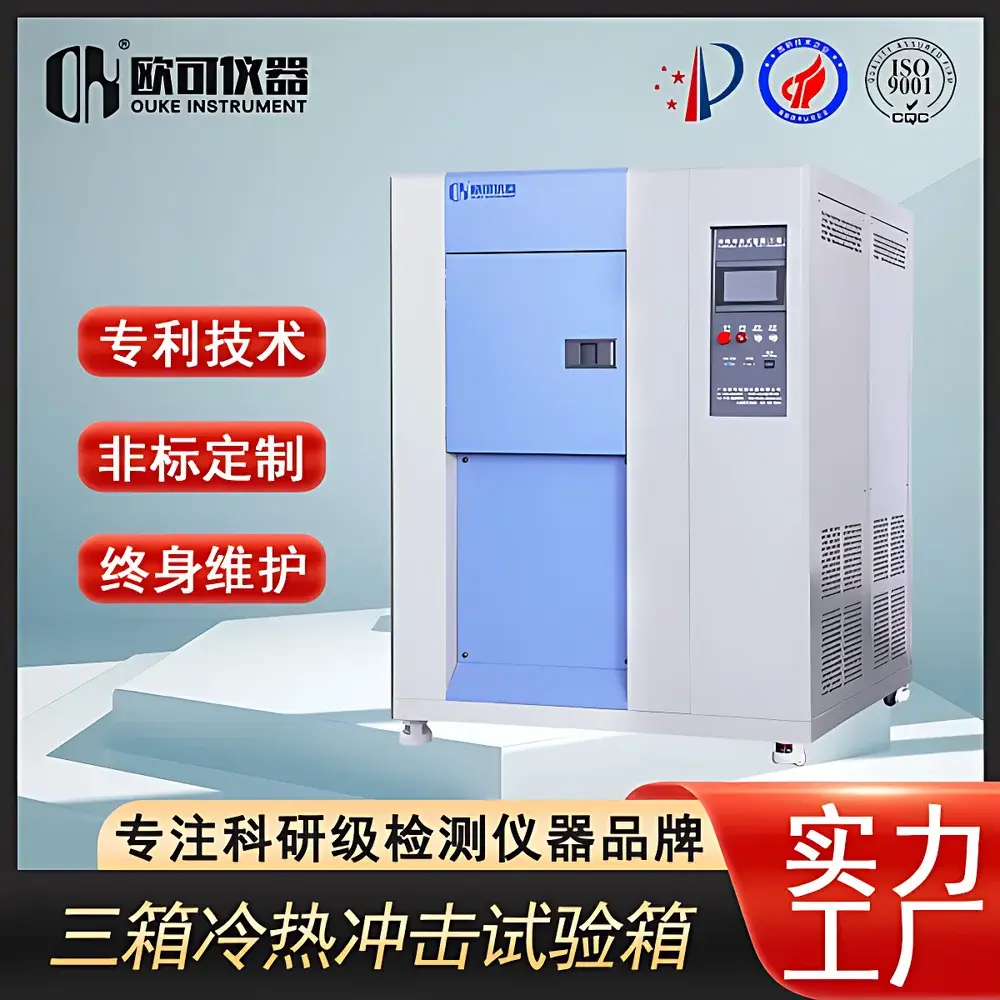
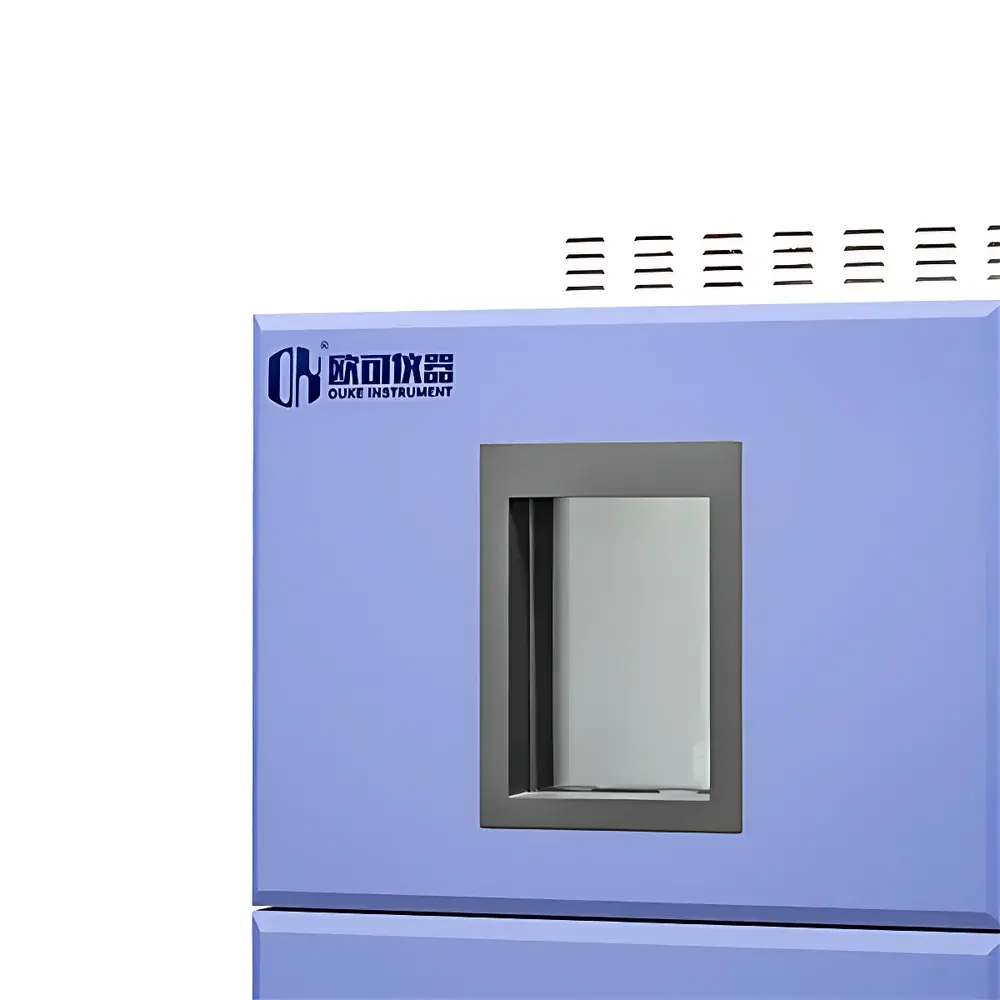
OK Instruments OK-TS-55 Thermal Shock Test Chamber
| Brand | OK Instruments |
|---|---|
| Origin | Guangdong, China |
| Manufacturer Type | Direct Manufacturer |
| Product Category | Domestic |
| Model | OK-TS-55 |
| Price | USD 11,200 (FOB Guangdong) |
| High-Temperature Range | +150 °C |
| Low-Temperature Range | −65 °C |
| Thermal Shock Range | −65 °C to +150 °C |
| Temperature Stability | ±2 °C |
| Heating Rate | ≥10 °C/min |
| Cooling Rate | ≥10 °C/min |
| Control System | 7-inch Color Touchscreen PID Controller with Data Logging |
| Temperature Resolution & Setpoint Accuracy | ±0.1 °C |
| Internal Chamber Material | SUS304 Stainless Steel |
| External Casing | Powder-Coated Steel |
| Insulation | Rigid Polyurethane Foam + Ultra-Fine Glass Wool |
| Chamber Configuration | Three-Zone (Hot Zone / Test Zone / Cold Zone) |
| Sample Load Capacity | ≤30 kg |
| Compliance | GB/T 2423.1–2008 (Test A), GB/T 2423.2–2008 (Test B), GB/T 10592–2008, GJB 150.3–1986, GJB 360A–1996 Method 107 |
Overview
The OK Instruments OK-TS-55 Thermal Shock Test Chamber is a precision-engineered three-zone thermal shock system designed for accelerated reliability assessment of electronic components, aerospace materials, automotive modules, and polymer-based assemblies. It operates on the principle of rapid, controlled temperature transitions between independently regulated high-temperature and low-temperature reservoirs—without moving the test specimen. This static-sample, three-chamber architecture ensures mechanical stability during extreme thermal transients while eliminating vibration-induced artifacts common in two-chamber shuttle-type systems. The chamber delivers repeatable thermal shocks across a validated operational range of −65 °C to +150 °C, with heating and cooling rates exceeding 10 °C per minute under standard load conditions. Its design adheres to internationally recognized environmental stress screening (ESS) protocols and supports qualification testing aligned with military, industrial, and regulatory frameworks.
Key Features
- Three-zone configuration: independent hot zone (+200 °C max), test zone (sample stationary), and cold zone (−70 °C min), enabling precise thermal gradient control without mechanical sample transfer
- High-fidelity microprocessor-based controller with 7-inch color touchscreen interface, supporting programmable multi-step profiles, real-time trend logging, and alarm-triggered event capture
- Dual-stage refrigeration system utilizing cascaded compressors (industrial-grade semi-hermetic units), optimized for rapid heat extraction and stable sub-zero operation
- Thermal insulation composed of rigid polyurethane foam (≥120 mm thickness) and ultra-fine glass wool, minimizing thermal leakage and improving energy efficiency
- SUS304 stainless steel interior surfaces with corrosion-resistant, non-outgassing finish—compatible with cleanroom environments and long-term exposure to thermal cycling
- Pneumatically actuated high-cycle-life damper valves for seamless, low-inertia air path switching between hot and cold reservoirs
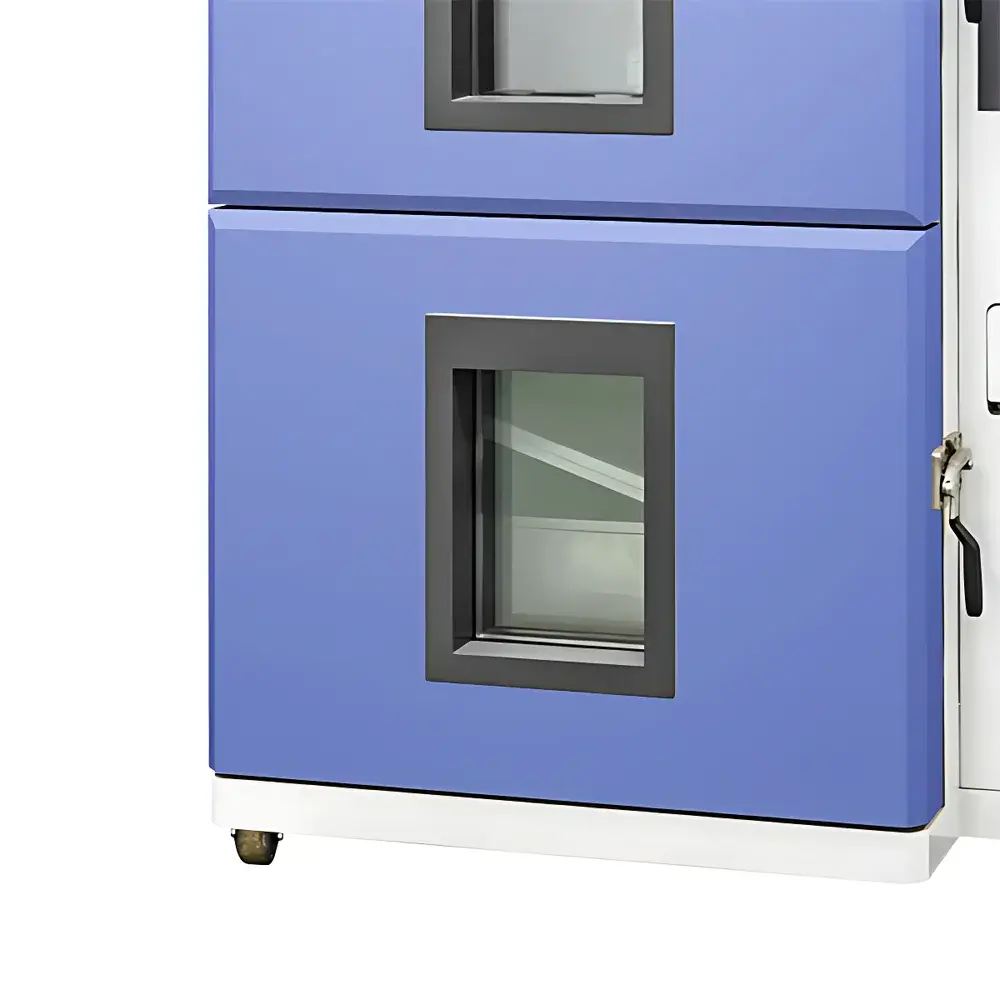
- Integrated sample support structure with adjustable stainless steel trays (two-tier), rated for static loads up to 30 kg and compatible with standardized DUT fixtures
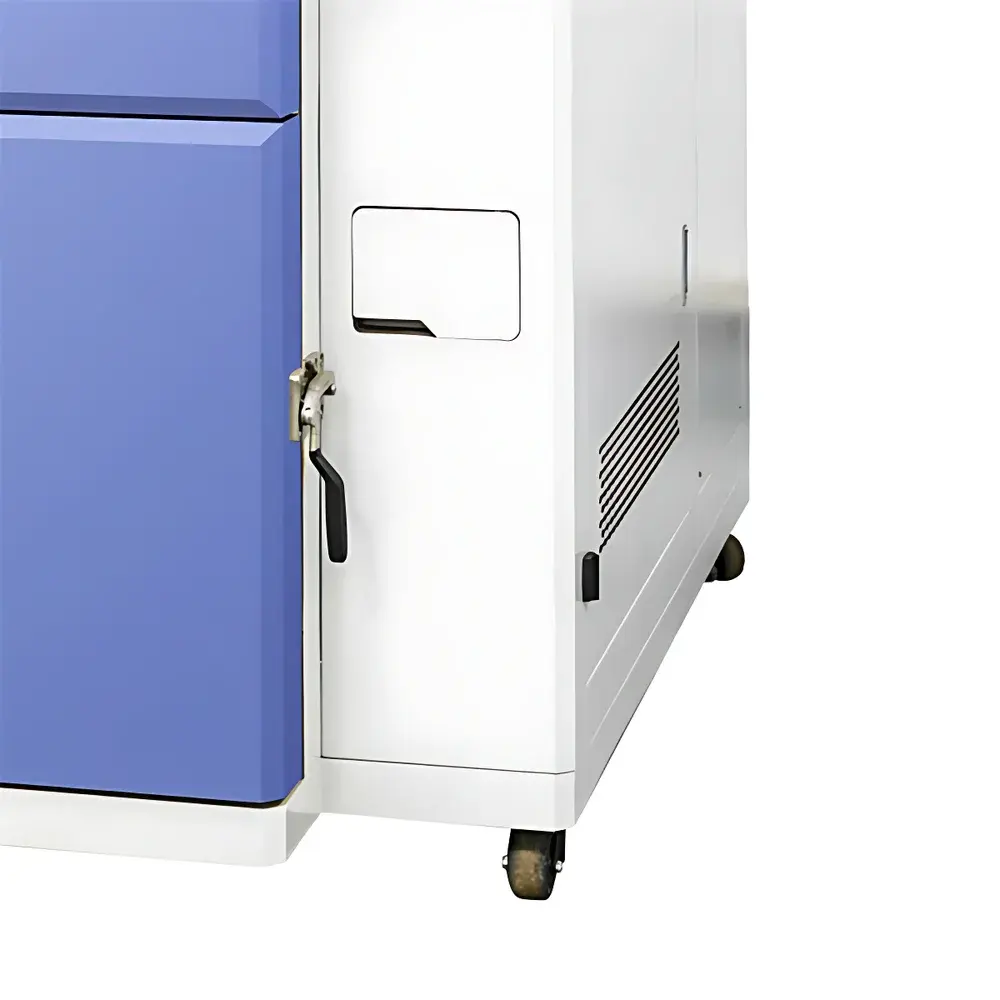
- Front-access service panels, heavy-duty casters with locking brakes, and modular refrigerant circuits facilitating field maintenance and calibration traceability
Sample Compatibility & Compliance
The OK-TS-55 accommodates a broad spectrum of physical form factors—from bare PCBs and IC packages to assembled avionics modules and encapsulated sensors—within its 36 × 35 × 40 cm test chamber (D × W × H). Its uniformity performance (±0.5 °C at setpoint, measured per IEC 60068-3-5) ensures representative stress application across heterogeneous samples. The system satisfies mandatory requirements of multiple international standards, including GB/T 2423.1–2008 (Cold Test A), GB/T 2423.2–2008 (Dry Heat Test B), GB/T 10592–2008 (Temperature Chamber Specifications), GJB 150.3–1986 (Military Environmental Test Methods – Temperature Shock), and GJB 360A–1996 Method 107 (Temperature Cycling). While not pre-certified for FDA 21 CFR Part 11 or ISO/IEC 17025, its audit-ready data logs, user-level access controls, and calibration documentation support integration into GLP/GMP-compliant quality systems upon site-specific validation.
Software & Data Management
The embedded controller firmware supports CSV export of time-stamped temperature records (hot zone, cold zone, and test zone) at configurable intervals (1–60 seconds). Logged parameters include chamber setpoints, actual sensor readings, valve status, compressor run hours, and system fault codes. Optional Ethernet or RS-485 interfaces enable remote monitoring via SCADA-compatible platforms. All data files are timestamped with UTC and retain metadata such as operator ID, test sequence number, and environmental calibration certificate IDs. Audit trails record user login/logout events, parameter modifications, and profile execution history—meeting baseline requirements for traceability in regulated manufacturing environments. No cloud connectivity or proprietary software installation is required; local data retrieval is performed via USB flash drive.
Applications
- Qualification of solder joint integrity in surface-mount electronics subjected to repeated thermal expansion mismatch
- Evaluation of delamination resistance in multilayer ceramic capacitors (MLCCs) and stacked die packages
- Assessment of sealant adhesion and gasket resilience in automotive powertrain control units exposed to under-hood thermal extremes
- Validation of optical alignment stability in infrared detector housings operating across cryogenic-to-ambient transitions
- Screening of coating adhesion and substrate interfacial strength in aerospace composite laminates
- Accelerated aging studies for battery cell enclosures and thermal interface materials (TIMs)
FAQ
What is the difference between two-chamber and three-chamber thermal shock configurations?
In a two-chamber system, the test specimen physically shuttles between hot and cold zones—introducing mechanical stress and potential positioning error. The OK-TS-55’s three-chamber design keeps the sample stationary while redirecting conditioned air, ensuring pure thermal stress without kinematic interference.
Does this chamber support programmable dwell times and cycle counts?
Yes—the controller allows full definition of dwell duration at each temperature extreme, transition ramp rate (within physical limits), total cycle count, and automatic termination upon completion or failure condition detection.
Can the OK-TS-55 be integrated into an automated test line?
It features dry-contact I/O ports (start/stop, fault output, cycle complete) and Modbus RTU over RS-485, enabling synchronization with PLCs and MES systems without custom middleware.
Is calibration documentation included with shipment?
Each unit ships with a factory calibration report covering temperature uniformity, stability, and sensor accuracy at three reference points (−65 °C, 25 °C, +150 °C), traceable to national metrology institutes via accredited subcontractors.
What maintenance intervals are recommended for the refrigeration system?
Compressor oil analysis and filter-drier replacement are advised every 2,000 operating hours; full system leak check and refrigerant recharge every 5,000 hours—or per OEM service bulletin updates.



