
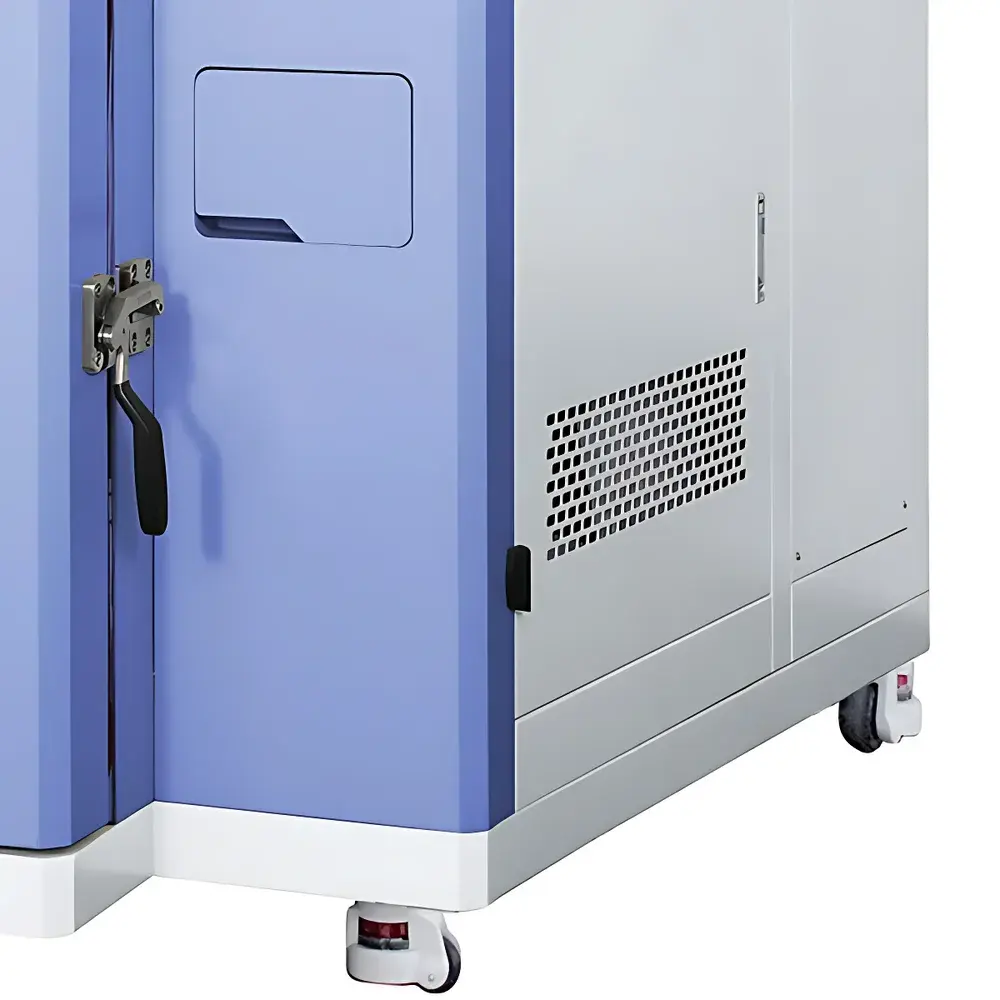
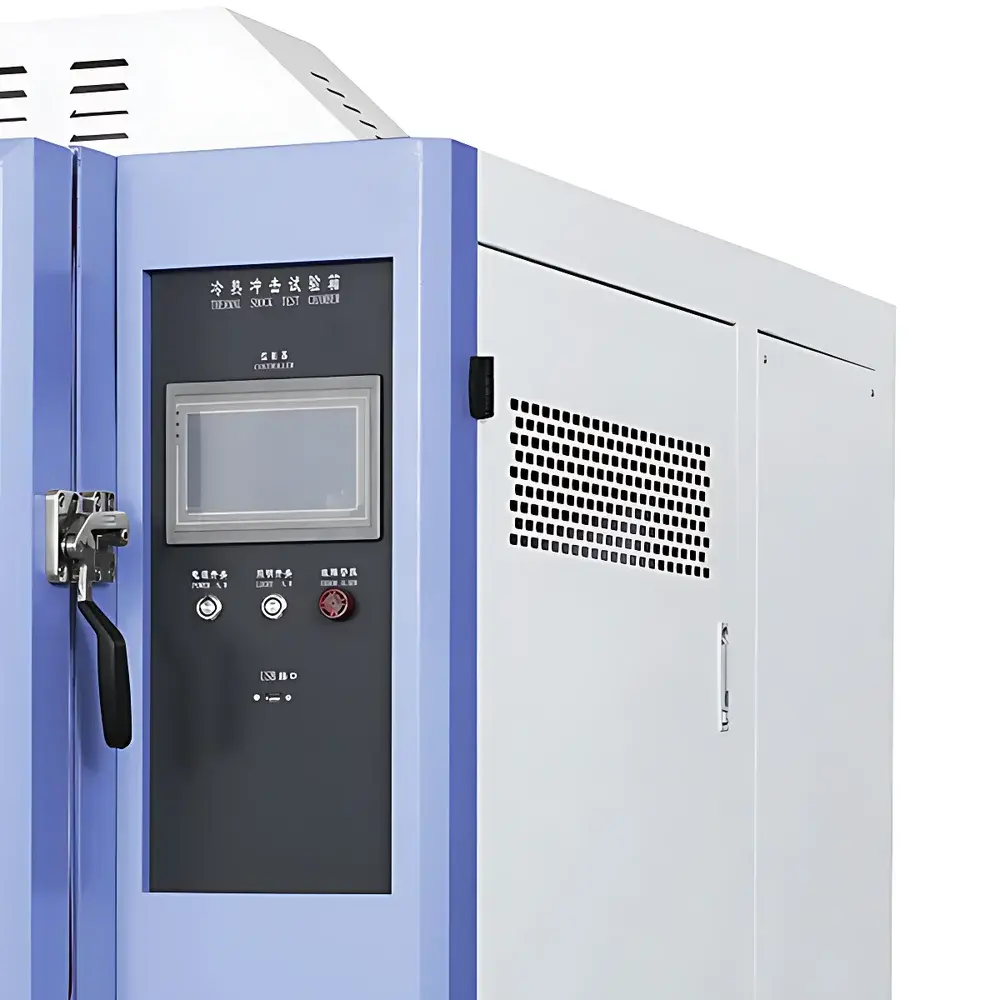
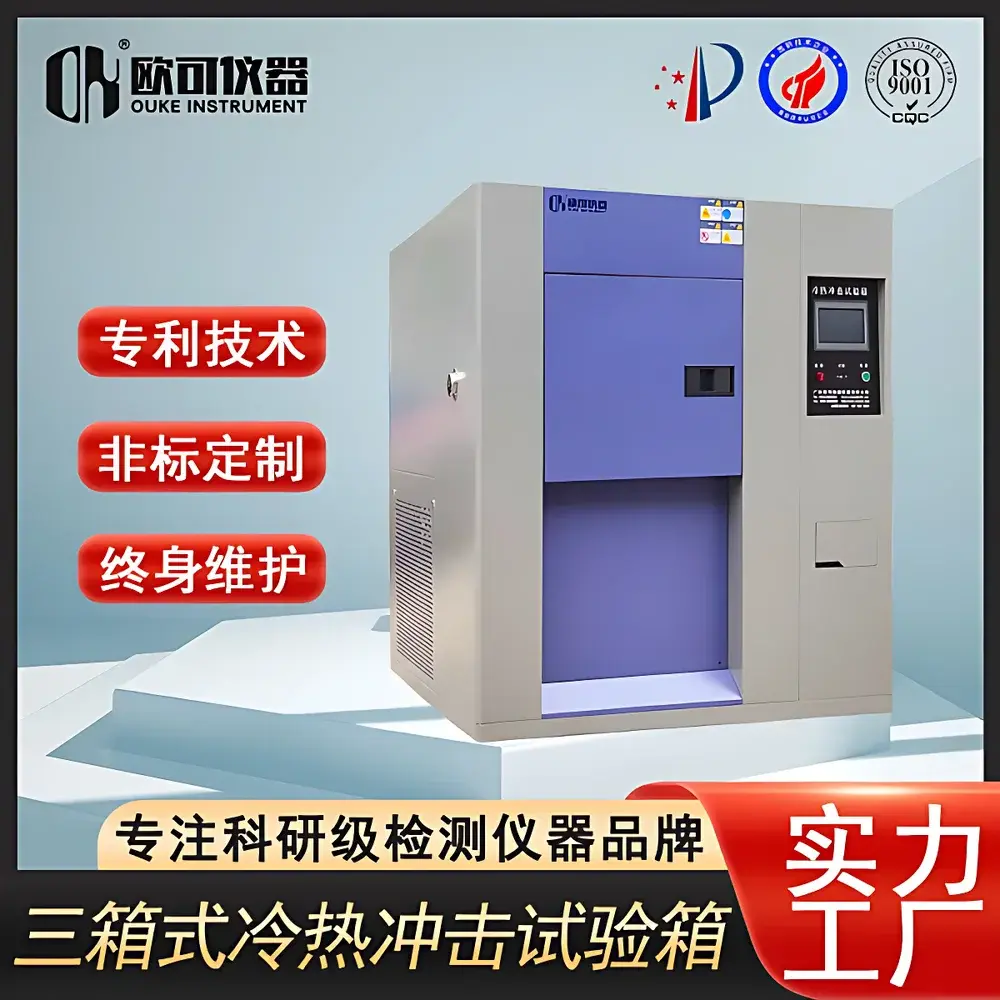
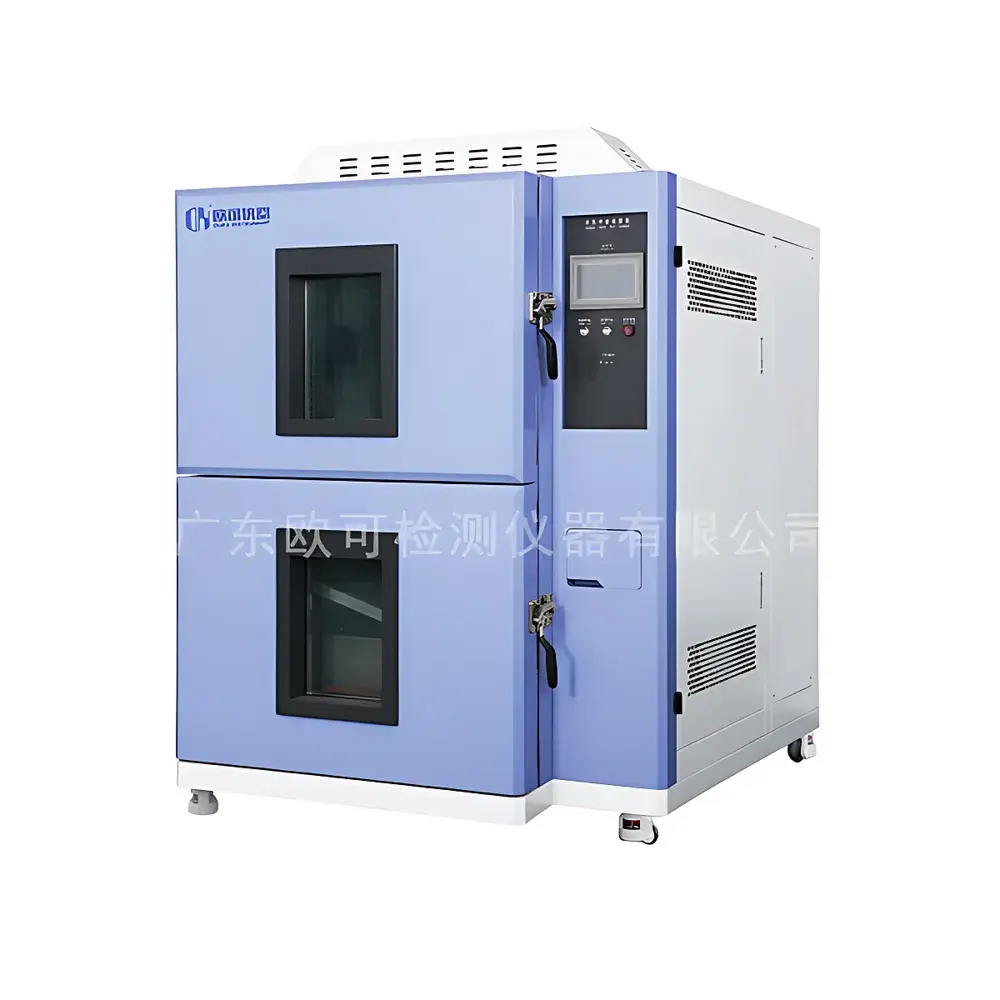
OK Instruments OK-TS-80.00 Thermal Shock Test Chamber
| Brand | OK Instruments |
|---|---|
| Model | OK-TS-80.00 |
| Origin | Guangdong, China |
| Manufacturer Type | Direct Manufacturer |
| High Temperature Range | +150 °C |
| Low Temperature Range | −50 °C |
| Thermal Shock Range | −50 °C to +150 °C |
| Temperature Stability | ±2 °C |
| Heating Rate | 10 °C/min |
| Cooling Rate | 10 °C/min |
Overview
The OK Instruments OK-TS-80.00 Thermal Shock Test Chamber is an engineered environmental test system designed for rapid, repeatable, and high-fidelity thermal cycling of electronic components, automotive modules, aerospace assemblies, and precision mechanical parts. It operates on the two-chamber (hot/cold) static specimen principle—utilizing pneumatically actuated air doors to transfer test specimens between independently controlled high-temperature and low-temperature zones. This architecture eliminates thermal inertia associated with single-chamber designs and ensures precise, reproducible shock profiles per IEC 60068-2-14 (Test N: Change of Temperature) and MIL-STD-810H Method 503.7. The chamber supports both qualification-level and reliability screening protocols, delivering deterministic temperature transitions critical for detecting latent interfacial failures, solder joint fatigue, delamination, and coefficient-of-thermal-expansion (CTE) mismatch effects.
Key Features
- Two-zone independent thermal control: Separate heating and cooling reservoirs—hot zone (RT to +200 °C), cold zone (RT to −70 °C)—enabling programmable thermal shock profiles without cross-contamination of thermal mass.
- Bipartite refrigeration system: Dual-stage cascade refrigeration using environmentally compliant refrigerants (R404A/R23), featuring semi-hermetic German compressors and water-cooled condensation (requires external 10 m³/h cooling tower).
- Precision thermal performance: ±0.5 °C temperature control accuracy; ±2.0 °C uniformity across the test volume; ≤5 min temperature recovery time post-transfer.
- Robust construction: Interior chamber fabricated from mirror-finish SUS#304 stainless steel; exterior in SUS#304 or powder-coated steel; insulated with high-density, flame-retardant polyurethane (PU) foam.
- Configurable interface: Standard 50 mm diameter cable port; two-tier stainless steel load shelves; rear-mounted 3-phase 5-wire AC380 V ±5%, 50 Hz ±0.5 Hz power inlet (2.5 m cable).
Sample Compatibility & Compliance
The OK-TS-80.00 accommodates specimens up to 50 × 40 × 40 cm (W × H × D) in its standard configuration, with custom internal dimensions available upon request. Its design conforms to international and defense-grade environmental testing standards, including IEC 60068-2-14 (Temperature Change), MIL-STD-810H Method 503.7 (Temperature Shock), GJB 150.5A-2009 (Military Equipment Environmental Test: Temperature Shock), GB/T 2423.22–2012 (Environmental Testing – Part 2: Tests – Test N: Change of Temperature), and QC/T 17–1992 (Automotive Component Weathering Requirements). The system supports GLP-compliant validation documentation packages and is compatible with IQ/OQ/PQ protocols for regulated industries.
Software & Data Management
The chamber integrates a programmable touch-panel controller with real-time data logging, capable of storing ≥10,000 data points (time-stamped temperature readings from hot/cold zones and test chamber). Optional PC-based software enables remote monitoring, script-based profile sequencing (including dwell, ramp, and shock cycles), automated report generation (PDF/CSV), and audit-trail functionality aligned with FDA 21 CFR Part 11 requirements when configured with user authentication and electronic signature modules. All thermal profiles are traceable to NIST-traceable reference sensors calibrated annually per ISO/IEC 17025 guidelines.
Applications
- Failure mode analysis of PCBAs subjected to repeated thermal stress (e.g., BGA solder joint integrity, underfill adhesion).
- Qualification testing of avionics enclosures and sensor housings per DO-160 Section 4.11.
- Reliability assessment of EV battery modules, power electronics, and thermal interface materials (TIMs).
- Material compatibility evaluation for polymer composites, optical coatings, and MEMS devices.
- Pre-shipment stress screening for industrial IoT gateways and telecom infrastructure hardware.
FAQ
What is the difference between thermal shock and temperature cycling?
Thermal shock involves rapid transfer between extreme temperature extremes (e.g., −50 °C ↔ +150 °C) with minimal dwell time, inducing high transient stress gradients. Temperature cycling applies slower, controlled ramps over broader ranges and longer durations, emphasizing cumulative fatigue.
Does this chamber support automated test sequences?
Yes—the embedded controller supports multi-step programs (up to 99 segments), including ramp/dwell/shock combinations. Optional PC software adds conditional logic, pass/fail thresholds, and integration with MES/QMS platforms.
Is external cooling infrastructure mandatory?
Yes. The dual-stage refrigeration system requires a dedicated water-cooled condenser loop with ≥10 m³/h flow capacity at 32 °C inlet temperature. A cooling tower must be installed outdoors by the end user.
Can the chamber be validated for ISO/IEC 17025 compliance?
Yes. OK Instruments provides calibration certificates for all critical sensors (traceable to national standards), uncertainty budgets, and IQ/OQ documentation templates suitable for third-party accreditation.
What maintenance intervals are recommended?
Compressor oil and filter replacement every 12 months; refrigerant leak inspection quarterly; door gasket integrity and pneumatic actuator function verified biannually. Full preventive maintenance service is available under extended warranty contracts.



