
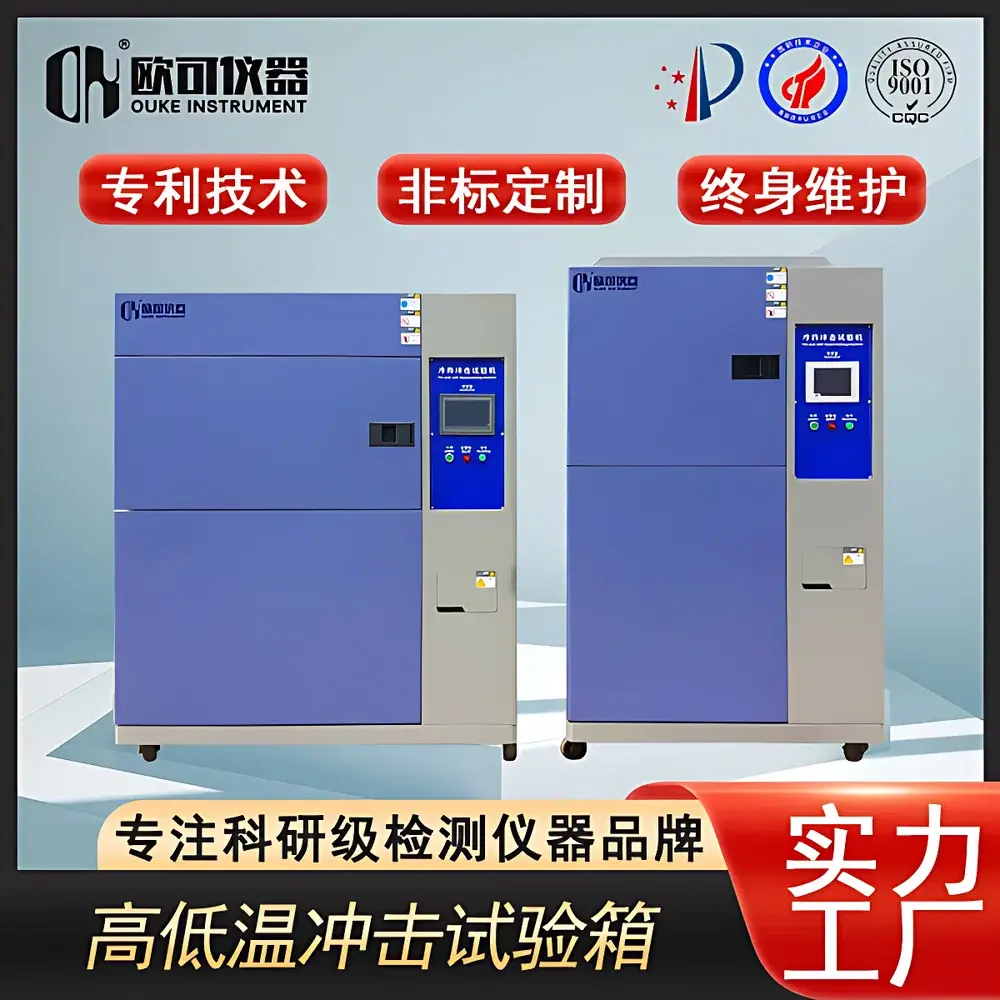
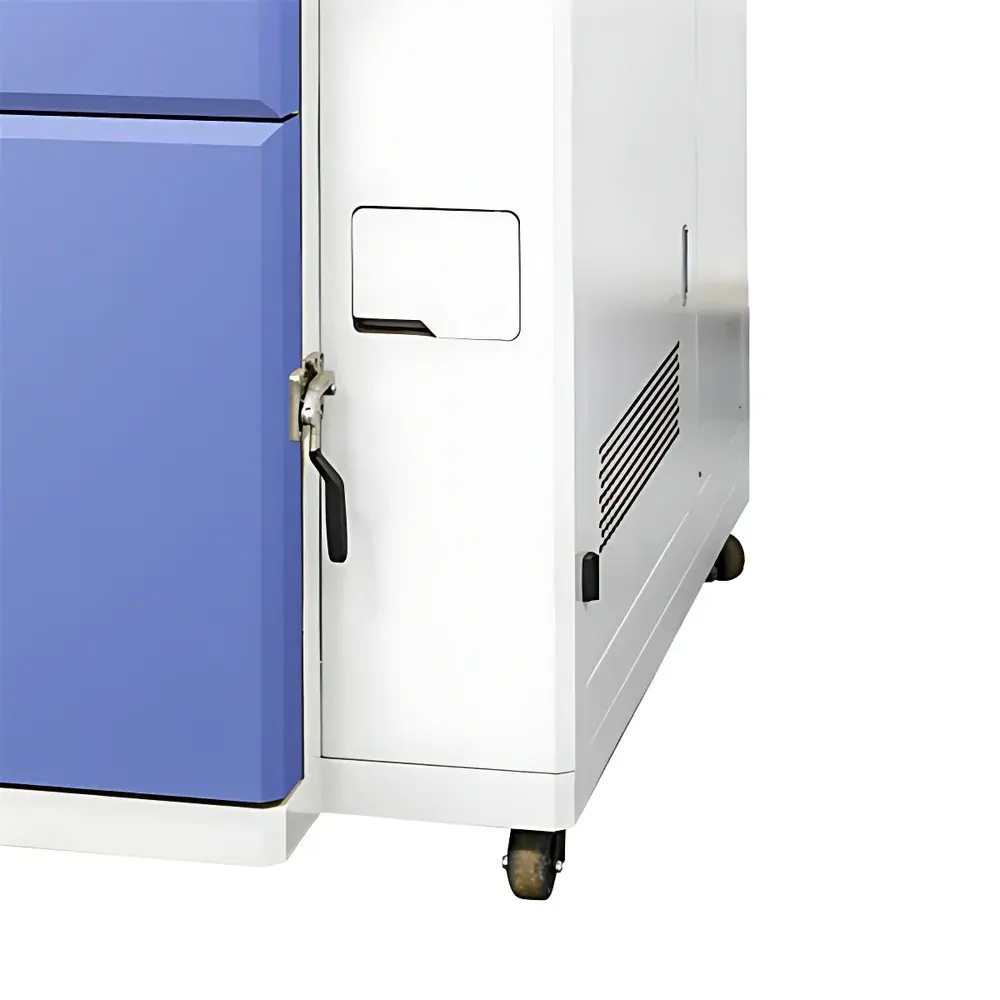
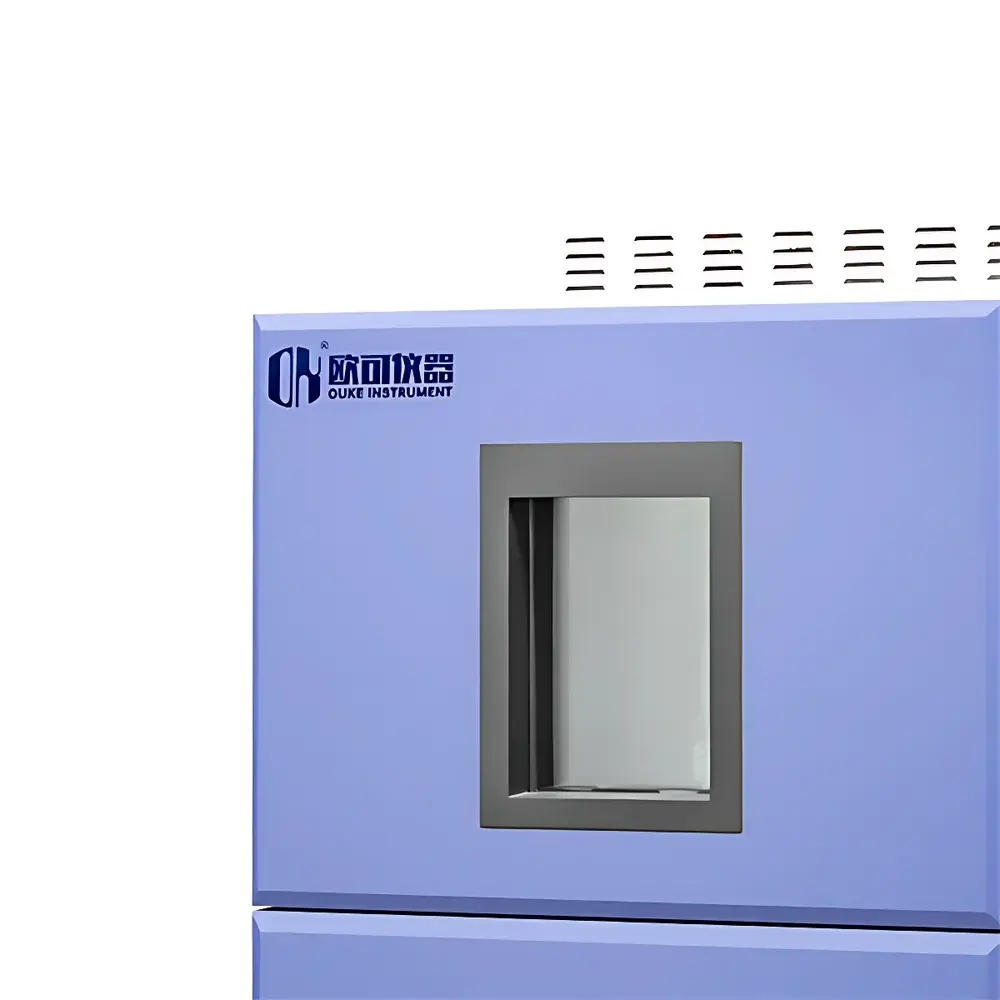
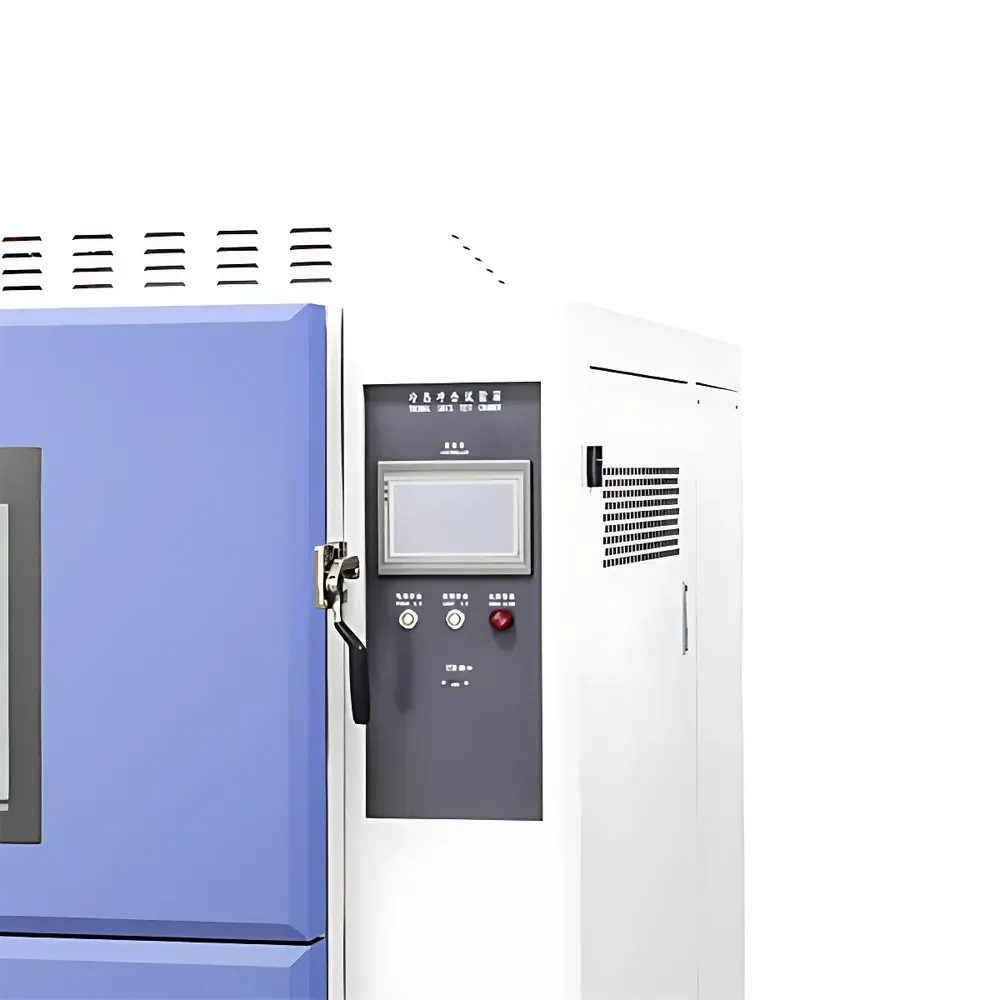
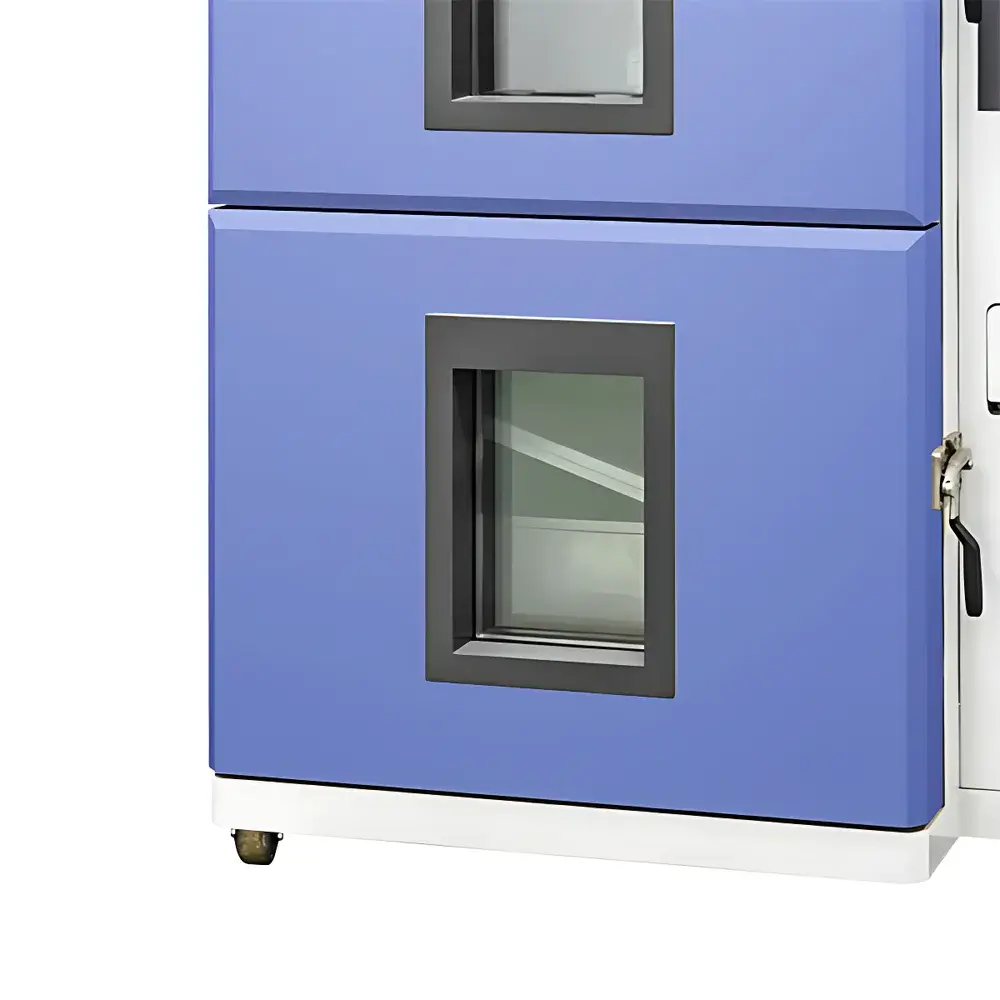
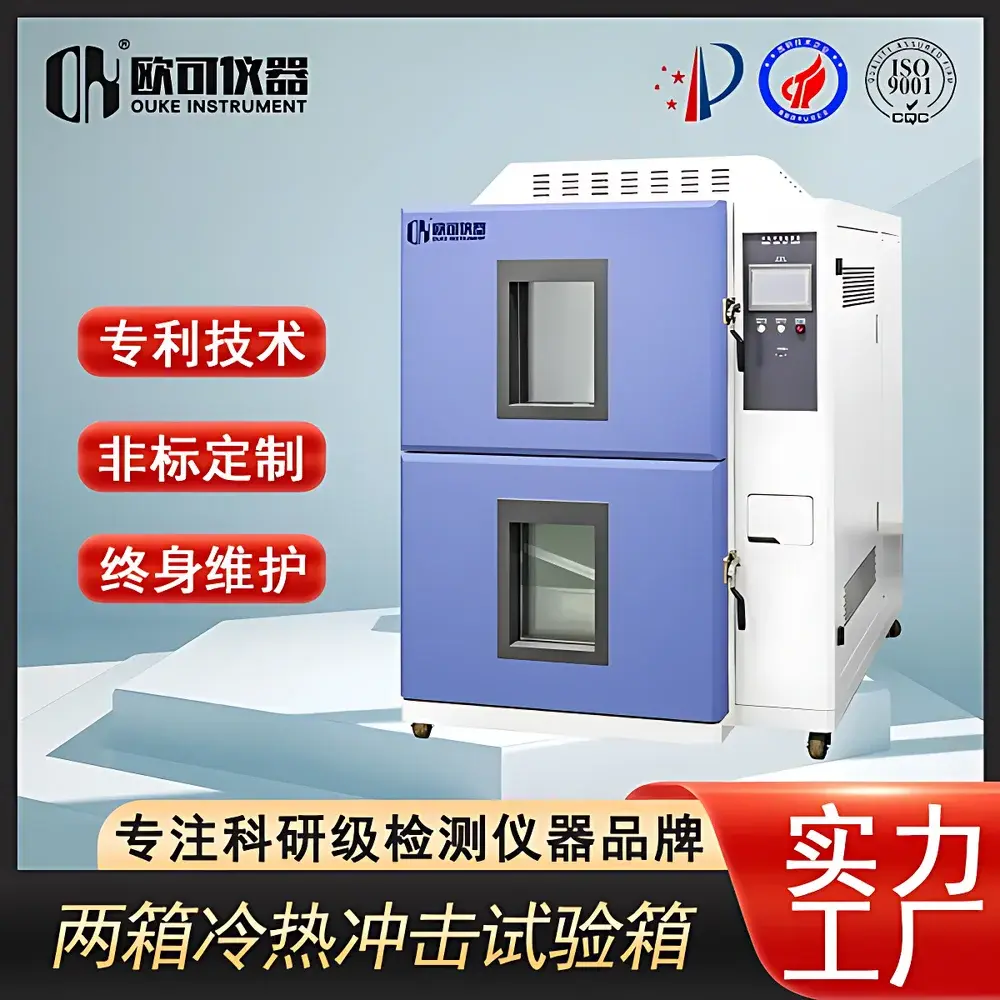
OK Instruments OK-TS-80.6 Thermal Shock Test Chamber
| Brand | OK Instruments |
|---|---|
| Origin | Guangdong, China |
| Manufacturer Type | Direct Manufacturer |
| Model | OK-TS-80.6 |
| High-Temperature Range | +150 °C |
| Low-Temperature Range | −50 °C |
| Thermal Shock Range | −50 °C to +150 °C |
| Temperature Stability | ±2 °C |
| Transition Time (Two-Zone) | ≤10 s |
| Heating/Cooling Rate (Chamber Ambient) | 15 °C/min |
Overview
The OK Instruments OK-TS-80.6 Thermal Shock Test Chamber is an engineered solution for accelerated reliability assessment under extreme, rapid thermal transients. Unlike temperature cycling or rapid temperature change (RTC) chambers—which apply controlled linear ramp profiles—this system delivers true thermal shock by subjecting test specimens to near-instantaneous transitions between pre-conditioned high- and low-temperature environments. Its operational principle aligns with the fundamental definition of thermal shock per IEC 60068-2-14 (identical to GB/T 2423.22) and MIL-STD-883 Method 1010: a step-function temperature shift where the specimen experiences a defined ΔT in ≤10 seconds, inducing mechanical stress via differential thermal expansion across material interfaces. This makes it indispensable for detecting latent defects such as solder joint cracking, delamination in multilayer PCBs, sealant failure in hermetic packages, and interfacial debonding in heterogeneous assemblies—failures that remain undetected under steady-state or slow-ramp thermal stress.
Key Features
- Two-zone configuration with independent high-temperature (+150 °C) and low-temperature (−50 °C) chambers, enabling direct specimen transfer via pneumatically actuated lift basket
- Verified transition time ≤10 seconds—from specimen exit of one chamber to full immersion in the opposing thermal environment—meeting critical thresholds in JESD22-A104 and MIL-STD-883H
- High-stability thermal control: ±2 °C uniformity maintained across the test zone during dwell phases, ensuring repeatability across qualification lots
- Robust stainless-steel construction with double-wall insulation and forced-air circulation for minimal thermal lag and consistent heat exchange dynamics
- Programmable multi-step test sequences with adjustable dwell times (1 min to 999 h), transition triggers, and safety interlocks compliant with IEC 61000-4-2 ESD immunity requirements
- Integrated over-temperature and over-pressure protection, redundant PID controllers, and real-time fault logging for GLP/GMP-aligned validation workflows
Sample Compatibility & Compliance
The OK-TS-80.6 accommodates specimens up to standard mid-size industrial electronics modules, automotive ECUs, and aerospace avionics housings. Its two-zone architecture is optimized for samples weighing ≤25 kg and dimensionally compatible with the internal basket (W×D×H: 400 × 400 × 400 mm). The chamber satisfies essential compliance prerequisites for product qualification in regulated sectors: it supports execution of test protocols referenced in IEC 60068-2-14 (Test Nb), MIL-STD-883H Method 1010.11, JESD22-A104D, and AEC-Q200 stress categories. All thermal profiles are traceable to NIST-traceable reference sensors, and system calibration records adhere to ISO/IEC 17025 documentation standards. For FDA-regulated medical device manufacturers, the chamber’s programmable audit trail and user-access controls facilitate alignment with 21 CFR Part 11 electronic record requirements when paired with validated software.
Software & Data Management
Control and monitoring are executed via OK Instruments’ proprietary TC-Manager v3.2 software, running on an embedded industrial PC with Windows IoT Enterprise. The interface supports intuitive graphical test sequencing, real-time thermocouple channel visualization (up to 8 external inputs), and automatic generation of PDF-compliant test reports—including timestamps, setpoint deviations, transition event markers, and pass/fail annotations per step. Data export is available in CSV and XML formats for integration into LIMS or MES platforms. Firmware-level security features include role-based access control (admin/operator/viewer), encrypted parameter backups, and tamper-evident log files with SHA-256 hashing—critical for audit readiness in ISO 9001:2015 and IATF 16949 environments.
Applications
- Qualification testing of semiconductor packages (QFN, BGA, CSP) per JESD22-A104D for intermetallic growth and solder fatigue sensitivity
- Validation of automotive ADAS sensors exposed to rapid cabin-to-outdoor thermal shifts (e.g., −40 °C ambient → +85 °C interior within 5 s)
- Reliability screening of military-grade connectors and cable assemblies subjected to field-deployed thermal shock scenarios
- Failure analysis root cause identification in MEMS devices, where coefficient-of-thermal-expansion (CTE) mismatch induces micro-cracking in silicon-glass bonds
- Process capability assessment of conformal coating adhesion and reflow soldering integrity under transient thermal gradients
FAQ
What distinguishes thermal shock testing from temperature cycling?
Thermal shock applies instantaneous step changes (≤10 s transition) to induce mechanical fracture; temperature cycling uses controlled ramps (e.g., 5–15 °C/min) to assess cumulative fatigue over hundreds of cycles.
Does this chamber support three-zone (static sample) operation?
No—the OK-TS-80.6 is a two-zone lift-basket design. For static-sample applications requiring zero vibration, OK Instruments offers the OK-TS-V series with vertical airflow switching.
Is liquid nitrogen required to achieve −50 °C?
No—mechanical cascade refrigeration achieves −50 °C without cryogenic supplementation, reducing operational cost and infrastructure dependency.
Can the chamber be integrated into an automated test line?
Yes—RS-485 Modbus RTU and Ethernet/IP interfaces enable seamless PLC communication for synchronized load/unload and data handoff.
How is temperature uniformity verified during qualification?
Per IEC 60068-3-5, 9-point sensor mapping is performed at each temperature extreme using calibrated Class A PT100 probes, with results documented in the Factory Acceptance Test (FAT) report.



